

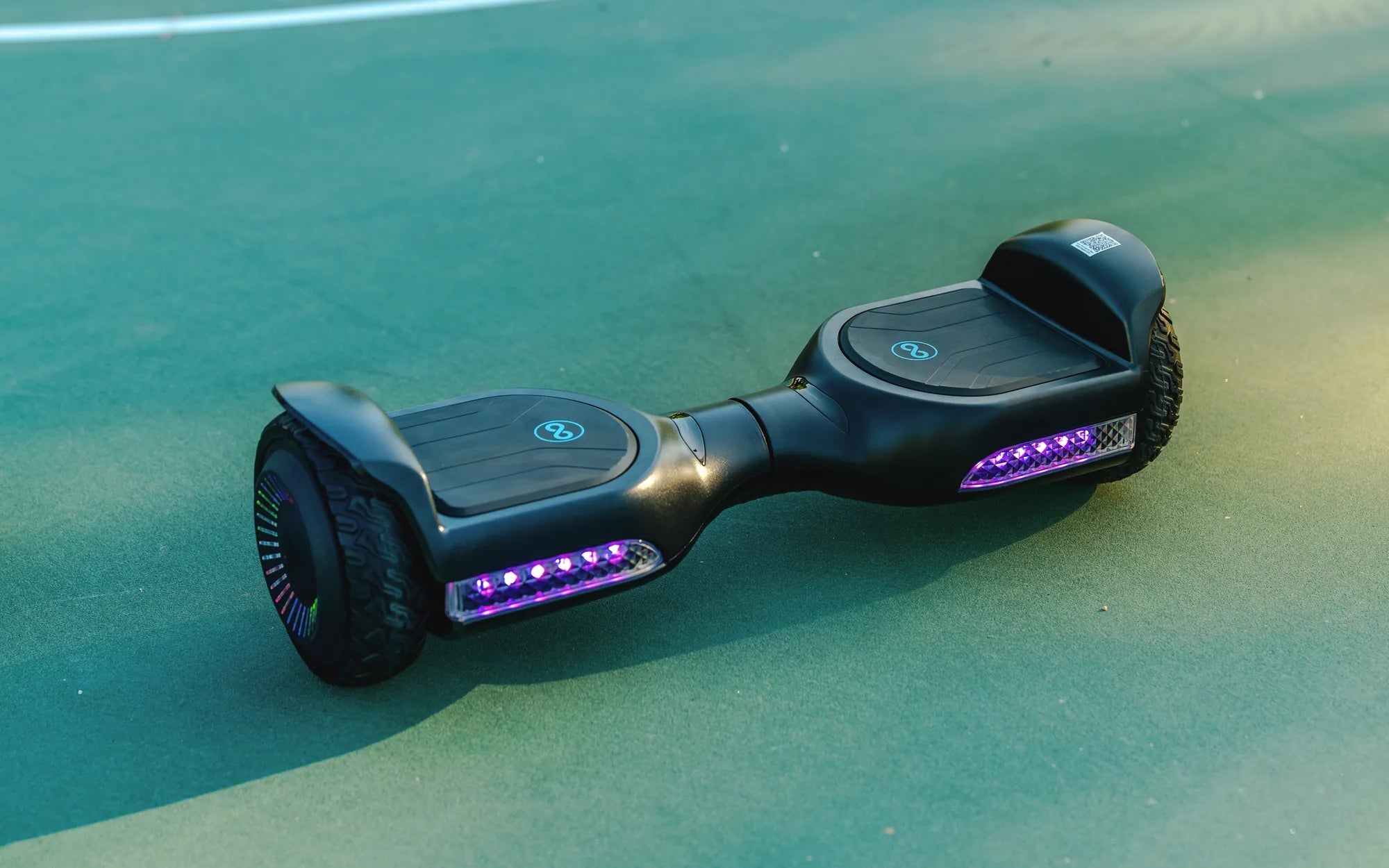
Introduction: Redefining the Urban Commute
The daily urban commute is broken. Traffic congestion wastes billions of hours, transportation costs are soaring, and carbon emissions continue to climb. A new solution has emerged not from sprawling infrastructure projects, but from compact, intelligent personal mobility. The smart self-balancing scooter represents a fundamental shift, combining artificial intelligence, advanced gyroscopes, and electric propulsion into a single, intuitive platform. This article will dissect the technology behind these devices, analyze their tangible impact on city life, and provide a practical guide for choosing and using the right model. You will learn how they solve the "last-mile" problem, what makes them truly "smart," and why brands like Gyroor are leading the charge with safety-focused, durable designs trusted by over 100,000 riders.
What Makes It "Smart"? Beyond Basic Self-Balancing
The term "self-balancing" refers to the fundamental gyroscopic technology that keeps the device upright. The "smart" designation, however, signifies a leap into connected, adaptive intelligence. Modern smart self-balancing scooters are IoT-enabled personal transport devices. They move beyond simple balance assistance to offer a suite of features that enhance safety, customization, and usability through seamless integration with digital ecosystems.
At the heart of the smart experience is proprietary mobile app connectivity. Through a Bluetooth-linked smartphone app, riders can access real-time diagnostics, track ride history, and adjust performance parameters. You can lock your scooter remotely to prevent theft, monitor battery health down to the cell level, and customize LED lighting patterns for visibility and style. This connectivity transforms the scooter from a simple vehicle into a data-rich mobility partner.
Advanced models incorporate sensor fusion, using data from gyroscopes, accelerometers, and sometimes even cameras or ultrasonic sensors to adapt to riding conditions. Algorithms can detect different road surfaces, adjusting motor torque for a smoother ride on cobblestones versus pavement. They can also implement geofencing for safe zones or speed limits, and provide tilt-back haptic feedback when approaching maximum speed, a key safety feature in Gyroor's engineering philosophy.
The intelligence extends to the rider interaction. Learning algorithms can tailor the scooter's responsiveness to a user's skill level over time, making the ride progressively more intuitive. This combination of connectivity, adaptive control, and user customization is what truly defines the modern smart self-balancing scooter, setting it apart from first-generation hoverboards.
Core Technologies Powering the Ride
The seamless experience of a smart self-balancing scooter is built on a foundation of three critical, interlocking technologies. Understanding these components is key to appreciating the engineering marvel and evaluating product quality.
The Gyroscopic Stabilization System
Precision micro-electromechanical systems (MEMS) gyroscopes and accelerometers are the scooter's inner ear. Operating at hundreds of readings per second, these sensors detect the slightest shift in the rider's center of gravity. This data is fed to a central processing unit (CPU) that calculates the necessary counter-adjustment in milliseconds, sending commands to the wheel motors to maintain perfect balance. The sophistication of this control loop dictates stability, especially during acceleration, braking, and on inclines.
Brushless Hub Motors and Powertrain
Power is delivered by high-torque, brushless direct current (BLDC) hub motors embedded in the wheels. These motors are efficient, quiet, and require minimal maintenance. Their integration into the wheel hub creates a compact and direct drive system. The motor's power rating (in watts) determines hill-climbing ability and acceleration, while the overall system design, including the motor controller, dictates smoothness of power delivery and regenerative braking efficiency.
Intelligent Battery Management Systems (BMS)
The lithium-ion battery pack is the lifeblood of the scooter, and its management system is the brain for safety and longevity. A high-quality BMS, like those used in Gyroor's UL-certified battery packs, does far more than prevent overcharging. It actively monitors the voltage, current, and temperature of individual battery cells, ensuring balanced charging to maximize lifespan beyond 500 cycles. It enforces safe operating parameters, cutting power in fault conditions, which is a non-negotiable safety standard for reputable brands.
Gyroor's Smart Scooter Advantage: Engineering Meets Practicality
In a market filled with options, Gyroor has established itself by focusing on the pillars of reliability, safety, and rider-centric design. The brand's approach to the smart self-balancing scooter category is defined by translating advanced technology into dependable, everyday utility.
A primary differentiator is uncompromising safety engineering. Every Gyroor scooter utilizes UL-certified battery packs that have undergone rigorous testing for thermal stability, short-circuit protection, and durability. This certification is a critical benchmark, often overlooked by cheaper alternatives, that directly impacts fire safety risk. Furthermore, Gyroor integrates these packs with robust Battery Management Systems that provide the rider with accurate battery level readings and protect the cells from damage.
Practicality for all weather conditions is engineered in through IPX5 water-resistant ratings on key models. This means the scooter can withstand water jets from any direction, making it resilient against wet roads and light rain—a crucial feature for a daily commuter. This durability is backed by a clear 1-year warranty and accessible US-based customer support, providing peace of mind for a device that blends complex electronics with mechanical components.
Gyroor's design philosophy also emphasizes intuitive control. Features like beginner modes that limit speed, clear audio warnings for low battery or excessive tilt, and ergonomic footpad design lower the barrier to entry. By marrying smart connectivity features like app-based controls with this foundational focus on safe, durable hardware, Gyroor delivers a smart self-balancing scooter that is both advanced and trustworthy.
Model Comparison: Finding Your Perfect Smart Ride
Choosing the right model depends on your primary use case: dense city commuting, recreational cruising, or off-road adventure. Below is a comparison of hypothetical Gyroor model categories based on real-world performance tiers.
| Feature | City Commuter (e.g., Gyroor C1) | Performance Cruiser (e.g., Gyroor P1) | All-Terrain Pro (e.g., Gyroor A1) |
|---|---|---|---|
| Max Speed | 10-12 mph | 15-18 mph | 12-15 mph |
| Max Range | 12-15 miles | 18-22 miles | 15-18 miles |
| Motor Power | 2 x 400W | 2 x 700W | 2 x 600W (High Torque) |
| Weight | ~25 lbs | ~30 lbs | ~35 lbs |
| Tire Type | 8.5" Solid/Pneumatic | 10" Pneumatic | 10" All-Terrain, Pneumatic |
| Smart Features | App Lock, Ride Stats, LED Lights | App Speed Modes, Custom Lighting, Trip Logging | App with Terrain Mode, Enhanced Diagnostics |
| Best For | Short commutes, public transport linking, portability | Longer recreational rides, smoother roads, higher speed | Parks, trails, uneven surfaces, gravel paths |
The Urban Mobility Impact: Data-Driven Benefits
The proliferation of smart self-balancing scooters is not a niche trend but a response to quantifiable urban challenges. Their impact is measurable across economics, environment, and infrastructure efficiency.
Economically, they offer a dramatic reduction in commuting cost per mile. The average car commute in the US costs approximately $0.60 per mile when factoring in fuel, maintenance, insurance, and depreciation. A smart electric scooter costs about $0.03-$0.05 per mile in electricity. For a 5-mile daily commute, this translates to annual savings of over $1,500. They also eliminate parking fees and reduce reliance on ride-sharing services for short trips.
Environmentally, the benefit is direct: zero tailpipe emissions. Replacing short car trips is critical, as a high percentage of urban vehicle trips are under 3 miles—a distance where internal combustion engines are least efficient and most polluting. If just 10% of these short trips in a mid-sized city were replaced by e-scooters, carbon emissions could be reduced by thousands of metric tons annually. The smart self-balancing scooter is a key tool for decarbonizing urban transport.
From an infrastructure perspective, these devices excel at solving the "last-mile" problem—the inconvenient gap between a public transit stop and a rider's final destination. This gap discourages public transit use. A compact scooter that can be carried onto a train or bus seamlessly bridges this gap, making entire multi-modal journeys feasible and reducing pressure on road networks and parking spaces. Their small footprint means they move more people using a fraction of the space required by cars, directly alleviating congestion.
Safety, Regulations, and Riding Best Practices
Adopting any new mode of transport requires an understanding of safe operation and legal frameworks. Responsible riding ensures personal safety and promotes positive integration into the urban landscape.
Essential Safety Gear: A helmet is non-negotiable. Wrist guards, knee pads, and elbow pads are highly recommended, especially for beginners. Reflective clothing or accessories are crucial for low-light conditions. The built-in smart lights on devices like Gyroor scooters enhance visibility, but active illumination from the rider is key.
Mastering the Learning Curve: Start in a flat, open, private area like an empty parking lot. Use a support (wall or friend) to mount initially. Focus on micro-adjustments; leaning your ankles and calves is more effective than leaning your whole body. Practice mounting, dismounting, gentle acceleration, and controlled stopping before attempting turns or higher speeds. Most people achieve basic competency within 30-60 minutes.
Understanding Local Regulations: Laws vary significantly by city, state, and country. Common regulations include: a minimum rider age (often 16+), speed limits on sidewalks (frequently 6-10 mph, with many cities banning sidewalk riding entirely), mandatory use of bike lanes where available, and prohibitions on riding in certain business districts. Always check your local municipal code before riding in public. A smart self-balancing scooter is a vehicle, and its operator is responsible for knowing the rules of the road.
Operational Safety: Regularly check tire pressure (if pneumatic), ensure all lights are functional, and listen for unusual sounds from the motors. Never ignore low-battery warnings, as power can drop off precipitously. Avoid riding in heavy rain or through deep puddles, even with water-resistant ratings. Be hyper-aware of road hazards like potholes, gravel, and wet leaves, which can affect traction.
Frequently Asked Questions (FAQ)
Q: How long does it take to learn to ride a smart self-balancing scooter?
A: Most adults can learn the basics—mounting, dismounting, moving forward, and stopping—within 30 to 60 minutes of dedicated practice in a safe area. Achieving confident, fluid control for navigating urban obstacles typically takes a few days of regular use. Utilizing a beginner or training mode, available on many Gyroor models, can significantly speed up this process by limiting top speed.
Q: Are these scooters safe to use in the rain, given the electronics?
A: It depends on the scooter's ingress protection (IP) rating. Many Gyroor models carry an IPX5 rating, meaning they are protected against water jets from any direction. This makes them safe for riding on wet roads and in light rain. However, no consumer electric scooter is fully waterproof or submersible. Avoid deep puddles, heavy downpours, and submersion, as this can damage electronics and void the warranty.
Q: What is the real-world range I can expect on a single charge?
A: Manufacturer ranges are tested under ideal conditions (light rider, flat terrain, moderate speed). Real-world range is typically 70-80% of the advertised maximum. Factors that reduce range include rider weight, frequent acceleration/braking, hilly terrain, cold temperatures, and low tire pressure. For a scooter advertised for 15 miles, a 180 lb rider in a moderately hilly city can expect a reliable 10-12 miles per charge.
Q: How does the warranty handle issues with the smart features or app?
A: Reputable brands like Gyroor include the electronic control systems, sensors, and Bluetooth connectivity within their standard 1-year warranty for manufacturing defects. If a smart feature (e.g., app pairing failure, erroneous sensor data) is due to a hardware fault, it is covered. Software app updates are typically provided for free. Always ensure you purchase from an authorized retailer to guarantee warranty support.
Q: Can I take my smart self-balancing scooter on an airplane?
A: Almost universally, no. The lithium-ion battery packs in these scooters almost always exceed the watt-hour (Wh) limits set by airlines for carry-on or checked luggage (usually 100-160 Wh). Scooter batteries commonly range from 200Wh to over 500Wh. Traveling by air with a smart self-balancing scooter requires special freight arrangements as dangerous goods.
Conclusion: Your Gateway to Smarter City Navigation
The smart self-balancing scooter has evolved from a novelty into a legitimate, efficient, and sustainable pillar of urban mobility. It addresses concrete problems—congestion, cost, pollution, and the last-mile gap—with an elegant, technology-driven solution. The fusion of intelligent stabilization, connectivity, and user-centric design creates a transportation experience that is not only practical but genuinely enjoyable. As cities continue to densify and re-prioritize space for people over cars, these agile personal vehicles will play an increasingly central role.
Choosing a scooter from a brand that prioritizes safety, durability, and support is the most important decision a rider can make. Gyroor exemplifies this approach with its commitment to UL-certified batteries, weather-resistant builds, and comprehensive customer service. Investing in a quality smart self-balancing scooter is an investment in freedom, efficiency, and a more sustainable way to move through your city. The future of urban mobility is compact, connected, and electric—and it's ready to ride.
Ready to experience the future of personal transport? Browse the full collection of reliable, feature-rich smart self-balancing scooters and e-bikes at gyroorboard.com.
How Long to Charge a Hoverboard: The Ultimate Guide to Charging Times and Tips
Hoverboard Go Kart Kit: The Ultimate DIY Adventure on Wheels