


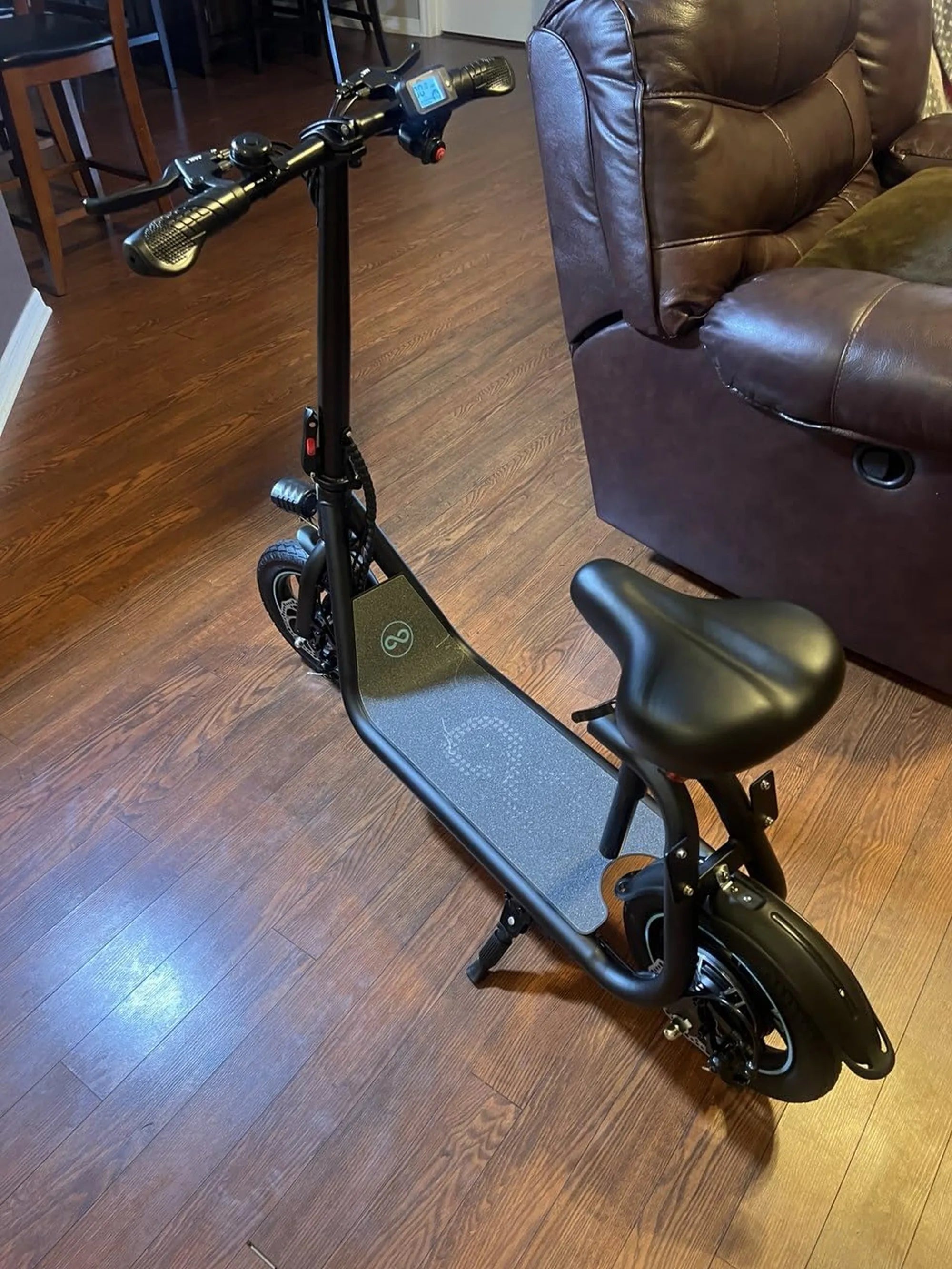
The Rise of Stand-Up Electric Scooters
City streets are undergoing a quiet revolution. The stand-up electric scooter has emerged not as a passing trend, but as a core component of a pragmatic solution to urban gridlock, rising transportation costs, and environmental concerns. These compact, agile vehicles are redefining the 'last mile' and empowering commuters with unprecedented flexibility. This article delves into why stand-up electric scooters represent the future of urban mobility, examining the data, the features that matter, and the practical knowledge needed to ride safely and legally. We'll explore how brands like Gyroor, a leader trusted by over 100,000 riders across North America and Europe, are engineering scooters with UL-certified batteries and robust designs for confidence in daily use.
The adoption curve is steep. From shared mobility programs to personal ownership, these scooters address specific urban pain points with elegant efficiency. They are not merely toys but legitimate transportation tools for millions. Understanding their impact requires a look at the converging factors of technology, urban planning, and shifting commuter priorities. The future of getting around dense city centers is increasingly electric, personal, and upright.
This analysis moves beyond hype to provide a factual, data-driven perspective. We will break down the true cost savings, the environmental benefits per mile, and the engineering benchmarks that separate a reliable daily commuter from a subpar product. For anyone considering a smarter, freer way to navigate their city, this guide serves as an essential resource. The era of the stand-up electric scooter is here, and it is built on a foundation of practicality and innovation.
Why Stand-Up Scooters Are Dominating City Streets
The dominance of stand-up electric scooters in urban landscapes is no accident. It is the direct result of their ability to solve multiple modern commuting problems simultaneously. Their core value proposition rests on three pillars: unmatched portability, significant cost-efficiency, and a tangible reduction in environmental impact. Each pillar directly counters a frustration associated with traditional transport, from searching for parking to paying for fuel and insurance.
Urban planners and commuters alike are recognizing their utility. They reduce traffic congestion by taking single-occupant cars off the road and decrease strain on overcrowded public transit systems for short trips. The data supports the shift; studies in cities with robust micro-mobility networks show measurable decreases in car usage for trips under three miles. This behavioral change is critical for urban sustainability goals.
The appeal is also deeply personal. They offer a sense of autonomy and directness that is often lost in stop-and-go traffic or delayed trains. Riders gain predictable commute times, the ability to take more direct routes through parks or bike lanes, and the sheer enjoyment of an open-air ride. This combination of systemic benefit and individual empowerment is a powerful driver for adoption, solidifying the stand-up electric scooter's place as a future-facing mobility solution.
Portability and Convenience Unmatched
Portability is the superpower of the stand-up electric scooter. Weighing between 25-45 pounds for most commuter models, they are light enough to carry up a flight of stairs and compact enough to store under a desk, in a closet, or beside an office chair. The foldable design, a standard feature on nearly all personal models, transforms the scooter from a vehicle to a portable package in seconds. This eliminates the two greatest headaches of urban transport: parking and storage.
This portability enables seamless mixed-mode commuting. A rider can scoot to a bus or train station, fold and carry their vehicle aboard, and then unfold it for the final leg of the journey from the transit stop to their destination. This 'first and last mile' solution effectively expands the practical coverage radius of public transit networks, making them viable for more people. Compared to a bicycle, which often requires dedicated, secure parking, the scooter's ability to stay with its owner provides immense peace of mind and logistical simplicity.
The convenience extends to daily errands. Quick trips to the grocery store, coffee shop, or friend's apartment become effortless, often faster than driving and finding parking. The barrier to use is incredibly low—no special clothing required, minimal preparation, and immediate deployment. This 'always-ready' accessibility is a key factor in turning occasional use into a daily habit, fundamentally changing how people perceive distance and travel time within their neighborhoods.
Cost-Efficiency Over Traditional Transport
The financial argument for owning a stand-up electric scooter is compelling. When analyzed against car ownership or even consistent use of ride-sharing and public transit, the savings are substantial and immediate. The initial investment, typically ranging from $500 to $1500 for a quality commuter model, is often less than a single monthly payment for a car lease, insurance, and fuel.
Operational costs are negligible. Charging a scooter's battery costs mere cents per charge. With no fuel, insurance, parking fees, or significant maintenance outside of tire wear, the total cost of ownership over a year is a fraction of any car-based transportation. For example, the annual cost of fueling a compact car for a 10-mile daily commute can exceed $800; the equivalent electricity cost for a scooter is under $20.
The table below provides a simplified annual cost comparison for a 5-mile one-way urban commute:
| Transport Method | Estimated Annual Cost* | Notes |
|---|---|---|
| Personal Car | $4,000 - $9,000 | Includes payment, insurance, fuel, maintenance, parking. |
| Ride-Sharing (Daily) | $3,000 - $5,000 | Based on two $10-15 trips per weekday. |
| Public Transit Pass | $1,000 - $1,500 | Varies greatly by city. |
| Stand-Up E-Scooter | $50 - $150 | Primarily electricity; assumes one tire replacement. |
*Costs are broad estimates for illustrative purposes. The scooter cost assumes a one-time purchase price amortized over 3 years.
This economic efficiency makes stand-up electric scooters accessible to a wide demographic, including students, young professionals, and anyone looking to trim their monthly budget. The payoff period is short, after which the scooter provides nearly free transportation for years, representing one of the most rational personal transport investments available today.
The Green Commute: Reducing Your Carbon Tireprint
The environmental benefit of stand-up electric scooters is direct and significant. As pure electric vehicles, they produce zero tailpipe emissions. When charged on a standard grid, their lifecycle carbon footprint is a small fraction of that of a gasoline-powered car. According to lifecycle analyses, an e-scooter emits approximately 1/10th the CO2 per passenger mile compared to a private automobile.
This reduction is crucial in dense urban areas where air quality and greenhouse gas emissions are concentrated. Widespread adoption can contribute materially to a city's climate action goals by displacing short, high-pollution car trips where internal combustion engines are least efficient. Furthermore, their small size and efficient motors mean they require far fewer resources to manufacture than a car, reducing their embodied carbon from production.
For the eco-conscious commuter, the choice is clear. Pairing an e-scooter with renewable energy sources (like a home solar panel) can make the commute nearly carbon-neutral. This alignment of personal convenience with planetary responsibility is a powerful motivator. It allows individuals to take tangible, daily action against climate change simply by choosing how they get to work or run errands, making the stand-up electric scooter a tool for personal and environmental wellness.
Key Features to Look For in a Reliable E-Scooter
Not all stand-up electric scooters are created equal. The market ranges from flimsy, underpowered models to robust, engineering-focused vehicles built for daily use. Understanding the key features that dictate performance, safety, and longevity is critical for making a wise investment. Focusing on these core specifications will ensure your scooter is a reliable partner, not a source of frustration or hazard.
The cornerstone of a good scooter is a synergy between power, range, and build quality. A powerful motor is useless if the battery lacks capacity, and a long-range battery is a liability if housed in a poorly constructed, non-water-resistant frame. Leading brands like Gyroor design their scooters with this holistic view, ensuring components are matched and housed to work together reliably under real-world urban conditions. This attention to integrated design is what separates a commuter-grade vehicle from a disposable gadget.
Prospective buyers should prioritize verified safety certifications and durable construction over maximum speed or flashy accessories. A scooter is a vehicle, and its primary job is to transport you safely and predictably, day after day. The following sections break down the non-negotiable features that define a trustworthy stand-up electric scooter, providing a checklist for your evaluation process.
Motor Power and Range: Getting Where You Need to Go
Motor power, measured in watts (W), determines a scooter's ability to accelerate, maintain speed, and climb hills. For typical urban terrain with moderate inclines, a 350W motor is considered a practical minimum. A 500W motor provides more confident hill-climbing and better performance for heavier riders or those carrying a backpack. Motors of 600W and above handle steep hills with ease and offer brisk acceleration, but may be subject to different local speed regulations.
Range is dictated by battery capacity, measured in watt-hours (Wh). Manufacturer range claims are often based on ideal conditions (light rider, flat ground, slow speed). A practical rule is to discount claimed range by 30-40% for real-world factors like hills, stops/starts, rider weight, and temperature. For a reliable daily commute, look for a battery with at least 360Wh capacity. This typically translates to a real-world range of 12-18 miles, sufficient for most round-trip urban journeys with a safety margin.
It's essential to match range to your needs. Consider your longest regular trip and add a 30% buffer. A scooter that consistently runs its battery to zero will degrade the battery cells faster. Models from reputable brands provide transparent specifications and realistic performance expectations. For instance, Gyroor's commuter-focused models are engineered to deliver consistent range through advanced battery management systems that protect the UL-certified cells, ensuring the scooter performs as expected for years.
Build Quality and Safety Certifications
Build quality is paramount. The frame, typically made from aluminum alloy, should feel solid, with no noticeable flex or creaking. Welds should be clean and even. The folding mechanism, a critical stress point, must have a robust locking mechanism—preferably with a secondary safety latch. A wobbly stem or insecure fold is a major safety risk.
Safety certifications are the most critical, yet often overlooked, differentiator. The battery is the single most important safety component. Always insist on a UL 2271 or UL 2843 certified battery pack. This independent certification ensures the battery has passed rigorous tests for electrical, mechanical, and environmental safety, drastically reducing the risk of fire. Gyroor's commitment to using only UL-certified batteries in all its models is a non-negotiable standard for rider safety.
The braking system is equally vital. A combination of braking methods is ideal. An electronic (regenerative) brake helps slow the scooter and recapture some energy, while a physical brake—either a disc brake or a drum brake—provides strong, reliable stopping power in all conditions, especially wet weather. Look for wide, grippy deck tape and bright, always-on front and rear lights integrated into the design for visibility, not added as an afterthought.
Weather Resistance and Durability
Urban commuting means encountering puddles, wet streets, and light rain. An Ingress Protection (IP) rating tells you how well the scooter is sealed against solids and liquids. For reliable all-weather use, a minimum of IPX5 is essential. This rating means the scooter can withstand water jets from any direction, making it safe to ride on wet roads and through puddles. Many budget models lack a proper IP rating, leaving their electrical systems vulnerable to water damage and creating a safety hazard. Gyroor's standard IPX5 rating across its lineup is a benchmark for durable, all-conditions design.
Tire choice affects comfort and durability. Pneumatic (air-filled) tires provide superior shock absorption and traction, especially on uneven pavement, but are susceptible to punctures. Solid (airless) tires eliminate flats but can give a harsher ride. Some high-end models feature tubeless pneumatic tires with sealant for the best of both worlds. Suspension systems (spring or hydraulic) further smooth out bumps, increasing comfort and control on rough surfaces.
Durability is also about component quality. Look for details like thick-gauge wiring, sealed connectors, and a dashboard that is readable in direct sunlight. These elements speak to a manufacturer's commitment to creating a product that endures the rigors of daily urban use, ensuring your investment is protected and your commute remains reliable through seasons of use.
Stand-Up Scooters vs. Other E-Mobility Options
The personal electric vehicle landscape offers several choices. Understanding how stand-up electric scooters compare to alternatives like e-bikes, electric skateboards, and mopeds is key to selecting the right tool for your specific needs. Each option has a distinct profile of advantages, trade-offs, and ideal use cases. A clear comparison helps contextualize the unique role of the stand-up scooter in the mobility ecosystem.
Stand-up scooters excel in scenarios where extreme portability, low cost, and simplicity are the highest priorities. They are the most agile and storage-friendly option, making them perfect for dense urban cores, multi-modal commuting, and riders who need to carry their vehicle indoors frequently. Other vehicles may outperform in range, speed, or cargo capacity, but often at the expense of the scooter's core conveniences.
This analysis is not about declaring a single winner, but about matching the vehicle to the rider's lifestyle, commute pattern, and physical requirements. For many urban dwellers, the stand-up electric scooter hits the sweet spot of practicality, making it the most logical and widely adoptable form of personal e-mobility available today.
Electric Scooters vs. E-Bikes: A Practical Comparison
E-bikes and stand-up electric scooters serve overlapping but distinct purposes. E-bikes typically offer greater range (25-50 miles), higher speed potential (often up to 28 mph with pedal assist), and superior cargo-carrying capacity via racks and panniers. They are excellent for longer commutes, hilly terrain, or trips that involve carrying groceries or gear. The seated position and pedal-assist also provide light exercise.
Stand-up electric scooters counter with decisive advantages in portability and storage. They are significantly lighter, fold into a more compact form, and are easier to carry onto public transit or into an office. Their footprint when stored is a fraction of an e-bike's. They are also generally simpler to operate with a thumb throttle, requiring no pedaling, which can be preferable for commuting in business attire.
From a regulatory standpoint, e-scooters often face clearer and sometimes more permissive rules than higher-speed e-bikes, which can be classified as mopeds in some jurisdictions. Cost is another differentiator; a quality entry-level commuter e-scooter is often less expensive than a comparable entry-level e-bike. The choice boils down to distance versus density: e-bikes for longer, cargo-heavy journeys; e-scooters for shorter, agile, and logistics-light trips in dense environments.
How They Complement Public Transit Systems
The relationship between stand-up electric scooters and public transit is symbiotic, not competitive. Transit systems excel at moving large numbers of people along high-density corridors, but their effectiveness diminishes with distance from a station or stop—the 'last mile' problem. This is where the scooter shines, acting as a personal connector that dramatically expands the practical catchment area of every bus stop and train station.
Imagine a commuter who lives 1.5 miles from the nearest subway station. A 25-minute walk makes the subway impractical. A 5-minute scooter ride makes it perfectly viable. This integration turns previously marginal transit routes into convenient options, increasing ridership and reducing car dependency system-wide. Transit agencies are increasingly recognizing this, with some integrating scooter-share programs directly into their fare and app ecosystems.
For the user, this combination offers the best of both worlds: the speed and predictability of rail for the long leg, and the door-to-door flexibility of a personal vehicle for the short legs, all without the cost and hassle of a car. It creates a seamless, efficient, and cost-effective hybrid commute that is faster and less stressful than driving in congestion. The stand-up electric scooter, therefore, is not a replacement for mass transit, but its perfect partner in creating a truly comprehensive urban transportation network.
Navigating Regulations and Riding Safely in the City
Responsible ownership of a stand-up electric scooter requires understanding and adhering to local laws and practicing defensive riding. Regulations are evolving rapidly as cities adapt to this new mode of transport. Being an informed rider not only keeps you safe and legal but also helps build positive public perception, ensuring continued access for everyone.
Safety is a two-part equation: the inherent safety features of the scooter (brakes, lights, build quality) and the behavior of the rider. Investing in a well-built scooter from a brand like Gyroor addresses the first part. The second part depends on your knowledge, preparedness, and attitude on the road. Combining a reliable machine with a vigilant rider creates the safest possible scenario.
Ignorance of the law or poor riding habits can lead to fines, accidents, and stricter regulations for all users. Taking the time to learn the rules and develop good practices is a fundamental duty of e-scooter ownership. This section provides a foundational guide, but always check for the most current information from your local department of transportation.
Understanding Local Laws and Where to Ride
Laws for stand-up electric scooters vary dramatically by city, county, and state. There is no national standard in the U.S. Common regulatory areas include: Helmet Laws (often required for all riders or those under 18), Minimum Age (typically 16 or 18), Speed Limits (often capped at 15-20 mph), and Where to Ride (bike lanes vs. streets vs. sidewalks).
As a general rule, sidewalks are usually prohibited for riding, as scooters can pose a danger to pedestrians. The intended place of travel is the bicycle lane. If no bike lane exists, riders are typically expected to use the road, obeying all traffic signals and riding with the flow of traffic. Some cities prohibit scooters on certain high-speed roads or highways.
It is the rider's responsibility to research these rules before riding. Start with your city's official website or transportation authority. Regulations can change, so periodic checks are wise. Riding in accordance with the law protects you from liability in case of an incident and fosters goodwill with pedestrians, drivers, and law enforcement, paving the way for more supportive policies in the future.
Essential Safety Gear and Riding Best Practices
Beyond a legally required helmet, additional safety gear is highly recommended. A properly certified bicycle helmet is the absolute minimum. For enhanced protection, consider a full-face helmet or a multi-impact skate-style helmet. Wrist guards are also advisable, as falls often result in instinctive attempts to break the fall with hands.
Visibility is critical. Use your scooter's built-in lights at all times, day and night. Adding additional front (white) and rear (red) lights, as well as reflective strips on your clothing or backpack, makes you far more conspicuous to drivers. Assume that drivers do not see you.
Best practices for riding include: Adopt a defensive posture—anticipate that cars may turn without signaling or doors may open. Maintain a safe speed for conditions—slow down in wet weather, at night, or in crowded areas. Use hand signals to indicate turns. Never ride with both headphones in; stay aware of your surroundings. Perform a pre-ride check of tires, brakes, and lights. Keep both hands on the handlebars and avoid distractions from your phone. Following these practices transforms you from a passive rider into an active, responsible road user.
The Gyroor Difference: Engineered for Confidence
In a market with varying levels of quality, Gyroor has established itself by adhering to a core philosophy: reliability through engineering. Trusted by over 100,000 riders, the brand's focus is on building scooters that inspire confidence for the daily commute. This is achieved not through marketing claims, but through tangible, verifiable standards in safety, durability, and support that directly address the concerns of discerning riders.
The Gyroor approach is holistic. It starts with component selection—prioritizing UL-certified battery cells, high-discharge motors from reputable suppliers, and robust folding mechanisms. It extends to design integration, ensuring weather sealing is comprehensive and lighting systems are integral. This results in products that perform consistently, ride after ride, in the unpredictable environment of a city.
Choosing a Gyroor scooter means investing in peace of mind. It is the understanding that your vehicle is built to a set of safety and durability benchmarks that many competitors treat as optional. For the urban commuter, this reliability translates to fewer worries, fewer failures, and more enjoyment on the road. The following features exemplify this commitment.
UL-Certified Batteries: Our Commitment to Safety
The battery is the heart of an electric scooter, and its safety cannot be compromised. Gyroor's unwavering standard is the use of battery packs certified to UL 2271. This certification is not a simple checkbox; it represents passing a battery of extreme tests including overcharge, short circuit, crush, drop, immersion, and thermal shock. Batteries that pass are far less likely to experience thermal runaway—the cause of fires.
This commitment extends beyond the cells to the Battery Management System (BMS). Gyroor's BMS actively monitors each cell for temperature, voltage, and current, preventing overcharging, over-discharging, and short circuits. This protection maximizes both safety and battery lifespan, ensuring the pack maintains its capacity over hundreds of charge cycles. When you see the UL mark on a Gyroor scooter, it represents a foundational layer of safety engineering that should be non-negotiable for any personal electric vehicle.
Built to Last: IPX5 Water Resistance and Warranty
Durability is defined by how a product handles the real world. Gyroor builds its commuter scooters to an IPX5 water-resistance standard. This engineering specification means the scooter's electrical compartments can withstand sustained, low-pressure water jets from any direction. In practical terms, it allows you to confidently ride through urban puddles and in light rain without fear of immediate damage or long-term corrosion.
This durability is backed by a clear promise: a comprehensive 1-year warranty on the scooter. This warranty covers defects in materials and workmanship, providing a safety net for your investment. It reflects the brand's confidence in its manufacturing and quality control processes. Coupled with accessible customer support, this warranty transforms the scooter from a disposable commodity into a dependable appliance for mobility. The combination of IPX5 protection and a strong warranty means your scooter is built not just for fair-weather joyrides, but for the demanding, year-round reality of being your primary urban transport.
Frequently Asked Questions (FAQ)
Q: What is the average real-world range of a commuter e-scooter?
A: While advertised ranges can reach 25-40 miles, real-world range is heavily influenced by rider weight, terrain, speed, and temperature. For a typical 350W-500W commuter model with a 360Wh battery, expect a practical range of 12-18 miles per charge. Conserving battery by using eco modes, maintaining tire pressure, and avoiding excessive hill climbing can maximize distance.
Q: Are stand-up electric scooters legal in my city?
A: Laws vary significantly. Most major cities now permit them, but with specific rules. You must check with your local Department of Transportation or city council website for ordinances regarding helmet use, minimum age, speed limits, and where you are allowed to ride (e.g., bike lanes vs. sidewalks). Always assume sidewalk riding is prohibited unless explicitly allowed.
Q: How much maintenance do they require?
A: Maintenance is minimal compared to a car or bicycle. Regular tasks include checking and inflating pneumatic tires (weekly), ensuring bolts (especially on the folding mechanism) are tight, and cleaning the deck and frame. Brake pads may need replacement after several hundred miles of use. The most important maintenance is proper battery care: avoiding full discharges, not leaving it at 100% charge for weeks, and storing in a cool, dry place.
Q: Can they handle hills and rough pavement?
A: Capability depends on motor power and tire/suspension type. A 500W+ motor can handle moderate hills (10-15% grade). For steep hills, 600W or dual-motor setups are recommended. For rough pavement, pneumatic tires are essential, and a scooter with front and/or rear suspension will provide a much smoother, more controlled ride and reduce strain on the scooter's frame.
Q: What is the typical lifespan of a quality e-scooter?
A> With proper care and maintenance, a well-built commuter scooter from a reputable brand can last 3-5 years or more. The battery is the primary wear component, typically rated for 500+ full charge cycles before capacity drops to about 80% of new. A UL-certified battery from a brand like Gyroor, paired with a robust frame and quality components, is designed to reach and exceed this lifespan through daily use.
Your Ticket to a Smarter, Freer Commute
The evidence is compelling. Stand-up electric scooters offer a direct, efficient, and sustainable answer to the complex challenges of urban mobility. They liberate commuters from traffic, high costs, and fixed-route limitations, replacing frustration with a sense of agency and even enjoyment. The future of city transport is not about a single technology replacing all others, but about a diverse toolkit where the right vehicle is used for the right trip. For the vast majority of short urban journeys, the stand-up electric scooter is that right vehicle.
This future, however, is built on a foundation of safety and reliability. Choosing a scooter engineered with UL-certified batteries, proper weather resistance, and durable construction is not an extravagance—it is a prerequisite for responsible ownership. It ensures that your investment enhances your life safely and consistently for years to come. Brands that prioritize these fundamentals, like Gyroor, are not just selling products; they are enabling a sustainable shift in how we live and move.
The urban landscape is yours to explore with newfound efficiency. Embrace the freedom, the savings, and the lighter environmental footprint. Start your journey with a vehicle designed for the real world. Browse the full Gyroor collection, featuring UL-certified, IPX5-rated scooters backed by a 1-year warranty, at gyroorboard.com and discover the smarter way to ride.
Best Cheap Electric Scooters: Affordable Rides for Every Budget
Lightweight Electric Scooters for Adults: The Ultimate Urban Commuting Solution