



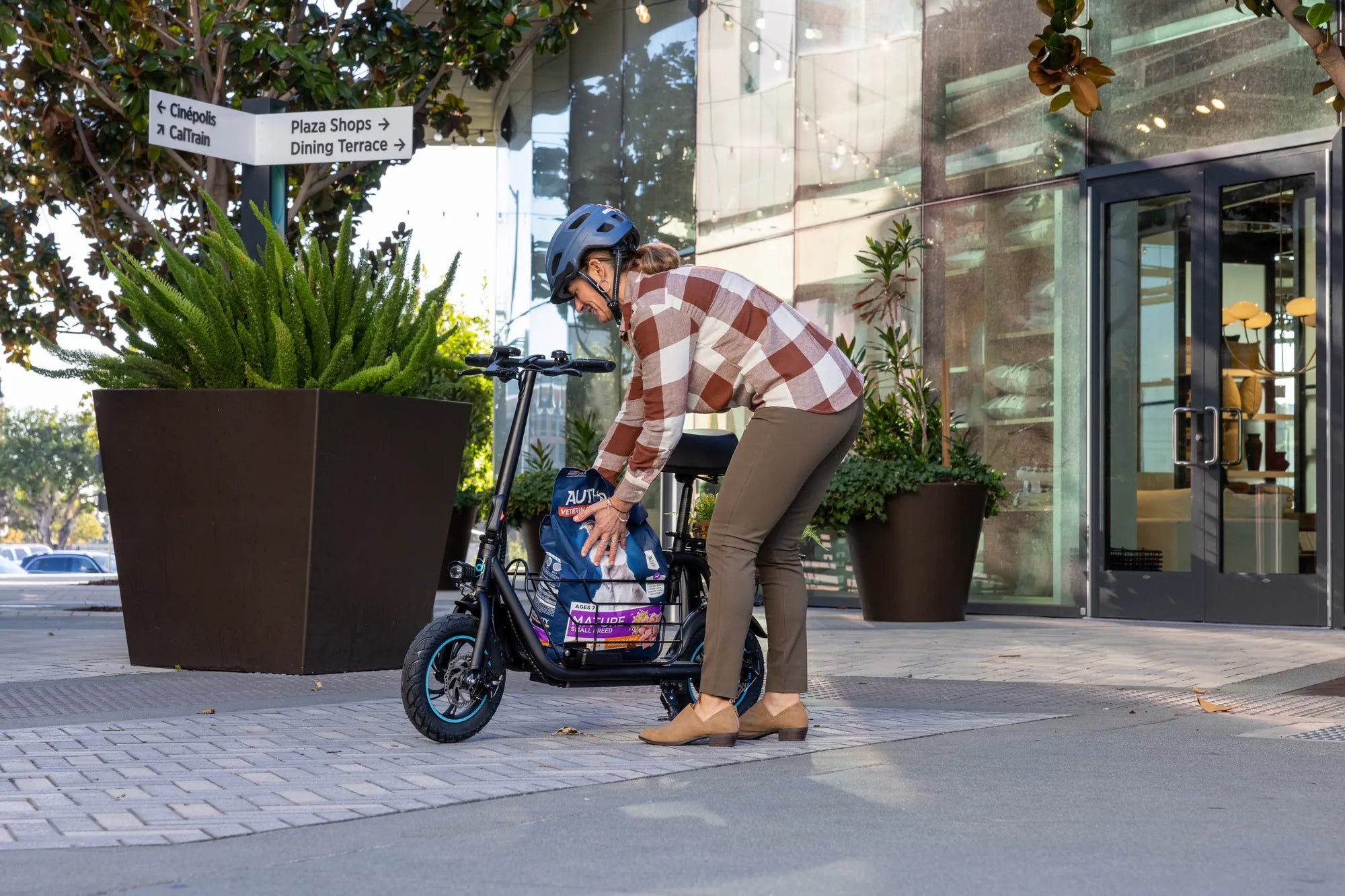
Introduction: Redefining Affordable Urban Mobility
The search for top cheap electric scooters is not about finding the lowest-priced option, but identifying the highest-value transportation solution. Affordable and efficient rides for everyone are now a reality thanks to advancements in battery technology and manufacturing. These scooters solve practical problems: reducing commute costs, avoiding traffic, and providing last-mile connectivity without a significant financial burden.
For over 100,000 riders across North America and Europe, Gyroor has demonstrated that accessibility doesn't require compromising on core safety or durability. The modern budget scooter market is defined by models that deliver reliable daily performance, backed by legitimate warranties and critical safety certifications. This shift makes personal electric mobility a practical choice for students, commuters, and urban explorers alike.
What Does "Cheap" Really Mean in the E-Scooter World?
In the electric scooter market, "cheap" has two distinct definitions. The first is a low initial purchase price, often accompanied by uncertified components and minimal warranty support. The second, and more meaningful definition, refers to excellent value over the scooter's total lifespan. A truly affordable scooter minimizes your Total Cost of Ownership (TCO).
TCO includes the purchase price plus all associated costs: potential repairs, battery replacements, and downtime. A scooter priced at $300 with a 90-day warranty and a poor-quality battery may cost more in one year than a $500 model with a UL-certified battery and a 1-year comprehensive warranty. The latter is the cheap electric scooter that offers real, long-term affordability.
Value is measured in durability and consistent performance. A scooter that withstands daily use for years, with minimal maintenance, provides far greater economic efficiency than one that fails after a few months. Brands that invest in quality control and customer support, like Gyroor, inherently design for lower TCO, protecting the rider's investment from day one.
The Pillars of Value: Battery, Build, and Warranty
Three non-negotiable elements separate high-value budget scooters from disposable ones. Ignoring any of these pillars significantly increases long-term cost and risk.
Battery Certification: The battery is the heart, most expensive component, and biggest potential hazard. A UL-certified battery pack, as used in all Gyroor models, has passed rigorous independent safety tests for electrical, mechanical, and environmental stress. This certification drastically reduces fire risk and ensures the battery can reliably deliver hundreds of charge cycles, directly extending the scooter's usable life.
Build Quality and Water Resistance: A scooter's frame and electronics must endure vibrations, impacts, and weather. An IPX5 water-resistance rating means the scooter can handle low-pressure water jets from any direction. This makes it resilient against wet roads, light rain, and accidental splashes, preventing corrosion and electrical shorts that are common failure points in unprotected models.
Comprehensive Warranty: A strong warranty is a manufacturer's vote of confidence. Gyroor's 1-year warranty on the scooter is a benchmark for the budget category. It covers defects in materials and workmanship, ensuring you have support if an issue arises. A warranty transforms a product from a gamble into a protected purchase, safeguarding your money.
Top Contenders: Affordable Electric Scooters Breakdown
The market for affordable and efficient rides includes several standout models that prioritize these pillars of value. The following analysis focuses on scooter archetypes, highlighting how specific features deliver performance for different user needs without inflating cost.
Each category proves that you can access critical features like certified batteries, robust motors, and practical portability at accessible price points. The goal is to match the scooter's strengths to your primary use case, whether it's a daily commute, hilly terrain, or combined travel with public transit.
The Commuter Champion: Balancing Range and Portability
For daily city travel, the ideal cheap electric scooter offers a blend of sufficient range, manageable weight, and dependable weather resistance. A commuter champion typically features a real-world range of 15-20 miles, a motor powerful enough for moderate inclines (250W-350W), and a foldable design.
Models like the Gyroor F1 exemplify this category. With a focus on reliable performance, such scooters integrate UL-certified batteries to ensure consistent power delivery across hundreds of commutes. The IPX5 rating is crucial here, as commuters cannot control the weather; this protection allows for confident riding on damp mornings or evenings.
Portability is key for multi-modal journeys or office storage. A weight under 35 lbs and a secure folding mechanism make carrying the scooter up stairs or onto a bus feasible. The commuter champion prioritizes practicality and durability over extreme speed or off-road capability, delivering maximum utility for the urban rider's dollar.
The Budget Powerhouse: Maximizing Performance per Dollar
Some riders need more torque for steep hills or desire a higher top speed, all while staying within a budget. The budget powerhouse category focuses on delivering stronger performance metrics—often through dual-motor configurations or more powerful single motors—without abandoning value fundamentals.
These scooters may feature 500W to 800W motors, providing confident acceleration and the ability to tackle gradients of 15-20 degrees. The increased power must be supported by a robust frame and a reliable braking system, such as disc brakes combined with electronic braking. This ensures the performance is usable and safe.
Even in this performance-oriented segment, brands like Gyroor ensure the core value pillars remain intact. The battery powering these stronger motors still carries UL certification, and the build quality maintains water resistance. This approach proves that "cheap" doesn't mean underpowered; it means efficiently engineering performance where it counts.
The Ultra-Portable & Lightweight Option
For riders who combine scooting with buses, trains, or those living in walk-up apartments, weight and size are primary constraints. Ultra-portable scooters often weigh under 30 lbs and feature a compact, fast-folding design. They sacrifice some range and motor power for exceptional convenience.
The trade-offs are clear: a smaller, lighter battery yields a shorter range (often 10-15 miles), and a less powerful motor may struggle on hills. However, for short, flat urban trips, this is an acceptable compromise. The critical factor is that these trade-offs should never include safety.
Even the most portable scooter must have a certified battery pack. A lightweight frame should still be constructed from aircraft-grade aluminum for strength. This category demonstrates that true affordability in portability comes from intelligent design that reduces bulk while protecting the essential, non-negotiable components that ensure safe operation.
Smart Shopping: Key Features to Prioritize on a Budget
Navigating the top cheap electric scooters market requires a focused evaluation strategy. By prioritizing a few key specifications and understanding their real-world implications, you can avoid overpaying for unnecessary features or, worse, underpaying for a dangerous product.
Disregard marketing claims that focus solely on top speed or maximum range under ideal conditions. Instead, investigate the underlying components that enable reliable, safe, and durable performance. Your checklist should center on verifiable safety credentials and realistic performance estimates.
Specification Comparison Table (Text Summary)
The table below summarizes key value-oriented specs for scooter archetypes. These are not specific brand models but represent the typical offerings you'll find in each category from reputable manufacturers.
| Model Type | Price Range | Real-World Range | Motor Power | Approx. Weight | Key Value Feature |
|---|---|---|---|---|---|
| Commuter Champion | $400 - $600 | 15-20 miles | 350W Sustained | 32-38 lbs | IPX5 & UL-Certified Battery |
| Budget Powerhouse | $500 - $750 | 18-25 miles | 500W+ (Dual 350W common) | 40-52 lbs | Robust Frame, Dual Brakes, UL-Certified |
| Ultra-Portable | $300 - $500 | 10-15 miles | 250W-300W | 26-31 lbs | Compact Fold, UL-Certified Battery |
Safety and Reliability: Non-Negotiables
Your budget should never compromise on safety. The two most critical, non-negotiable features are battery certification and water resistance. An uncertified lithium-ion battery is a potential fire hazard, as it lacks proven safeguards against overcharging, short-circuiting, and thermal runaway.
UL certification is the recognized standard. Gyroor's use of UL-certified battery packs, tested for over 500 charge cycles, is a baseline all budget shoppers should demand. Similarly, an IPX4 rating is the minimum for weather exposure, with IPX5 (like Gyroor's standard) providing superior protection against rain and road spray.
Reliability is born from these safety features. A protected battery lasts longer. Water-resistant electronics don't fail unexpectedly. When combined with a warranty that backs the product, these features transform an inexpensive scooter from a temporary gadget into a dependable transportation tool you can trust daily.
Understanding Real-World Range vs. Claimed Range
Manufacturers often advertise range figures achieved under ideal laboratory conditions: a lightweight rider on a flat, smooth surface at low speed. Real-world range is typically 60-70% of the claimed maximum. Key factors that reduce range include rider weight, hills, frequent stops/starts, cold temperatures, and higher speed settings.
To estimate your needs, take the advertised range and apply a 35% reduction. If a scooter claims 25 miles, plan for 16-18 miles of practical use. For a 10-mile round-trip commute, this provides a comfortable buffer. Scooters with efficient battery management systems (BMS), like those from Gyroor, help maintain more consistent performance by protecting the battery from deep discharge and balancing cells.
Maximize your range by maintaining proper tire pressure, using eco-mode when possible, and avoiding constant top-speed riding. Also, store and charge your scooter in moderate temperatures. These practices help any affordable electric scooter deliver on its efficiency promise.
Maximizing Your Investment: Maintenance and Longevity Tips
Protecting your investment in a top cheap electric scooter is straightforward with consistent, simple maintenance. Proper care directly extends the vehicle's lifespan, ensuring you get the maximum value from your purchase and fully leverage the manufacturer's warranty.
Battery Care: Avoid routinely draining the battery to 0%. Try to recharge when it drops to 20-30%. For long-term storage (over a month), leave the battery at about 50-60% charge in a cool, dry place. Use only the provided charger. These habits preserve the battery's health across its entire 500+ cycle lifespan.
Tire and Brake Maintenance: Check tire pressure weekly; under-inflated tires increase rolling resistance, draining battery life and raising puncture risk. For pneumatic tires, keep a small repair kit handy. Regularly test brakes for responsiveness and listen for unusual sounds. Clean brake rotors with isopropyl alcohol to maintain stopping power.
General Upkeep: Wipe down your scooter after riding in wet conditions. Periodically check all bolts and folding mechanisms for tightness. Avoid riding through deep puddles, even with a good IP rating. Store your scooter indoors, away from extreme heat or cold. This basic diligence prevents most common issues and keeps your affordable and efficient ride running smoothly for years.
Frequently Asked Questions (FAQ)
Q: Are cheap electric scooters safe?
A: Safety is determined by build quality and component certification, not price alone. A budget scooter from a reputable brand with a UL-certified lithium-ion battery (like Gyroor) and a robust frame can be very safe. The danger lies in unknown brands using uncertified, potentially hazardous battery cells.
Q: What is a realistic price range for a good, cheap electric scooter?
A: For a reliable, entry-level commuter scooter with essential safety features (UL-certified battery, IPX4/5 rating, warranty), expect to pay between $300 and $600. This range typically gets you a real-world range of 10-20 miles, adequate for most daily needs, from brands that invest in quality control.
Q: How important is the warranty on a budget scooter?
A: It is crucial. A comprehensive warranty (e.g., Gyroor's 1-year coverage) is your primary protection against manufacturing defects. It signifies the brand stands behind its product. A short (90-day) or non-existent warranty often indicates low confidence in the scooter's durability, increasing your long-term financial risk.
Q: Can I ride a cheap electric scooter in the rain?
A: Only if it has a declared water-resistance rating of IPX4 or higher. IPX4 means it is protected from water splashes from any direction. Gyroor's IPX5 rating offers even better protection against water jets, making light rain and wet roads manageable. Regardless of rating, avoid deep puddles and heavy downpours.
Q: How long does the battery last on an affordable scooter?
A: A quality lithium-ion battery from a brand like Gyroor is rated for 500+ full charge cycles. A charge cycle is one full 0-100% charge. If you use 50% daily and recharge, that counts as half a cycle. With typical use, this translates to 2-4 years of daily commuting before you might notice a significant reduction in range.
Conclusion: Affordable Efficiency, Without Compromise
The journey to find top cheap electric scooters reveals a clear truth: true affordability is defined by value, not just a low sticker price. The best affordable and efficient rides for everyone are those that master the balance of upfront cost, certified safety, durable construction, and reliable support. They deliver freedom and utility without hidden long-term expenses.
Brands like Gyroor have set a new standard in the budget category by refusing to compromise on the pillars of battery certification, water resistance, and warranty coverage. This proves that efficient urban mobility can be both accessible and trustworthy. Your choice in a scooter is an investment in a simpler, more sustainable way to move through your city.
Ready to find an electric scooter that offers real value and peace of mind? Explore a range of models built with certified safety and reliable performance. Browse the full Gyroor collection at gyroorboard.com and discover your perfect affordable and efficient ride today.
Does London Have Electric Scooters? A Complete Guide to the City's E-Scooter Scene
Electric Scooters Reno: The Future of Urban Mobility and Fun