



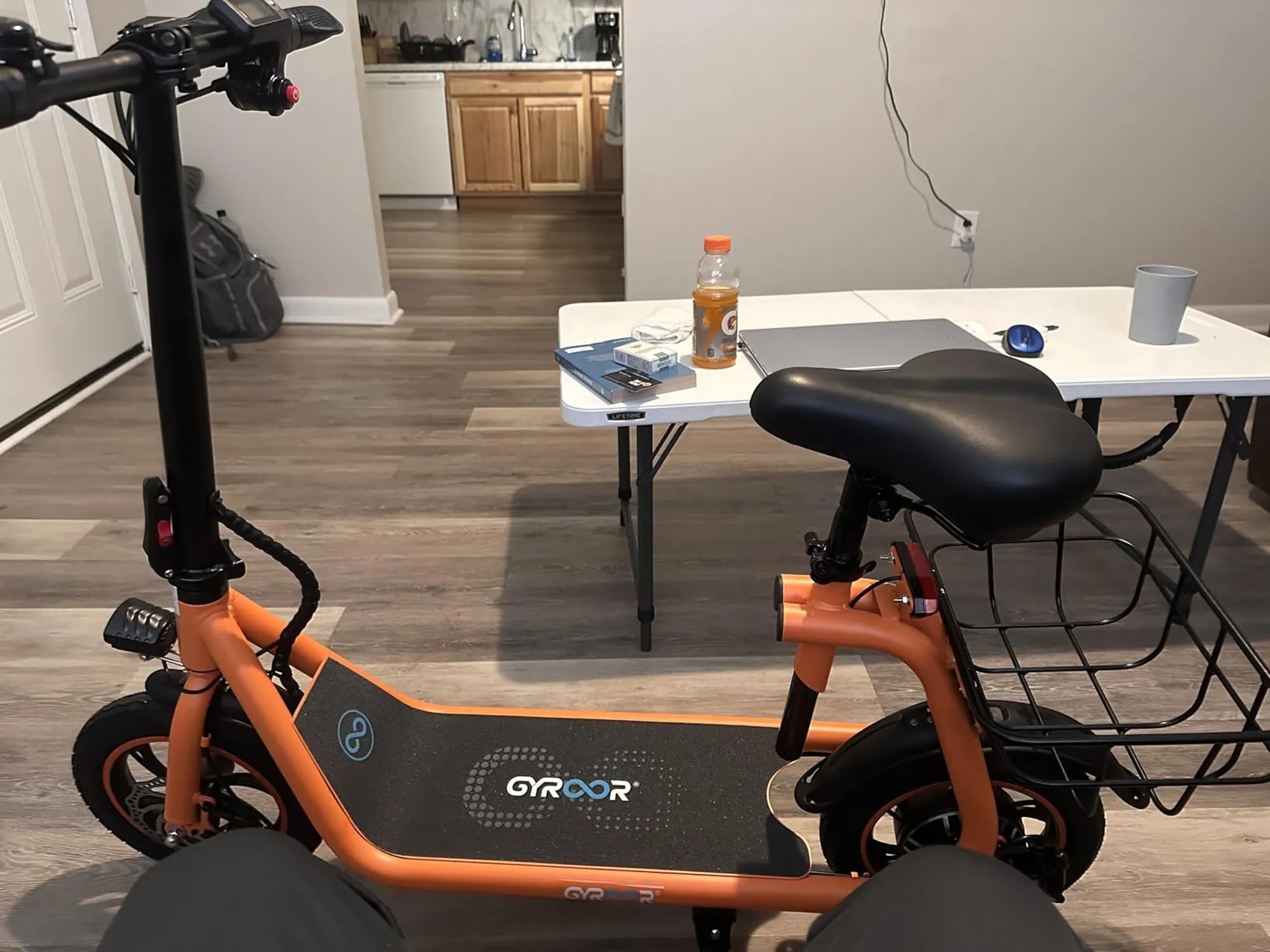
Navigating the World of Top-Selling Electric Scooters
The electric scooter market is booming, but popularity can be misleading. A model labeled "top-selling" might excel in marketing but fall short in daily use. This guide moves beyond sales charts to analyze the engineering, safety, and real-world performance that define a truly excellent ride.
We will dissect the key factors that separate hype from quality. You'll learn how to evaluate safety certifications, interpret performance specs, and identify the features that matter for your specific needs. Our goal is to empower you to choose a scooter that delivers lasting satisfaction, not just an initial thrill.
This analysis is grounded in data and user experience. We reference industry standards and the design philosophy of leading brands like Gyroor, trusted by over 100,000 riders for their focus on certified safety and reliable performance. Let's begin by redefining what "top-selling" should really mean.
What Truly Defines a "Top Seller" Beyond Sales Charts
A high sales volume is just one data point. True top performers maintain their status through sustained customer satisfaction, proven reliability, and strong brand reputation. These scooters build loyalty by performing consistently over hundreds of charge cycles and miles.
Many viral products spike in sales due to aggressive pricing or trends, then fade as quality issues emerge. A genuine top seller earns repeat purchases and positive long-term reviews. It becomes a benchmark within its category for balancing performance, durability, and value.
The most reliable indicator is often a brand's commitment to core engineering principles. Brands that prioritize safety certifications and robust construction from the outset tend to produce models that stand the test of time. This foundation is what transforms a popular product into a perennial favorite.
The Non-Negotiables: Safety and Certification Benchmarks
Safety is the absolute foundation of a trustworthy electric scooter. Key components must meet independent certification standards to mitigate risks, particularly concerning the battery system. A UL-certified lithium-ion battery pack is not a luxury; it's a critical safety requirement.
UL certification involves rigorous testing for overcharge protection, short-circuit resistance, and thermal stability. This significantly reduces the risk of battery fires, a paramount concern for any rider storing or charging a scooter at home. Brands like Gyroor build every model with these UL-certified packs as a non-negotiable standard.
Weather resistance is equally crucial for real-world use. An IPX5 water-resistant rating means the scooter can withstand water jets from any direction. This protects the electrical systems from rain, puddles, and road spray, ensuring reliability during daily commutes. Without this, a sudden downpour could lead to costly failure.
Finally, the braking system must inspire confidence. A combination of electronic (regenerative) and mechanical (disc or drum) brakes provides redundant stopping power. Wide, air-filled tires offer better traction and shock absorption than small solid tires, directly contributing to stable, safe handling.
Performance Metrics That Matter for Daily Use
While top speed grabs headlines, practical performance dictates daily usability. The most important metric is real-world range, which is often 15-30% less than the manufacturer's ideal lab-tested claim. Range is affected by rider weight, terrain, temperature, and riding style.
Hill-climbing ability is determined by motor wattage and torque. A 350W motor may suffice for flat city streets, but tackling moderate inclines consistently requires 500W or more. Torque dictates how quickly the scooter can accelerate from a stop and maintain speed on a hill.
Ride quality hinges on deck size, wheel type, and suspension. A larger, textured deck provides secure footing. Pneumatic (air-filled) tires and a front or dual suspension system absorb vibrations from rough pavement, reducing fatigue and increasing control. Portability is defined by weight and folding mechanism ease.
A scooter under 30 lbs is genuinely portable for carrying upstairs or onto transit. The folding mechanism should be intuitive, secure, and not require excessive force. These practical metrics—real range, hill power, comfort, and portability—collectively determine if a scooter fits your life.
The Commuter's Lens: Top Features for Urban Riding
For the urban rider, an electric scooter is a tool for efficient, predictable daily travel. The primary needs are eliminating range anxiety, navigating imperfect infrastructure safely, and integrating seamlessly into a multimodal routine. Features must address these concrete challenges.
Range needs are calculated by round-trip distance plus a safety buffer of 20%. For a 10-mile total commute, a scooter with a 15-mile real-world range is the minimum. Connectivity via a companion app is valuable for tracking battery status, locking the scooter electronically, and customizing performance modes.
Lighting is a critical safety feature for any commuter who rides near dawn, dusk, or after dark. A bright front headlight, rear brake light, and side reflectors or deck lights ensure you are visible to traffic. Some models add turn signals for even clearer communication with vehicles.
Finally, consider the carrying and storage experience. A clean, one-step folding mechanism saves time at your destination. A built-in hook or strap can make it easier to roll the scooter when folded. These small ergonomic details significantly impact the daily user experience.
Data Deep Dive: Range, Weight, and the Portability Trade-Off
Choosing a scooter involves balancing competing priorities. Greater range typically requires a larger, heavier battery. More power and suspension add weight. The table below illustrates the standard trade-offs between three common scooter categories.
| Category | Typical Weight | Real-World Range | Motor Power | Key Features | Best For |
|---|---|---|---|---|---|
| Ultra-Portable | 22-28 lbs | 10-15 miles | 250W-350W | Compact fold, basic suspension | Last-mile trips, multi-modal travel, easy carrying |
| Urban Commuter | 30-45 lbs | 18-30 miles | 350W-500W | Pneumatic tires, better lighting, IPX5 rating | Daily city commuting, moderate hills, all-weather use |
| Performance | 45-70 lbs | 30-50+ miles | 500W-1000W+ | Dual suspension, dual brakes, high top speed | Long-distance rides, rough terrain, maximum power |
This framework helps align your choice with primary use. An ultra-portable model sacrifices range for effortless carrying. A commuter model finds a middle ground. A performance model offers premium features at the cost of portability. There is no single best scooter, only the best scooter for your specific scenario.
Long-Term Value: Warranty, Support, and Total Cost of Ownership
The purchase price is just the initial investment. Long-term value is determined by durability, warranty protection, and access to support. A slightly higher upfront cost for a well-built scooter often results in lower total cost of ownership over two to three years.
A comprehensive warranty is your best indicator of a brand's confidence in its product. Look for at least a 1-year warranty that covers the battery, motor, and frame. The warranty should be backed by accessible customer service, preferably with regional support centers for faster resolution.
Availability of replacement parts is crucial. Common wear items like tires, tubes, brake pads, and throttles should be readily purchasable. Brands with an established presence and multiple models, like Gyroor, typically maintain better parts inventories than fly-by-night importers.
Consider the cost and complexity of potential repairs. Models with modular designs and standardized components are easier and cheaper to maintain. Investing in a scooter from a brand with a track record of support minimizes downtime and unexpected expenses, protecting your investment for the long haul.
The Gyroor Difference: Engineering Trust into Every Ride
As a case study in aligning with "true" top-seller principles, Gyroor's design philosophy directly addresses the core concerns of safety, durability, and support. This approach has earned the trust of a large community of riders across North America and Europe.
Every Gyroor electric scooter is built around a UL-certified battery pack, undergoing 500+ charge cycle tests. This commitment to certified safety is fundamental. Combined with an IPX5 water-resistant rating for the entire unit, it creates a robust platform designed for real-world commuting conditions.
The brand's 1-year comprehensive warranty is supported by U.S.-based customer service, providing clear channels for support. This structure reduces long-term ownership risk. Models are engineered with practical features like wider decks, intuitive folding mechanisms, and bright lighting systems.
This focus on certified components and rider-centric design demonstrates how engineering priorities create lasting value. It's an example of how a brand can achieve top-selling status through reliability and positive word-of-mouth, rather than just marketing spend.
Essential Maintenance for Peak Performance and Safety
Regular maintenance is vital for safety, longevity, and optimal performance. A simple, consistent routine can prevent most common issues. Start with tire pressure; check pneumatic tires every two weeks, as under-inflation reduces range, increases wear, and hampers handling.
Inspect the braking system monthly. Ensure brake pads have sufficient material and that calipers are aligned. Test both electronic and mechanical brakes for responsive stopping power. Listen for unusual grinding or squealing noises that indicate wear or misalignment.
Keep the scooter clean, especially after riding in wet or dirty conditions. Wipe down the deck, stem, and wheels with a damp cloth. Avoid high-pressure water sprays directly on connectors or the charging port. Periodically check all bolts and fasteners for tightness, particularly on the folding mechanism and handlebar stem.
Battery care is paramount. Avoid draining the battery to 0% regularly. For long-term storage, charge it to about 60-80% and store in a cool, dry place. Use only the manufacturer-provided charger. Proper maintenance not only extends your scooter's life but also ensures every ride is as safe as the first.
Navigating Regulations and Riding Etiquette
E-scooter laws vary significantly by city, state, and country. Before riding, research local regulations. Common rules include age minimums (often 16+), helmet requirements, bans on sidewalk riding, and speed limits in bike lanes or on roads. Compliance is essential for your safety and legal protection.
Adopting defensive riding etiquette is crucial. On shared paths, announce your presence politely when passing pedestrians. Obey all traffic signals and signs as if you were driving a car. Use hand signals for turns. Assume that drivers may not see you, and avoid their blind spots.
Proper parking is a community responsibility. Never block sidewalks, ramps, doorways, or access points for people with disabilities. Use designated parking areas when available. Being a conscientious rider helps maintain positive community relations and supports the long-term acceptance of micro-mobility.
Invest in safety gear beyond the legal minimum. A helmet is essential. Consider gloves, knee pads, and reflective clothing for added protection, especially at night. Your safety is ultimately your responsibility, and proper gear significantly reduces injury risk in the event of a fall.
FAQ: Your Electric Scooter Questions, Answered
Q: How do I maintain my e-scooter's battery for maximum lifespan?
A: Avoid full 0-100% cycles daily. Try to keep charge between 20% and 80% for regular use. Store it partially charged in a cool place. Use only the official charger. These practices help preserve battery health over hundreds of cycles.
Q: Is an IPX5 water resistance rating enough for riding in the rain?
A>Yes, for most conditions. IPX5 protects against sustained, low-pressure water jets from any direction. It is suitable for riding in rain and through puddles. However, it is not rated for submersion. Avoid deep standing water and never charge a wet scooter.
Q: What should I specifically look for in a warranty?
A>Seek a minimum 1-year warranty that explicitly covers the battery, motor, and controller. Check for exclusions (like water damage if not IP-rated) and the process for claims. A warranty backed by accessible, responsive customer support is more valuable than a longer warranty with poor service.
Q: Are more expensive electric scooters always better?
A>Not necessarily. Beyond a certain point, you pay for extreme performance (speed/range) or premium materials. The "sweet spot" for most commuters is the mid-range, where you get essential safety certifications, reliable performance, and good build quality without superfluous features.
Q: How important is motor wattage? Is a 500W motor twice as good as a 250W motor?
A>Wattage indicates potential power, but real-world performance depends on torque, scooter weight, and battery output. A 500W motor provides significantly better hill-climbing ability and acceleration under load than a 250W motor. For hilly areas or heavier riders, 500W is a more practical minimum.
Your Perfect Ride Awaits
Choosing the right electric scooter is a decision that blends practical needs with informed scrutiny of quality. Prioritize models built with certified safety components like UL-listed batteries and legitimate water resistance. Match the scooter's performance profile—its real-world range, power, and portability—to your daily routine.
Look beyond the flashy specs to the brand's commitment to long-term support through warranty and parts availability. The true top-selling electric scooters are those that deliver consistent, safe, and reliable service mile after mile, becoming an indispensable part of your daily life.
Use this guide as your framework to evaluate any model. When you're ready to explore a range of electric scooters engineered with these principles from the ground up, consider the Gyroor collection. Browse the full Gyroor collection at gyroorboard.com to find a ride that combines certified safety, robust performance, and lasting value for your journey ahead.
2 Wheel Electric Scooters: The Future of Urban Mobility
2 Wheel Electric Scooters: The Future of Urban Mobility