



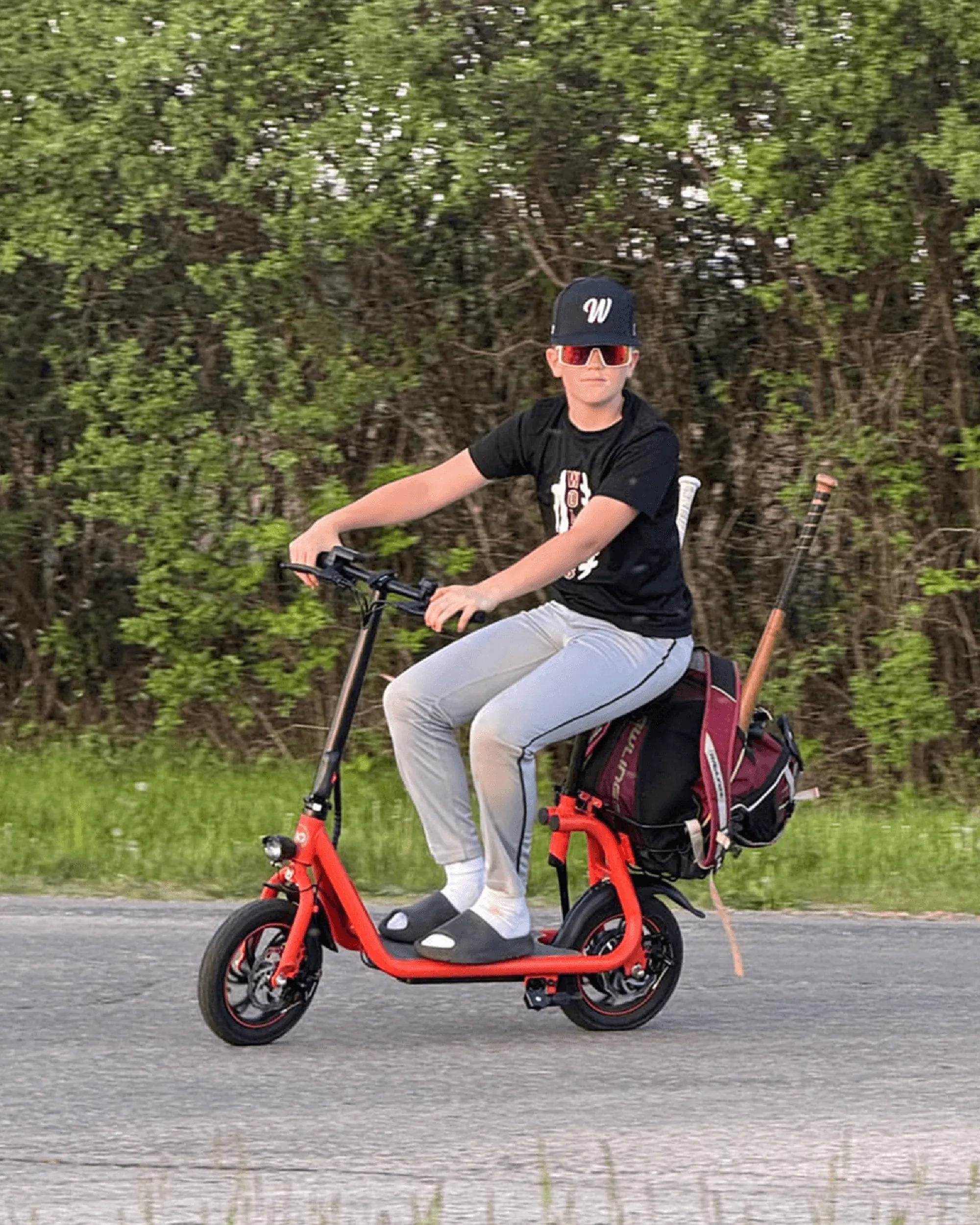
Forget the trunk. The most practical cargo space on three wheels isn't a car—it's the humble tricycle rear basket. This unassuming accessory is the workhorse that redefines utility cycling, turning a simple ride into a legitimate transport solution. Whether you're running urban errands, managing light deliveries, or heading out for a recreational haul, the right rear basket unlocks a new level of freedom and function. This comprehensive guide will detail everything you need to know: from selecting the perfect basket for your needs to installing it correctly, exploring its versatile uses, and understanding the engineering that makes a quality basket, like those from Gyroor, a worthwhile investment for over 100,000 riders.
Why a Rear Basket is a Game-Changer for Tricycle Owners
The primary benefit of a tricycle rear basket is hands-free, secure cargo transport. Unlike dangling bags from handlebars or balancing parcels on a lap, a rear basket provides a dedicated, stable platform. This fundamental advantage liberates the rider, making trips for groceries, library books, or even a small pet not just possible, but effortless and safe.
Positioning weight over the rear axle, particularly on a delta-style trike (two wheels in back), significantly improves stability compared to front-loading. This placement lowers the center of gravity and minimizes the impact on steering, which is crucial for safe handling, especially for seniors or those carrying delicate items. The basket becomes an extension of the trike's stable geometry.
This utility serves distinct user personas perfectly. Parents can securely carry a diaper bag and park toys. Seniors appreciate the ease of transporting groceries without strain. Delivery workers for local cafes or pharmacies find it an ideal tool for last-mile logistics. Eco-conscious shoppers can ditch the car for most weekly hauls, reducing their carbon footprint one basket-load at a time.
Key Considerations Before Choosing Your Basket
Selecting a tricycle rear basket requires evaluating several key factors to ensure it meets your specific needs. The first is mounting type. Frame-mounted baskets attach directly to the trike's rear frame or axle, offering the most robust and stable connection for heavier loads. Seatpost-mounted versions are more common on standard bicycles adapted to trikes but may offer less stability for high weights.
Material and durability are paramount. Common materials include powder-coated steel (strong, heavy, rust-resistant), aluminum (lightweight, corrosion-resistant), coated wire mesh (excellent ventilation, good strength), and molded plastic (lightweight, easy to clean). The choice impacts longevity, weight capacity, and suitability for different cargo types, like wet groceries or gardening tools.
Always verify the manufacturer's stated weight capacity and the basket's internal dimensions. A capacity of 40-60 lbs is standard for quality baskets, but you must also consider your trike's total recommended cargo limit. Dimensions determine practicality—a taller, narrower basket might be better for bags of soil, while a wider, shallower one is ideal for bulky items like paper towels.
Installation and Compatibility: Ensuring a Perfect Fit
Proper installation is critical for safety and performance. Most baskets come with a universal mounting bracket kit, but for optimal fit and stability, a model-specific bracket designed for your trike is superior. These brackets account for unique frame geometries, weld points, and accessory mounts, ensuring a rock-solid connection.
The installation process typically requires basic tools: hex keys, wrenches, and sometimes a screwdriver. The general steps involve positioning the bracket on the trike's rear frame, securing it with provided bolts (often using locknuts to prevent loosening from vibration), and then attaching the basket to the bracket. Always follow the manufacturer's instructions precisely.
For owners of Gyroor electric trikes, checking compatibility is straightforward. Consulting the official accessory guide or customer support ensures the selected tricycle rear basket and its mounting system are engineered to integrate seamlessly with the trike's frame, preserving the clean design and not interfering with the motor, battery, or lighting systems.
The Gyroor Advantage: Engineered for Reliability and Load
Gyroor's design philosophy—emphasizing durability, safety, and user-centric innovation—extends fully to its accessories. A Gyroor tricycle rear basket isn't an afterthought; it's a component engineered to complement the trike's stable ride and powerful motor. By properly managing cargo weight distribution, it enhances the vehicle's core function as a reliable personal transporter.
The brand's commitment to UL-certified battery safety and IPX5 water-resistant designs mirrors the robustness expected from its cargo solutions. Just as riders trust Gyroor's 1-year warranty and 500+ charge cycle batteries, they can depend on accessories built to the same standard of quality and longevity, supporting a lifestyle of frequent, load-bearing use.
Material and Build Quality for Long-Term Use
Gyroor baskets are constructed with longevity in mind. This typically involves high-tensile, powder-coated steel frames that resist chipping, rust, and UV degradation. Critical stress points, such as where the basket meets the mounting plate or at corner joints, feature reinforced welding or additional gusseting to prevent failure under load.
The finish is not merely cosmetic. A high-quality powder coat provides a durable barrier against the elements, whether it's road salt in winter or frequent exposure to sun and rain. This attention to material science contrasts sharply with generic, thinly coated alternatives that may rust quickly or deform under moderate weight, compromising safety and aesthetics.
Secure Mounting and Weight Distribution
A basket is only as good as its connection to the trike. Gyroor's mounting systems are designed for a secure, rattle-free fit. Using wider bracket plates and multiple attachment points distributes clamping force and shear stress across a larger area of the frame, preventing damage and maintaining integrity even on rough pavement or curbs.
This secure mounting is essential for handling. A poorly attached basket can shift, causing unpredictable weight transfer that affects steering and braking. Gyroor's engineered fit ensures the load remains precisely where intended—low and centered over the rear axle—preserving the trike's inherent stability and giving the rider confidence whether the basket is empty or fully loaded.
Beyond the Groceries: Creative Uses for Your Rear Basket
The utility of a tricycle rear basket extends far beyond the supermarket run. For pet owners, it can securely hold a medium-sized pet carrier for stress-free vet visits or park trips. Gardeners and landscapers can haul bags of mulch, pots, and tools directly to their worksite, turning the trike into a mobile gardening station.
For recreational users, it's the perfect picnic companion. Carry a cooler, blanket, and games to the park with ease. It can also serve as a mobile workshop for craft fairs or farmers' markets, transporting supplies and inventory. For the everyday rider, it's a secure spot for a backpack, purse, or laptop bag, keeping personal items accessible but not in the way.
Securing loose items is key for these varied uses. A stretchable cargo net is indispensable for containing odd-shaped objects. Bungee cords with hooks can latch onto the basket's grid. Some riders add a removable, waterproof liner or a dedicated bag with a closure that sits inside the basket, combining open accessibility with contained storage.
Comparison: Rear Basket vs. Alternative Cargo Solutions
Choosing the right cargo system depends on your primary needs. The tricycle rear basket sits in a sweet spot of convenience, capacity, and cost. To make an informed decision, it's helpful to compare it directly to other common options. The following table outlines the key trade-offs.
| Solution | Best For | Pros | Cons |
|---|---|---|---|
| Tricycle Rear Basket | Everyday errands, bulky items, quick access. | Easy loading/unloading, high visibility of contents, versatile for odd shapes, often most affordable. | Contents exposed to weather, requires nets/cords to secure loose items. |
| Front Basket | Light, frequently accessed items (purse, phone). | Items are in sight and easy to reach while riding. | Can negatively affect steering balance, lower weight capacity, limited size. |
| Pannier Bags/Side Baskets | Heavy, dense loads (groceries, books), weather-sensitive items. | Lower center of gravity, weather-protected, can be easily removed and carried. | Can be more expensive, less convenient for very large/bulky items, may require specific rack. |
| Cargo Trailer | Maximum capacity, large/heavy loads (multiple kids, big shopping trips). | Highest weight & volume capacity, keeps load completely separate from trike. | Most expensive, cumbersome to store/maneuver, affects trike length and parking. |
As shown, the rear basket offers an ideal balance, providing substantial capacity and unmatched accessibility without the complexity or high cost of a trailer or the handling compromises of a front basket.
Maintenance and Care for Your Tricycle Basket
Maintaining your tricycle rear basket ensures it lasts for years. Regular care is simple but effective. Periodically inspect the basket and its mounting hardware for signs of wear, such as rust spots, paint chips, or loose bolts. Tightening bolts every few months counters vibration-induced loosening, a common issue on any vehicle.
Cleaning is straightforward. For metal wire baskets, a rinse with a garden hose and a wipe-down with a mild soap solution removes dirt and grime. Avoid abrasive pads that can damage protective coatings. For plastic baskets, the same gentle cleaning applies. Ensure the basket is dry before storing wet items long-term to prevent moisture-related corrosion.
During the off-season or if the trike is stored outdoors, consider applying a silicone-based protectant to metal parts to add an extra layer of moisture resistance. For long-term storage, removing the basket (if easily detachable) and storing it indoors can prolong its life. These simple steps protect your investment and maintain its appearance and functionality.
Safety Tips for Hauling Cargo on Your Trike
Safety is paramount when using a tricycle rear basket. First, never exceed the basket's or the trike's stated weight capacity. Overloading can stress the frame, damage the mounting points, and severely compromise handling and braking performance, especially on electric models where speed is a factor.
Always secure your load. Use cargo nets, bungee cords, or straps to prevent items from shifting or falling out. An unsecured load can become a projectile hazard or cause a sudden weight shift that leads to a tip-over. Distribute weight evenly within the basket, placing heavier items at the bottom and centered.
Be mindful of the changed dimensions of your vehicle. A loaded basket makes the trike wider and longer. Allow extra space when passing through gates, next to parked cars, or in bike racks. Practice braking and turning at low speed with a full load to understand how the trike's handling characteristics change before heading into traffic.
FAQ: Your Tricycle Basket Questions, Answered
Q: What is the typical weight limit for a tricycle rear basket?
A: Robust, well-built baskets like those offered by Gyroor typically support 40 to 60 pounds (18-27 kg). However, you must also consult your trike's owner manual for the vehicle's total recommended cargo limit, which includes the rider's weight.
Q: Can I install a basket on any adult tricycle?
A> Most adult trikes with a rear frame can accommodate a basket, but compatibility is not universal. It depends on the mounting bracket design and the trike's frame geometry. For the best fit and safety, a model-specific kit from the trike manufacturer (like Gyroor) is always recommended.
Q: How do I keep my belongings from bouncing out?
A> Use a stretch cargo net designed for baskets, criss-cross bungee cords, or install a removable liner bag with a drawstring or zipper closure. Many quality baskets, including Gyroor's, feature integrated tie-down points or loops to anchor these securing devices.
Q: Does adding a basket affect the trike's performance or battery life?
A> The weight of the empty basket itself has a negligible impact. However, carrying heavy loads will require more motor effort from electric trikes, which can reduce the per-charge range slightly. This is a fundamental principle of any electric vehicle—more weight requires more energy.
Q: Are rear baskets weatherproof?
A> The baskets themselves are typically weather-resistant but not waterproof. Contents will get wet in rain unless protected. For weather-sensitive items, use a waterproof bag or liner inside the basket, or consider a waterproof pannier bag as an alternative for those trips.
Elevate Your Ride with the Right Hauling Partner
The tricycle rear basket is more than an add-on; it's the component that fully realizes your trike's potential as a practical, car-replacing vehicle. It provides the freedom to transport what you need, when you need it, with stability and ease. The choice between a generic accessory and an engineered solution from a trusted brand like Gyroor is a choice between mere convenience and reliable, long-term utility backed by durable construction, secure integration, and proven customer support.
View your trike not just as a ride, but as a complete transport system. The right basket is the final, crucial piece that ties it all together. For riders who value quality, safety, and design coherence, selecting a compatible Gyroor accessory ensures your trike is equipped to handle daily life's demands, load after load, for years to come.
Ready to transform your trike into the ultimate utility vehicle? Explore durable, trike-tested rear baskets and other premium accessories designed for seamless integration. Browse the full Gyroor collection at gyroorboard.com.
Dirt Bike for 16 Year Old Boy: The Ultimate 2024 Buying Guide
Dirt Bike for 16 Year Old Boy: The Ultimate 2024 Buying Guide