

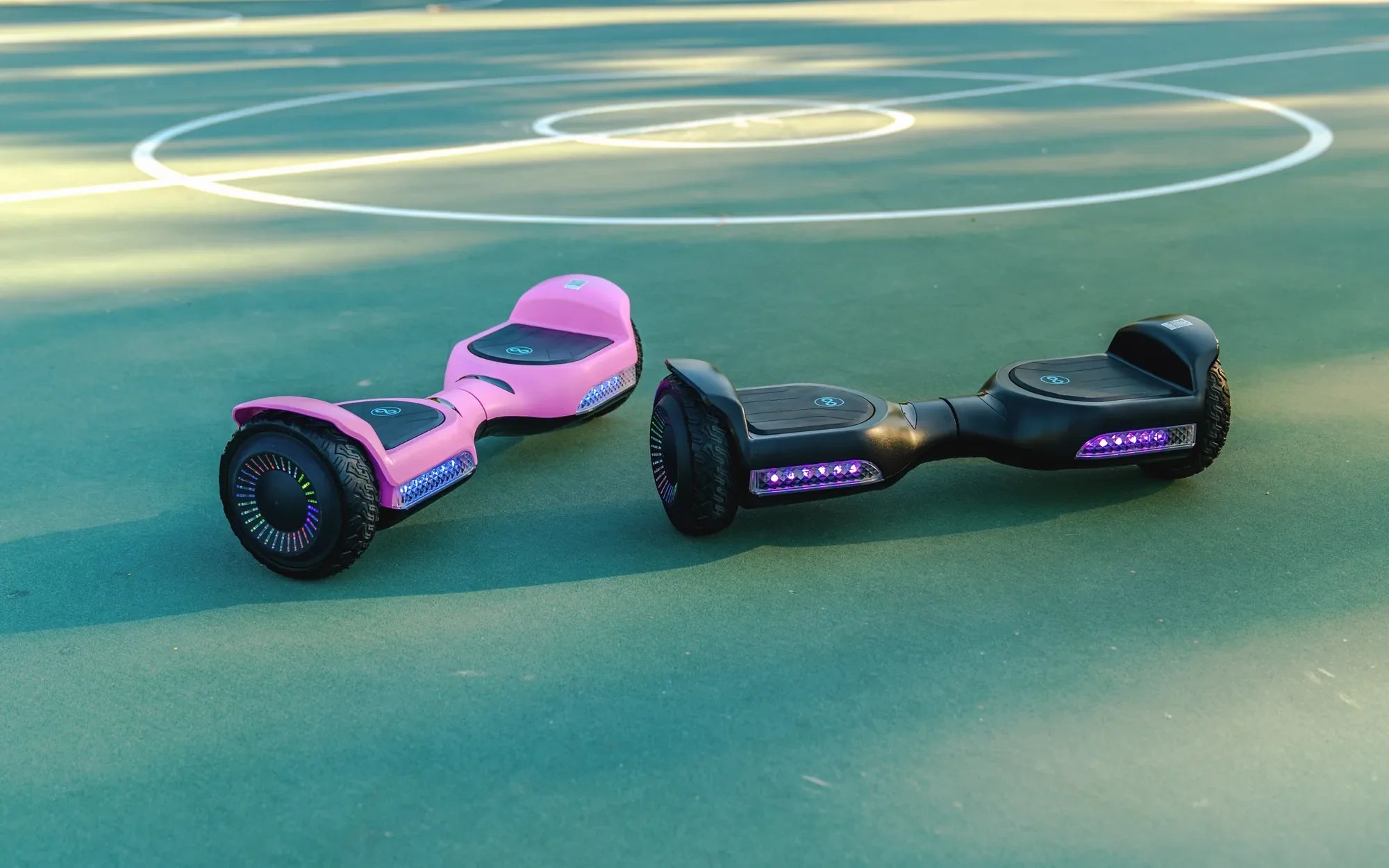
Ignoring your self-balancing scooter's weight limit isn't just about a slower ride—it's a direct gamble with your safety and the scooter's lifespan. This critical specification, often glanced over, determines everything from battery range and motor health to the very real risk of a sudden shutdown while riding. The weight limit on self balancing scooter is a non-negotiable engineering parameter, not a gentle suggestion. In this guide, you'll learn exactly why the limit exists, how to calculate your true load, what happens when you exceed it, and how to select a scooter that delivers reliable, safe performance for your needs.
Why the Scooter's Weight Limit is More Than Just a Number
The manufacturer's stated maximum weight is the cornerstone of your scooter's design integrity. It represents the calculated point where all components—motors, battery, frame, and tires—are engineered to work safely and efficiently in harmony. Treating this limit as a flexible guideline compromises this engineered balance.
For brands like Gyroor, which serves over 100,000 riders, establishing and adhering to clear, tested weight limits is a fundamental part of product reliability and rider trust. These limits are derived from rigorous stress testing, ensuring that every model performs as advertised throughout its warranty period and beyond. The weight limit on self balancing scooter models is a promise of performance under specific conditions.
Understanding this limit protects your investment. Riding within the specified range ensures you get the advertised speed, range, and hill-climbing ability. More importantly, it safeguards the sophisticated electronics and mechanical parts from premature failure, which is rarely covered under warranty if caused by overloading.
Ultimately, this number is your first and most important check for compatibility. Before considering speed or range, verifying that the scooter can safely support you and anything you plan to carry is the essential first step in choosing the right personal transporter.
Decoding the Weight Limit: Safety, Performance, and Longevity
The published weight limit encapsulates three interdependent pillars: rider safety, advertised performance, and product longevity. Each pillar fails if the limit is ignored, turning a fun device into a potential hazard.
Safety is the paramount concern. Self-balancing scooters rely on precise gyroscopic sensors and powerful motors to maintain stability. Exceeding the load strains these systems, increasing the risk of a motor cut-out or a delayed response, which can lead to a loss of balance and a fall. The structural integrity of the frame and axle is also tested beyond its design point.
Performance metrics like top speed, acceleration, and range are all calibrated for the maximum load. A scooter carrying a rider at its limit will achieve these figures under ideal conditions. However, any additional weight or environmental factor like a hill will cause performance to drop sharply. You may not reach top speed, and your range could be halved.
Longevity refers to the operational life of the scooter's core components. Motors and batteries operating continuously near or above their thermal and electrical design limits will degrade much faster. This means a battery that might last 500+ charge cycles could see its capacity diminish in half that time, and motors may burn out prematurely.
The Engineering Behind the Limit: Motors, Batteries, and Frame
The limit is a sum of its parts. Dual hub motors must generate sufficient torque to both propel the rider and constantly make micro-adjustments for balance. Higher-wattage motors, like those in Gyroor's off-road series, can handle greater loads because they have more torque in reserve.
The battery pack, such as the UL-certified cells used by Gyroor, must deliver high current on demand. Overloading forces the battery to discharge at a higher rate (C-rate), generating excess heat and stressing the cells, which accelerates degradation and, in extreme cases, poses a safety risk.
The frame, often made of aluminum alloy or reinforced polymer, must withstand repeated stress from weight and impacts. Heavy-duty models feature reinforced axles and thicker deck plates. The tires and their inflation also play a role, as under-inflated tires on a heavy load increase rolling resistance, further straining the motors.
What Happens When You Exceed the Limit?
The consequences of overloading are progressive and serious. Initially, you'll notice a dramatic drop in performance: slower acceleration, difficulty climbing slight inclines, and significantly reduced range. The scooter may feel sluggish and unresponsive.
As you continue, the motors and battery will overheat. You might smell a burning odor or feel excessive heat from the deck. Overheating triggers thermal protection, which can cause the scooter to power down unexpectedly—a major safety hazard while moving. Persistent overheating damages motor windings and permanently reduces battery capacity.
Structurally, the frame, axle, and tire bearings endure excessive stress, leading to premature wear, cracks, or failure. Riding over the limit also voids manufacturer warranties, including Gyroor's reliable 1-year coverage, as it is considered misuse. You assume full financial responsibility for any repairs.
Finding the Right Scooter: A Guide for Different Riders
Selecting a scooter with an appropriate weight capacity is the most effective way to ensure safety, enjoyment, and value. The market caters to a wide range, and understanding the categories is key.
Riders should always target a scooter with a maximum limit that exceeds their total calculated load (rider + gear) by a comfortable margin—15-20% is ideal. This reserve ensures the scooter isn't perpetually operating at its peak stress level, especially during starts, stops, or on inclines.
Brands like Gyroor design specific models for different user profiles, from lightweight commuters to off-road adventurers. The right choice hinges on honest assessment of your weight and intended use, not just the desire for a particular style or feature set.
For Riders Under 220 lbs (100 kg): Standard Models
The majority of standard self-balancing scooters, including many popular urban and city models, are engineered for this weight range. Riders within this bracket can confidently choose from a wide variety of options and expect to achieve the advertised performance specifications.
These models typically feature dual motors in the 250W-500W range per motor and standard lithium-ion battery packs. They are perfect for teens and adults for casual riding, short commutes on paved surfaces, and recreational use. Maintenance is straightforward when operated within limits.
It is still critical to verify the specific model's limit, as some compact or older designs may have lower thresholds. Always check the official specifications from the manufacturer before purchasing.
For Heavier Riders: High-Capacity and Off-Road Models
Riders between 220 lbs and 330 lbs (100-150 kg) must seek out models explicitly designed for heavier loads. These are often marketed as "heavy-duty," "pro," or "all-terrain/off-road" scooters.
These scooters differentiate themselves with more powerful dual motors (often 500W+ per motor), reinforced frames and axles, larger wheels (8.5-10 inches), and higher-capacity battery packs. The larger air-filled tires better distribute weight and absorb shocks. Gyroor's off-road series, for example, is built with these robust specifications to handle tougher conditions and heavier riders reliably.
Choosing a model in this category isn't just about capacity; it's about preserving performance. A heavy rider on a standard scooter will have a poor experience, while on a heavy-duty model, they can enjoy good acceleration, manageable hill climbs, and reasonable range.
Beyond Rider Weight: Calculating Your Total Load
This is the most common oversight. The weight limit applies to the total dynamic load on the scooter, not just the rider's body weight. Failing to account for everything you carry can inadvertently push you over the limit.
The correct calculation is: Total Load = Rider Weight + Clothing & Footwear + Backpack/ Bag + Any Carried Cargo. A winter jacket, boots, a laptop backpack, and groceries can easily add 25-30 lbs (11-14 kg).
For example, a 195 lb rider might assume they are safe on a scooter with a 220 lb limit. However, with a 15 lb backpack and clothing, their total load is 210 lbs. While under the limit, they are operating at 95% of capacity, leaving no margin for the increased strain of starting, stopping, or hills, which can create instantaneous loads that exceed the limit.
Make this calculation a habit. If you regularly commute with a backpack, factor its typical weight into your scooter selection from the start. Opt for a model whose limit exceeds your total calculated load by a safe margin.
Data at a Glance: Gyroor Model Weight Limits Compared
The table below compares key specifications across different Gyroor scooter categories, illustrating how design priorities shift to accommodate varying weight capacities and use cases.
| Model Category | Max Weight Limit | Motor Power (Dual) | Battery & Range | Tire Type | Best For |
|---|---|---|---|---|---|
| City / Commuter | 220 lbs (100 kg) | 2x 350W | 36V 4.4Ah, ~12 miles | 6.5" Solid | Teens & adults on paved paths, light urban use. |
| All-Terrain | 265 lbs (120 kg) | 2x 500W | 36V 7.5Ah, ~15 miles | 8.5" Air-Filled | Heavier riders, uneven pavement, light off-road trails. |
| Off-Road Pro | 330 lbs (150 kg) | 2x 800W | 48V 10.5Ah, ~18 miles | 10" Air-Filled, Knobby | Heavy-duty use, steep hills, rough terrain, maximum payload. |
This comparison shows a clear correlation between increased weight capacity and enhancements in motor power, battery size, and tire design. Choosing the right column is the first step to a satisfying ride.
Maintenance and Care for Riders at or Near the Limit
If you regularly ride close to your scooter's maximum capacity, proactive maintenance is non-negotiable to ensure safety and extend the product's life. The added strain means components will wear faster if not properly cared for.
Tire Pressure: Check air-filled tires weekly. Under-inflated tires drastically increase rolling resistance, forcing motors to work harder and overheat. Maintain the PSI recommended in the manual. For solid tires, regularly inspect for excessive wear or cracks.
Battery Vigilance: Adhere strictly to charging guidelines. Avoid draining the battery completely and don't leave it on the charger indefinitely. The UL-certified packs in Gyroor scooters are durable, but high loads increase strain. Monitor for reduced range, which is the first sign of battery fatigue.
Thermal Management: Be acutely aware of heat. After a ride, feel the deck near the wheel hubs. It should be warm, not hot. If it's too hot to touch, you've likely overworked the motors. Allow longer cool-down periods between rides. Avoid consecutive long rides or hill climbs.
Audio and Visual Checks: Listen for new or worsening sounds like grinding, clicking, or whining from the wheels. Visually inspect the frame, especially around the axle and foot pads, for any signs of stress or cracking. Early detection can prevent catastrophic failure.
Frequently Asked Questions (FAQ)
Q: Can I occasionally go a few pounds over the limit for a short ride?
A: It is strongly discouraged. The limit is a safety threshold, not an average. Even a small overload increases strain on all systems. A "short ride" could include a hill or sudden stop that creates a momentary peak load far exceeding the design tolerance, risking a cut-out or component damage.
Q: Does rider height affect the weight limit?
A: Height itself does not change the manufacturer's weight limit. However, a taller rider often has a higher center of gravity, which can affect the subjective feeling of balance and stability, especially during turns or at speed. The scooter's mechanics are responding to weight, not height.
Q: Is the weight limit different when riding on grass or uphill?
A: The published limit is for optimal, flat, paved conditions. Riding on grass, gravel, or uphill significantly increases the load on the motors due to greater rolling resistance and the need to fight gravity. For such conditions, you should be riding well under the scooter's maximum limit—ideally at 70-80% of capacity—to have sufficient power reserve.
Q: Can I modify my scooter to increase its weight limit?
A: No. The weight limit is a function of the integrated system design—frame strength, motor torque, battery discharge rate, and controller programming. Upgrading one component (like the battery) does not increase the safe load capacity of the frame or motors and will almost certainly void the warranty and create dangerous mismatches in the system.
Q: How does the weight limit relate to the water resistance rating?
A: They are separate but important specifications. A scooter like many Gyroor models with an IPX5 rating is protected against water jets, but this rating is validated assuming the scooter is used within its weight limit. Overloading can stress seals and housing joints, potentially compromising water resistance and leading to internal damage from moisture.
Ride Smart, Ride Safe, Ride Within Limits
The weight limit on self balancing scooter is the foundational rule for safe and enjoyable personal transportation. It is a precise engineering parameter that ensures the complex interplay of motors, battery, and frame functions as designed. Respecting this limit by choosing the correct model for your total load and maintaining it diligently is the surest path to maximizing your scooter's performance, range, and lifespan.
Ignoring this specification risks personal injury, costly repairs, and a frustrating riding experience. Brands like Gyroor build their reputations on clarity and reliability, providing tested limits and robust designs—from urban commuters to heavy-duty off-road models—so every rider can find a perfect, trustworthy match. Your safety and satisfaction depend on starting with this essential piece of information.
Ready to find a self-balancing scooter built for your weight and lifestyle? Browse the full Gyroor collection at gyroorboard.com to explore UL-certified, high-performance models designed for real-world reliability.
Smart Electric Self Balancing Scooter Hover Board: The Future of Personal Mobility
How Many Years Does a Hoverboard Last? The Ultimate Guide to Lifespan and Durability