



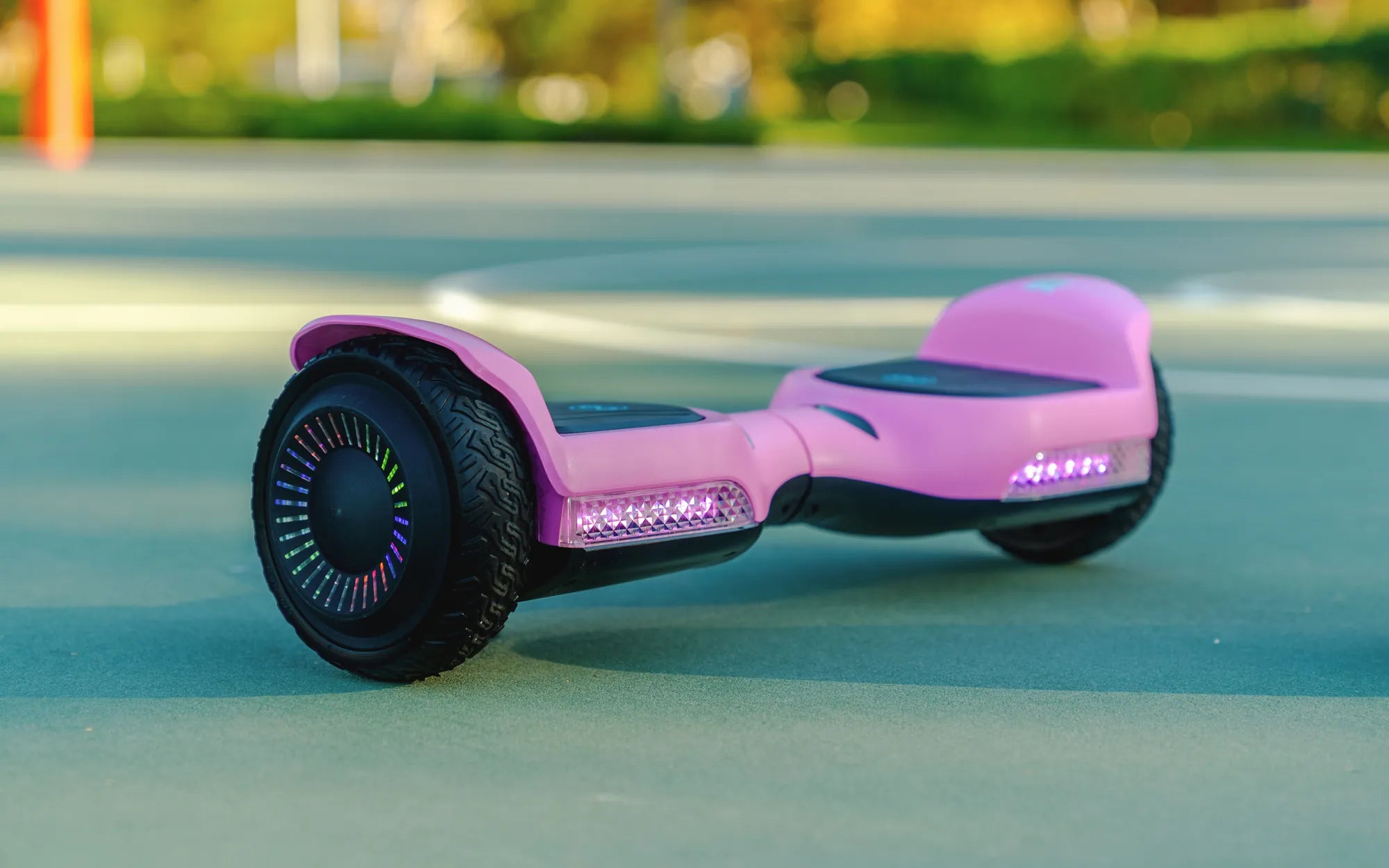
The Hoverboard Safety Question
What are the chances of a hoverboard blowing up? The shocking truth is that while viral videos of flaming scooters created a lasting public fear, the actual risk today is determined almost entirely by the quality of the product you buy and how you use it. The early, infamous era of hoverboards is over, replaced by stringent engineering standards and certified components from reputable brands. This article provides a data-driven breakdown of the real probabilities, the engineering safeguards that prevent disasters, and the actionable checklist you need to ride with absolute confidence.
The Infamous Era: Why Early Hoverboards Gained a Dangerous Reputation
The years 2015 and 2016 were a dark period for self-balancing scooters. A perfect storm of explosive consumer demand, unregulated manufacturing, and a race to the bottom on price created a global safety crisis. The U.S. Consumer Product Safety Commission (CPSC) reported over 250 incidents of fire or overheating across more than 40 different brands in just a few months.
These weren't minor glitches. They were house fires, car fires, and injuries that led to millions of units being recalled and banned from airlines, universities, and shopping malls worldwide. The reputation of the hoverboard was effectively destroyed before it was fully formed. This period is crucial to understand because it defines the "before" picture—the baseline of danger that modern regulations were created to fix.
The core failure was systemic. With no dominant safety standard, hundreds of manufacturers, many unknown, flooded the market. They competed solely on price and appearance, cutting every possible corner on the most critical component: the battery and its management system. The result was a product segment synonymous with danger, a legacy that still haunts consumer perception today.
The Culprit: Uncertified Lithium-Ion Batteries
At the heart of every incident was the lithium-ion battery pack. These batteries are incredibly energy-dense, which is why they power everything from smartphones to electric vehicles. However, that density comes with risk if the batteries are poorly made or managed.
The early hoverboards used cells from the lowest bidders, often without any recognized safety certification. These cells were highly susceptible to a catastrophic failure mode called "thermal runaway." This is a chain reaction where one overheating cell heats its neighbor, causing it to fail, and the process accelerates uncontrollably, leading to fire or explosion.
Thermal runaway could be triggered by several faults common in cheap boards: internal manufacturing defects like microscopic metal fragments, physical damage from drops, overcharging from a faulty charger, or puncturing the battery casing. Without proper systems to monitor and prevent these conditions, the battery was a ticking time bomb. This is the primary reason people asked, "What are the chances of a hoverboard blowing up?"—because with those early models, the chance was unacceptably high.
Modern Safety Standards: How Reputable Brands Prevent Fires
The industry's response to the crisis was the rapid development and adoption of rigorous safety standards. Today, legitimate manufacturers build hoverboards not as cheap toys, but as sophisticated personal electric vehicles. The engineering focus has shifted from cost to reliability and safety, integrating multiple layers of protection that make a catastrophic failure an extreme rarity for certified products.
Brands like Gyroor, trusted by over 100,000 riders, design their boards with these safeguards as a foundation. The approach is holistic, encompassing the battery cell chemistry, the electronic brain that manages it, and the physical housing that protects it. This multi-barrier strategy ensures that if one system is stressed, another contains the risk.
The transformation is so complete that comparing a 2015 uncertified hoverboard to a modern UL-certified model is like comparing a homemade fireworks kit to a professionally engineered automotive airbag system. The fundamental technology is similar, but the execution, testing, and safety margins are worlds apart.
The Critical Role of UL 2272 Certification
UL 2272 is the single most important factor in answering "What are the chances of a hoverboard blowing up?" today. Developed by the globally recognized safety science company UL Solutions (formerly Underwriters Laboratories), this standard was created specifically for self-balancing scooters in response to the fires.
To earn UL 2272 certification, a hoverboard's entire electrical system—battery, charger, motor, and all circuitry—must pass a brutal series of tests. These include overcharge testing, short-circuit tests, vibration and impact tests, and even driving the board through a water bath to ensure no leakage causes a shock or fire. The batteries themselves must also meet the separate UL 2271 standard for lithium-ion batteries.
A hoverboard bearing the UL 2272 mark is not just assembled with safe parts; its entire design has been validated to fail safely under extreme conditions. For consumers, this certification is the essential baseline. It is a non-negotiable requirement that separates legitimate products from dangerous knockoffs. All Gyroor hoverboards utilize UL-certified battery packs tested for 500+ charge cycles as a core component of their safety promise.
Engineering for Safety: BMS, Build Quality, and Protection
Beyond certification, modern hoverboards incorporate specific engineering features that actively prevent failures.
The Battery Management System (BMS): This is the onboard computer for the battery. A smart BMS constantly monitors every cell in the pack for voltage, temperature, and current. It prevents overcharging by cutting off power at 100%, guards against over-discharging (which can damage cells), balances charge across cells, and will shut down the entire pack if temperatures exceed safe limits. It is the first and most critical line of defense.
High-Quality Cell Sourcing: Reputable brands use cells from major, name-brand manufacturers like Samsung or LG. These cells have their own rigorous manufacturing quality control, making internal defects that could lead to thermal runaway exceptionally rare.
Physical and Environmental Protection: A robust, flame-retardant shell protects the battery from punctures and impacts. Furthermore, ingress protection ratings like IPX5, a standard feature in Gyroor's design, ensure the board can withstand water jets from any direction. This prevents the most common user-related hazard—water damage leading to a short circuit.
Assessing Your Risk: A Data-Driven Look at Probabilities Today
So, what are the chances of a hoverboard blowing up in 2024? For a UL 2272 certified product from a reputable brand used according to instructions, the probability is extremely low—statistically comparable to other common lithium-ion devices like quality laptops or smartphones. The risk hasn't been reduced to zero, as no complex electronic device can claim absolute perfection, but it has been managed down to an acceptable level for millions of users.
The CPSC's massive recall efforts effectively removed the most dangerous pre-standard models from the market. The remaining risk is now bifurcated: virtually negligible for certified products, and still unacceptably high for uncertified ones. Your choice as a consumer directly selects which risk category you fall into.
Think of it in comparative terms. The everyday risk of a kitchen grease fire or a faulty household appliance is likely higher than the risk posed by a certified hoverboard used properly. The key is moving the question from a blanket fear of "hoverboards" to a specific evaluation of "this particular hoverboard model and its provenance."
The Real Risk Factors: User Behavior & Counterfeit Products
Today, the primary residual risks are not inherent to the technology but are introduced by user choices.
The Counterfeit Market: The single biggest danger is purchasing an uncertified board from an unknown online seller, often at a too-good-to-be-true price. These products may have fake UL stickers, use recycled or substandard cells, and lack a proper BMS. They are the direct descendants of the 2015 firestarters.
User Error and Neglect: Even the safest hoverboard can be compromised by poor treatment. Key risk-enhancing behaviors include:
- Using an off-brand or incorrect charger that overvolts the battery.
- Charging the board immediately after a long, hot ride while the battery is still warm.
- Ignoring obvious physical damage to the board or battery casing.
- Storing or charging in extreme temperatures (e.g., a hot car in summer or a freezing garage).
- Attempting to modify the battery or electronics.
Managing these factors is entirely within the user's control and is the final, crucial layer of safety.
Your Safety Checklist: Choosing and Maintaining a Safe Hoverboard
Empowered with knowledge, you can now make a safe choice and maintain it. This checklist serves as your practical guide.
What to Look for When Buying (The Gyroor Standard)
Never purchase a hoverboard that does not meet every one of these criteria:
- UL 2272 Certification: Verify the mark on the product and its packaging. Check the manufacturer's website for certification details.
- Brand Reputation: Buy from established brands with a track record and customer service. Gyroor, for example, backs its products with a reliable 1-year warranty and has a documented customer base of over 100,000 riders.
- Quality Specifications: Look for mentions of name-brand battery cells and a smart BMS. IPX4 or higher water resistance is a strong indicator of thoughtful design.
- Retailer Authenticity: Purchase from the brand's official website or authorized retailers. Be deeply skeptical of third-party sellers on major marketplaces offering steep discounts.
Essential Maintenance and Usage Habits
Ownership safety is an ongoing practice. Adopt these habits:
- Charger Discipline: Use only the manufacturer-provided charger. Unplug the charger from both the wall and the board once the indicator shows a full charge (usually 2-4 hours).
- Environment Matters: Charge and store your board in a dry, cool, indoor area away from direct sunlight and flammable materials. Avoid charging on carpet or bedding.
- Pre-Ride Inspection: Quickly check for cracks, loose parts, or bulges in the battery casing before each ride.
- Respect the Limits: Don't exceed the weight limit. Avoid riding through deep puddles or leaving the board out in the rain, even with an IPX5 rating.
- Long-Term Storage: If storing for a month or more, leave the battery at about a 50% charge state.
Hoverboard Safety Comparison: Certified vs. Uncertified
The table below illustrates the stark differences between a modern, safe hoverboard and the dangerous products that still linger online.
| Safety Feature / Aspect | UL 2272 Certified Hoverboard (e.g., Gyroor) | Uncertified / Knockoff Hoverboard |
|---|---|---|
| Battery Certification | UL 2271 certified battery pack. Cells from reputable manufacturers (Samsung, LG). | No safety certification. Often uses unknown, recycled, or "grade B" cells prone to defects. |
| Electrical System Safety | Full system UL 2272 certified. Tested for overcharge, short circuit, and water exposure. | No systemic testing. Poor solder joints, undersized wiring, and lack of protection circuits are common. |
| Battery Management System (BMS) | Smart BMS monitors cell voltage, temperature, and current. Prevents overcharge/over-discharge. | Often missing entirely or is a rudimentary, ineffective circuit. Offers no real protection. |
| Build Quality & Protection | Flame-retardant shell. IPX5 water-resistant design to prevent short circuits. | Thin, flammable plastic. Little to no sealing, making it vulnerable to moisture and damage. |
| Charger | Provided charger is matched to the battery's specifications with its own safety cut-offs. | Generic, often incorrect charger that can overvolt the battery, leading to overheating. |
| Warranty & Support | Typically includes a 1-year warranty and accessible customer service. | Little to no warranty. Seller may disappear after the sale. |
| Estimated Risk of Fire/Incident | Extremely Low (aligned with quality electronics). | Unacceptably High. |
FAQ: Quick Answers to Common Hoverboard Safety Concerns
Q1: Are hoverboards still banned on airplanes?
Most major airlines globally ban hoverboards in both checked and carry-on luggage due to their lithium-ion batteries, which are considered a fire risk in the cargo hold. This policy applies even to UL-certified models. Always check with your specific airline before traveling.
Q2: How long should I charge my hoverboard?
Always refer to your manual, but a full charge typically takes 2 to 4 hours. Never leave it charging unattended for extended periods (like overnight or while at work). Use a timer plug if necessary. The BMS should prevent overcharging, but disconnecting is the safest practice.
Q3: What should I do if my hoverboard gets wet or damaged?
If a board with an IPX5 rating like Gyroor's gets lightly wet, power it off and wipe it dry. For significant water exposure or any physical damage (cracks, bulges, impact), stop using it immediately. Do not charge it. Contact the manufacturer's customer service for guidance. Do not attempt to open or repair the battery yourself.
Q4: Is it safe to leave it charging overnight?
No. This is one of the most common risk-enhancing behaviors. While a certified board's BMS is designed to stop charging at 100%, a faulty charger or rare BMS failure could pose a risk. Always charge in a supervised period and disconnect when full.
Q5: How can I verify if a hoverboard is UL certified?
First, look for the UL Mark on the product and its packaging. Then, you can visit the UL Product Spec website and search for the company name or product model. Reputable brands will also list their certifications clearly on their official website.
Riding with Confidence, Not Fear
The journey from the fiery headlines of 2015 to the reliable personal transporters of today is a story of rigorous engineering overcoming reckless production. What are the chances of a hoverboard blowing up? The shocking truth is that the answer is now firmly in your hands. By choosing a UL 2272 certified model from a trusted brand like Gyroor, and by following simple, sensible maintenance rules, you reduce that risk to a minuscule level. The technology is proven and safe. Don't let the ghost of past failures deter you from the enjoyment and utility of a modern self-balancing scooter. Make the informed choice, ride responsibly, and experience the freedom with complete peace of mind.
Ready to choose a hoverboard engineered for safety and performance? Browse the full Gyroor collection at gyroorboard.com to explore UL-certified models built with premium batteries, IPX5 water resistance, and backed by a reliable 1-year warranty.
Christmas Gift for 18 Year Old Girls: Thoughtful and Trendy Ideas
Christmas Gift Ideas for Young Adult Girls: Unique and Thoughtful Presents