



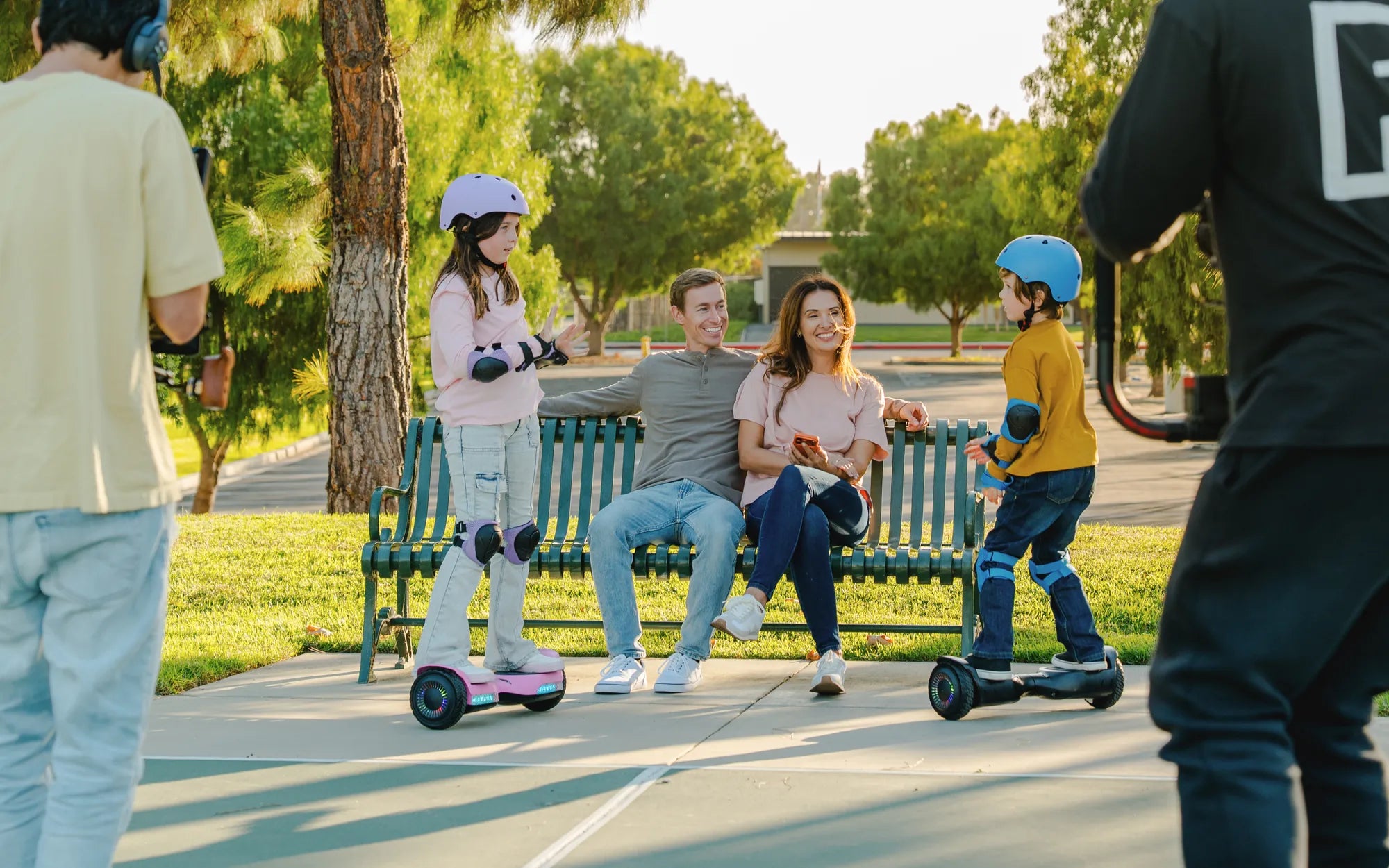
Videos of hoverboards engulfed in flames are seared into public memory, creating a lasting perception of danger. But what are the chances of your hoverboard blowing up today? The shocking truth is that while the risk was once very real, it has been dramatically reduced through stringent safety standards and better engineering. This article will dissect the science of lithium-ion battery failure, present the actual statistics, and provide you with the knowledge to choose and maintain a hoverboard with near-zero risk. We'll demystify safety certifications, outline critical user practices, and explain how leading brands build safety into every component.
The Anatomy of a Hoverboard Battery: Why Some Fail Catastrophically
At the heart of every hoverboard is a lithium-ion battery pack, the same technology in your smartphone and laptop. The risk of thermal runaway—a chain reaction leading to fire or explosion—stems from specific, well-understood failure points. Primarily, it's a story of poor quality control versus robust engineering.
The first major risk factor is the use of substandard battery cells. Cheap, uncertified cells can have microscopic metal particles or imperfections in their internal separators. These flaws can cause an internal short circuit during charging or use, generating intense heat rapidly.
A second critical component is the Battery Management System (BMS). A quality BMS is the brain of the battery pack. It monitors cell voltage, temperature, and current, preventing overcharging, over-discharging, and overheating. Many early, problematic hoverboards either had a primitive BMS or none at all, allowing cells to be stressed beyond their limits.
Physical damage is another direct path to failure. A puncture or severe crush to the battery pack can breach the internal cell separators, causing an immediate short circuit. Even minor damage from repeated drops can weaken the battery casing and internal connections over time.
Finally, the charger and charging circuit are vital. Using an incorrect, faulty, or off-brand charger can deliver the wrong voltage or current, effectively cooking the battery. A proper charging system communicates with the BMS to stop charging at precisely 100%.
From Headlines to Hard Data: What the Statistics Actually Say
The alarming headlines from 2015 and 2016 were based on a genuine crisis. During that period, the U.S. Consumer Product Safety Commission (CPSC) reported over 250 incidents of hoverboard fires across 40 states, resulting in millions of units being recalled. The risk was statistically significant for uncertified products flooding the market.
The pivotal moment came with the development and enforcement of the UL 2272 safety standard. Post-2016, data shows a steep decline in incidents directly correlated with the adoption of this certification. The CPSC now explicitly recommends purchasing only UL 2272-certified hoverboards, noting the drastic improvement in safety.
Quantifying the current risk for a certified hoverboard is challenging because widespread failures are now so rare. The chances of a UL 2272-certified model from a reputable brand experiencing a catastrophic battery event are exceptionally low—arguably on par with the risk from any other certified consumer electronics device with a lithium-ion battery.
The residual risk today is almost entirely concentrated in older, uncertified models still in use, or in new, non-compliant products purchased from unreputable sources. The data clearly indicates that safety is no longer a generic hoverboard issue, but a specific issue of certification and quality.
The Gold Standard in Safety: Understanding UL 2272 Certification
UL 2272 is not a simple checkmark; it is a comprehensive set of over 100 rigorous tests conducted by independent laboratory Underwriters Laboratories. This certification is the single most important factor in determining a hoverboard's safety. It evaluates the entire electrical system as a complete unit.
The tests simulate extreme abuse conditions the board might encounter throughout its lifecycle. These include overcharging tests, where the battery is charged well beyond its capacity, and short-circuit tests on both the battery and the charger. The system must fail safely without fire or explosion.
Mechanical tests are equally severe. The battery pack undergoes crush tests, drop tests, and impact tests. It is subjected to water exposure (rain) and temperature cycling from extreme cold to heat. The motor and wiring are tested for overload and malfunction.
For a consumer, the presence of a legitimate UL 2272 mark on the hoverboard and its charger is non-negotiable. It is a guarantee that the product's design has been stress-tested against the very failure modes that caused the early fires. Never purchase a hoverboard that lacks this specific certification.
Your Safety Checklist: 8 Practices to Virtually Eliminate Risk
Safety is a partnership between robust engineering and informed user behavior. Adhering to these eight practices will minimize risk to a negligible level.
1. Purchase Only UL 2272-Certified Models: Verify the certification on the product, its packaging, and the manufacturer's website. This is your foundational safety step.
2. Use Only the Manufacturer-Provided Charger: The supplied charger is designed to work in tandem with the board's specific BMS. Using a third-party charger voids safety guarantees.
3. Avoid Overcharging: Do not leave the hoverboard charging unattended for extended periods, especially overnight. Unplug it once the indicator shows a full charge.
4. Store in a Cool, Dry Place: Never store a hoverboard in direct sunlight, in a hot car, or in freezing conditions. Ideal storage temperature is between 50°F and 77°F (10°C and 25°C).
5. Conduct Regular Visual Inspections: Before riding, check for any physical damage to the board, wheels, and particularly the battery casing. Look for cracks, bulges, or unusual odors.
6. Respect Water Resistance Ratings: If your board has an IP rating (e.g., IPX5), understand its limits. Most boards are resistant to light rain and puddles, not submersion. Dry the board thoroughly after riding in wet conditions.
7. Never Attempt Modifications: Do not disassemble the battery pack or attempt to "hack" the board for more speed or range. This compromises all built-in safety systems.
8. Dispose of Properly: At end-of-life, do not throw the hoverboard in the trash. Take it to a designated battery or e-waste recycling facility.
Brand Spotlight: How Gyroor Engineering Mitigates Every Risk Factor
Examining a brand with a proven safety record illustrates how theoretical risks are designed out. Gyroor, a leading electric scooter and e-bike brand trusted by over 100,000 riders, applies this philosophy to its hoverboard designs.
First, every Gyroor hoverboard uses UL-certified battery packs equipped with an advanced, multi-layer BMS. This system provides cell-level voltage monitoring, temperature sensors, and short-circuit protection, directly addressing the primary failure points of early models.
Second, Gyroor builds its hoverboards with IPX5 water-resistant designs. This rating means the enclosure can withstand low-pressure water jets from any direction, protecting the electrical components from rain and puddle splashes, a common cause of electrical faults.
Third, quality control and a reliable 1-year warranty reflect confidence in the product's durability. This commitment ensures that the components, from the battery cells to the charging port, meet consistent standards, reducing the chance of a random manufacturing defect reaching the consumer.
By integrating these features—certified batteries, robust BMS, water resistance, and stringent QC—Gyroor's engineering proactively mitigates the specific risk factors of thermal runaway, offering a model for what safe hoverboard construction looks like.
Hoverboard Safety Comparison: Certified vs. Non-Certified
| Safety Feature | UL 2272 Certified Hoverboard (e.g., Gyroor) | Non-Certified / Generic Hoverboard |
|---|---|---|
| Battery Cells | High-quality, brand-name or UL-certified cells with documented specifications. | Often uncertified, low-cost cells of unknown origin and inconsistent quality. |
| Battery Management System (BMS) | Advanced, multi-protection BMS for overcharge, discharge, temperature, and short-circuit. | Basic or missing BMS, offering little to no cell protection. |
| Electrical System Testing | Entire system tested for over 100 abuse scenarios including electrical, mechanical, and environmental. | No independent safety verification; may have only basic functionality testing. |
| Charger Compatibility | UL-certified charger designed specifically to communicate with the board's BMS. | Generic charger; risk of incorrect voltage/current output. |
| Build Quality & Enclosure | Designed to contain a battery failure; often includes water-resistant (IP) rating. | Plastic casing may not contain fire; minimal protection from elements. |
| Statistical Risk of Fire | Exceptionally low; on par with mainstream consumer electronics. | Significantly higher; represents the majority of incident reports. |
FAQ: Your Top Hoverboard Safety Questions, Answered
Can I leave my hoverboard charging overnight?
It is not recommended, even for certified models. While a good BMS should prevent overcharging, disconnecting the board once fully charged eliminates any residual risk from a potential charger or electrical fault. Make charging an attended activity.
What should I do if my hoverboard gets wet?
Immediately power it off. Wipe it down thoroughly and place it in a dry, ventilated area for at least 24-48 hours before attempting to turn it on or charge it. Do not use a heater or hair dryer, as concentrated heat can damage the battery. If it's not IP-rated, be extra cautious.
How can I tell if my battery is damaged?
Warning signs include: a visible bulge or deformation in the battery casing, significantly reduced range, the board not holding a charge, unusual noises (hissing, popping) from the battery area, or a burning/chemical smell. If you observe any of these, stop using and contact the manufacturer.
Are used hoverboards safe to buy?
Exercise extreme caution. Only consider a used model if you can 100% verify it is UL 2272 certified, you can inspect it for physical damage, and the seller can demonstrate it holds a charge normally. The risk of hidden battery damage from previous abuse is high. When in doubt, buy new from an authorized retailer.
What's the safest way to store a hoverboard long-term?
For storage over a month, charge (or discharge) the battery to approximately 50-60%. Store in a cool, dry place away from flammable materials. Check the charge level every 2-3 months and top up to 50-60% if needed. Never store a hoverboard with a fully depleted or fully charged battery.
Is it safe to fly with a hoverboard?
Most major airlines globally ban hoverboards in both checked and carry-on luggage due to the fire risk associated with lithium-ion batteries. This policy applies even to certified models. Always check with your airline's specific regulations before traveling.
Conclusion: Riding with Confidence, Not Fear
The dramatic image of a hoverboard fire is a relic of a specific, unregulated moment in the product's history. Today, the chances of your hoverboard blowing up are minimal—provided you make an informed choice. The shocking truth is that safety is now clearly defined: it resides in the UL 2272 certification mark and in the reputation of the brand behind it. By selecting a certified product from an established manufacturer and following simple, sensible maintenance practices, you can enjoy the thrill of riding with complete peace of mind. The era of fear is over; the era of smart, safe riding is here.
Ready to choose a hoverboard engineered for safety and performance? Browse the full collection of UL-certified electric scooters and e-bikes at gyroorboard.com, where innovation meets rigorous safety standards.
Hoverboard Red Light Flashing 7 Times: Causes and Solutions Explained
Hoverboard Orange Light While Charging: Causes and Solutions