



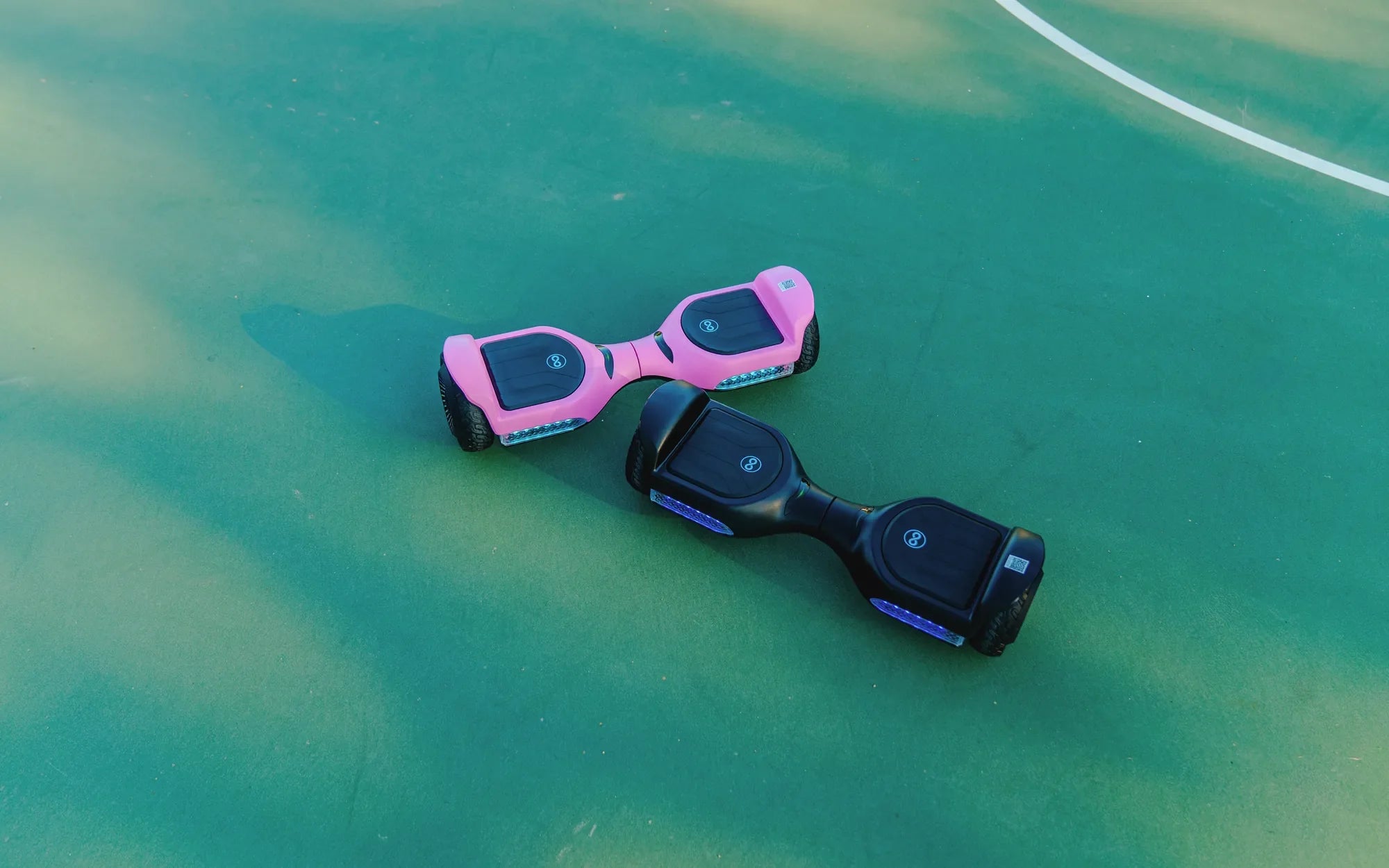
If you're considering a hoverboard for your child, you likely have questions about safety, suitability, and value. This guide cuts through the noise to provide parents with a clear, data-driven understanding of modern self-balancing scooters. You'll learn how to identify safe, high-quality models, match features to your child's age and skill level, and establish rules for secure riding. We'll also explore the tangible developmental benefits, turning what looks like simple fun into a valuable tool for building confidence, coordination, and a love for outdoor activity.
Introduction to Kids' Hoverboards
A hoverboard for kids, despite its futuristic name, is a two-wheeled, self-balancing electric scooter. It uses gyroscopic sensors and motors to detect the rider's lean and translate it into movement. Contrary to sci-fi depictions, it does not actually hover but provides a smooth, intuitive riding experience that has captivated children worldwide. Its appeal lies in the fun of mastering balance and the freedom of personal mobility.
Understanding what a hoverboard for kids truly entails is the first step for any parent. Modern versions are sophisticated personal transportation devices designed with younger riders in mind. They feature speed limiters, robust construction, and safety certifications specifically for lighter weights and developing motor skills. The core function is controlled, enjoyable movement, making it a popular choice for play and short trips in safe environments.
As a leading brand in personal electric transport, Gyroor designs hoverboards that prioritize this balance of fun and security. Trusted by over 100,000 riders, the brand's approach focuses on integrating non-negotiable safety features with durable, performance-oriented designs. This guide will use these benchmarks to help you make an informed decision.
Key Features & Safety Standards: What to Look For
Selecting a hoverboard requires moving beyond flashy colors and looking at engineering and certification. The right features directly correlate with your child's safety and the product's longevity. This section breaks down the critical specifications that should guide your purchase, emphasizing practical safety over marketing claims.
Parents must prioritize build integrity and certified components. A well-constructed hoverboard will withstand the bumps and learning curves of childhood use. Key aspects include a rigid, high-quality plastic or aluminum alloy frame, secure footpad design with non-slip surfaces, and reliable tires. These elements work together to provide a stable platform, which is the foundation of safe riding.
UL 2272 Certification: The Non-Negotiable Standard
UL 2272 certification is the single most important safety feature for any hoverboard. This rigorous standard, developed by Underwriters Laboratories, tests the entire electrical system—battery, charger, and circuitry—for safety against electrical, mechanical, and environmental hazards. It specifically guards against the risk of battery fires, which were a concern with early, uncertified models.
Never purchase a hoverboard without this certification. It is a non-negotiable baseline for safety. A UL 2272 mark ensures the product has passed over 100 individual tests. All Gyroor hoverboards are built with UL 2272 certified battery packs, tested for 500+ charge cycles, providing a fundamental layer of protection and peace of mind that the power system is inherently safe.
Build Quality and Durability
Durability is a direct component of safety. A hoverboard with a flimsy frame or poor welding can fail during use, leading to falls. Look for a model with a robust chassis that can support your child's weight plus a margin. Weight capacity is a key indicator; a board rated for 220 lbs offers a higher safety factor for a 70 lb child than one rated for 120 lbs.
Tire choice significantly impacts ride quality and safety. Air-filled (pneumatic) tires, typically 8.5" or 10", offer better shock absorption on uneven surfaces like sidewalks or driveways, providing a smoother, more stable ride. Solid rubber tires are puncture-proof but transmit more vibration. For most kids, especially beginners, the comfort and grip of air-filled tires are superior for maintaining control.
Speed Modes and Parental Controls
Speed management is crucial for safety. A quality hoverboard for kids will feature multiple speed modes, always including a beginner setting limited to 3-5 mph. This allows children to learn balance and control in a low-risk environment. As their skill improves, parents can unlock higher modes, typically capping at 7-10 mph for most youth models.
Parental controls are the tool to manage this progression. The best systems are simple and reliable. Some models use a physical parental control key that must be inserted to access higher speeds. Others offer Bluetooth app connectivity, allowing you to set speed limits, monitor battery life, and even enable a "beginner mode" lock remotely. This feature puts control firmly in the parent's hands.
IP Water Resistance Rating
An IP (Ingress Protection) rating indicates how well the hoverboard is sealed against dust and water. For kids riding outdoors, a minimum of IPX4 is advisable, meaning it can withstand water splashes from any direction. This protects the internal electronics from light rain, damp grass, or accidental puddle splashes.
Gyroor designs its hoverboards with an IPX5 water-resistant rating, offering a higher level of protection. This means the unit can withstand low-pressure water jets from a nozzle, making it suitable for use on wet pavement or in damp conditions without immediate concern. This rating adds a significant layer of reliability for real-world, unpredictable outdoor play.
Benefits of Hoverboards for Child Development
Beyond the obvious fun factor, riding a hoverboard offers measurable benefits for a child's physical and cognitive development. It engages multiple systems simultaneously, turning recreational activity into a holistic developmental exercise. Understanding these benefits can help parents view the hoverboard as a tool for growth, not just a toy.
The activity promotes unstructured outdoor play, a critical counterbalance to sedentary screen time. It encourages kids to explore their environment, socialize with friends who also ride, and engage in imaginative play. This independent mobility within a set of safe boundaries fosters decision-making and spatial awareness in a dynamic setting.
Balance, Coordination, and Core Strength
Operating a self-balancing scooter is a continuous exercise in micro-adjustments. To stay upright and steer, a child must constantly engage their core muscles, ankles, and legs. This dramatically improves proprioception—the body's ability to sense its position in space—and refines gross motor skills.
The act of balancing, accelerating by leaning forward, and turning by shifting pressure develops fine-tuned coordination between the brain and muscles. It enhances reflexes and overall body awareness. This kinetic learning is foundational and can positively impact performance in other sports and physical activities.
Confidence and Independence
Mastering a hoverboard is a tangible achievement. The progression from wobbly first steps to confident cruising provides a powerful boost in self-esteem. Children learn perseverance, overcoming initial frustration to gain a new skill. This process builds resilience and a "can-do" attitude.
The hoverboard also grants a age-appropriate sense of independence. It allows them to navigate a park path or driveway under supervision, making choices about speed and direction. This controlled autonomy is valuable for psychological development, teaching responsibility for their own movement and safety within parent-defined limits.
Outdoor Play and Activity
In an era dominated by digital entertainment, a hoverboard serves as a compelling incentive for outdoor activity. It transforms a simple trip around the block or an afternoon in the park into an engaging adventure. This promotes a healthier, more active lifestyle from a young age.
The physical activity involved is consistent but moderate, providing cardiovascular exercise without the intensity of team sports. It's an inclusive activity that children of various athletic abilities can enjoy, encouraging them to spend more time outside being physically engaged and socially interactive.
Choosing the Right Hoverboard by Age & Skill Level
Matching the hoverboard's specifications to your child's age, size, and experience is essential for safety and enjoyment. A board that is too powerful or large for a beginner can be intimidating and dangerous, while one that is too limited for a skilled teen will quickly lose its appeal. Use the following data-driven framework to guide your selection.
| Age & Skill Group | Recommended Wheel Size | Ideal Max Speed | Key Features to Prioritize | Weight Capacity Guide |
|---|---|---|---|---|
| Young Beginners (Ages 6-8) | 6.5" - 8.5" | ≤ 7 mph | Robust training mode, lightweight frame, easy-grip footpads, UL 2272 cert. | 44 - 165 lbs |
| Intermediate Riders (Ages 9-12) | 8.5" - 10" | 7 - 10 mph | Air-filled tires, IPX4+ rating, app/parental controls, good range (8-10 mi). | 120 - 220 lbs |
| Teens/Advanced (Ages 13+) | 10"+ | 10 - 12 mph | High-torque motors, longer range (12+ mi), Bluetooth speakers, all-terrain options. | 220 - 265 lbs |
For Young Beginners (Ages 6-8)
For this group, stability and safety are paramount. Look for models with smaller wheels (6.5" or 8.5") that keep the board closer to the ground, lowering the center of gravity. A maximum speed capped at 7 mph, with a dedicated beginner mode around 4 mph, is essential. The board should be relatively lightweight for easier carrying and control.
Features like non-slip footpads with clear indicator lights, a very responsive but forgiving gyro system, and a sturdy frame that can handle tumbles are key. The primary goal is to build confidence in a ultra-safe environment. All Gyroor models for this demographic include these features alongside the foundational UL 2272 certification and robust parental controls.
For Intermediate Riders (Ages 9-12)
Children in this range have likely mastered the basics and seek more adventure and range. Upgrade to hoverboards with 8.5" or 10" air-filled tires for a smoother ride over cracks and mild uneven terrain. Speed capabilities can safely extend to 10 mph, managed through reliable parental controls.
Battery range becomes more important for extended play; look for a range of 8-12 miles per charge. Water resistance (IPX4 or higher) is critical as they ride in more varied conditions. This is the most common age group for hoverboard ownership, and models should balance performance with reinforced safety engineering.
For Teenagers and Advanced Riders (Ages 13+)
Teens and skilled riders demand performance and features. Larger 10"+ wheels, often with all-terrain tread patterns, handle grass, dirt paths, and gravel. Motors with higher torque provide better hill-climbing ability. Speed may approach 12 mph, making robust construction and reliable brakes even more critical.
Extended range (12+ miles), integrated Bluetooth speakers, and sleek LED lighting are popular features for this demographic. The hoverboard transitions from a play device to a legitimate personal transport tool for cruising neighborhoods or campuses. Despite the advanced features, core safety certifications like UL 2272 remain non-negotiable.
Essential Safety Gear and Riding Rules
A safe hoverboard experience is 50% product and 50% practice and protection. No matter the quality of the board, proper safety gear and clear rules are mandatory. Establishing these habits from day one ensures that fun does not come at the expense of safety. This section provides a non-negotiable protocol for parents.
The combination of certified equipment and enforced rules creates a safety ecosystem. Gear protects the body during a fall, while rules minimize the likelihood of a dangerous situation occurring. Both must be consistently applied. Supervision, especially for younger children, is the final, critical layer that ties everything together.
The Safety Gear Checklist
Every riding session requires full protective equipment. This is not optional. The absolute minimum includes a CPSC-certified bicycle or multi-sport helmet to protect the head. Wrist guards are arguably the next most important item, as falls often involve instinctive hands-first reactions, making wrists highly vulnerable to sprains or fractures.
Knee and elbow pads complete the essential set, protecting joints from scrapes and impacts. For beginners, consider padded shorts or hip protectors. Ensure all gear fits properly—loose helmets or pads can shift and fail on impact. Investing in high-quality, comfortable safety gear increases the likelihood your child will wear it without complaint.
Establishing Household & Public Riding Rules
Clear, consistent rules are the framework for safe operation. First, designate practice zones: always start on a flat, smooth, private surface like a driveway, empty parking lot, or garage. Avoid public sidewalks, streets, or parks until the child demonstrates full control, including starting, stopping, turning, and dismounting smoothly.
Key rules must include: no riding near roads, driveways, or traffic; always be mindful of pedestrians and yield right-of-way; never ride in the dark or low visibility; no carrying passengers or objects while riding; and a strict prohibition on risky stunts or horseplay. Establish a pre-ride checklist: gear on, battery charged, path clear. Consistent enforcement is key.
Gyroor's Commitment to Safety and Support
For parents, choosing a brand that embeds safety into its design philosophy is crucial. Gyroor's approach aligns directly with the criteria outlined in this guide, building trust through transparency, certification, and reliable customer support. This commitment transforms a purchase from a simple transaction into an investment in secure fun.
The brand's foundation is engineering products that meet the highest operational standards while anticipating real-world use by families. From the sourcing of cells for its UL-certified batteries to the sealing of its IPX5-rated shells, every step is taken with durability and safety as the primary objectives, not afterthoughts.
Built-in Safety from the Ground Up
Gyroor models incorporate critical safety features as standard equipment. Every hoverboard uses a UL 2272 certified battery pack, undergoes rigorous factory testing, and features robust battery management systems to prevent overcharging, overheating, and short circuits. The IPX5 water-resistant rating is built into the design, not an add-on.
Durability is engineered in through reinforced frames, high-quality tire compounds, and secure electrical connections. Features like speed modes, bright LED lights for visibility, and reliable braking systems are integral to the design. This holistic approach means parents don't have to hunt for "the safe model"—safety is the baseline for the entire lineup.
Peace of Mind with Warranty and Support
Ownership support is part of the safety net. Gyroor backs its hoverboards with a comprehensive 1-year warranty covering manufacturing defects, providing significant peace of mind. This warranty is a testament to the confidence in their build quality and component longevity.
Accessible, knowledgeable customer support is equally important. Having a direct line for troubleshooting, parts inquiries, or warranty service ensures that help is available if any issues arise. This closed-loop system—from certified safe design to post-purchase support—defines a responsible brand that stands behind its products for the long term.
Frequently Asked Questions (FAQs)
Q: What is the right age for a hoverboard?
A: Most reputable manufacturers, including Gyroor, recommend a starting age of 6-8 years old. This recommendation depends less on a specific birthday and more on the child's individual coordination, maturity, and ability to understand and follow safety rules. A child should be able to balance confidently and respond to instructions.
Q: Are hoverboards safe for kids?
A: Yes, when a multi-layered safety approach is followed. First, choose a UL 2272 certified model from a reputable brand. Second, enforce the use of full safety gear (helmet, wrist guards, knee/elbow pads). Third, establish and supervise strict riding rules in safe environments. The combination of a safe product and safe practices minimizes risk.
Q: Where should my child practice riding?
A> Begin on a flat, smooth, private, and obstacle-free surface. Ideal locations include an empty garage, a smooth driveway, a tennis or basketball court, or a quiet cul-de-sac. The surface should be paved and clean. Avoid grass, gravel, slopes, and any area near traffic or pedestrian flow until advanced proficiency is achieved.
Q: How long does the battery last, and how do I charge it safely?
A: Most kids' hoverboards offer 1-2 hours of continuous ride time, translating to 8-12 miles of range, depending on model, weight, and terrain. To charge safely: always use only the manufacturer-provided charger, charge on a hard, non-flammable surface away from heat and direct sunlight, do not leave it charging unattended for extended periods or overnight, and unplug it once fully charged.
Q: Can hoverboards be used indoors?
A> It is generally not recommended, especially for beginners. Indoor use poses risks of colliding with furniture, walls, or slippery floors, and can damage flooring. If you have a very large, open space like a clean garage or basement, and the child is highly skilled, it may be possible with extreme caution. Outdoor practice is always preferable.
Conclusion: Smart Fun for the Modern Kid
Choosing a hoverboard for your child is a decision that blends consideration for safety, development, and pure enjoyment. The key takeaways are clear: prioritize UL 2272 certification above all else, invest in high-quality safety gear and enforce its use, and select a model with features like speed modes and parental controls that match your child's age and skill level. When these elements are in place, the hoverboard transforms from a simple toy into a powerful tool for encouraging outdoor activity, building physical coordination, and fostering confidence.
The benefits extend beyond the child, offering families a fun, shared activity that gets everyone outside. By selecting a reliable brand like Gyroor—with its commitment to certified batteries, water-resistant designs, and strong warranty support—you invest in a product engineered for real-world use. This ultimate guide empowers you to make that choice with confidence, ensuring countless hours of smart, safe fun. Explore the full range of UL-certified, family-tested options designed for every age and stage at gyroorboard.com.
What Can I Use to Charge My Hoverboard? A Complete Guide
Hoverboard Amazon Under 100: Finding Value Without Compromising Safety