



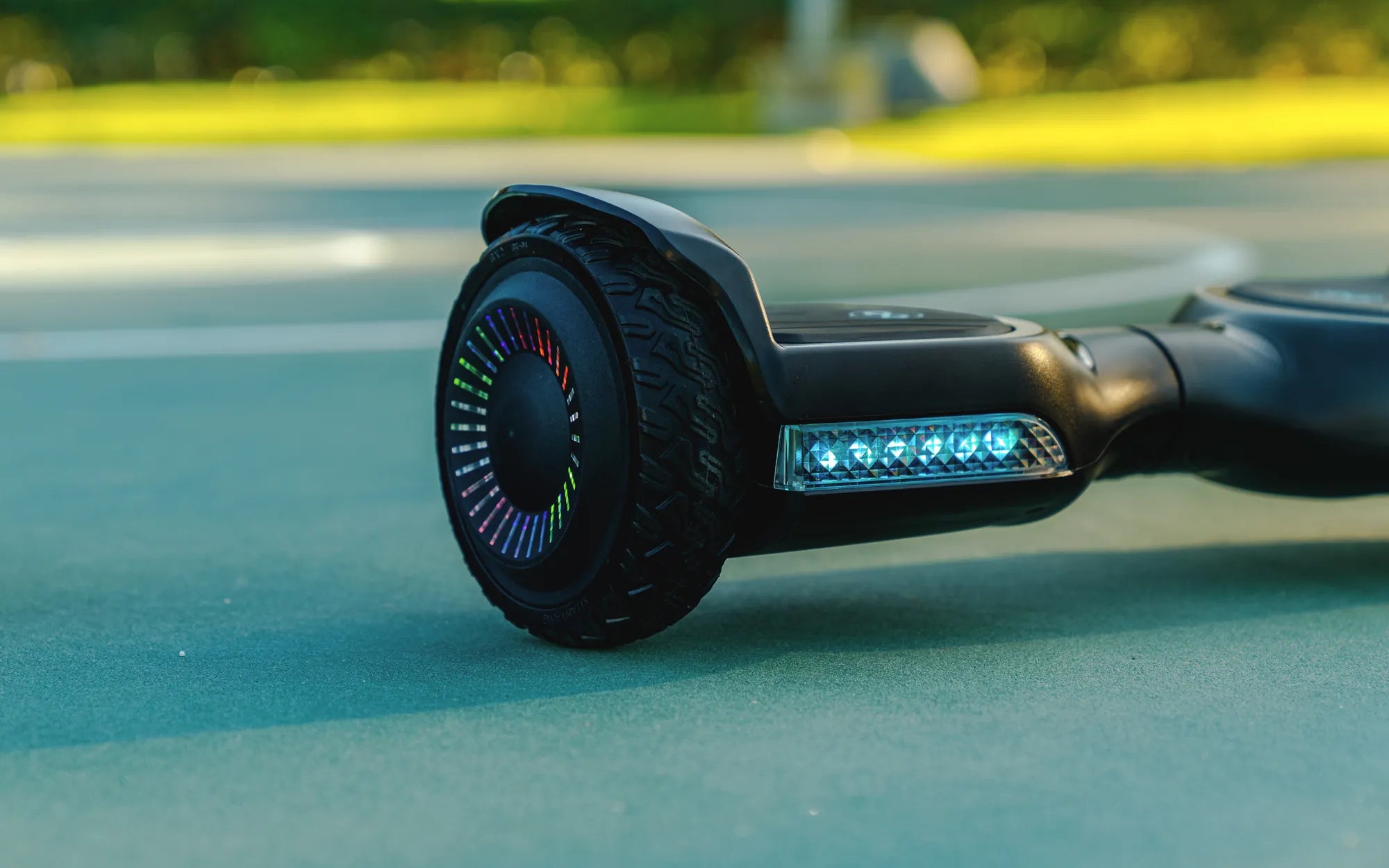
Introduction to Self-Balancing Hoverboards
What is a self balancing hoverboard? It's a compact, electric, two-wheeled personal transporter that uses internal gyroscopes and microprocessors to automatically maintain its balance. Despite the 'hoverboard' name popularized by media, these devices do not actually hover; they are self-balancing scooters with wheels. This technology represents a significant leap in personal electric mobility, merging intuitive, body-lean control with portable design.
The device's operation is deceptively simple for the rider. You step on, and the board actively works to keep you upright, responding to subtle shifts in your weight. This creates a sensation of gliding, which has captured the imagination of commuters and tech enthusiasts alike. It's a hands-free experience distinct from scooters or e-bikes.
This article will dissect the technology behind self-balancing hoverboards, evaluate their performance and safety features, and compare them to other transport modes. We'll explore their role in the evolving micro-mobility landscape and provide the data you need to make an informed decision.
The Core Technology: How Self-Balancing Works
The magic of a self-balancing hoverboard lies in a constant feedback loop between sensors, a processor, and motors. When you stand on the foot pads, internal sensors detect the board's angle and orientation hundreds of times per second. A central microprocessor interprets this data and instantly commands the electric motors to spin at precise speeds to counteract any tilt, keeping the board level.
This system allows for intuitive control. To move forward, you lean forward slightly. The sensors detect this forward pitch and signal the motors to spin forward, preventing a fall and creating propulsion. Leaning back commands reverse motion, while differential pressure on the foot pads—pressing your right toe down more than your left—initiates a turn.
Gyroscopes and Sensors: The Brain of the Board
An Inertial Measurement Unit (IMU), containing gyroscopes and accelerometers, acts as the board's vestibular system. The gyroscope measures rotational velocity—how quickly the board is tilting—while the accelerometer measures linear acceleration and tilt angle. Together, they provide a real-time, three-dimensional picture of the board's position in space.
This data stream is the foundational input. Without accurate, high-speed readings from these sensors, the self-balancing algorithm cannot function correctly. Quality components here are critical for a smooth, responsive, and safe ride, distinguishing premium models from unreliable ones.
Electric Motors and Power Delivery: The Muscle
Each wheel is powered by its own brushless DC electric motor, typically ranging from 250W to 500W. These motors receive precise digital commands from the main processor. The processor calculates the exact torque required for each wheel independently to maintain balance and execute directional changes.
This dual-motor setup enables not only propulsion but also the board's dynamic stability. If the rider begins to fall to the left, the processor commands the left wheel motor to spin faster to 'catch' the lean. This instantaneous power delivery is what makes the device feel like an extension of your body.
Key Features and Specifications to Understand
Evaluating a self-balancing hoverboard requires looking beyond marketing claims to concrete specifications. These metrics directly impact performance, safety, and suitability for your needs. Understanding terms like wattage, watt-hours, and IP ratings empowers you to choose a reliable model.
Key specs form a performance profile. Motor power dictates hill-climbing ability, battery capacity determines your range, and build quality influences durability across different terrains. Prioritizing certified safety features is non-negotiable for a device you stand on.
Motor Power and Speed: Performance Metrics
Motor power, measured in watts (W), is often listed as a combined total for both wheels. A board with dual 350W motors (700W total) will generally offer better acceleration and hill-climbing capability than a 500W total system. Power directly affects maximum slope grade, typically ranging from 10 to 15 degrees for commuter models.
Top speed is usually between 6 and 10 mph (10-16 km/h), governed for safety. While some models may advertise higher speeds, the combination of a low center of gravity and small wheels makes stability at higher speeds a primary engineering concern. Consistent, controlled power delivery is more valuable than sheer top speed.
Battery Life and Range: Planning Your Journey
Battery capacity is measured in watt-hours (Wh), indicating total energy storage. A common range is from 132Wh to 297Wh. As a practical estimate, expect 1-1.5 miles of travel per 20Wh of battery capacity under average conditions. A 264Wh battery, therefore, typically provides a 12-15 mile range.
Battery safety is paramount. Always look for UL 2272 certification for the battery pack itself. This rigorous standard tests for electrical, mechanical, and environmental safety to prevent overheating or fire. Brands like Gyroor utilize these UL-certified battery packs, tested for over 500 charge cycles, ensuring long-term reliability and peace of mind.
Build Quality and Durability: Withstanding the Ride
Wheel size and type are critical for comfort and terrain handling. Standard 6.5-inch solid rubber tires suit smooth pavements, while 8.5-inch or 10-inch air-filled (pneumatic) tires absorb bumps and can handle grass, gravel, and dirt paths. Larger tires provide more stability and off-road capability.
The IP (Ingress Protection) rating indicates resistance to dust and water. An IPX4 rating protects against splashes, but an IPX5 rating—like that found on many Gyroor models—means the housing can withstand water jets from a nozzle, making it safe to ride through puddles and in light rain. A robust frame, often from reinforced aluminum alloy, is essential for supporting rider weight and enduring impacts.
Self-Balancing Hoverboards vs. Other Personal Transport
The micro-mobility market offers several options. Choosing between a self-balancing hoverboard, an electric scooter, or an e-bike depends on your specific needs for portability, range, speed, and the learning curve you're willing to tackle. Each device fills a slightly different niche in urban transportation.
A self-balancing hoverboard excels in ultra-portability and fun, intuitive control but has a steeper initial learning phase. Electric scooters offer higher speeds and easier mastery for most adults, while e-bikes provide the longest range and most traditional riding posture. The following table provides a direct comparison.
| Feature | Self-Balancing Hoverboard | Electric Kick Scooter | Electric Bike (E-Bike) |
|---|---|---|---|
| Learning Curve | Moderate to Steep (30-60 min practice) | Very Easy (Almost instant) | Easy (Like a bicycle) |
| Max Speed | 6-10 mph | 15-20 mph | 20-28 mph (Class 1-3) |
| Typical Range | 10-15 miles | 15-25 miles | 25-50+ miles |
| Portability | Excellent (Light, carryable) | Good (Folding mechanism) | Poor (Heavy, large) |
| Primary Use Case | Short trips, recreation, last-mile | Commuting, last-mile, errands | Longer commutes, fitness, cargo |
| Terrain Handling | Pavement to light off-road (with large tires) | Pavement, smooth paths | Pavement, roads, some trails |
The Practical Commuter: Hoverboard vs. E-Scooter
For the 'last mile' between transit and destination, both devices are contenders. A hoverboard is more compact and can be carried more easily into an office or store. Its hands-free operation can feel more natural once mastered. However, an electric scooter typically offers greater speed and range, making it better for slightly longer commutes.
Legality is a key differentiator. Many cities have clearer regulations for e-scooters on bike lanes, while hoverboard laws can be ambiguous, sometimes restricting them to private property. A commuter must check local ordinances. For a reliable, portable e-scooter option, brands like Gyroor offer UL 2272 and UL 2849 certified models designed for daily urban use.
The Off-Road Enthusiast: Capability on Rough Terrain
Not all hoverboards are confined to sidewalks. Models equipped with 8.5-inch or larger pneumatic tires, higher ground clearance, and more powerful motors (700W+) are marketed as 'off-road' hoverboards. These can confidently traverse grass fields, packed dirt trails, and gravel paths, though they are not designed for extreme mountain biking terrain.
Compared to a standard electric scooter with small solid tires, a capable off-road hoverboard often provides better traction and shock absorption on uneven surfaces. However, a purpose-built off-road e-bike or e-scooter with full suspension will outperform both in speed and comfort over truly rough ground. The choice hinges on the degree of off-roading intended.
Safety, Best Practices, and Responsible Riding
Riding any personal electric vehicle requires a safety-first mindset. A self-balancing hoverboard's unique control scheme demands specific precautions. Before your first ride, invest in protective gear: a certified bicycle or multi-impact helmet, wrist guards, and knee and elbow pads are essential. Most serious injuries result from falls, not mechanical failure.
Always begin practice in a flat, open, and smooth area like an empty parking lot or driveway. Use a railing or wall for initial support. Focus on mounting, dismounting, and gentle forward/backward movement before attempting turns. Understand that the board has limits; over-leaning, especially backward, can cause a fall or the board to shut off.
The Importance of Quality and Certification
This cannot be overstated: never purchase a self-balancing hoverboard without proper safety certifications. The minimum standard is UL 2272, which certifies the entire electrical system. For devices with a seat attachment or classified as an e-bike, UL 2849 is the relevant standard. These certifications are your guarantee that the battery, motors, and circuitry have passed rigorous stress tests.
Choosing a reputable brand like Gyroor, which builds its hoverboards and e-scooters with UL-certified batteries, IPX5 water-resistant designs, and backs them with a reliable 1-year warranty, is the most effective risk mitigation strategy. Over 100,000 riders across North America and Europe trust such brands for a reason—proven safety and durability.
The Future of Personal Transportation: Where Do Hoverboards Fit?
Self-balancing technology is a cornerstone of the micro-mobility revolution aimed at reducing urban congestion and carbon emissions. As battery technology improves, offering higher energy density, we can expect hoverboards with longer ranges and faster charging times. Integration with smart city infrastructure, like dedicated micro-mobility lanes, could further legitimize their use.
Advanced sensor suites, including simpler LiDAR or camera-based systems, could enable obstacle detection and automatic speed adjustment. Furthermore, the core self-balancing gyroscopic technology is already being adapted for other applications, from advanced robotics to assistive mobility devices for individuals with balance impairments.
For the eco-conscious rider, a self-balancing hoverboard represents a zero-direct-emission vehicle for short trips where a car is inefficient. Its compact size reduces the spatial footprint of transportation. As urban planning continues to prioritize people over cars, nimble, electric personal transporters like the hoverboard will play an increasingly defined role.
Frequently Asked Questions (FAQ)
Are self-balancing hoverboards hard to learn?
Most adults can learn the basic controls within 30 to 60 minutes of dedicated practice in a safe area. The initial feeling is unfamiliar, but the body adapts quickly to the gyroscopic feedback. Mastery of smooth turns and confident riding typically comes within a few days of regular use. Patience and protective gear are key.
What is the legal status of riding a hoverboard?
Laws vary dramatically by country, state, and city. In many US states, they are treated similarly to electric scooters, potentially allowed on bike paths and roads with speed limits under 25 mph, but often banned on sidewalks. Some cities prohibit them entirely on public property. Always check your specific local ordinances before riding in public.
How do I maintain my hoverboard for longevity?
Follow a simple routine: Keep the tire pressure correct if using pneumatic tires. Wipe down the board with a slightly damp cloth after dusty or wet rides; never hose it down. Store it in a cool, dry place away from direct sunlight. Follow the manufacturer's charging instructions—avoid leaving it plugged in for days on end. Regularly check for loose parts or unusual sounds.
Can I ride a hoverboard in the rain?
It depends entirely on the model's IP rating. A board with an IPX4 rating can handle light splashes, while an IPX5 rating like those on Gyroor models is designed to withstand water jets, making riding in rain and through puddles safe. Never submerge any hoverboard, and avoid deep standing water regardless of rating.
What is the weight limit for most hoverboards?
The standard weight limit for consumer self-balancing hoverboards ranges from 220 lbs (100 kg) to 265 lbs (120 kg). Higher-capacity models exist. Exceeding the weight limit stresses the motors and battery, leading to reduced performance, range, and potential safety hazards or damage to the board.
Conclusion: Is a Self-Balancing Hoverboard Right for You?
A self-balancing hoverboard is a compelling fusion of technology and transportation, ideal for short-distance travel, recreational fun, and solving the last-mile problem. Its value lies in its ultra-portable design and uniquely intuitive, hands-free riding experience. However, it demands a commitment to learning and a unwavering focus on safety practices and quality equipment.
Evaluate your primary needs. If your commute is under 3 miles, you value extreme portability, and you enjoy mastering new tech, a hoverboard could be perfect. For longer distances, higher speeds, or if you prioritize the easiest possible learning curve, a quality electric scooter may be a better fit. Regardless of your choice, prioritize devices from established brands with clear safety certifications.
Ready to explore the world of personal electric mobility? Whether a self-balancing hoverboard, an electric scooter, or an e-bike meets your needs, choosing a trusted brand is the first step to a safe and enjoyable ride. Browse the full Gyroor collection at gyroorboard.com to see UL-certified, high-performance options designed for real-world use by over 100,000 riders.
Fastest Hoverboard Speed: The Complete Data-Driven Guide
2 Wheel Scooter for Kids: The Ultimate Guide to Fun and Safety