



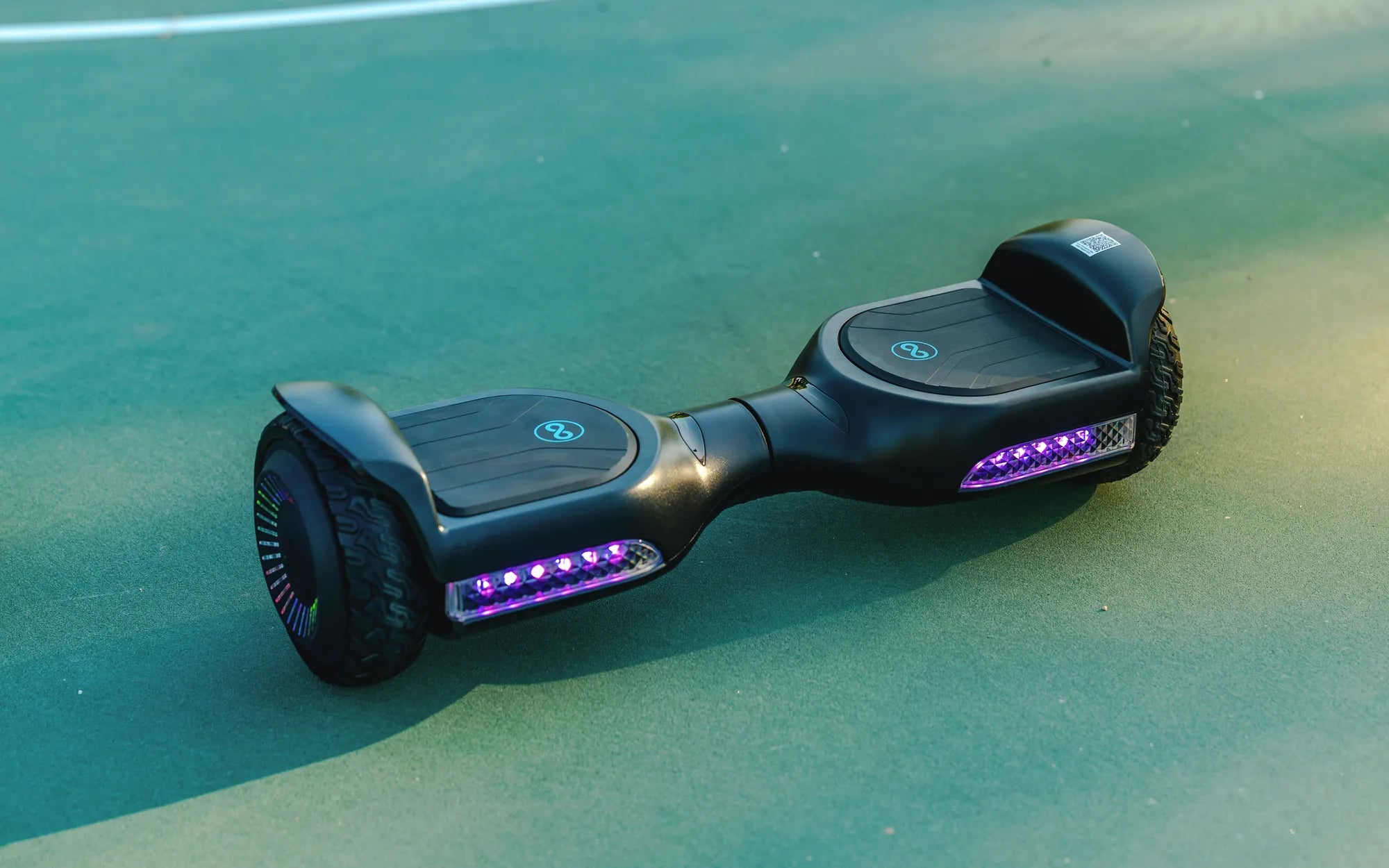
Introduction to the 2 Wheel Self Balancing Scooter
What is the 2 wheel self balancing scooter? It is a hands-free personal electric vehicle (PEV), often colloquially called a hoverboard or self-balancing board. This innovative device uses internal gyroscopes and microprocessors to automatically maintain balance, translating your body's subtle leans into forward, backward, and turning motion.
This complete guide will demystify the technology, outline critical safety features, and provide a practical roadmap for new riders. You will learn the science behind the ride, how to evaluate different models, and the essential steps to becoming a confident, safe operator. Understanding the 2 wheel self balancing scooter is the first step to unlocking a new form of efficient, enjoyable micro-mobility.
The Core Technology: How Self-Balancing Works
The magic of the 2 wheel self balancing scooter lies in a sophisticated feedback loop between sensors, a computer, and motors. At its heart are inertial measurement units (IMUs) containing gyroscopes and accelerometers. These components constantly measure the board's tilt angle and rotational rate hundreds of times per second.
A central microprocessor acts as the brain, receiving this real-time data. When you lean forward, the sensors detect the change in the deck's angle. The processor calculates the precise correction needed and sends a command to the electric motors inside each wheel. The motors spin at varying speeds to propel the board forward, effectively "chasing" your center of gravity to keep you upright.
This process creates an intuitive control system. Leaning forward accelerates you; leaning back decelerates or reverses. To turn, you apply differential pressure—pushing your right toe down turns you left, and pushing your left toe down turns you right. The system's responsiveness and stability are directly tied to the quality of these components, which is where engineering-focused brands distinguish themselves.
Anatomy of a Quality Self-Balancing Scooter
Not all 2 wheel self balancing scooters are created equal. A reliable model is built around several key components that determine its safety, performance, and longevity. Understanding this anatomy is crucial for making an informed purchase.
The foundation is a robust frame, typically made from reinforced aluminum or magnesium alloy, which must withstand daily impacts and rider weight. Inside each wheel hub is a brushless DC electric motor, with power ratings (often 250W to 350W per motor) defining torque and hill-climbing ability. The battery pack, the vehicle's lifeblood, is the most critical safety component.
Connecting everything is the control board, housing the main processor and sensor suite. The quality of its soldering and component shielding dictates reliability. Finally, the tires—either air-filled (pneumatic) for shock absorption on rough terrain or solid rubber for puncture-proof convenience on smooth surfaces—define the ride comfort. Each part must work in flawless harmony for a safe experience.
Non-Negotiable Safety Features: What to Look For
Safety is the paramount concern when evaluating any 2 wheel self balancing scooter. The market's history has shown that cutting corners on safety can have serious consequences. Therefore, certain features are non-negotiable for any reputable model.
UL 2272 Certification: The Fire Safety Standard
The UL 2272 certification is the single most important safety benchmark. This rigorous standard, developed by Underwriters Laboratories, tests the entire electrical system—battery, charger, and motor management—for electrical and fire safety. It involves over 20 tests including overcharge, short circuit, and crush tests. A certified battery pack, like those used in all Gyroor models, has undergone this testing, drastically reducing the risk of thermal runaway and fire. Never purchase a scooter without this certification.
IP Rating: Protection From the Elements
An IP (Ingress Protection) rating indicates resilience against dust and water. For practical urban use, a minimum of IPX4 (protection from water splashes) is advisable. A rating of IPX5, which Gyroor designs to, means the housing can withstand water jets from any direction, allowing you to confidently ride on damp roads, through puddles, and in light rain without fear of internal damage.
Robust Battery Management Systems (BMS)
A quality Battery Management System is the guardian of the battery pack. It monitors individual cell voltage, temperature, and current flow. It prevents overcharging, over-discharging, and short circuits, and balances cells to ensure longevity. A sophisticated BMS is a key component within UL 2272 certification and is essential for achieving the advertised 500+ charge cycles.
Performance Metrics: Understanding Speed, Range, and Terrain
Performance specifications can be confusing. Here’s what terms like speed, range, and motor power actually mean for your riding experience. These factors determine where and how you can use your 2 wheel self balancing scooter.
Speed: Most consumer models have a top speed between 6-10 mph (10-16 km/h). This is governed by software for safety and stability. Higher speeds require more advanced balancing skills and increase stopping distance.
Range: Advertised range (e.g., 10-12 miles) is based on ideal conditions: a light rider on flat, smooth pavement at moderate speed. Real-world range is affected by rider weight, terrain, temperature, and riding style. Hills, frequent acceleration, and cold weather can reduce range by 30-40%.
Motor Power & Terrain: Total motor power (2x 250W = 500W) indicates hill-climbing ability. A 500W+ system can handle moderate slopes (around 15 degrees). For off-road or hilly use, look for higher wattage and larger, air-filled tires. For purely urban commuting on sidewalks, solid tires and standard power may suffice.
| Use Case | Recommended Motor Power | Recommended Tire Type | Key Feature Focus |
|---|---|---|---|
| Urban Commuting (Smooth Pavement) | 350W - 500W Total | Solid Rubber (8.5") | Portability, IPX5 Rating, Range |
| Suburban/ Park Riding | 500W - 700W Total | Air-Filled (10") | Comfort, Moderate Hill Climb |
| Off-Road/ Trail Riding | 700W+ Total | Large Air-Filled (10.5"+) | Maximum Torque, Suspension, Durability |
Gyroor's Approach: Engineering for Reliability and Trust
As a leader trusted by over 100,000 riders in North America and Europe, Gyroor's philosophy centers on certified safety and rider-focused engineering. This approach transforms the 2 wheel self balancing scooter from a novelty into a dependable micro-mobility tool.
Every Gyroor scooter starts with a UL 2272 certified battery pack. This isn't an optional upgrade; it's the foundation. These battery cells are rigorously tested for 500+ charge cycles, ensuring long-term capacity retention. The electrical systems are then integrated into IPX5 water-resistant shells, allowing the scooters to handle real-world conditions like wet pavement and road spray without compromising internal components.
Beyond the hardware, reliability is backed by a clear 1-year warranty and accessible customer support. This ecosystem of safe components, durable design, and post-purchase support provides the peace of mind necessary to fully enjoy the freedom of a 2 wheel self balancing scooter. It represents an investment in a product built to last, not just a temporary gadget.
Mastering Your First Ride: A Step-by-Step Guide
Learning to ride a 2 wheel self balancing scooter is easier than it looks, but a methodical approach ensures safety and builds confidence quickly. Always wear safety gear during this learning phase.
Step 1: Mounting and Finding Neutral. Place the scooter on a flat, open surface like a carpeted room or short grass (which provides a softer fall). Use a wall or sturdy chair for support. Step on with one foot, ensuring the footpad is centered. The board will likely wiggle—this is normal. When stable, quickly place your second foot on the other pad. Stand upright with knees slightly bent, distributing weight evenly. Find the "neutral" point where the board stays still.
Step 2: Basic Movement. Look straight ahead, not at your feet. To move forward, ever so slightly lean your ankles and shift your weight forward from the ankles, not the waist. To stop, gently lean back to the neutral position. Practice moving one body length forward and stopping until it feels controlled. Dismount by stepping off backwards one foot at a time, using your support.
Step 3: Turning and Control. Once you can start and stop smoothly, practice turning. At a slow roll, apply gentle pressure with your right toes to turn left, and with your left toes to turn right. Start with wide, gradual arcs. Practice figure-eights to build coordination. Remember: sharper turns require slower speeds.
Step 4: Progressive Practice. After 30-60 minutes on a soft surface, move to a smooth, flat pavement area like an empty parking lot. Practice emergency stops by leaning back more assertively. Gradually increase speed within your comfort zone, always maintaining a slight knee bend for stability.
Riding Safely: Etiquette and Best Practices
Operating a 2 wheel self balancing scooter responsibly ensures your safety and maintains positive relationships with other path users. Safety extends beyond personal gear to how and where you ride.
Essential Safety Gear: A certified bicycle or multi-impact helmet is mandatory. Wrist guards are highly recommended, as falls often involve putting hands out. Knee and elbow pads provide additional protection, especially for learners.
Riding Etiquette: On shared paths, ride on the right and pass on the left, announcing yourself politely (e.g., "Passing on your left!"). Yield to pedestrians at all times. Avoid sidewalks crowded with pedestrians—opt for bike lanes or quiet residential streets where legal. Use a bike light or reflective clothing when riding in low-light conditions. Never ride under the influence of alcohol or drugs.
Legal Awareness: Laws governing 2 wheel self balancing scooters vary widely by city, state, and country. Common restrictions include age limits (often 16+), bans on roadway use, speed limits on paths, and requirements for lights after dark. It is your responsibility to check and adhere to local regulations before riding in public spaces.
Maintenance and Care for Longevity
Proper maintenance maximizes the lifespan and performance of your 2 wheel self balancing scooter. Simple, regular checks can prevent most issues.
Battery Care: Avoid draining the battery to 0%. Recharge when it drops to 20-30%. Do not leave the scooter on the charger indefinitely after it's full. Store the scooter in a cool, dry place, and if storing for more than a month, leave the battery at around 50-60% charge.
Tire and Hardware Checks: For air-filled tires, maintain the recommended PSI weekly for optimal range and comfort. Monthly, inspect the tire tread for wear or embedded debris. Check that all screws on the frame and wheel hubs are tight (but do not over-tighten). Wipe down the scooter with a damp cloth after riding in wet or dirty conditions; the IPX5 rating allows this safely.
Software Updates: Some models, including advanced Gyroor scooters, may offer firmware updates via a mobile app. These updates can improve motor control algorithms, battery management, and safety features. Check for updates periodically.
Frequently Asked Questions (FAQ)
Q1: What is the typical weight limit for a 2 wheel self balancing scooter?
A: Most quality models support riders between 44 lbs (20 kg) and 265 lbs (120 kg). Always check the manufacturer's specified maximum load capacity. Exceeding it can strain the motors, reduce battery life, and compromise stability.
Q2: How long does the battery take to charge, and what's the real-world range?
A: Full charge times typically range from 2 to 5 hours. Real-world range depends on conditions; a scooter advertised for 12 miles may achieve 8-10 miles for an average-weight rider on mixed terrain. Cold weather can further reduce this range.
Q3: Can I ride my IPX5-rated scooter in the rain?
A: Yes, an IPX5 rating means it can withstand water jets from any direction. It is safe to ride in light rain, through puddles, and on wet roads. However, avoid submerging the scooter in deep water, and do not ride during heavy downpours or floods.
Q4: Is the 2 wheel self balancing scooter difficult to learn for adults?
A> Most adults can learn the basics within 15-30 minutes of practice in a safe, open area. The learning curve is generally quicker than for a bicycle. Balance and confidence improve significantly within the first few hours of practice.
Q5: Are these scooters legal on roads and sidewalks?
A> Laws vary significantly. In many US jurisdictions, they are not permitted on public roads but may be allowed on sidewalks, bike paths, or private property. In the EU, they are often classified as personal light electric vehicles with specific rules. Always check your local municipal and state/provincial regulations before riding in public.
Making the Right Choice for Your Needs
Choosing the right 2 wheel self balancing scooter requires matching its capabilities to your intended use. Consider your primary environment: smooth city streets, park paths, or off-road trails. Factor in your weight and any need for hill climbing. Prioritize models with UL 2272 and a meaningful IP rating above all else.
For commuters, a lightweight model with solid tires and good range is ideal. For recreational riders seeking comfort on varied surfaces, air-filled tires and more power are key. Brands like Gyroor offer models tailored to these different profiles, all built on the same foundation of certified safety. The right choice balances performance desires with non-negotiable safety standards.
Your Journey to Hands-Free Mobility Starts Here
The 2 wheel self balancing scooter represents a fascinating convergence of physics, engineering, and personal transport. It offers a unique, efficient, and enjoyable way to cover short distances. However, the core takeaway is that the experience is defined by the product's quality. A scooter built with certified components, water-resistant durability, and reliable support isn't just a product—it's a platform for confident exploration.
By prioritizing safety through standards like UL 2272, practicing responsible riding habits, and performing simple maintenance, you can ensure years of reliable service. This technology, when engineered and used correctly, provides a glimpse into the future of urban mobility. Ready to experience the blend of innovation and practicality that a properly built 2 wheel self balancing scooter offers? Explore the full range of UL-certified, IPX5-rated models designed for real-world riding. Browse the full Gyroor collection at gyroorboard.com to find the scooter that matches your adventure.
Christmas Gift Ideas for Girls Age 11: Fun and Thoughtful Presents
Christmas Gift Ideas for Girls Age 11: Fun and Thoughtful Presents