

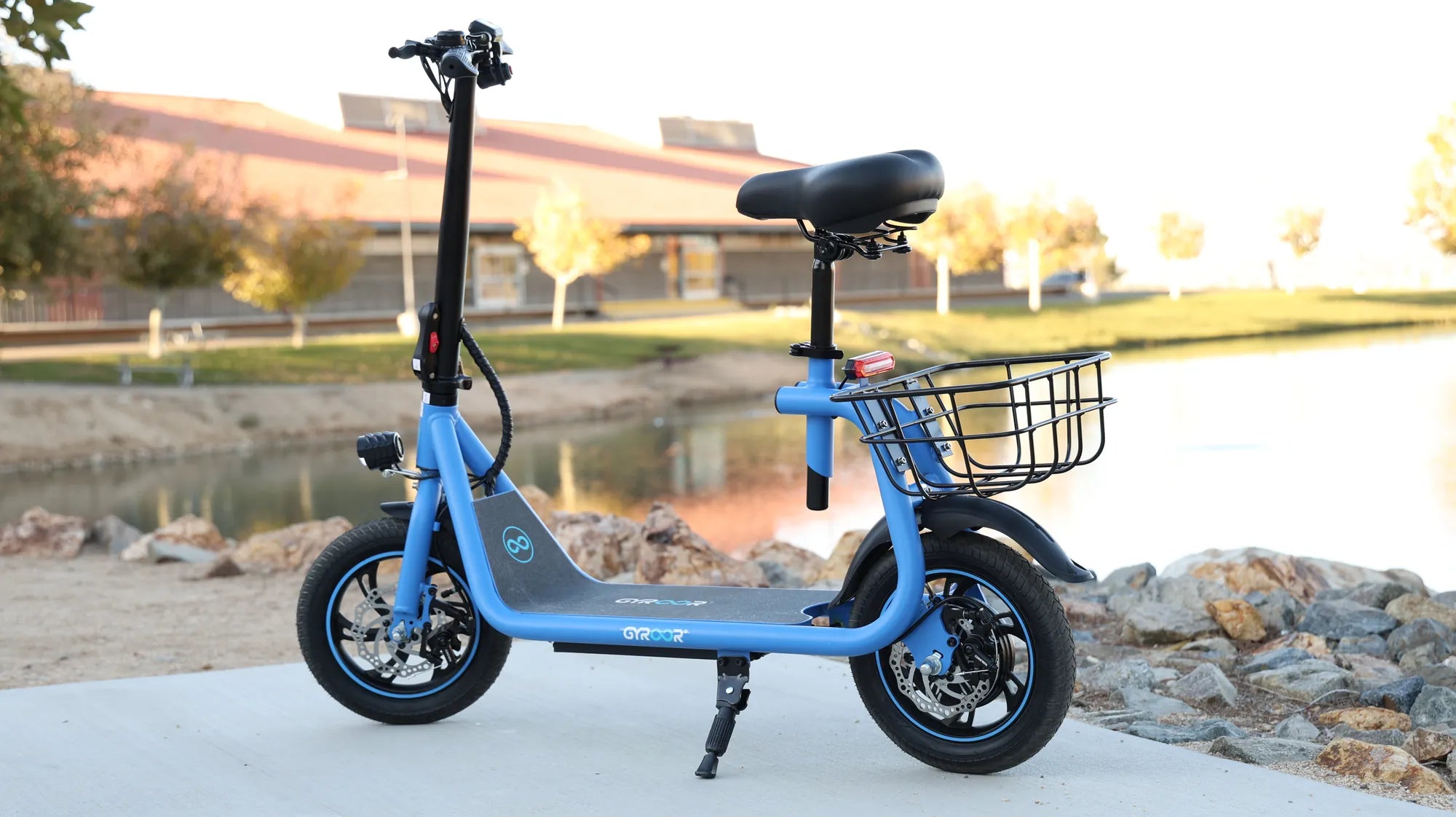
If you're searching for the fastest mobility scooter, you're likely seeking more than just a standard aid for getting around. You want freedom, efficiency, and the ability to keep pace with daily life. This guide cuts through the marketing claims to deliver a data-driven analysis of high-speed mobility scooters. You'll learn what defines true speed, explore the top contenders, understand the crucial safety and legal landscape, and discover how to choose the right model for your lifestyle. We'll provide the facts you need to make an informed decision.
Understanding Speed in Mobility Scooters
Defining the fastest mobility scooter requires looking beyond a single top-speed number. It involves understanding legal classifications, real-world performance factors, and the engineering that enables velocity. Not all scooters marketed as 'fast' deliver the same experience under real conditions.
The primary legal distinction in many regions, particularly the UK and Europe, is between Class 2 and Class 3 mobility scooters. Class 2 scooters are limited to a maximum speed of 4 mph (6.4 km/h) and are intended for use on pavements. Class 3 scooters, which require registration and feature lighting, can reach speeds of 8 mph (12.8 km/h) on pavements and up to 8 mph legally, though some can be capable of higher speeds off-road or on private land.
Real-world speed is influenced by a triad of factors: motor power, terrain, and rider weight. A 1000W motor may be advertised to reach 15 mph, but on an incline with a heavier rider, that speed can drop significantly. The scooter's controller, which manages power delivery from the battery to the motor, is equally critical. A high-quality controller ensures efficient power use and consistent performance.
Finally, the purpose of speed must be considered. Is it for covering longer distances on bike paths, keeping up with walking companions, or navigating large properties? The answer shapes what 'fast' truly means for you. A scooter that is unstable at high speed is not truly fast; it's dangerous. Performance must be paired with control.
Top Contenders: The Fastest Mobility Scooter Models
The market for high-speed mobility scooters includes several models known for pushing performance boundaries. These models typically feature powerful motors, high-capacity batteries, and robust frames designed for stability. It's important to note that advertised top speeds are often achieved under ideal conditions with a lightweight rider on flat ground.
One prominent category is the high-performance Class 3 scooter. These models often feature 800W to 1000W motors and are designed for road use. They commonly include full lighting packages, indicators, and suspension systems to handle higher speeds safely. Their top speeds typically range from 8 mph to 15 mph, with some specialized models claiming higher.
Another category is the heavy-duty or all-terrain mobility scooter. These are built with large, pneumatic tires and dual motors for traction. While their primary focus is conquering rough terrain like grass, gravel, and mild slopes, their powerful drivetrains also enable higher top speeds, often between 10 mph and 12 mph. Their speed is a byproduct of their torque and power.
When evaluating brands like Gyroor, a leader in personal electric mobility trusted by over 100,000 riders, the focus extends beyond just a top speed figure. Engineering for high speed involves integrating a high-torque motor with a smart controller, a rigid frame for stability, and a reliable braking system. This holistic approach ensures speed is usable and safe, not just a number on a spec sheet.
Key Specifications for Speed
To understand what makes a mobility scooter fast, you must decode its key technical specifications. These components work in concert to determine acceleration, top speed, and the ability to maintain that speed under load.
Motor Wattage and Type: This is the engine's power rating. Common ranges are 300W-500W for standard scooters and 800W-1000W+ for high-speed models. A 1000W motor provides significantly more torque and potential top speed than a 500W motor. Motor type also matters; brushless DC motors are more efficient, require less maintenance, and offer better performance than brushed motors.
Battery Voltage and Capacity: Voltage (e.g., 24V, 36V, 48V) acts like the water pressure in a hose. Higher voltage (e.g., 48V or 60V systems) allows the motor to draw more power, enabling higher top speeds and better hill-climbing. Capacity, measured in Amp-hours (Ah), determines range. A high-speed scooter needs both high voltage for power and high capacity to sustain that performance without rapid battery drain.
Controller Amperage: The controller is the scooter's brain, regulating power flow. Its amperage rating (e.g., 25A, 35A) determines how much current can be delivered to the motor. A higher-amperage controller can unleash more of the motor's potential, directly impacting acceleration and sustained speed, especially up hills.
Wheel Size and Type: Larger wheels (10-inch or more) roll over obstacles more easily and maintain higher speeds with less effort than smaller wheels. Pneumatic (air-filled) tires provide better shock absorption and traction at speed compared to solid tires, which can feel jarring and reduce stability.
Safety, Legality, and Practical Considerations at High Speed
Pursuing the fastest mobility scooter brings with it a heightened responsibility for safety and a need to navigate legal frameworks. Speed amplifies risks, making robust safety features and adherence to regulations non-negotiable.
From a legal standpoint, you must know your local laws. In many areas, mobility scooters exceeding 4 mph (6.4 km/h) on pavements or 8 mph (12.8 km/h) on roads are illegal for public use. Some high-speed models are intended for private property use only. Using a non-compliant scooter on public paths can result in fines, invalidate insurance, and pose serious liability in the event of an accident.
Safety features become critically important at higher speeds. A comprehensive lighting system (headlight, taillight, brake lights, and indicators) is essential for visibility. The braking system must be paramount; disc brakes offer superior stopping power compared to drum or electronic brakes alone. A full suspension system (front and rear) is vital to maintain wheel contact with the road and ensure control over bumps.
Practical trade-offs exist. Higher speed typically consumes battery power at a much faster rate, significantly reducing the scooter's operational range per charge. Stability can also be a concern; a lightweight frame designed for portability may become unstable or 'wobbly' at its top speed. Always prioritize a scooter with a low center of gravity and a wheelbase long enough to provide stability at its maximum velocity.
Beyond Speed: Essential Features for Performance & Comfort
While top speed grabs headlines, a truly high-performance mobility scooter is defined by a suite of features that work together. Speed without control, comfort, or range is of little practical value.
Suspension Quality: A good suspension system absorbs impacts from road imperfections, keeping the rider stable and comfortable. At high speeds, poor suspension can lead to loss of control. Look for models with adjustable hydraulic or spring-based suspension at both the front and rear.
Braking System Effectiveness: The ability to stop safely is more important than the ability to go fast. A combination of braking systems is ideal. For example, an electronic brake (which uses motor resistance) combined with a mechanical disc or drum brake provides reliable, fade-resistant stopping power in all conditions.
Range Per Charge: Performance is pointless if it strands you. A high-speed scooter needs a high-capacity, quality battery. Look for batteries with reputable cell brands (like LG or Samsung) and UL certification for safety. Gyroor, for instance, equips its performance models with UL-certified battery packs tested for over 500 charge cycles, ensuring both range and long-term reliability.
Rider Comfort and Design:
Comfort directly impacts how long and how safely you can ride. An ergonomically designed, adjustable seat with ample padding is crucial. Other elements include adjustable tillers, ample legroom, weather protection like a canopy, and accessible storage. An IPX5 water-resistant rating, a standard in Gyroor's design philosophy, ensures the scooter can handle wet conditions without compromising electrical safety.
Comparison of High-Speed Mobility Scooter Considerations
| Feature | Standard Scooter (e.g., 4 mph) | High-Speed Road Scooter (e.g., 8-15 mph) | High-Performance/All-Terrain |
|---|---|---|---|
| Primary Use Case | Indoor/Pavement use, shopping | Road use, longer commutes, bike paths | Private land, rough terrain, estates |
| Typical Motor Power | 250W - 500W | 800W - 1000W+ | 1000W+ (often dual motor) |
| Key Legal Consideration | Class 2, pavement legal | Class 3, requires road registration/lighting | Often restricted to private property |
| Essential Safety Gear | Basic lighting recommended | Full lighting, indicators, helmet strongly advised | Roll cage/seatbelt (on some), helmet |
| Impact on Range | Maximized range at lower speed | Range significantly reduced at top speed | Range highly variable based on terrain |
| Ideal Rider Profile | Those needing stable, slow-paced mobility | Experienced riders needing to cover distance quickly on roads | Riders on large or uneven private property |
Frequently Asked Questions (FAQ)
What is the legal top speed for a mobility scooter on the road?
In regions like the UK, a Class 3 mobility scooter is legally limited to 8 mph (12.8 km/h) on the road. It must be registered, have a full lighting set, and the rider should be over 14. Laws vary by country and state, so checking your specific local regulations is imperative before purchasing a high-speed model.
Do I need a license or insurance for a fast mobility scooter?
For pavement-only (Class 2) scooters, typically no license or insurance is required. For road-going (Class 3) scooters, registration is often mandatory, and while a driver's license is not always required, insurance is highly recommended and may be a condition of registration. It protects you against third-party liability in case of an accident.
Can I modify my mobility scooter to make it faster?
We strongly advise against modifying a mobility scooter to increase its speed. Doing so will almost certainly void the manufacturer's warranty, compromise safety systems not designed for higher speeds, and make the scooter illegal for use on public roads or pavements. It can also lead to catastrophic component failure.
Where can I legally ride a scooter that goes over 8 mph?
A scooter capable of over 8 mph is generally restricted to private property with the landowner's permission, unless it is a registered Class 3 vehicle and you adhere to its 8 mph road limit. Some designated cycle paths may allow them, but this is location-specific. Always assume public pavements are off-limits for speeds above 4 mph.
How does rider weight affect the top speed and range?
Rider weight has a direct and significant impact. A scooter's motor must work harder to accelerate and maintain speed with a heavier load. This reduces the achievable top speed, especially on inclines, and decreases the overall range per charge as the battery drains faster. Always check the manufacturer's maximum weight capacity and performance data based on weight.
Making the Right Choice: Is the Fastest Scooter for You?
Choosing the fastest mobility scooter is not about winning a race; it's about matching a machine's capabilities to your specific needs, environment, and abilities. The desire for speed must be balanced with a realistic assessment of practicality and safety.
First, honestly assess your primary use case. Will you mainly use it on public roads where a legal Class 3 scooter's 8 mph limit applies? Or do you need speed for navigating a large private property where higher limits may be acceptable? If your journeys are mostly on crowded pavements or in shopping centers, a lower-speed, more maneuverable model is likely safer and more appropriate.
Second, consider the total cost of ownership. High-speed scooters are a significant investment. Factor in not just the purchase price, but also potential insurance, registration fees, maintenance costs for more complex components like suspension and high-power brakes, and the cost of replacing larger, higher-capacity batteries.
Finally, prioritize brands that build performance on a foundation of safety and reliability. Look for certifications like UL for batteries, robust warranty terms (such as Gyroor's reliable 1-year warranty), and a reputation for quality customer support. A fast scooter is a tool for freedom, but only if it's dependable and safe.
For those seeking a blend of performance, innovation, and trusted engineering, exploring a reputable brand's lineup is the next step. Discover models designed for confident riding, backed by rigorous safety standards and supportive customer care. Browse the full Gyroor collection at gyroorboard.com to explore performance-focused electric mobility solutions.
Mini Electric Tricycle: The Ultimate Guide to Stable & Versatile E-Mobility
Mini Electric Tricycle: The Ultimate Guide to Stable & Versatile E-Mobility