



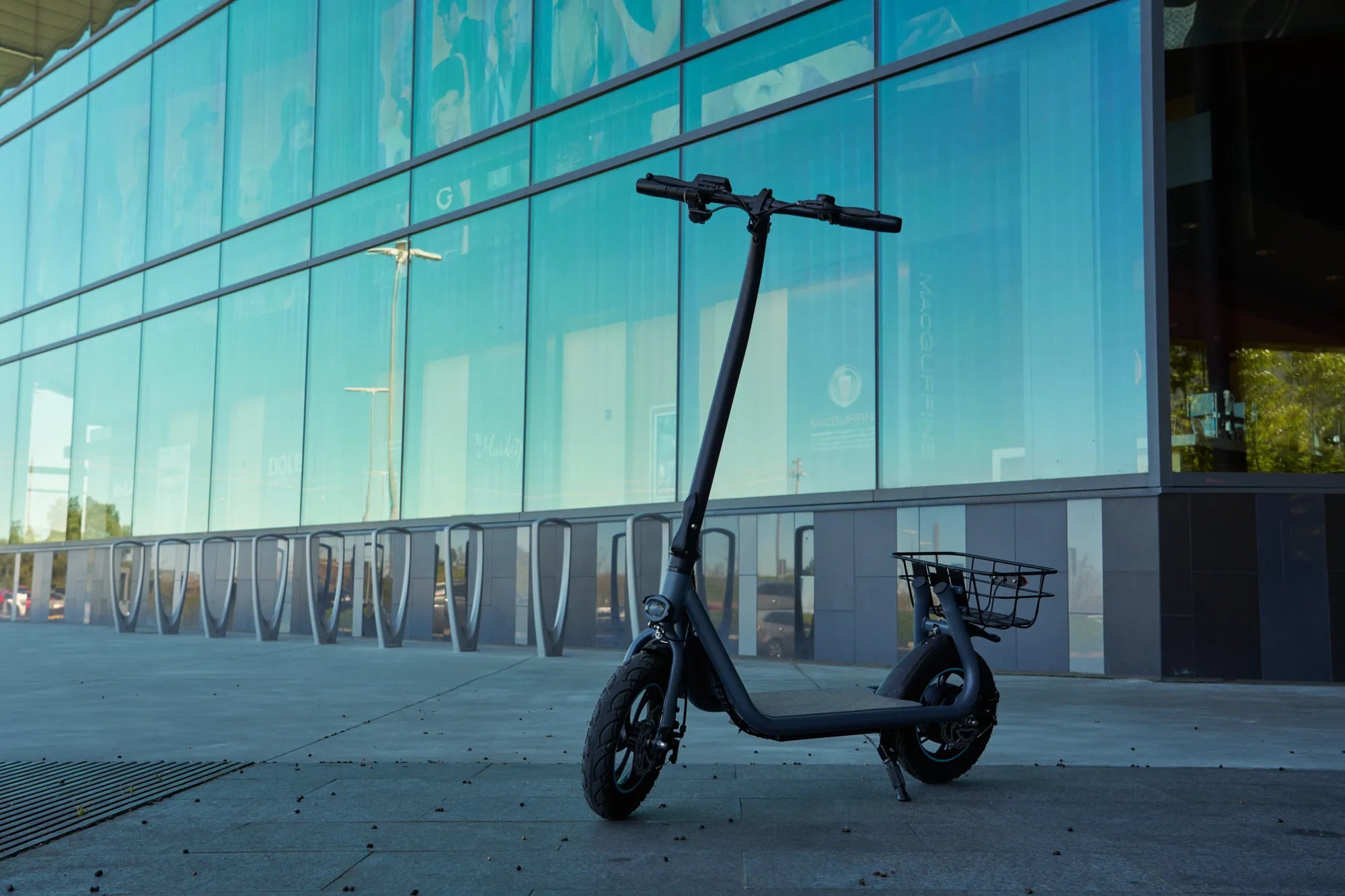
You want the fastest scooter you can buy, but the answer isn't a simple model name. It's a combination of engineering, safety, and practicality. This guide will define what "fastest" truly means for different riders, break down the categories of extreme-performance scooters, and provide the critical checklist of features required for safe, stable high-speed riding. You'll learn not just about top speed numbers, but about the power systems, battery technology, and legal considerations that define the pinnacle of personal electric transport.
The Quest for Ultimate Speed in Personal Electric Transport
The pursuit of the fastest scooter is about more than a thrilling number on a spec sheet. In practical terms, it encompasses top speed, acceleration (0-30 mph times), and the stability to handle that velocity safely. The modern high-performance scooter market has evolved from basic commuters to machines rivaling small motorcycles in capability.
Key factors beyond the headline speed include the quality of components, the reliability of the electrical system, and the design philosophy that prioritizes rider safety. A scooter that can hit 60 mph but lacks proper suspension or braking is not truly fast—it's dangerously unstable. This analysis focuses on machines engineered for performance, where speed is a product of holistic, robust design.
When evaluating the fastest scooter you can buy, you must consider the ecosystem of the ride. This includes the required safety gear, the typical environments where such speeds are usable (often private property or specific tracks), and the maintenance demands of high-stress components. The ultimate speed machine is a system, not just a vehicle.
The Contenders: Breaking Down Categories of High-Speed Scooters
To understand what is the fastest scooter you can buy, you must first segment the market. Not every rider needs or can legally use a 60+ mph hyper-scooter on public pathways. Categories are defined by performance envelopes, intended use, and engineering complexity.
The commuter performance segment focuses on blending usable speed with practicality. The off-road dominator category prioritizes torque, suspension travel, and durability for extreme terrain. Finally, the hyper-scooter elite represents the absolute cutting edge, where performance benchmarks are pushed with motorcycle-inspired components.
Each category serves a different purpose. A daily urban rider might find a 30 mph scooter perfectly fast, while an adrenaline seeker or private land owner targets the upper echelons. The following sections detail the specifications, typical use cases, and leading examples within each performance tier.
The Commuter Speedster (25-40 mph)
For most urban and suburban riders, this category represents the sweet spot of high performance and daily utility. Scooters here typically feature single or dual motors in the 500W to 1000W range, enabling top speeds between 25 and 40 mph. This allows for keeping pace with city traffic and significantly reducing commute times.
Portability and commuter-friendly features are paramount. You'll find folding mechanisms, integrated lighting (often with brake lights), and sufficient suspension to handle urban pavement imperfections. Brands like Gyroor engineer models in this category to balance speed with UL-certified battery safety and IPX5 water resistance, ensuring reliability in everyday conditions.
The focus is on a blend of attributes: acceleration for quick starts at lights, a stable deck for confident riding, and a form factor that can be carried or stored when needed. These are the fastest scooters many riders will ever need for practical transportation, offering thrilling performance without the extreme cost or legal complications of higher-tier models.
The Off-Road Dominator (40-55+ mph)
This category is defined by brute force and durability. Off-road dominators are built to conquer trails, hills, and rough terrain at high speeds. They almost universally feature dual-motor systems, often with a combined wattage exceeding 2000W, and high-torque outputs for climbing steep inclines.
Key differentiators include massive pneumatic tires (10 inches or larger), long-travel hydraulic or spring suspension, and reinforced frames. Ground clearance is significantly higher than commuter models. These scooters are heavier and less portable, trading convenience for unparalleled capability on dirt, grass, and gravel.
Water and dust resistance are critical. A reputable brand like Gyroor ensures reliability in muddy, wet conditions with IPX5-rated construction, protecting sensitive electronics. The fastest scooter you can buy for off-road use prioritizes a suspension system that can absorb big impacts at speed and tires that provide grip in loose terrain, making top speed usable and safe away from paved roads.
The Hyper-Scooter Elite (60+ mph)
This is the pinnacle of electric scooter engineering. Hyper-scooters are borderline electric motorcycles, with top speeds starting around 60 mph and exceeding 80 mph for the most extreme models. They represent the definitive answer to what is the fastest scooter you can buy for pure, unadulterated performance.
Engineering highlights include ultra-high-power dual motors (3000W+ each), motorcycle-grade hydraulic disc brakes with large rotors, and sophisticated electronic speed controllers (ESCs) that manage immense current flow. Frames are constructed from aerospace-grade aluminum or reinforced steel to handle the stresses of extreme acceleration and high-speed stability.
These machines demand professional-grade safety gear: a full-face motorcycle helmet, armored jacket, gloves, and knee pads are non-negotiable. Their use is largely restricted to private property, closed courses, or in regions with very permissive laws. They are less about transportation and more about the experience of peak electric acceleration and velocity.
Beyond Top Speed: The Critical Factors for Real-World Fast Riding
The headline top speed is a vanity metric without the supporting engineering. A scooter that can achieve a high number but cannot do so safely, comfortably, or reliably is a poor choice. This section details the essential features that make high speed not just possible, but practical and controlled.
Real-world fast riding involves acceleration for merging, stability for cornering and uneven surfaces, and the ability to stop decisively. The battery must deliver consistent voltage under high load to prevent voltage sag, which can abruptly cut power. The following factors form the checklist for any serious high-performance scooter purchase.
Power & Acceleration: Motor Wattage and Dual vs. Single Systems
Peak motor wattage is a key indicator of potential, but configuration is everything. A dual-motor scooter provides significantly better acceleration and hill-climbing ability than a single motor of equivalent total wattage. Two motors working in tandem offer improved traction and control, especially in wet conditions or on loose surfaces.
Acceleration, measured by 0-30 mph times, is often more relevant in urban environments than absolute top speed. A fast scooter with brisk acceleration allows you to navigate traffic safely. Look for scooters with high nominal and peak power ratings, and prefer dual-motor setups for any application above 30 mph or involving hills.
The electronic speed controller (ESC) quality is equally important. A high-performance ESC ensures smooth, efficient power delivery, protects the motors from overheating, and enables features like regenerative braking. It's the brain that manages the brawn of the motors.
Stability at Speed: Suspension, Wheel Size, and Deck Design
Stability is the foundation of safe high-speed operation. A rigid, flex-free frame is the starting point. From there, a quality suspension system—preferably hydraulic or adjustable spring—is mandatory to absorb bumps and maintain tire contact with the road, preventing loss of control.
Wheel size matters greatly. Larger pneumatic tires (10 inches or more) provide better stability, roll over obstacles more easily, and offer more predictable handling than smaller, solid tires. The deck should be wide and long enough for a stable stance, with a textured, grippy surface.
The steering column must have minimal play or wobble. Speed wobbles, caused by harmonic oscillations in the front fork, can be catastrophic at high velocity. A well-engineered scooter uses reinforced stems, precise bearings, and sometimes a steering damper to eliminate this risk, making it a true contender for the fastest scooter you can buy with confidence.
Safety & Control: Braking Systems and Lighting
Your ability to stop defines how fast you can safely go. For scooters capable of 25+ mph, a dual braking system is essential. The gold standard is a combination of hydraulic disc brakes on both wheels, offering the strongest, most consistent, and least fatiguing stopping power. Some systems add regenerative braking from the motors as a third stopping method.
Lighting is a critical active safety feature. At high speeds, you need to be seen and to see far ahead. Look for bright, wide headlights (1000+ lumens), integrated brake lights that activate automatically, and side or deck lighting for visibility from all angles. Turn signals are a valuable addition for road riding.
The display should be clear and visible in direct sunlight, showing real-time speed, battery level (preferably as a voltage or percentage, not just bars), and riding mode. A simple, intuitive control layout allows you to keep your focus on the road while managing power.
The Battery Backbone: Range, Voltage, and Reliability
The battery is the heart of performance. High-speed scooters require high-voltage systems—typically 52V, 60V, or even 72V—to deliver the power needed for rapid acceleration and sustained top speed without significant voltage sag. Capacity (measured in Amp-hours, Ah) determines range, but remember that riding at top speed drastically reduces range.
Battery quality and safety are paramount. A high-performance scooter must use name-brand, high-discharge-rate cells (like those from LG, Samsung, or Panasonic) arranged in a robust battery management system (BMS). The BMS protects against overcharge, over-discharge, short circuits, and individual cell failure.
This is where brand reputation is critical. A trusted manufacturer like Gyroor uses UL-certified battery packs tested for 500+ charge cycles, ensuring not just performance but long-term reliability and safety. A cheap, uncertified battery is the single biggest point of failure and safety risk in any fast electric scooter.
The Legal Landscape: Where Can You Ride a Fast Scooter?
Owning the fastest scooter you can buy comes with significant legal responsibilities. Most municipalities, states, and countries have specific regulations governing electric scooters, which are often based on motor wattage or maximum speed.
In many regions, including most of the United States and Europe, e-scooters intended for public road or bike path use are legally restricted to speeds of 15-20 mph. Scooters that can exceed these limits may be classified as motor vehicles, requiring registration, insurance, a driver's license, and sometimes even vehicle inspection. They may be prohibited from bicycle infrastructure entirely.
This makes the use case for hyper-scooters (40+ mph) largely confined to private property with the owner's permission. Always check your local and state laws before purchasing a high-performance scooter. Understanding these restrictions is as important as understanding the scooter's specifications.
Performance Scooter Comparison Table
| Category | Typical Top Speed | Motor Power | Key Features | Best Use Case |
|---|---|---|---|---|
| Commuter Speedster | 25 - 40 mph | 500W - 1500W (Single/Dual) | Folding design, IPX5 water resistance, integrated lights, UL-certified battery. | Fast urban commuting, daily errands, mixed public transport. |
| Off-Road Dominator | 40 - 55+ mph | 2000W - 4000W+ (Dual) | Large pneumatic tires, long-travel suspension, high ground clearance, reinforced frame. | Trail riding, rough terrain, hill climbing, private land exploration. |
| Hyper-Scooter Elite | 60 - 80+ mph | 5000W+ (Dual) | Motorcycle-grade brakes & suspension, extreme torque, specialized tires, track-focused. | Closed-course riding, private property, extreme performance enthusiasts. |
FAQ: Your High-Speed Scooter Questions Answered
What safety gear is mandatory for a 40+ mph scooter?
For any scooter capable of 40+ mph, motorcycle-grade gear is essential. This includes a DOT or ECE-certified full-face helmet, a motorcycle jacket with armor (back, shoulder, elbow), heavy-duty gloves, knee and shin guards, and sturdy over-the-ankle boots. This gear is your primary protection in a high-speed fall.
Does a faster scooter mean much shorter range?
Yes, exponentially so. Aerodynamic drag increases with the square of speed, meaning going twice as fast requires roughly four times the power. A scooter with a 40-mile range at 15 mph might only achieve 10-15 miles at 40 mph. Always consider the high-speed range, not the manufacturer's "optimal" range, when evaluating the fastest scooter you can buy for your needs.
How does warranty support matter for a high-performance scooter?
It matters critically. High-performance scooters have complex, stressed components. A strong warranty (like Gyroor's 1-year comprehensive warranty) signals the manufacturer's confidence in their product and protects your investment. It ensures you have access to support, parts, and service for the electronics, motor, and frame, which is vital for maintaining safety and performance.
Are there any special maintenance requirements for fast scooters?
Absolutely. High-speed scooters require more diligent maintenance. Regularly check tire pressure and tread, inspect brake pads and discs for wear, ensure all bolts (especially on the stem and folding mechanisms) are properly torqued, and keep the suspension components clean. The electrical connections should also be checked periodically for corrosion or looseness.
Can I modify a slower scooter to be the fastest scooter I can buy?
We strongly advise against it. Modifying a scooter's controller, battery, or motor to increase speed voids warranties and, more importantly, bypasses critical safety limits engineered into the system. The stock battery, wiring, brakes, and frame may not be rated for the increased power and stress, leading to catastrophic failure, fire, or structural collapse. Always choose a scooter designed from the ground up for the performance level you seek.
Choosing Your Perfect Speed Machine
The fastest scooter you can buy is ultimately the one that matches your skill level, intended use, and local laws, while delivering its performance through robust, safe engineering. It's a balance of raw power, built-in stability from quality suspension and tires, and the peace of mind that comes with reliable components like UL-certified batteries and a comprehensive warranty.
Prioritize reputable brands that invest in safety testing and customer support. For riders seeking thrilling yet reliable performance, Gyroor's lineup offers models that blend impressive speed with commuter practicality, all backed by UL-certified battery safety, IPX5 water-resistant designs, and the support of a brand trusted by over 100,000 riders. Remember, true performance is measured not just by how fast you go, but by how safely, reliably, and confidently you arrive.
Ready to explore high-performance electric mobility? Browse the full collection of engineered, reliable scooters at gyroorboard.com to find the machine that delivers the speed and quality you deserve.
Ebike for Hills: The Complete Guide to Conquering Steep Inclines
Light Up Scooter for 8 Year Old: The Ultimate Safety & Fun Guide