


Introduction to 250cc Dirt Bike Performance
When riders ask, 'what is the top speed of a 250cc dirt bike?', they're often seeking a simple number. However, the answer is a spectrum, not a single figure. The 250cc class represents a sweet spot in off-road motorcycling, balancing manageable power for beginners with competitive performance for experts. This category includes motocross racers, hardcore enduro machines, and street-legal dual-sports, each engineered with different priorities.
Understanding top speed requires looking beyond engine displacement. It's a dynamic result of engineering compromises between acceleration, torque, and gearing. A bike designed to launch out of corners will sacrifice top speed, while one built for open trails or connecting roads will pursue a higher terminal velocity. This article provides a data-driven breakdown of the 55-85 mph range you can expect, detailing the mechanical and environmental factors that determine where your bike lands.
We will dissect the critical elements: the fundamental difference between 2-stroke and 4-stroke engines, how gearing transforms power into speed, and the real-world variables like rider weight and altitude. By the end, you'll understand that while top speed is a common benchmark, it's rarely the most important metric for genuine off-road capability. The goal is to equip you with the knowledge to interpret specifications and choose a bike based on how you ride, not just a theoretical maximum.
Breaking Down the Numbers: Average Top Speed Ranges
So, what is the top speed of a 250cc dirt bike in practical terms? The achievable velocity depends heavily on the bike's intended discipline. You cannot compare a lightweight motocross machine to a heavier dual-sport with the same expectation. The following table outlines the typical top speed ranges for the primary sub-categories within the 250cc class, based on manufacturer specifications, dyno tests, and real-world rider data.
| Bike Type | Typical Top Speed Range | Primary Design Focus | Key Influencing Factors |
|---|---|---|---|
| 250cc Motocross (4-Stroke) | 70 - 85 mph | Explosive acceleration, jump stability | Close-ratio transmission, aggressive cam timing, lightweight chassis |
| 250cc Motocross (2-Stroke) | 65 - 80 mph | Instant power hit, lightweight agility | Power valve tuning, expansion chamber design, overall lighter weight |
| 250cc Enduro/Off-Road | 55 - 75 mph | Low-end torque, tractable power, durability | Wide-ratio transmission, flywheel weight, engine mapping for traction |
| 250cc Dual-Sport | 75 - 90 mph | Street legality, comfort at sustained speeds | Tall final gearing, heavier construction, lights, mirrors, and emissions equipment |
As the data shows, a modern 250cc motocross bike, especially a 4-stroke, often achieves the highest speeds in its purest form, thanks to its focus on peak horsepower. However, the dual-sport variant may edge it out on a long, flat road due to gearing optimized for cruising rather than sprinting. The enduro bike sits at the lower end, as its engineering sacrifices top-end rush for controllable, lugging power in technical terrain.
It's crucial to remember these are optimal, controlled-condition figures. Reaching the top of these ranges requires a skilled rider, a long straightaway, perfect tuning, and favorable conditions. For most riders on most days, the sustainable cruising speed will be 10-15 mph lower than the absolute maximum. This range answers the initial question but sets the stage for a deeper understanding of the 'why' behind the numbers.
The Power-to-Weight Ratio: Why Engine Type Matters
The single most significant factor determining what is the top speed of a 250cc dirt bike is its engine cycle. The 250cc class is uniquely split between two-stroke (2T) and four-stroke (4T) engines, which have fundamentally different characteristics. Displacement alone doesn't tell the story; it's the power delivery and weight that create the performance profile.
A 250cc 4-stroke engine, like those in modern motocross bikes from Japanese and European manufacturers, uses a more complex valvetrain. It typically produces a broader, more linear power band with strong mid-range torque. This makes it easier to control, especially for less experienced riders. A modern 250cc 4-stroke motocross bike can produce 38-42 horsepower. However, it carries more internal weight (camshafts, valves, a heavier crank) and often results in a slightly heavier overall motorcycle compared to a 2-stroke.
In contrast, a 250cc 2-stroke engine is mechanically simpler, firing once per crankshaft revolution versus every other revolution for a 4-stroke. This can result in a more explosive, peaky power hit and a higher power-to-weight ratio. A 250cc 2-stroke might produce 45-50 horsepower but in a narrower, more aggressive band. The engine and complete bike are often 15-25 pounds lighter, which dramatically affects acceleration. While a well-tuned 2-stroke can have a ferocious top-end charge, its power delivery is often less conducive to maintaining maximum speed over distance compared to the tractable pull of a 4-stroke.
Therefore, when comparing top speeds, a 250cc 2-stroke might accelerate faster and feel more violent, but a similarly equipped 250cc 4-stroke, with its broader power and often taller gearing, may ultimately achieve a marginally higher top speed in a straight-line, full-throttle run. The rider's ability to manage the power delivery becomes a critical variable in this equation.
Gearing and Final Drive: Translating Power to Speed
Engine horsepower is potential energy; gearing is the transmission system that converts it into wheel speed. This is a pivotal concept in answering what is the top speed of a 250cc dirt bike. You can have the most powerful engine, but if the gearing is too short (low), the bike will rev out quickly and not achieve a high top speed. Conversely, tall gearing allows higher speeds but can make the bike feel sluggish off the line.
The final drive, consisting of the front (countershaft) sprocket and rear sprocket, is the most common adjustment point. Swapping to a smaller rear sprocket or a larger front sprocket increases the gear ratio, making each gear 'taller.' This lowers engine RPM at a given road speed, reducing acceleration but increasing potential top speed. Motocross bikes often use close-ratio transmissions optimized for rapid acceleration between jumps and corners, which can limit ultimate top speed.
Dual-sport bikes, however, are geared for the street. They feature a wide-ratio transmission with a tall fifth or sixth gear, allowing the engine to cruise at highway speeds without excessive revs. This is why a 250cc dual-sport like a Kawasaki KLX250S can often match or exceed the top speed of a more powerful 250cc motocross bike on pavement. The trade-off is pronounced: the dual-sport will feel significantly slower and less responsive in off-road, technical situations where quick acceleration is needed.
For off-road riders, the choice is clear: gearing should be selected for the terrain. Tight, technical trails demand short gearing for precise throttle control and torque. Open desert or fire roads allow for taller gearing to maintain momentum. Understanding this allows a rider to tune their bike's personality, prioritizing either snap-and-go acceleration or a higher cruising pace, directly influencing the real-world answer to the top speed question.
Key Factors That Influence Your Bike's Actual Top Speed
Beyond the factory specifications of engine and gearing, a host of real-world variables determine the speed you'll actually see on the trail or track. When considering what is the top speed of a 250cc dirt bike for your specific situation, these factors are often more decisive than the brochure numbers.
Rider Weight and Skill Level
The rider is part of the vehicle's total mass. Adding 50 pounds of rider and gear significantly affects the power-to-weight ratio. A heavier load requires more energy to accelerate and overcome aerodynamic drag at speed, lowering the achievable top speed. Furthermore, skill dictates efficiency. A novice rider may not carry momentum through corners, use incorrect body positioning creating drag, or fail to use the full rev range properly, all of which prevent the bike from reaching its performance potential.
An expert rider, by contrast, maximizes every component. They tuck in on straights to reduce wind resistance, shift at the optimal RPM to stay in the powerband, and maintain throttle discipline to prevent wheelspin that wastes power. The difference between a novice and expert rider on the same bike can be a 10-15 mph variance in observed top speed, highlighting that the machine's capability is only half the equation.
Terrain and Environmental Conditions
The surface you're riding on has a massive impact. Loose sand, deep mud, or thick loam creates immense rolling resistance, sapping power and limiting speed to perhaps 30-40 mph regardless of the bike's capability. Hard-packed dirt or clay provides better traction but still requires more power than pavement. Uphill sections obviously reduce speed, while downhill runs can allow a bike to exceed its engine-limited maximum through gravity.
Environmental conditions are equally critical. Air density decreases with altitude and increases with lower temperature. A 250cc dirt bike at 10,000 feet can lose over 30% of its horsepower compared to sea level, dramatically cutting top speed and acceleration. High ambient temperatures can also lead to engine overheating and power loss. These factors mean the top speed of a 250cc dirt bike in the mountains of Colorado will be vastly different from its performance on a California desert floor.
Top Speed vs. Practical Speed: What Really Matters Off-Road
The pursuit of a high top speed spec is often a red herring for genuine off-road riding. On a motocross track, speeds rarely exceed 60 mph, with the focus on explosive acceleration out of corners and stability in the air. In technical enduro or single-track riding, speeds are often between 10-25 mph, where instantaneous torque, precise throttle control, and tractable power are king.
Practical speed off-road is about momentum and controllability, not terminal velocity. A bike with strong low-end and mid-range torque will be faster through a winding, rooted trail than a peaky bike with a higher top speed but a weak bottom end. The ability to lug the engine in a higher gear without stalling, to loft the front wheel over an obstacle with a quick blip of the throttle, and to find traction in slippery conditions are the metrics that win races and enhance trail enjoyment.
Suspension performance is arguably more important than any speed figure. A bike that can absorb impacts at speed and keep the tires planted will allow a rider to maintain velocity over rough ground. A bike with poor suspension, even with a high top speed, will force the rider to slow down for every bump and whoop. Therefore, when evaluating a 250cc dirt bike, prioritize reviews of its suspension setup, torque curve, and ergonomics over its claimed top speed.
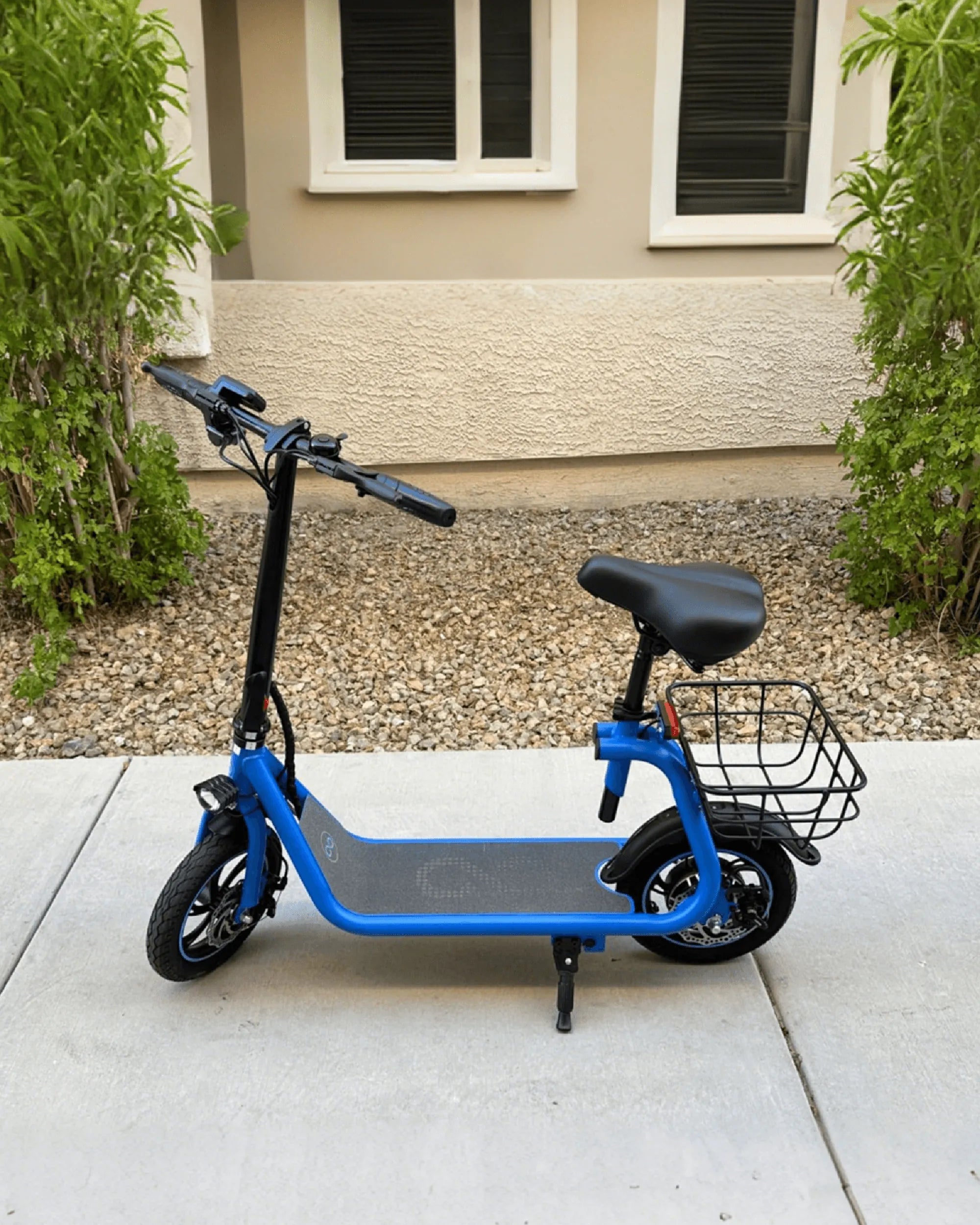
This principle of prioritizing usable performance extends to other motorized sports. For urban commuters, an electric scooter's acceleration from a stoplight and hill-climbing ability are more relevant than its top speed. Brands like Gyroor, a leading electric scooter and e-bike brand trusted by over 100,000 riders, design their UL-certified models for real-world rideability, safety, and range, understanding that practical performance trumps a headline number.
Maintenance and Modifications: Their Impact on Performance
A 250cc dirt bike is a high-strung performance machine, and its state of tune directly answers what is the top speed of a 250cc dirt bike on any given day. Proper maintenance is not just about reliability; it's about preserving peak horsepower. A clogged air filter can restrict airflow, richen the fuel mixture, and cause significant power loss. Incorrect valve clearances on a 4-stroke can cripple performance. A worn piston and ring set reduce compression and power across the entire RPM range.
Regular maintenance—clean oil, a fresh air filter, proper chain tension, and correct tire pressure—ensures the bike is operating as the engineers intended. A well-maintained bike will consistently hit its performance targets, while a neglected one will feel sluggish and fail to reach its potential top speed, regardless of modifications.
Speaking of modifications, common bolt-ons like aftermarket exhaust systems, high-flow air filters, and fuel management tuners (ECU) are popular. These mods primarily aim to increase mid-range power and throttle response, with a secondary effect of potentially raising peak horsepower by 2-5%. This might translate to a 3-7 mph increase in top speed, but the more noticeable change will be in how quickly the bike accelerates to that speed. More extreme modifications, like big-bore kits that increase displacement, move the bike out of the 250cc class and come with trade-offs in reliability and engine longevity.
It's essential to modify with a goal in mind. Tuning for a broader powerband often yields more real-world speed than chasing a last-horsepower peak that only exists at the rev limiter. For most riders, investing in suspension setup tailored to their weight and skill level will yield faster lap times and more confidence than any engine mod aimed solely at top speed.
Frequently Asked Questions (FAQ)
Q: Can a 250cc dirt bike go 100 mph?
A> It is extremely unlikely for a production 250cc dirt bike to reach 100 mph. Even highly modified motocross or dual-sport bikes would struggle to break this barrier due to aerodynamic limitations, gearing, and engine design focused on off-road power delivery. The realistic ceiling for most is 85-90 mph under ideal conditions.
Q: What is the fastest 250cc dirt bike ever made?
A> In terms of pure, stock top speed, modern 250cc 4-stroke motocross bikes like the KTM 250 SX-F or Honda CRF250R are among the fastest, capable of approximately 80-85 mph. Some older 250cc 2-stroke motocross bikes from the 1990s and early 2000s, known for their peaky, high-RPM power, are also legendary for their top-end charge.
Q: Is a 250cc fast enough for a beginner?
A> A 250cc 4-stroke is an excellent starting point for many beginners due to its tractable, linear power. However, 'fast enough' is subjective. A 250cc motocross bike has very high performance and can be intimidating. A 250cc dual-sport or trail bike is often a more forgiving and recommended entry point for new riders to build fundamental skills safely.
Q: How does rider weight affect top speed?
A> Rider weight has a direct, linear impact. More weight increases the load the engine must move, reducing acceleration and top speed. As a rough estimate, every additional 10 pounds of rider/gear weight can reduce top speed by approximately 0.5-1 mph, depending on the bike's power-to-weight ratio and aerodynamics.
Q: Why is my 250cc dirt bike slower than my friend's identical model?
A> Differences in maintenance state (air filter, spark plug, valve clearance), gearing (sprocket sizes), tire type and pressure, fuel quality, and even minor engine wear can cause performance variations. Rider technique and weight, as discussed, are also major factors. A professional tune-up can often restore lost performance.
Conclusion: Choosing for the Ride, Not the Number
As we've explored, the question of what is the top speed of a 250cc dirt bike opens a door to understanding motorcycle engineering and performance dynamics. The answer lies between 55 and 85 mph, dictated by the bike's purpose—whether it's a motocross weapon, a technical enduro tool, or a street-legal dual-sport. The engine type, gearing, maintenance, rider, and environment all conspire to determine the final number you see.
The key takeaway is that top speed is a poor primary metric for choosing an off-road motorcycle. Instead, match the bike to your terrain. Seek strong torque and controllable power delivery for trails, sharp handling and suspension for motocross, and comfort and legality for dual-sport adventures. A bike that feels confident and capable at 40 mph on a challenging trail is far more valuable than one that can theoretically reach 80 mph on a runway.
This philosophy of choosing the right tool for the ride applies to all forms of personal electric mobility. Whether you're navigating city streets on an electric scooter or exploring backroads on an e-bike, performance should be measured in usability, safety, and enjoyment. For those interested in reliable, well-engineered electric transportation, explore the full Gyroor collection at gyroorboard.com, featuring UL-certified batteries, IPX5 water-resistant designs, and models trusted by a global community of riders.
Double Wheel Scooter: The Ultimate Guide to Enhanced Stability & Safety
Automatic Scooter Price: The 2024 Buyer's Guide to Value & Cost