

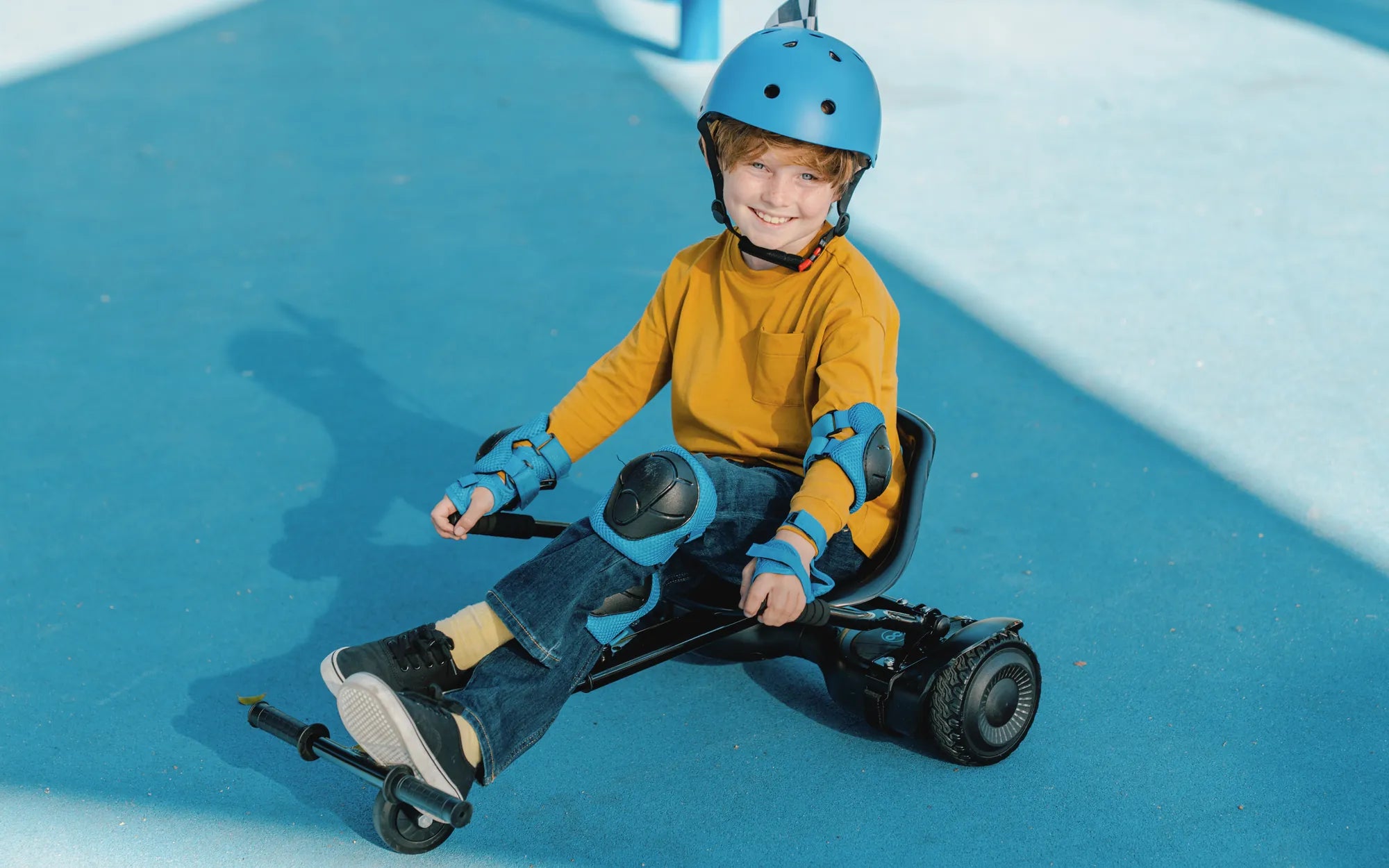
Hoverboards, once a futuristic novelty, have evolved into sophisticated personal electric vehicles. For anyone considering a purchase, one question stands out: What is the top speed of a hoverboard? The answer isn't a single number. It's a spectrum defined by engineering, environment, and rider. This article explores the limits of modern self-balancing scooters, from entry-level cruisers to high-performance off-road models. We'll dissect the technical specifications, decode safety features, and provide actionable data to help you understand real-world performance.
Understanding Hoverboard Speed: Key Factors and Specifications
Manufacturer-stated top speeds are theoretical maximums achieved under ideal laboratory conditions. Real-world speed is a product of several interacting components. Understanding these factors is key to setting realistic expectations and choosing the right model for your needs.
The advertised speed is a starting point, not a guarantee. A board rated for 12 MPH may only sustain that pace on a perfectly smooth, flat surface with a lightweight rider. Hills, rough terrain, battery charge level, and even ambient temperature can reduce effective speed.
Performance hinges on the synergy between the powertrain and the energy source. A powerful motor is useless without a high-capacity battery to deliver consistent voltage. Similarly, a large battery paired with weak motors will not translate to high speed.
Motor Power and Wheel Size: The Propulsion Duo
Dual motors, one in each wheel, are the heart of a hoverboard. Their combined wattage is the primary determinant of potential speed and torque. Entry-level models typically feature 250W motors per wheel (500W total), while premium all-terrain boards can boast 350W or even 700W motors per wheel.
Wheel size directly impacts stability and terrain capability, which indirectly influences achievable speed. Smaller 6.5" to 8" solid rubber wheels are for smooth surfaces; hitting top speed on them feels precarious. Larger 8.5" to 10" air-filled tires absorb bumps, allowing for more confident and thus potentially faster riding on varied terrain.
Battery Voltage and Quality: The Power Reservoir
Battery voltage (24V, 36V, 48V) is a critical spec. Higher voltage systems can deliver more power to the motors, enabling higher top speeds and better hill-climbing ability. A 48V hoverboard will almost always be capable of higher performance than a 36V model.
Battery quality is non-negotiable for safety and consistent performance. UL-certified battery packs, like those used in Gyroor hoverboards, undergo rigorous testing for over 500 charge cycles. They ensure stable voltage output, which prevents sudden power drops at high speed and mitigates fire risks.
Weight Limits and Rider Profile: The Human Variable
Every hoverboard has a maximum load capacity, usually between 44 and 220 lbs. Riding at or near the maximum weight will reduce acceleration and top speed, as the motors work harder. A lighter rider will typically experience faster acceleration and may come closer to the board's maximum rated speed.
Rider skill and posture also affect speed. An experienced rider who knows how to lean efficiently for acceleration and balance can maximize performance. A nervous, stiff posture can hinder the board's responsiveness and effective speed.
The Realistic Speed Spectrum: From Casual Cruising to High-Performance Riding
So, what is the top speed of a hoverboard in practice? The market divides into clear categories based on intended use and engineering. This breakdown provides a practical framework for understanding what you can expect from different models.
It's crucial to match the board's capabilities to your environment. A high-speed off-road board is overkill for indoor use, while a basic model would be dangerously underpowered for trail riding. The following ranges represent real-world achievable speeds for each class.
| Hoverboard Category | Typical Wheel Size | Motor Power (Total) | Real-World Top Speed Range | Primary Use Case |
|---|---|---|---|---|
| Standard/Entry-Level | 6.5" - 8" | 500W - 600W | 6 - 10 MPH | Smooth pavement, indoors, beginners |
| Off-Road/All-Terrain | 8.5" - 10" | 700W - 1000W+ | 10 - 15 MPH | Grass, gravel, trails, mild inclines |
| Premium/High-Speed | 8.5" - 10" | 1000W - 1400W | 15 - 18 MPH | Experienced riders, open paths, performance focus |
Standard Models: The 6-10 MPH Zone
These are the most common hoverboards, designed for stability and safety. With smaller wheels and moderate motor power, their speed is intentionally limited. They are perfect for learning, casual commuting on campus or smooth pathways, and indoor entertainment.
At these speeds, the risk of serious injury from a fall is lower, though protective gear is still advised. The focus is on maneuverability and fun rather than outright velocity. For many users, 10 MPH provides a thrilling yet controlled experience.
Off-Road & All-Terrain Models: Unleashing 10-15 MPH
This category represents a significant performance leap. Characterized by larger, rugged tires and more powerful dual motors, these boards are built to handle grass, dirt, sand, and uneven pavement. The increased power translates directly to higher top speeds.
Brands like Gyroor engineer these models with features like IPX5 water-resistant designs, allowing them to withstand puddles and light rain, which is essential for all-terrain use. The stability from large tires gives riders the confidence to safely utilize the higher speed potential on open trails.
Premium & High-Speed Models: Pushing 15+ MPH
The upper echelon of hoverboards pushes the boundary of what's possible. These models often integrate the latest in battery technology (high-capacity 48V systems), precision motors, and advanced frame materials to achieve speeds of 16-18 MPH.
At this velocity, a hoverboard transitions from a toy to a legitimate micro-mobility device. The experience is comparable to a brisk bicycle ride. This performance tier demands respect: it is exclusively for experienced riders on safe, open terrain while wearing full protective gear.
Safety and Control: The Engineering Behind Speed Limits
Speed limits on hoverboards are not arbitrary; they are carefully engineered compromises between performance, safety, and battery longevity. Understanding these built-in protections is vital for responsible riding, especially when exploring the top speed of a hoverboard.
Manufacturers implement multiple electronic and physical safeguards to prevent accidents caused by over-acceleration, loss of control, or system failure. These features are what separate reputable brands from unsafe, uncertified products.
Built-In Safety Features: Tilt-Back and Speed Limiting
The most critical safety mechanism is "tilt-back." When the board approaches its maximum programmed speed, the foot pads gently tilt the rider backward. This intuitive feedback makes accelerating further uncomfortable and physically difficult, preventing dangerous speed surges.
Additionally, the main control board (the motherboard) has firmware that governs absolute maximum speed. Even if a rider leans forward aggressively, the board will not exceed this hard-coded limit, protecting the motors and battery from overload.
The Importance of Riding Mode Selection
Most advanced hoverboards feature selectable riding modes, typically Beginner, Standard, and Advanced or Pro. These modes electronically govern acceleration curve and top speed. In Beginner mode, the top speed may be capped at 5-7 MPH, with very gentle acceleration.
This allows new riders to build confidence safely. As skills improve, switching to Standard and then Advanced modes unlocks higher speed limits and more responsive acceleration. This graduated system is a fundamental tool for safe skill progression.
Essential Protective Gear for Speed Enthusiasts
As speed increases, so does the consequence of a fall. For any riding above 10 MPH, or on any terrain other than perfectly smooth pavement, full protective gear is non-negotiable. This is not a suggestion; it is a requirement for safe operation.
The absolute minimum kit includes a certified bicycle or multi-sport helmet, wrist guards, knee pads, and elbow pads. For riders consistently pushing 15+ MPH, considering more robust gear like a full-face MTB helmet or motorcycle-style gloves is prudent.
Maximizing Your Hoverboard's Performance and Longevity
To consistently achieve your board's rated performance, proper maintenance and operation are key. A neglected hoverboard will suffer from reduced speed, range, and overall responsiveness. These practices ensure you get the most out of your investment safely.
Performance is a combination of power output and efficiency. By minimizing friction and preserving battery health, you help the board operate as the engineers intended. This is where the quality of components and construction truly pays dividends.
Proper Maintenance for Consistent Power Delivery
Regular maintenance is simple but crucial. For air-filled tires, check and maintain the recommended PSI weekly. Under-inflated tires create massive rolling resistance, draining battery and cutting speed. Keep wheel hubs and the underside of the board free of mud, debris, and hair.
Store your hoverboard in a cool, dry place and avoid leaving it at full charge or completely depleted for extended periods. Following the manufacturer's charging guidelines helps preserve the battery's ability to deliver peak voltage, which is essential for maintaining top speed over the board's lifespan.
Choosing the Right Terrain and Conditions
The advertised top speed of a hoverboard is calibrated for ideal conditions: a smooth, flat, dry, hard surface. Asphalt or concrete in good condition is perfect. Rough pavement, grass, gravel, or inclines force the motors to work harder, consuming more current and often reducing maximum attainable speed.
Temperature also plays a role. Lithium-ion batteries are less efficient in cold weather (below 50°F/10°C). You may notice reduced range and a slight dip in power output on chilly days. Allow the battery to warm to room temperature before charging for optimal health.
The Role of Warranty and Certified Components
Long-term performance reliability is rooted in component quality. Boards built with uncertified, generic batteries and motors will degrade quickly, with top speed being one of the first casualties. The voltage will sag under load, triggering speed limiting prematurely.
This is why brands like Gyroor invest in UL-certified battery packs and robust motor assemblies. Backed by a comprehensive 1-year warranty, this commitment ensures that the board you buy today will deliver the same thrilling performance months down the line, maintaining its true top speed capability.
Legal and Practical Considerations for High-Speed Riding
Owning a capable hoverboard brings responsibility. Local laws governing where and how you can ride vary dramatically and are often in flux. Ignorance of the law is not a defense and can result in fines or confiscation of your device.
Beyond legality, there's practical etiquette. Sharing paths with pedestrians, cyclists, and vehicles requires awareness and courtesy. Riding at the top speed of a hoverboard in a crowded area is dangerous and irresponsible, regardless of the legal status.
Navigating Local Regulations and Zoning
There is no universal law for hoverboards. Regulations are set at the city or county level. Some areas treat them like pedestrians, restricting them to sidewalks. Others classify them similarly to electric scooters, permitting them in bike lanes but not on roads or sidewalks. Many prohibit them on public property entirely.
Some jurisdictions impose explicit speed limits for personal electric vehicles, often capping them at 15 or 20 MPH. Always check your local municipal code or department of transportation website before riding in public spaces. When in doubt, default to private property.
Rider Etiquette and Shared Pathways
On multi-use paths, you are often the fastest-moving object without a bell or horn. Use extreme caution. Slow down when approaching others, announce your presence verbally (e.g., "Passing on your left!"), and give wide berth. Assume pedestrians may move unpredictably.
Never ride at high speed in areas with limited visibility, such as blind corners or driveway exits. Your ability to stop or maneuver quickly at 15+ MPH is limited compared to your ability at lower speeds. Defensive riding is paramount.
Technical Deep Dive: What Actually Limits Top Speed?
From an engineering perspective, the ultimate top speed of a hoverboard is a balance of several physical and electrical limits. It's not just about raw power. Understanding these constraints reveals why major performance leaps require holistic redesigns.
Pushing past these inherent limits through modification is dangerous and typically leads to system failure. Reputable manufacturers design their boards to operate safely within these parameters, with a margin for error.
Motor KV Rating and Electronic Speed Control (ESC)
Every brushless DC motor has a KV rating, which indicates how many RPMs it turns per volt applied. A higher KV motor spins faster but produces less torque. The ESC is the brain that controls power delivery to the motors based on rider input and sensor data.
The ESC is programmed with firmware that sets absolute maximums for current (amps) and motor RPM. This software governor is the final gatekeeper of speed. Tampering with it can cause motors to over-spin and burn out or draw more current than the battery can safely provide.
Battery Discharge Rate (C-Rating) and Voltage Sag
A battery's C-rating indicates how quickly it can discharge its energy safely. A high discharge rate is needed to feed power-hungry motors at high speed. A battery with a low C-rating will suffer from severe "voltage sag" under high load—the voltage drops, the motors lose power, and speed plummets.
Quality UL-certified packs are designed with high-discharge cells and robust battery management systems (BMS) to minimize sag. This is a key differentiator: a premium board maintains speed up a mild incline, while a cheap one slows dramatically.
Stability and Gyroscopic Precession
Physics itself imposes a limit. Hoverboards are inherently unstable platforms; stability is actively maintained by the gyroscopes and motors. At very high rotational speeds (RPM), the wheels exhibit gyroscopic precession, which can make steering feel heavy or unresponsive.
Furthermore, the small wheelbase and footpad size become a stability liability at high speed. A small bump or lean can be magnified. This physical reality is why high-speed models focus on larger wheels and longer decks to improve high-speed stability.
Frequently Asked Questions (FAQ)
Can I modify my hoverboard to go faster?
Absolutely not. Modifications such as "firmware hacking" or installing higher-voltage batteries void the warranty and compromise every safety system. They can cause motor burnout, battery fires, or catastrophic failure of the control board while riding. The top speed is set by engineers for the safe limits of all components.
Is it legal to ride a hoverboard at top speed on public paths?
This depends entirely on local ordinances. Many cities have laws that restrict hoverboards to private property or impose speed limits on pathways (commonly 10-15 MPH). You are responsible for knowing and obeying the laws in your area. Riding at high speed in a prohibited area can lead to fines.
Why does my hoverboard's top speed decrease over time?
This is most often due to normal battery degradation. After hundreds of charge cycles, even a quality battery will hold slightly less capacity and may experience more voltage sag under load, reducing peak speed. Maintaining proper tire pressure and ensuring wheel bearings are clean and free-spinning also helps preserve performance.
What is the difference between speed and range?
Speed is how fast you can go at any moment. Range is how far you can go on a single charge. They are often inversely related. Riding consistently at the top speed of a hoverboard will drain the battery much faster than cruising at a moderate pace, significantly reducing your total range.
Are more expensive hoverboards always faster?
Generally, yes, but with important nuance. A higher price typically buys more powerful motors, a higher-voltage battery, and larger wheels—all contributing to higher potential speed. However, the price also pays for better safety features, waterproofing, build quality, and warranty. Speed is just one feature of a high-quality board.
Speed as a Feature, Not Just a Number
The pursuit of understanding the top speed of a hoverboard reveals much more than a simple metric. It uncovers the intricate balance of engineering, safety, and practical physics that defines modern personal transportation. While 15+ MPH offers an exhilarating experience, it must be paired with respect for the device's limits and a commitment to safe riding practices.
True performance is measured not just in miles per hour, but in reliability, safety, and durability. A hoverboard that maintains its speed and integrity over hundreds of rides, backed by certified components and a strong warranty, represents a far better value than a superficially fast but poorly constructed alternative. When choosing your ride, prioritize brands that invest in these foundational qualities.
For those ready to explore the capabilities of a well-engineered self-balancing scooter, the journey begins with the right equipment. Discover models built for performance and peace of mind. Browse the full Gyroor collection at gyroorboard.com to find a hoverboard that matches your need for speed, safety, and lasting quality.
Outdoor Christmas Gift Ideas for Kids: Fun and Active Holiday Presents
Kids Kids Electric Scooter and Side Car: The Ultimate Fun Ride for Young Adventurers