

Introduction: Matching Rider and Machine
Selecting the correct dirt bike for a 200 pound man is a critical decision that directly impacts safety, performance, and long-term enjoyment. It's a calculation that goes far beyond simple engine size, requiring a careful balance of power, suspension capability, and ergonomic fit. A bike that's too small will feel underpowered and unstable, while one that's improperly set up can be dangerous and exhausting to ride.
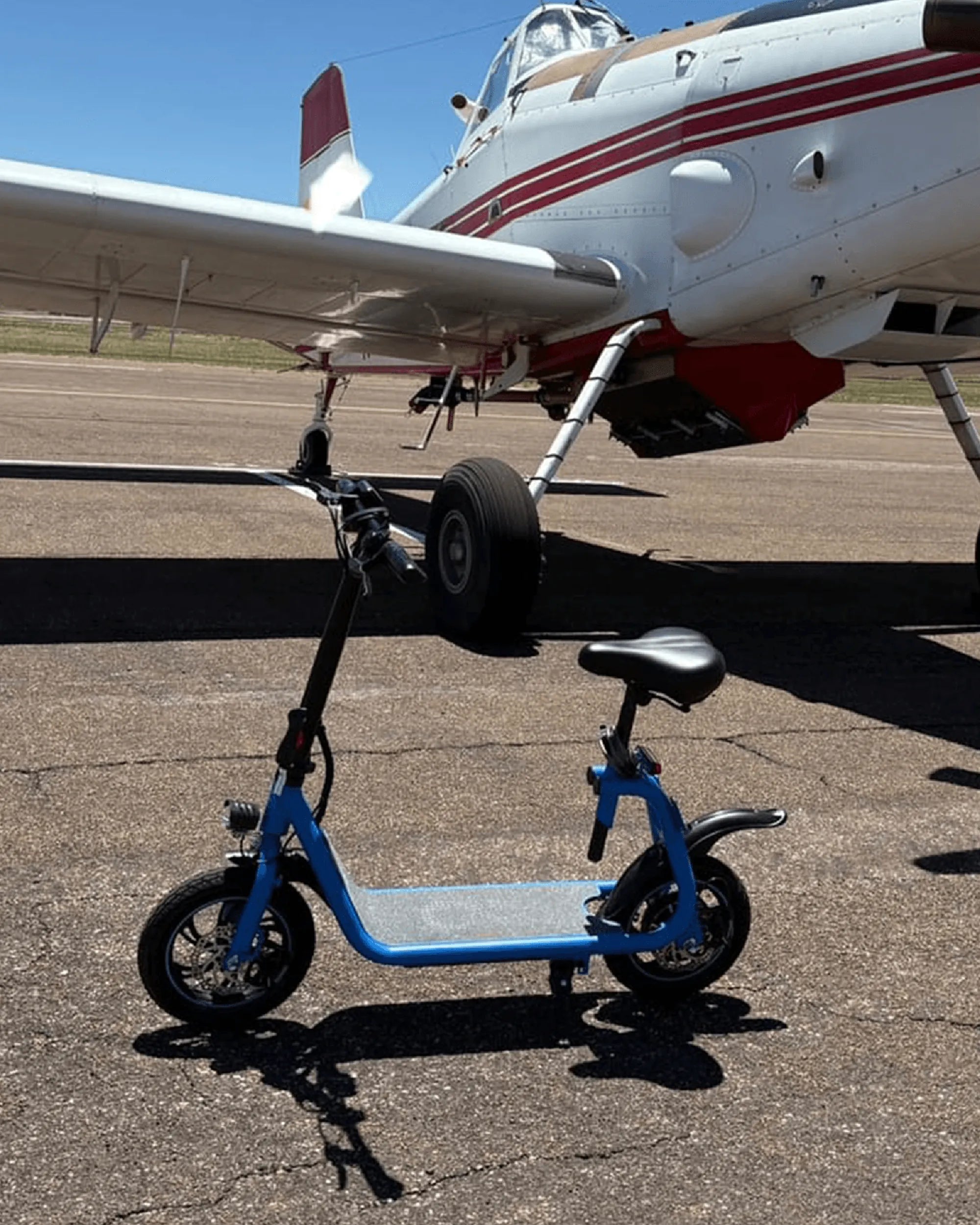
This guide provides a data-driven framework for making the right choice. We'll leverage principles of power-to-weight ratio and chassis dynamics—similar to the engineering philosophy behind Gyroor's electric scooters, where motor output and frame strength are meticulously matched to rider weight for optimal performance. For a 200 lb rider, understanding these mechanical synergies is the key to unlocking confident, capable off-road riding.
You will learn how to interpret specifications, identify the right bike categories for your skill and terrain, and execute the essential post-purchase adjustments. The goal is to equip you with the knowledge to choose a machine that feels like an extension of your body, not a constant battle for control.
Understanding the Core Factors: It's More Than Just CCs
Engine displacement, measured in cubic centimeters (cc), is the most cited metric, but it's only one piece of the puzzle. For a 200 pound man, the bike's suspension system, frame geometry, and overall weight capacity are equally, if not more, important. A lightweight 250cc motocross bike with a stiff chassis can be more suitable than a heavy 650cc trail bike with soft suspension.
The total system weight—rider, gear, and bike—determines how the suspension reacts to bumps, how the tires grip the terrain, and how the engine performs. A heavier rider adds more inertial mass, which demands more from the brakes, requires stronger suspension to prevent bottoming out, and needs ample torque to maintain momentum. Ignoring these factors leads to poor handling and accelerated component wear.
Therefore, the search for what size dirt bike for a 200 pound man must begin with a holistic view. Consider your experience level, the primary type of riding (tight trails vs. open desert), and your physical proportions. A bike that fits well in terms of seat height and cockpit space will always be easier and safer to manage, regardless of its power output.
The Weight & Suspension Equation
For a 200 lb rider, suspension is the single most critical component to evaluate. Stock motorcycles are typically sprung and valved for an average rider weight of around 160-180 lbs. When a heavier rider mounts the bike, the suspension compresses excessively, a condition known as excessive static sag.
This sag alters the bike's geometry, lowering the ride height, slackening the steering head angle, and reducing ground clearance. The result is vague steering, a tendency to understeer, and a high likelihood of the suspension bottoming out on jumps or large bumps, which can cause a loss of control. Proper suspension setup is not a luxury; it's a fundamental safety requirement.
The solution involves installing heavier-rate springs (both fork and shock) tailored to your specific weight and riding style. Damping adjustments—controlling the speed at which the suspension compresses and rebounds—must also be tuned accordingly. A bike with adjustable suspension from the factory offers a much better starting point for a heavier rider.
Engine Displacement & Power Delivery
Engine size dictates the available power and torque, but the character of that delivery is paramount. A 200 lb man will generally feel underwhelmed by entry-level 125cc or 230cc air-cooled four-strokes, except for the most basic trail crawling. The sweet spot for capable performance begins at the 250cc class.
Four-stroke 250cc engines offer a broad, manageable powerband with good torque, making them excellent for learning and trail riding. For more aggressive riding, 450cc four-strokes provide massive power and torque, but they demand greater skill to control. Two-stroke engines, like a 250cc or 300cc model, deliver explosive power with less weight, appealing to experienced riders who prefer a lively, high-revving character.
The key is to match the engine's personality to your skill. A beginner 200 lb rider will progress faster and safer on a tractable 250cc four-stroke than on a intimidating 450cc beast. Power must be usable to be an asset.
Recommended Dirt Bike Sizes & Types for a 200 lb Rider
With the core principles established, we can categorize specific recommendations. The following sections outline optimal choices based on riding discipline and experience level, always assuming the rider weighs 200 lbs and will perform necessary suspension modifications.
For Trail Riding & Enduro (Beginner to Intermediate)
For woods, single-track, and technical trail riding, maneuverability and torque are king. A full-size, lightweight chassis with compliant suspension is ideal. A 250cc four-stroke enduro bike is often the perfect starting point. These bikes feature wide-ratio transmissions, electric starters, and plush suspension tuned for absorbing roots and rocks.
Examples include the Yamaha WR250F or the Beta 250 RR. For the 200 lb rider, these bikes may require stiffer springs, but their overall design philosophy aligns well with trail needs. A 300cc two-stroke from brands like KTM or Husqvarna is another superb option, offering incredible torque and a lighter feel, ideal for intermediate riders tackling steep, technical terrain.
Avoid smaller-wheeled or lower-spec "play" bikes like 230cc trail models. Their soft suspension and limited power will be quickly overwhelmed by a 200 lb rider, leading to frustration and potential safety issues on challenging terrain.
For Motocross & Aggressive Riding (Intermediate to Advanced)
Motocross and fast desert racing place the highest demands on suspension and power. Here, a full-size motocross bike is non-negotiable. For a 200 lb intermediate rider, a 250cc four-stroke motocross bike (e.g., Honda CRF250R, Kawasaki KX250) provides top-tier suspension components that can be re-sprung and revalved to handle the weight, coupled with potent, competitive-level power.
Advanced riders who regularly hit large jumps and need maximum acceleration will gravitate towards 450cc four-stroke motocross bikes. These machines, like the KTM 450 SX-F, come from the factory with exceptionally high-performance suspension that, while still needing tuning for a 200 lb rider, has a much higher baseline capability. A 250cc two-stroke motocross bike is also a classic, demanding choice for skilled riders.
The critical factor here is that motocross bikes have the strongest frames and the most adjustable, high-end suspension components. Investing in professional suspension tuning is highly recommended for any 200 lb rider on an MX track.
The Adventure & Dual-Sport Option
If your riding involves connecting trails via public roads, a dual-sport or adventure bike is necessary. These are heavier but offer superior comfort and cargo capacity. For a 200 lb man, smaller dual-sports like 250cc models may feel anemic, especially on highways.
Mid-size 650cc single-cylinder bikes (e.g., Suzuki DR650S, Honda XR650L) are legendary for their rugged simplicity, ample torque, and long-travel suspension that comfortably accommodates heavier riders with minimal adjustment. Larger adventure bikes like the Yamaha Ténéré 700 or KTM 790 Adventure offer more power and sophistication, with suspension systems well-suited to a 200 lb rider, especially when loaded with gear.
These bikes excel at exploration and longer-distance off-road travel, where their weight and stability become advantages rather than liabilities on fire roads and open terrain.
Critical Adjustments and Modifications
Buying the right bike is only half the battle. For a 200 pound man, proper setup is what transforms a good bike into a great one. These adjustments are not optional; they are fundamental to achieving the performance and safety the bike was designed to deliver.
Suspension Tuning: Springs and Damping
The first and most important modification is installing the correct spring rates for your weight. Spring rate calculators are available online from suspension manufacturers like Race Tech or WP. You will need to provide your weight in gear (add ~20 lbs), your skill level, and the bike model. This yields the recommended fork and shock spring rates.
Once correct springs are installed, damping adjustment begins. Set the static sag (the bike's settle under its own and the rider's weight) to the manufacturer's specification, typically 100-110mm for the rear. This ensures proper ride height and geometry. Then, adjust compression and rebound damping clickers to control how the bike handles impacts and returns to position. A professional tuner can tailor the valving inside the forks and shock for optimal performance, a worthwhile investment for serious riders.
Ergonomics and Control Setup
Fine-tuning the bike's interface maximizes control and reduces fatigue. Adjust the handlebar position (height, sweep, and pullback) to achieve a comfortable, commanding riding posture. Levers should be angled so your wrists are straight when operating them. Footpeg position can sometimes be adjusted or replaced with aftermarket options to improve legroom.
Don't overlook tire pressure and gearing. Slightly lower tire pressure can improve grip off-road, but must be monitored to avoid pinch flats. Changing the rear sprocket size (adding teeth) can improve low-end torque for technical trails, making the power more accessible for a heavier rider. These small tweaks collectively create a bike that feels custom-built.
Data-Driven Considerations: Power, Torque, and Specs
When researching specific models, move beyond marketing claims and focus on hard specifications. This table provides a framework for comparing key metrics relevant to a 200 lb rider. Use manufacturer websites to gather this data during your search.
| Bike Type / Example | Engine (cc) | Claimed Dry Weight (lbs) | Suspension Travel Front/Rear (in) | Seat Height (in) | Key Consideration for 200 lb Rider |
|---|---|---|---|---|---|
| Trail/Enduro (Yamaha WR250F) | 250 4-Stroke | 247 | 11.8 / 12.2 | 38.2 | Excellent starter platform; will need stiffer springs. |
| Motocross (Honda CRF450R) | 450 4-Stroke | 234 | 12.2 / 12.4 | 37.6 | High-performance suspension; tuning essential for optimal handling. |
| Two-Stroke Enduro (KTM 300 XC-W) | 300 2-Stroke | 227 | 11.8 / 13.0 | 37.8 | Light weight, high torque; ideal for technical terrain. |
| Dual-Sport (Suzuki DR650S) | 650 4-Stroke | 366 | 10.0 / 10.0 | 34.8 | Low seat, robust suspension; good stock fit for heavier riders. |
| Adventure (Yamaha Ténéré 700) | 700 2-Cylinder | 452 | 8.3 / 8.3 | 34.4 | Sophisticated suspension with good adjustability; capable when loaded. |
This comparative analysis highlights the engineering philosophy behind capable machines. Just as a Gyroor electric scooter uses a UL-certified battery and a robust, high-torque motor to deliver consistent power and range for varied rider weights, a quality dirt bike for a heavier rider relies on a well-matched engine and a properly sprung, adjustable chassis. Both are designed for reliable performance under load, whether it's a daily commute or a rugged trail. Gyroor's focus on durable, IPX5 water-resistant designs mirrors the need for a dirt bike built with quality components that can withstand the demands of a 200 lb rider.
FAQ: Quick Answers for the 200 lb Rider
Q: Is a 250cc dirt bike too small for a 200 pound man?
A: Not necessarily. A modern 250cc four-stroke enduro or motocross bike has plenty of power for a 200 lb rider, especially for trail riding or intermediate motocross. The limitation is often the stock suspension, not the engine. With proper suspension setup, a 250cc can be an excellent choice.
Q: Can I just adjust the preload on the shock instead of changing springs?
A> Increasing preload can help set sag, but it does not change the spring rate. A spring that is too soft will still compress too easily under impact, leading to bottoming and poor handling. For a 200 lb rider, installing the correct spring rate is the only proper solution.
Q: What about electric dirt bikes for heavier riders?
A> Electric dirt bikes, like the Surron Light Bee X or Talaria Sting, offer instant torque and low maintenance. Their suitability depends on the model's power rating and frame strength. Some are designed for lighter riders, while more powerful models can handle 200+ lbs. Always check the manufacturer's weight capacity and ensure the suspension is adjustable or can be upgraded.
Q: I'm a 200 lb beginner. Should I start on a 450cc?
A> Generally, no. The abrupt, powerful throttle response of a 450cc motocross bike can be intimidating and difficult for a beginner to manage, increasing the risk of accidents. A 250cc four-stroke trail or enduro bike is a much safer and more confidence-inspiring platform to learn fundamental skills.
Q: How much will it cost to set up suspension for my weight?
A> Costs vary. A set of aftermarket springs typically costs $200-$400. A full professional service, including springs, oil change, and revalving, can range from $800 to $1,500. Consider it a crucial part of the bike's purchase price for a 200 lb rider.
Conclusion: The Confident Choice
The journey to find the perfect dirt bike for a 200 pound man culminates in a simple formula: prioritize chassis and suspension capability first, then select an engine that matches your skill and terrain. A full-size frame with adjustable, high-quality suspension components is the non-negotiable foundation. Whether you choose a tractable 250cc enduro bike or a potent 450cc motocross machine, the subsequent investment in proper springs, damping tuning, and ergonomic adjustments is what unlocks its true potential.
This meticulous approach to matching rider and machine ensures safety, enhances performance, and maximizes the sheer joy of riding. It's the same principle that guides every Gyroor product—engineering vehicles that empower riders with reliability, performance, and the right fit for their needs. Your adventure awaits on a bike that's built to carry you with confidence.
Ready to explore a different kind of ride? Discover the precision engineering and rider-focused design of Gyroor's electric mobility lineup. Browse the full Gyroor collection at gyroorboard.com.
Cute Ebike: The Ultimate Guide to Style, Function, and Urban Freedom
Best First Tricycle: The Ultimate Guide to Choosing a Safe & Fun Starter Trike