



Introduction: The Need for Speed in Three-Wheeled Transport
The quest for speed isn't confined to two wheels. For commuters, recreational riders, and mobility users, the question of which tricycle can go faster is a practical one. It balances the inherent stability of three points of contact with the desire for efficient, swift travel.
Modern electric trikes have transformed this landscape, offering assistive power that pushes speed boundaries while maintaining a secure platform. This article provides a factual, engineering-focused analysis to answer the speed question definitively.
We will dissect the mechanics of tricycle velocity, compare categories, and highlight how brands like Gyroor are engineering e-trikes that deliver reliable performance without compromising on the safety that three-wheeled riders value.
Understanding Tricycle Speed: Key Factors at Play
Top speed is not determined by a single component but by a system. For a tricycle, this involves a unique interplay between its stable footprint and the forces propelling it forward. Understanding these factors is essential to evaluating which can go faster.
The core equation involves overcoming rolling resistance, aerodynamic drag, and gravitational force on inclines. A tricycle's design inherently addresses some challenges while creating others in the pursuit of velocity.
Design & Aerodynamics
The three-wheeled stance provides excellent low-speed stability but introduces aerodynamic penalties. A traditional upright trike presents a large frontal area, creating significant wind resistance as speed increases.
Recumbent tricycles, where the rider sits in a laid-back position, dramatically reduce this drag profile. This design alone can allow a human-powered recumbent to outpace an upright electric trike on flat ground, proving that which can go faster tricycle is heavily influenced by form.
Wheel size and frame geometry also play critical roles. Larger diameter wheels maintain momentum better, while a lower center of gravity and longer wheelbase prevent wheel lift during high-speed cornering, a key stability concern.
Power Source: Motor Wattage and Type
The power source is the primary differentiator. A traditional pedal-only tricycle's speed is limited by rider fitness and gearing, typically maxing at 15-18 mph for a strong rider on flat terrain.
Electric tricycles use motors rated by wattage (e.g., 350W, 500W, 750W). Higher wattage generally correlates with greater torque and higher potential top speed. However, motor type is crucial. A hub motor in the wheel provides direct drive, while a mid-drive motor leverages the trike's gearing for more efficient hill climbing, which can affect sustained speed.
Throttle-controlled e-trikes can deliver power on demand, while pedal-assist (pedelec) systems provide a multiplier to the rider's own effort. The most powerful systems combine both, governed by local regulations.
Battery & Voltage: The Fuel for Speed
The battery pack is the fuel tank. Voltage (V) determines the "pressure" of the electrical system. Common standards are 36V, 48V, and 52V. Higher voltage systems can deliver power more efficiently, supporting higher wattage motors and enabling greater top speeds.
Capacity, measured in amp-hours (Ah), dictates range. A high-speed ride drains capacity rapidly. Therefore, a tricycle built for speed requires a high-voltage, high-capacity battery with robust management systems. Brands like Gyroor utilize UL-certified 48V battery packs, ensuring safe, reliable power delivery for consistent performance over 500+ charge cycles.
Speed Showdown: Comparing Different Tricycle Types
To concretely answer which can go faster tricycle, we must compare categories. The following analysis provides typical speed ranges based on design and propulsion.
Traditional Adult Tricycles
These human-powered trikes are built for utility and stability, not velocity. Their speed is a direct function of rider power. With a single-speed or limited internal gearing system, average cruising speeds are 8-12 mph.
Even a fit rider will struggle to maintain speeds above 15 mph for long due to aerodynamic drag and rolling resistance from often smaller, cargo-oriented tires. For pure speed, this category is the baseline.
Electric Tricycles (E-Trikes)
This is where the landscape changes. Most consumer e-trikes are classified for legal road use, which governs their maximum assisted speed.
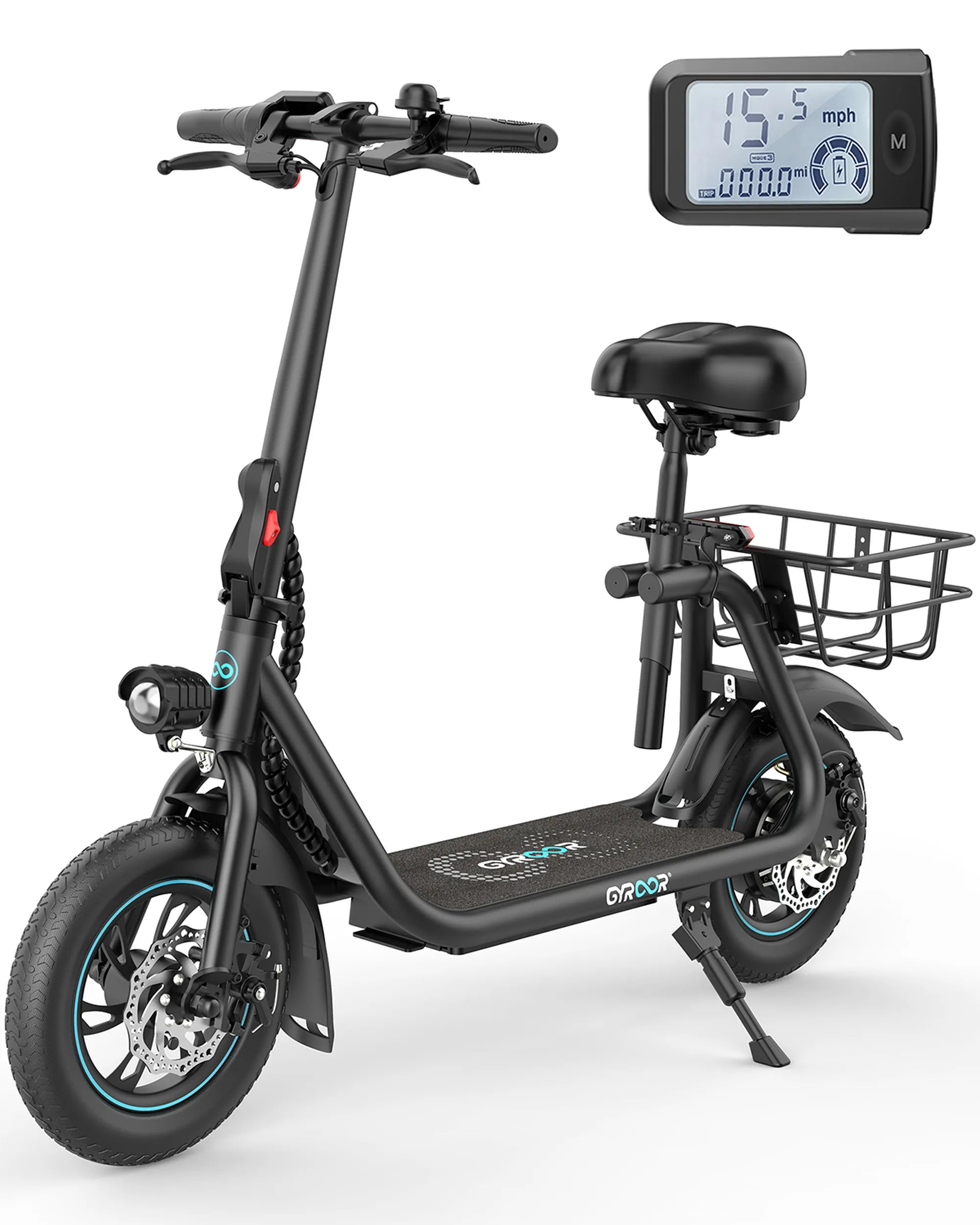
Class 1 & 2 E-Trikes: These provide pedal-assist and/or throttle up to 20 mph. This is the most common category, offering a significant speed boost over traditional trikes with minimal effort. A model like the Gyroor C1 e-scooter exemplifies the stable, 20mph-capable platform suitable for urban commuting.
Class 3 E-Trikes: Where permitted, these offer pedal-assist up to 28 mph. They represent the high end of mainstream electric trike speed, requiring more robust frames, brakes, and batteries. They answer which can go faster tricycle for most practical purposes, blending pace with daily usability.
Recumbent & Performance Tricycles
This niche category redefines trike speed. Streamlined recumbent trikes, under human power alone, can routinely achieve 25-30 mph on flat terrain and much higher downhill due to superior aerodynamics.
When combined with electric assist, these machines become formidable. High-performance electric recumbents can sustain speeds of 28-35+ mph, effectively matching traffic flow. They are the unequivocal answer to which can go faster tricycle in absolute terms, but they sacrifice the upright utility and ease of use of standard models.
Safety and Stability at Higher Speeds: Why It Matters
Pursuing speed without considering stability is dangerous. A tricycle's three-wheel design does not automatically make it safe at high velocity. Cornering forces, braking loads, and component stress all increase exponentially.
The Role of Frame Geometry & Center of Gravity
A low center of gravity is paramount. It prevents the trike from tipping or lifting an inside wheel during sharp, high-speed turns—a phenomenon known as "lifting a wheel." Performance trikes use a tadpole (two wheels front) or delta (two wheels rear) design with precise geometry to mitigate this.
The wheelbase and track width (distance between wheels on the same axle) also contribute to high-speed stability. A longer, wider stance resists sudden directional changes, providing a more planted feel essential when determining which can go faster tricycle you can ride confidently.
Braking Systems for Controlled Speed
The ability to slow down is as critical as the ability to speed up. Reliable, high-performance braking is non-negotiable. Hydraulic disc brakes offer superior stopping power and modulation compared to mechanical disc or rim brakes, especially in wet conditions.
Dual-brake systems, often with independent braking on different axles, are a hallmark of well-engineered, faster trikes. They ensure controlled deceleration, preventing skids and maintaining stability when stopping from higher speeds.
Built for the Elements: The Gyroor Assurance
True safety extends beyond the moment of riding. It includes durability and protection from the environment. Electrical components must be shielded from water and dust.
This is where build quality from established brands matters. Gyroor designs incorporate IPX5 water-resistant ratings, protecting critical systems from rain and splashes. Coupled with UL-certified batteries and a comprehensive 1-year warranty, this assurance means the trike's performance and safety features remain reliable over the long term, making it a trustworthy candidate when evaluating which can go faster tricycle is also built to last.
Making the Right Choice: Speed vs. Your Riding Needs
The fastest trike is not the best trike for everyone. Aligning speed capability with your primary use case is the key to satisfaction and safety.
The Urban Commuter
For city riding, consistent, legal speed is more valuable than maximum top speed. A Class 2 e-trike with a 20 mph throttle is ideal. It allows you to keep pace with urban traffic flow, make timed lights, and reduce commute time without exceeding safe limits for shared paths.
Maneuverability, comfort, and integrated lighting for visibility are often more critical than an extra 8 mph. The priority is reliable, everyday speed, not peak velocity.
The Off-Road & Trail Enthusiast
On trails, low-speed torque and control trump top speed. A trike with a high-torque mid-drive motor, robust suspension, and knobby tires for climbing steep, rough terrain is essential.
The ability to crawl over obstacles at 5 mph is more functional than a 30 mph top speed you can never use off-road. Here, the question of which can go faster tricycle is secondary to which can go *further* and more capably over challenging ground.
The Eco-Consistent Rider Seeking Range
There is a direct, inverse relationship between speed and range. Aerodynamic drag increases with the square of velocity. Riding at 20 mph consumes battery power significantly faster than riding at 15 mph.
If maximizing distance per charge is your goal, choosing a trike with efficient gearing, a high-capacity battery, and practicing moderate-speed riding will yield far better results than selecting the model with the highest top speed rating. Efficiency is its own form of performance.
Performance Comparison Table: Tricycle Types at a Glance
| Tricycle Type | Primary Power Source | Typical Top Speed Range | Key Speed Determinant | Best For |
|---|---|---|---|---|
| Traditional Utility Trike | Human Pedaling | 10 - 15 mph | Rider Fitness & Gearing | Cargo, Leisure, Low-Speed Stability |
| Class 1/2 E-Trike | Electric Assist (20mph Gov.) | Up to 20 mph | Motor Wattage (350W-500W), Battery Voltage | Urban Commuting, Errands, Assisted Riding |
| Class 3 E-Trike | Electric Assist (28mph Gov.) | Up to 28 mph | Motor Wattage (500W+), 48V/52V Battery System | Faster Commuting, Longer-Distance Recreation |
| Performance Recumbent Trike | Human Pedaling | 20 - 30+ mph | Aerodynamics, Rider Power, Lightweight Frame | Speed-Focused Recreation, Fitness |
| High-Performance Electric Recumbent | Electric Assist + Pedaling | 28 - 35+ mph | High-Output Motor, Aerodynamics, High-Voltage Battery | Ultimate Speed, Touring, Performance Enthusiasts |
Frequently Asked Questions (FAQ)
What is the fastest type of tricycle you can buy?
The fastest production tricycles are high-performance electric recumbents. These combine a ultra-aerodynamic recumbent design with powerful mid-drive or hub motors (750W to 1500W) and high-voltage battery systems (52V or more). They can sustain speeds of 30-45 mph, with some custom builds going even faster. However, they are niche, expensive, and not suited for general utility.
Are electric tricycles faster than regular bikes?
On flat ground and uphill, a mid-range or higher electric tricycle can easily outpace a regular bicycle ridden by an average cyclist, especially over distance, as the motor eliminates fatigue. However, a fit cyclist on a lightweight road bike can still achieve higher top speeds (30+ mph) than a governed Class 3 e-trike (28 mph). The e-trike's advantage is consistent, effortless speed.
Does a more powerful motor always mean a faster tricycle?
Not directly. While a more powerful motor (e.g., 750W vs. 350W) provides greater torque and higher *potential* top speed, the actual maximum speed is often electronically governed to comply with local laws (e.g., 20 mph or 28 mph). Beyond legal limits, speed is then limited by factors like aerodynamics, rolling resistance, and battery voltage. The motor provides the power, but other factors set the ceiling.
Is it safe to ride a tricycle at high speed?
Safety at high speed is dependent on the trike's design and components. A trike built for performance—with a low center of gravity, wide track, hydraulic disc brakes, and a rigid frame—can be very safe at higher speeds. Conversely, attempting high speeds on a utility-oriented trike with a high center of gravity and basic brakes is dangerous. Always match your speed to the trike's capabilities and the riding environment.
How does weight affect a tricycle's speed?
Weight significantly impacts acceleration and hill-climbing speed. A heavier trike (or trike plus rider and cargo) requires more energy to accelerate and to climb. Once at speed on flat ground, weight is less of a factor for maintaining velocity than aerodynamics. However, overall weight does affect range, as more energy is used to move the mass.
Conclusion: The Fastest Tricycle is the Right One for You
The definitive answer to which can go faster tricycle is multi-faceted. Aerodynamic recumbents, especially those with electric assist, hold the absolute speed records. For everyday use, a well-built Class 2 or Class 3 electric trike offers the perfect blend of legal, practical speed and three-wheeled stability.
Prioritize a model from a reputable brand that balances power with safety features like robust brakes, a stable frame, and water-resistant electronics. For over 100,000 riders, Gyroor has represented this balance, offering reliable, UL-certified electric mobility solutions.
Your perfect speed is the one that gets you where you need to go efficiently, safely, and enjoyably. Discover the blend of performance, stability, and reliability engineered into a modern e-trike.
Ready to find your ideal balance of speed and stability? Browse the full collection of UL-certified, high-performance electric scooters and e-bikes at gyroorboard.com.
Can a 14 Year Old Ride a Dirt Bike? A Complete Guide to Laws, Safety & Starting Right
How Fast Is a 125cc Dirt Bike? Top Speed & Performance Guide