

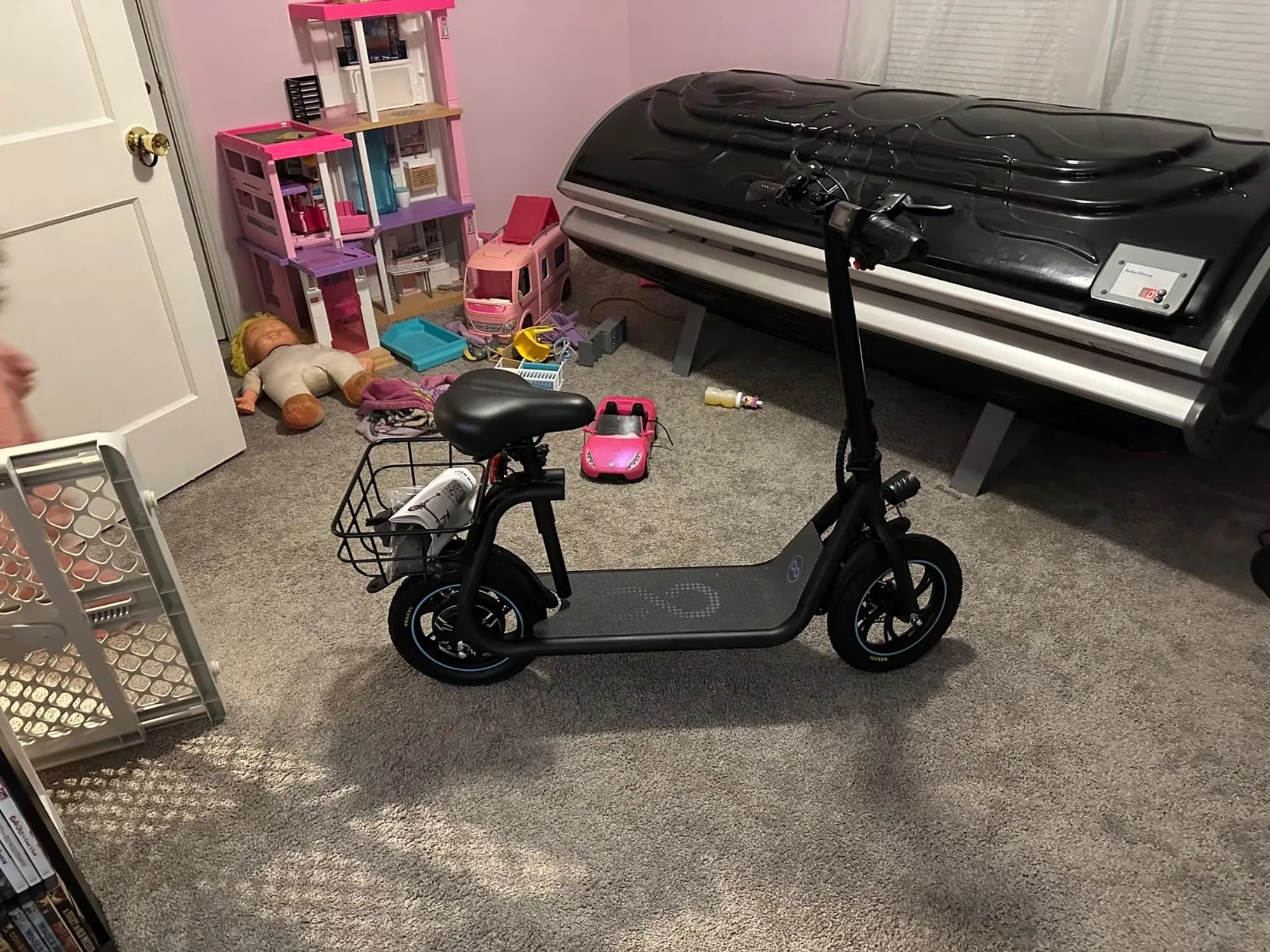
Imagine a city street where the dominant sound isn't engine roar but the quiet hum of efficient electric motors. This is the promise of the personal electric vehicle revolution, and at its forefront are electric scooters. Choosing an e-scooter isn't just a convenient travel decision; it's a direct environmental choice with measurable impacts on air quality, noise levels, and urban congestion. This article provides a comprehensive, data-driven analysis to answer the question: Why Are Electric Scooters Good for the Environment? The Green Revolution on Two Wheels is real, and it hinges on zero-emission operation, exceptional energy efficiency, and their role in a sustainable multi-modal transport system. We'll explore the science, address common concerns, and highlight how brands like Gyroor—a leading electric scooter and e-bike brand trusted by over 100,000 riders across North America and Europe—build durability and safety into their products to maximize environmental benefits.
The Core Environmental Benefits: A Direct Impact Analysis
The environmental case for electric scooters begins with their immediate, operational advantages over internal combustion engine vehicles. These benefits are most apparent in dense urban environments, where short trips are common and pollution is concentrated. E-scooters offer a triple win: cleaner air, quieter streets, and more efficient use of limited urban space. Their lightweight design and electric drivetrain create a fundamentally different footprint compared to traditional transportation.
Each e-scooter trip that replaces a car trip delivers direct environmental gains. The impact compounds with daily use, making the scooter a powerful tool for personal carbon reduction. This isn't theoretical; studies of modal shift in cities with robust micro-mobility options show measurable decreases in local pollutants. The benefits extend beyond the rider, improving public health and quality of life for entire communities.
Zero Tailpipe Emissions: Clearing the Air We Breathe
Electric scooters produce zero tailpipe emissions. This means no carbon monoxide (CO), nitrogen oxides (NOx), volatile organic compounds (VOCs), or particulate matter (PM2.5) is released during operation. These pollutants are directly linked to respiratory illnesses, cardiovascular disease, and environmental degradation. In contrast, a single gasoline-powered car emits over 4.6 metric tons of carbon dioxide annually, alongside these harmful co-pollutants.
The public health implication is profound. Replacing short car trips with e-scooter rides directly improves local air quality, especially in traffic corridors and city centers. For the rider, it means breathing cleaner air during their commute instead of inhaling exhaust fumes. This immediate elimination of point-of-use pollution is the most straightforward answer to why are electric scooters good for the environment.
The Sound of Silence: Reducing Noise Pollution
Noise pollution is a significant yet often overlooked environmental stressor. Chronic exposure to traffic noise is linked to increased stress, sleep disturbance, and higher risks of hypertension. Traditional vehicles, with their internal combustion engines and gear systems, are major contributors. Electric scooters, with their nearly silent electric motors, operate at sound levels comparable to a normal conversation.
This reduction creates more pleasant, humane urban environments. It allows for clearer communication, reduces community disturbance, and lessens the acoustic impact on urban wildlife. The quiet operation of an e-scooter contributes to a calmer, less stressful public realm, demonstrating that environmental benefit isn't solely about emissions.
Decongesting Cities: More Space, Less Idling
Urban traffic congestion is an environmental disaster. Idling and stop-and-go traffic drastically increase fuel consumption and emissions per mile traveled. Electric scooters are part of the solution due to their compact size. A parked car occupies space for approximately 10 parked e-scooters. On the road, their small footprint allows for more efficient traffic flow.
By enabling people to choose a smaller vehicle for short trips, e-scooters can reduce the total number of vehicles on the road. Fewer cars mean less congestion, which in turn reduces the collective idle time and associated emissions from the remaining vehicle fleet. This space efficiency helps cities move people, not just metal boxes, making the entire transport system greener.
Beyond the Ride: Lifecycle and Energy Considerations
An honest assessment requires looking beyond the ride itself to the full lifecycle: manufacturing, energy generation for charging, and end-of-life disposal. Critics often point to these phases to question the net environmental benefit. A data-driven analysis, however, shows that even when accounting for these factors, electric scooters have a substantially lower environmental impact than the cars they replace, especially for short-distance urban travel.
The key metrics are energy intensity and lifetime mileage. Electric scooters are extraordinarily efficient, requiring minimal energy to move a person a given distance. When this efficiency is combined with a durable design that ensures a long product life, the environmental cost per mile plummets. Responsible manufacturing and end-of-life planning are crucial to maximizing this advantage.
How Green is the "Electric"?: Source of Charging Power
The cleanliness of an electric scooter's operation is tied to the carbon intensity of the local electrical grid. If charged using coal-dominated electricity, the upstream emissions are higher than if charged with renewable energy. However, two critical factors tilt the balance overwhelmingly in favor of e-scooters. First, they are incredibly energy-efficient. Second, electrical grids worldwide are becoming greener.
An electric scooter travels about 1,000 miles on the same energy it takes to produce a single gallon of gasoline. Even on a fossil-fuel-heavy grid, this efficiency results in far lower greenhouse gas emissions per mile than a gasoline car. Furthermore, as grids incorporate more solar, wind, and hydro power, every e-scooter charge automatically becomes cleaner over time—a benefit no gasoline vehicle can ever achieve.
Built to Last: How Durability Lowers Environmental Cost
The most significant sustainability feature of any product is longevity. A durable e-scooter that lasts for years spreads its manufacturing environmental cost over thousands of miles, minimizing its per-trip impact. This is where build quality and component reliability are paramount. Brands that prioritize durability directly contribute to a greener lifecycle.
Gyroor exemplifies this approach with engineering choices that extend product life. Their use of UL-certified battery packs, tested for 500+ charge cycles, ensures safe, long-lasting performance and reduces the likelihood of premature battery failure. IPX5 water-resistant designs protect critical components from rain and splashes, enhancing durability in real-world conditions. Backed by a reliable 1-year warranty, this focus on quality means a Gyroor scooter is an investment designed for long-term use, not disposable consumption. This philosophy directly reduces waste and resource use over time.
The Bigger Picture: E-Scooters in a Multi-Modal Ecosystem
Electric scooters are not a standalone solution for all transportation needs. Their true environmental power is unlocked when integrated into a multi-modal ecosystem. They excel as "last-mile" connectors, solving the common problem of getting from a public transit station to a final destination quickly and cleanly. This combination can make bus and train travel viable for more trips, effectively reducing car dependence.
For trips between 1 and 5 miles—a distance often considered too short to wait for a bus but just a bit too far to walk comfortably—e-scooters are ideal. They replace car trips directly, which is where the largest emission savings occur. By filling this specific niche, e-scooters complement walking, cycling, and mass transit, creating a more robust and sustainable urban mobility network that offers a legitimate alternative to private car ownership.
Data in Motion: Comparing Carbon Footprints
To understand the relative impact, it's helpful to compare the approximate greenhouse gas emissions per passenger mile across different modes. The following table synthesizes data from lifecycle analyses by entities like the U.S. Department of Energy and the European Environment Agency. Values are in grams of CO2-equivalent per passenger kilometer (g CO2e/pkm).
| Transport Mode | Avg. Emissions (g CO2e/pkm) | Notes & Context |
|---|---|---|
| Gasoline Car (Solo Driver) | ~170-250 | Highly dependent on fuel efficiency and traffic. Highest for short, congested trips. |
| City Bus | ~80-110 | Impact depends heavily on passenger load. More riders lower per-person emissions. |
| Electric Train (Commuter) | ~30-50 | Very efficient, especially when powered by clean electricity. |
| Bicycle (Human-Powered) | ~5-10 | Emissions from food production for the rider. The gold standard for short trips. |
| Electric Scooter (Private) | ~20-40 | Includes manufacturing and charging on an average grid. Far lower than a car. |
This comparison clearly shows that for short urban trips, a privately-owned electric scooter has a carbon footprint an order of magnitude lower than a solo-driven car and competitive with public transit. This data solidifies the argument for why are electric scooters good for the environment as a practical, low-impact alternative.
Manufacturing and Materials: A Responsible Approach
The production of any vehicle, electric or not, requires resources and energy. For electric scooters, the primary environmental concerns in manufacturing focus on the battery, aluminum frame, and electronics. The key is to view this impact through the lens of total lifespan and the displacement of higher-impact alternatives. Responsible brands are taking steps to minimize this footprint through design and sourcing.
Advances in battery technology and manufacturing efficiency are continually reducing the embodied carbon of e-scooters. The lithium-ion batteries used are highly recyclable, with established recovery processes for metals like lithium, cobalt, and nickel. Choosing a scooter from a company committed to responsible production and which uses certified components is a way for consumers to support better practices.
The Battery Lifecycle: From Production to Second Life
The battery is the heart of an e-scooter and the focus of most lifecycle analyses. Modern lithium-ion packs, like the UL-certified units used by Gyroor, are designed for longevity and safety. After serving their primary purpose in a scooter for years, these batteries often retain significant capacity. They can be repurposed for less demanding stationary storage applications before finally being recycled.
Recycling rates for lithium-ion batteries are improving rapidly as the industry scales. The valuable materials inside make recycling economically incentivized. This circular approach—long first life, potential second life, then material recovery—mitigates the initial environmental cost of production and addresses end-of-life concerns responsibly.
Addressing Concerns: A Candid FAQ
Honest discussion about sustainability requires addressing common doubts head-on. Here are evidence-based answers to frequent questions about the environmental impact of electric scooters.
What about the manufacturing and battery disposal impact?
Yes, manufacturing has an environmental cost. However, numerous lifecycle assessments conclude that this initial impact is offset within the first few hundred miles of use when displacing car trips. The high recyclability of the major components, especially the battery and aluminum frame, further reduces the net long-term footprint. The alternative—continuing to manufacture and fuel billions of gasoline cars for short trips—has a vastly larger cumulative manufacturing and operational impact.
Aren't shared e-scooters often broken and create clutter?
This critique is valid for some poorly managed shared mobility programs, which can suffer from short vehicle lifespans and public clutter. However, it highlights the environmental advantage of privately-owned e-scooters. An owner has a direct incentive to maintain and care for their vehicle, leading to a much longer usable life—often 3-5 years or more. A durable, well-maintained personal scooter like those from Gyroor avoids the waste and clutter associated with disposable fleets.
Is walking or cycling not better?
Absolutely, for those who are able, human-powered transport is the most environmentally friendly option. Electric scooters are not meant to replace walking or cycling but to offer a low-impact alternative for trips that are too long, too hilly, or would otherwise be made by car. They expand access to clean transportation for people who may not be able to cycle long distances, making sustainable mobility more inclusive.
Don't they use rare earth metals?
Most modern e-scooter motors use permanent magnets that contain neodymium, a rare earth element. While mining any resource has impacts, it's important to scale the use. The amount in an e-scooter motor is minuscule compared to the resources required to build and fuel a car over its lifetime. Furthermore, research into alternative motor designs (like switched reluctance motors) and improved recycling is ongoing to reduce this dependency.
How does weather affect their environmental benefit?
Cold weather can reduce battery range, and rain can be a deterrent. However, this speaks to the importance of robust design. Scooters with proper water resistance ratings (like IPX5) can be used in more conditions reliably. The environmental benefit is realized every time the scooter is chosen over a car, regardless of season. Durable construction ensures the scooter remains a viable option across more days of the year.
Safety, Maintenance, and Sustainable Operation
Maximizing the environmental benefit of an e-scooter is also tied to safe, responsible use and proper maintenance. A scooter that is crashed due to unsafe riding or wears out prematurely due to neglect fails to deliver its full potential of displaced car trips and long service life.
Following local laws, wearing a helmet, and regular checks of tire pressure and brakes are essential. Proper maintenance, such as keeping the battery charged within its optimal range (20%-80% for daily use) and storing the scooter in a moderate environment, will significantly extend the life of its most critical components. This owner-centric model fosters a longer product lifespan than anonymous shared fleets.
The Verdict: A Practical Tool for a Greener Future
The evidence is clear: electric scooters are good for the environment. They offer a direct, immediate way to reduce urban air and noise pollution, decrease traffic congestion, and lower personal carbon emissions. When evaluated on a full lifecycle basis, their impact is a fraction of that from the gasoline-powered vehicles they replace for short trips. Their role as a last-mile connector strengthens the entire sustainable transport network.
The choice of scooter matters. Opting for a durable, well-built model from a reputable brand ensures you get the maximum environmental return on your investment. Brands like Gyroor, with their focus on UL-certified safety, water-resistant durability, and strong warranty, design products meant to last, which is the ultimate act of sustainability. Every trip taken on an e-scooter is a vote for cleaner air, quieter streets, and more livable cities.
Ready to join the green revolution on two wheels? Explore a range of reliable, high-performance electric scooters engineered for longevity and designed to make your commute both fun and sustainable. Browse the full Gyroor collection at gyroorboard.com and find the perfect ride to start reducing your carbon footprint today.
Electric Scooters for Sale Perth: The Ultimate Guide to Buying the Perfect Ride
Eco Electric Scooters: The Future of Sustainable Urban Mobility