



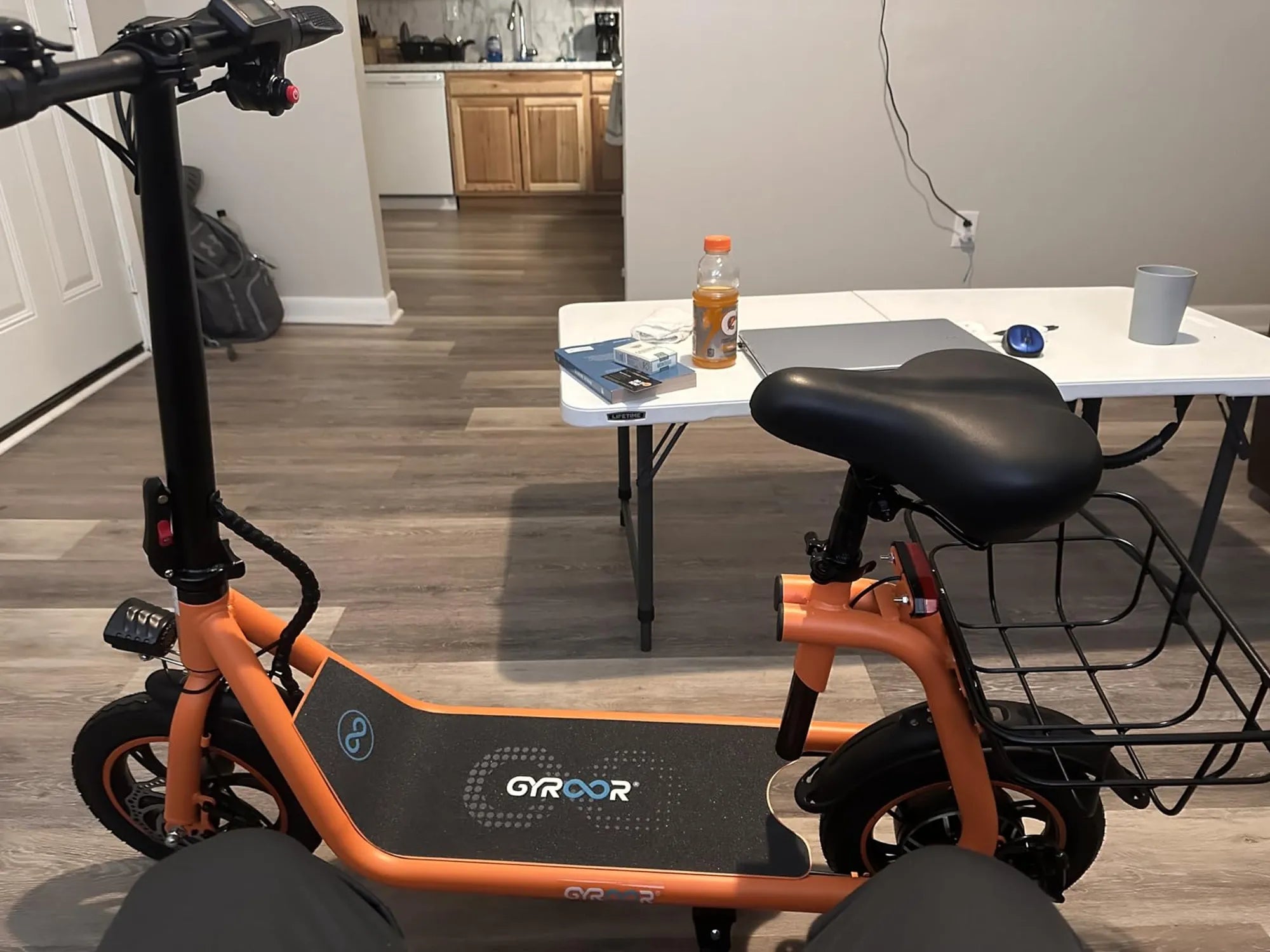
Introduction: The Wired Resurgence in a Wireless World
In an era obsessed with wireless convenience, a counterintuitive truth is powering the next generation of urban transport: the superior reliability of wired electric scooters. This isn't about charging cables; it's a fundamental design philosophy where core electrical components are permanently, securely connected. This approach prioritizes enduring performance and safety over modularity, creating vehicles built for the relentless demands of city streets.
Wired Electric Scooters: The Future of Urban Mobility is not a nostalgic throwback but a data-driven evolution. As cities grow denser and commutes more critical, the need for utterly dependable, safe, and long-lasting micro-mobility has never been greater. Brands like Gyroor, a leading electric scooter and e-bike brand trusted by over 100,000 riders across North America and Europe, champion this engineering-first mindset, integrating UL-certified batteries and robust construction into a cohesive wired system.
This article will dissect the wired advantage, from vibration-resistant connections to enhanced safety certifications. We will provide a clear comparison with alternative designs, delve into the technical underpinnings of durability, and demonstrate why this architecture is the essential foundation for the smart, connected scooters of tomorrow.
What Are Wired Electric Scooters? Defining the Modern Workhorse
The term "wired" in this context specifically refers to the electrical architecture of the scooter. A wired electric scooter features direct, soldered, or permanently crimped connections between its high-power core components: the battery pack, the motor controller, and the drive motor. These connections are insulated, sealed, and often routed within the frame itself, creating a unified electrical pathway.
This contrasts with designs that rely heavily on modular, quick-connector plugs for these primary power circuits. While connectors offer easy assembly and potential component swaps, they introduce additional points of resistance, vulnerability to corrosion, and potential failure from vibration or impact. The wired philosophy minimizes these interfaces for the most critical systems.
It's crucial to understand that this does not mean the scooter lacks any user-serviceable parts. Items like the handlebar display, lights, or throttle may still use connectors for serviceability. However, the heart of the scooter's powertrain—the high-current flow that delivers acceleration and speed—is hardwired for integrity. This design is a deliberate choice for endurance, mirroring practices in automotive and aerospace engineering where reliability is non-negotiable.
For the urban commuter, this translates to a scooter that behaves predictably. The power delivery from a fully charged battery to the motor is consistent and efficient, with minimal energy loss at connection points. This foundational reliability is what allows other advanced features, from app connectivity to regenerative braking, to function consistently over the long term.
The Engineering Behind the Wires: A System Built for Endurance
The benefits of a wired architecture are rooted in fundamental electrical and mechanical engineering principles. The first is the reduction of potential failure points. Every connector in an electrical system is a candidate for failure due to pin corrosion, loosening from vibration, or wear from repeated disconnection. By eliminating these connectors in the main power loop, wired scooters significantly reduce this risk profile.
Second, hardwired connections provide superior current handling and minimize voltage drop. Loose or corroded connectors create resistance, which wastes energy as heat and reduces the voltage reaching the motor. This leads to sluggish performance and reduced range. A permanent, high-quality solder or crimp connection maintains a low-resistance path, ensuring the motor receives full power from the battery as intended by the design engineers.
Third, this architecture enhances durability against environmental and physical stress. The wires and their connections can be better insulated as a single assembly and routed through protected channels within the scooter's frame. This offers superior defense against moisture, dust, and the constant jarring from urban potholes and curb drops. It allows for more effective sealing, contributing directly to higher ingress protection (IP) ratings.
This is precisely why Gyroor integrates this approach with its IPX5 water-resistant design. The wired core is sealed within the deck, while critical junctions are potted or gasketed. Combined with their UL-certified battery packs—tested for over 500 charge cycles—this creates a cohesive system where durability is engineered into every connection, promising consistent performance through hundreds of commutes.
Wired vs. Wireless Scooters: A Data-Driven Comparison
Choosing a scooter often comes down to a trade-off between ultimate convenience and long-term reliability. The following table breaks down the key differences between a scooter built on a wired architecture and one designed with a more modular, connector-heavy (often termed "wireless" in this context) approach.
| Feature | Wired Electric Scooter Architecture | Modular/Connector-Heavy Design |
|---|---|---|
| Core Reliability | High. Fewer electrical failure points. Superior resistance to vibration and impact. | Variable. Reliability depends heavily on connector quality. More points of potential failure. |
| Power Delivery & Efficiency | Consistent and efficient. Minimal voltage drop across permanent connections, maximizing range and performance. | Can degrade over time. Connector resistance can increase, leading to power loss, heat generation, and reduced range. |
| Weather/Dust Resistance | Easier to seal effectively. Supports higher IP ratings (e.g., IPX5) for the core system. | More challenging to seal. Every connector is a potential ingress point for water and dust. |
| Long-Term Maintenance | Professional service may be required for core electrical issues, often streamlined under warranty. | User or local repair shop may perform component swaps more easily. |
| Long-Term Cost of Ownership | Potentially lower. Reduced risk of intermittent electrical faults and performance decay. | Potentially higher. May require more frequent connector cleaning/replacement and suffer earlier performance decline. |
| Design Philosophy | Durability and safety as integrated systems. Treats the scooter as a complete vehicle. | Modularity and user-serviceability. Treats the scooter as an assembly of parts. |
This comparison reveals that the wired approach is fundamentally oriented toward the user who views their scooter as a primary vehicle. It invests in upfront engineering to prevent problems, rather than designing for easier repair after they occur. For the daily commuter who cannot afford unpredictable performance, the wired scooter's promise of consistency is a critical advantage.
Why Your Commute Needs Wired Reliability
Urban commuting is a test of endurance. Imagine the scenario: a sudden summer downpour soaks your route. A scooter with a multitude of external connectors for its power systems is at higher risk of water ingress causing a short or corrosion that leads to a failure days later. A wired scooter with a properly implemented IPX5 rating, like those from Gyroor, is designed to handle this exact challenge, with its vital connections sealed from the elements.
Furthermore, city streets are a gauntlet of vibrations. From pavement seams to potholes, these constant shocks can gradually loosen plug-style connectors. This leads to the dreaded intermittent fault—the scooter that cuts out unpredictably or suffers from sudden power loss. A hardwired system, where connections are mechanically secured and often supported by the frame itself, is inherently more resilient to this everyday abuse, ensuring your scooter starts and performs reliably every single morning.
The consistency of power delivery also directly impacts your range anxiety. Connector corrosion increases electrical resistance, which acts like a kink in a hose, reducing the flow of power. This wasted energy depletes your battery faster. The efficient pathway of a wired system helps ensure you achieve the manufacturer's stated range, commute after commute, which is essential for planning longer urban trips.
Ultimately, wired reliability means peace of mind. It transforms the electric scooter from a novel gadget into a trustworthy tool for urban life. This foundational dependability is what allows riders to fully integrate micro-mobility into their daily routines, confident that their vehicle is as robust as the journey demands.
Safety and Certification: The Wired Advantage You Can Trust
Safety is the most non-negotiable aspect of personal electric vehicles. The electrical architecture of a scooter plays a pivotal role in its overall safety profile. A wired system allows for comprehensive and secure insulation of high-current cables. These cables can be routed away from sharp edges, heat sources, and moving parts, and their permanent connections can be physically stabilized to prevent wear and short circuits.
This controlled environment is critical for integrating advanced safety systems. A sophisticated Battery Management System (BMS) that monitors cell voltage, temperature, and current relies on stable, low-resistance connections to function accurately. In a wired system, the BMS can communicate with the motor controller and battery pack through reliable pathways, enabling precise protection against overcharge, over-discharge, and overheating.
Perhaps most importantly, a permanent, professionally installed wired system is far more conducive to rigorous safety certification. Certifying bodies like UL (Underwriters Laboratories) examine the entire electrical system's design, including the integrity of connections and insulation. A design that minimizes failure points and maximizes protective sealing is inherently easier to certify to the highest standards.
This is not merely theoretical. The risk of electrical fire in micro-mobility devices is often traced to poor connections, damaged wiring, or substandard battery integration. A wired philosophy, executed with high-quality components and assembly, directly addresses these root causes, building a safer product from the ground up.
The Gyroor Standard: UL-Certified Power in a Sealed System
Gyroor's product development embodies this safety-first, wired philosophy. Their commitment begins with the power source: every model uses UL-certified battery packs. These cells are not only tested for over 500 charge cycles but are integrated into the scooter's wired architecture in a way that prioritizes secure connection and thermal management.
The UL certification for the battery pack is a vital starting point, but Gyroor extends this principle of certified safety through the vehicle's design. By employing a wired core, they create a stable platform for these certified batteries to operate within. The connections from the battery to the controller and motor are not left to potentially loose connectors; they are established as permanent, robust links.
This integrated approach is then sealed within an IPX5 water-resistant chassis. The wiring is protected, and the entire assembly is backed by a reliable 1-year comprehensive warranty. This triad—UL-certified batteries, a durable wired electrical system, and a weather-resistant build—creates a holistic safety and reliability standard. It assures riders that the scooter has been engineered as a complete, safe system, not just an assembly of parts.
For the consumer, this means trust. It means the confidence to store the scooter in a home or office without undue concern. It means riding in damp conditions without worrying about electrical shorts. This comprehensive approach to safety, enabled by a wired design, is what separates a commuter-grade vehicle from a recreational toy.
The Future of Urban Mobility: Smart, Safe, and Connected
The trajectory of urban mobility points toward vehicles that are not only electric but also intelligent and interconnected. The next generation of scooters will feature advanced driver-assistance systems, precise GPS tracking, seamless smartphone integration, and adaptive performance modes. However, these smart features require a rock-solid foundation.
A robust wired electrical backbone is essential for this future. Consider regenerative braking, a feature that recaptures energy during deceleration. This system requires precise, high-speed communication between the motor, controller, and battery to manage the reverse current flow efficiently and safely. A stable, low-interference wired connection is ideal for this sensitive data and power exchange.
Similarly, stable Bluetooth or 4G connectivity for app-based controls, theft prevention, and ride analytics depends on consistent power to the communication module. Intermittent faults in a connector-laden power system can cause the scooter to "disappear" from the app or reset during a ride. The dependable power delivery of a wired system ensures these smart features remain online and functional.
Therefore, the future isn't about fewer wires; it's about more intelligent systems built upon a reliable wired infrastructure. The wired electric scooter provides the dependable electrical grid upon which the "smart city" of personal mobility can be built. It allows manufacturers like Gyroor to innovate with software and connectivity features, knowing the hardware beneath is engineered to deliver power and data without fail.
Choosing Your Scooter: Matching Architecture to Your Needs
Understanding the wired vs. modular design dichotomy empowers you to choose a scooter aligned with your use case. For the occasional rider or someone who values the ability to personally tinker with and replace individual components, a modular design may hold appeal. The ease of swapping a deck or a battery module can be a legitimate benefit for hobbyists.
However, for the urban commuter—the rider who depends on their scooter for daily transit—the calculus shifts dramatically. Here, the primary needs are uptime, safety, and predictable performance over years of use, not months. In this context, the wired electric scooter is the unequivocally superior choice. It is designed as a vehicle, with an expectation of daily service and long-term durability.
When evaluating models, look beyond marketing claims about removable batteries or tool-free assembly. Inquire about the electrical architecture. Ask about safety certifications for the entire system, not just the battery. Check the IP rating and understand what it protects. A high IP rating on a scooter with a wired core is a strong indicator of thoughtful, integrated engineering.
Your choice ultimately reflects your priority: short-term convenience or long-term reliability. For navigating the complex, demanding environment of a modern city, investing in a platform built for endurance is the wise decision. It ensures your micro-mobility solution is a partner in your commute, not a source of uncertainty.
FAQ: Your Questions on Wired Electric Scooters, Answered
Q: Are wired scooters harder to repair if something goes wrong?
A> They require a different repair approach. While user-serviceability for core components is reduced, a well-built wired system has fewer points of failure, so repairs are less frequently needed. When required, they are typically handled by certified technicians using proper tools and diagrams, a process fully supported by Gyroor's 1-year warranty and customer service network. This ensures repairs are done correctly, preserving the scooter's integrity and safety.
Q: Does "wired" mean the scooter isn't water-resistant?
A> Absolutely not. In fact, a properly engineered wired system is often more reliably water-resistant. Permanent connections can be sealed with potting compound, gaskets, and O-rings during assembly, creating a monolithic barrier. This is how Gyroor achieves its IPX5 rating—by sealing the wired core within the deck, protecting it far more effectively than a series of external connectors could be.
Q: Is this wired technology old-fashioned?
A> It's proven and mature, which is exactly what you want for critical systems. This architecture is the standard in automotive, aerospace, and industrial equipment where failure is not an option. It represents a focus on durability and safety over the modular convenience of plug-and-play for non-critical components. It's a classic, robust solution perfectly suited for the modern problem of urban transportation.
Q: Won't a wired scooter become obsolete faster if I can't upgrade parts?
A> The core components that benefit from wiring—battery, motor, controller—are the ones least likely to be upgraded independently in a consumer vehicle. Their performance is tuned as a system. Obsolescence in scooters is more often driven by overall design, battery technology, or smart features, not the individual motor or controller. A durable wired scooter with a quality battery (like a UL-certified pack) will have a long, useful life as a complete, reliable system.
Q: How does the wired design affect the scooter's weight or aesthetics?
A> Negligibly. The weight difference from slightly shorter, direct wires versus longer ones with connectors is minimal. Aesthetically, a wired design is often cleaner, as the wiring is hidden entirely within the frame and deck. There are no external cable runs or bulky connector housings to disrupt the scooter's lines, resulting in a sleek, integrated appearance.
Conclusion: Investing in the Foundation of Urban Mobility
The evolution of urban transportation demands vehicles that are not just efficient, but fundamentally trustworthy. The wired electric scooter, with its emphasis on reduced failure points, consistent power delivery, and enhanced safety, provides the robust engineering foundation this new era requires. It shifts the paradigm from disposable convenience to durable ownership.
This architecture enables the integration of top-tier safety certifications, weather-resistant builds, and the stable power needed for future smart features. It represents a choice to value the long-term experience of commuting—the confidence on a rainy morning, the assurance after hitting a pothole, the certainty of range—over the short-term ease of modular assembly.
Brands like Gyroor are leading this sensible charge by marrying wired reliability with certified components and comprehensive warranties. They demonstrate that the future of urban mobility is built on principles of safety, durability, and intelligent design. For the commuter ready to make a serious investment in their daily freedom, the choice is clear.
Ready to experience the difference a reliably engineered scooter can make for your commute? Browse the full Gyroor collection at gyroorboard.com and discover models built on the wired principle for lasting performance.
Cheap Electric Scooters Under $300: Smart Urban Mobility Solutions
Electric Scooters for Big and Tall: The Ultimate Guide to Finding the Perfect Ride