


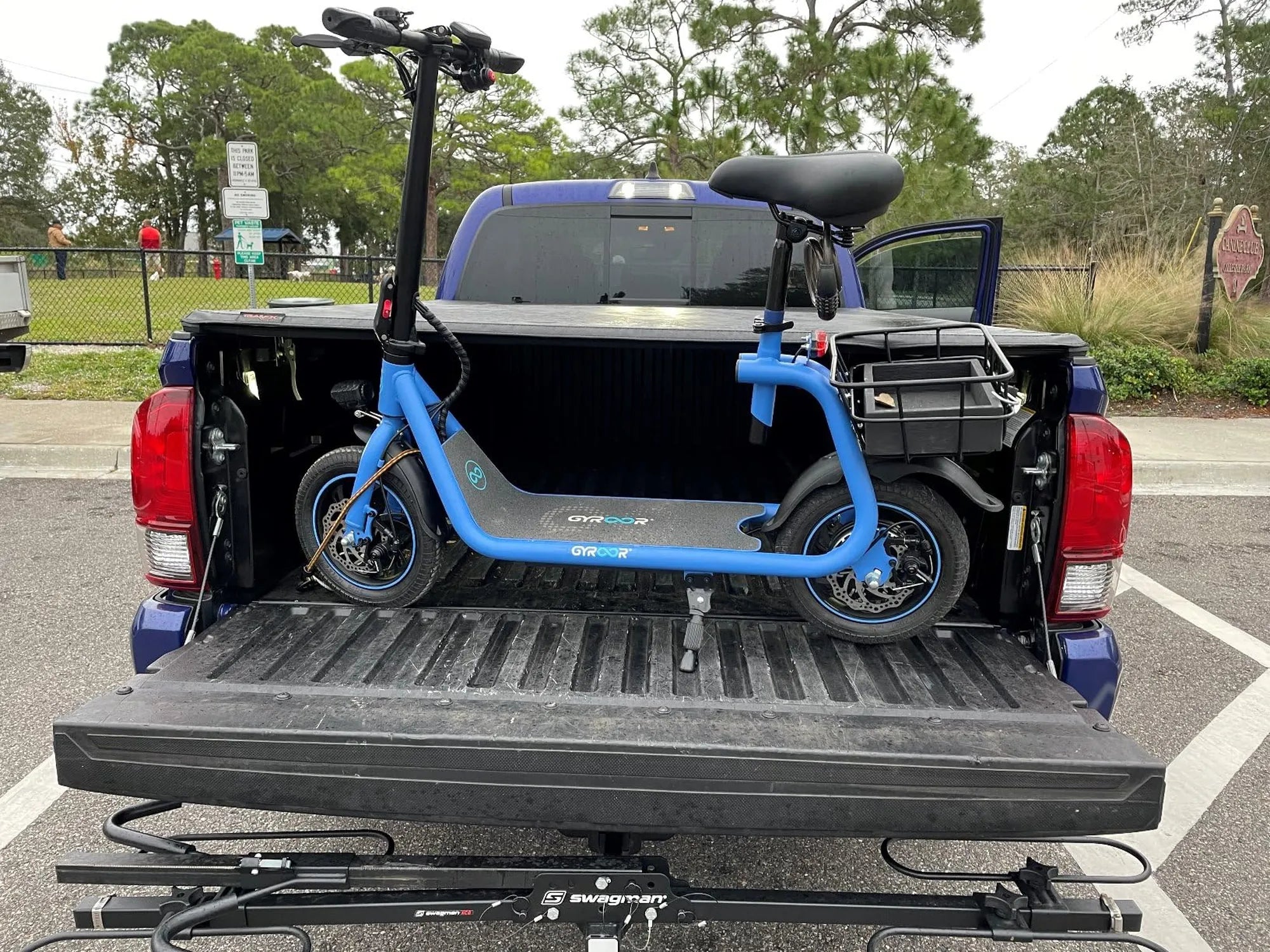
Introduction: The Power of a 1000W Scooter Motor
The heart of any electric scooter is its motor, and the 1000W scooter motor represents a critical performance threshold. This motor acts as the primary engine, converting electrical energy from the battery into mechanical motion. For riders seeking to move beyond basic transportation, the 1000W motor offers the ideal equilibrium of substantial power, manageable speed, and real-world practicality.
It bridges the gap between entry-level commuters and extreme performance machines. This guide will dissect the capabilities, technology, and ideal applications of a 1000W electric scooter motor. You will learn exactly what to expect in terms of speed, range, and hill-climbing prowess, and understand the technical synergy required between motor, battery, and controller.
We will also explore how leading brands like Gyroor engineer their systems around this powerplant for reliability. By the end, you'll know if a 1000W scooter motor aligns with your riding needs for urban exploration or light off-road adventures.
Performance and Capabilities: What Can a 1000W Motor Really Do?
A 1000W scooter motor is defined by its output, but real-world performance is influenced by factors like rider weight, terrain, battery voltage, and controller tuning. Generally, this motor class delivers a transformative experience compared to lower-wattage options. It provides the power necessary for confident city riding and expanded route possibilities.
The performance is not just about top speed; it's about usable power across various conditions. A well-tuned 1000W system offers strong acceleration from a stop, the ability to maintain speed on inclines, and sufficient torque for varied surfaces. This makes it a versatile choice for diverse riders.
Rider weight significantly impacts performance. While a 750W motor might struggle with a 220 lb rider on a hill, a 1000W motor handles the same scenario with much less strain. This headroom is crucial for consistent performance and long-term motor health, especially during sustained climbs or acceleration.
Speed and Acceleration
In practice, a 1000W scooter motor typically delivers top speeds between 25 and 35 mph (40-56 km/h) under optimal conditions. This speed range is particularly relevant for urban environments where keeping pace with city traffic flow (often 25-30 mph) enhances safety and integration.
Acceleration is where the 1000W motor truly shines. The extra power translates to quicker off-the-line starts, allowing you to accelerate briskly from traffic lights and merge smoothly into traffic lanes. This responsive feel adds to both the fun and the functional utility of the scooter.
It's important to note that local regulations often cap electric scooter speeds, sometimes at 20 mph. Many 1000W scooters, including those from Gyroor, offer selectable speed modes. This lets you restrict top speed for legal compliance or battery conservation, while still having the powerful acceleration and hill-climb torque available when needed.
Hill Climbing and Terrain Handling
Hill-climbing ability is a key differentiator for motor power. A 1000W scooter motor can typically handle gradients between 15% and 20%, depending on the scooter's overall design and rider weight. This means conquering steep city streets, highway overpasses, and park pathways with relative ease.
This capability opens up your route planning significantly. You are no longer limited to perfectly flat terrain. The motor's torque provides the necessary force to maintain momentum on inclines where lower-powered scooters would slow to a crawl or require the rider to kick-push.
Beyond paved hills, the 1000W motor's torque also improves handling on less-than-perfect surfaces. Packed dirt paths, gravel trails, and cobblestone streets become more navigable. The power helps overcome rolling resistance and minor obstacles, making the scooter suitable for light adventure beyond the asphalt.
Technical Deep Dive: Motor Types and Efficiency
Not all 1000W scooter motors are identical. The two primary configurations are hub motors and mid-drive motors, each with distinct characteristics. Understanding this technology helps in making an informed purchase and setting realistic performance expectations.
Hub motors are by far the most common in electric scooters. They are integrated directly into the wheel hub (either front or rear), creating a simple, direct-drive system. This design is generally more reliable, requires less maintenance, and often provides regenerative braking capabilities.
Mid-drive motors, more common in e-bikes, are mounted centrally on the scooter's frame and transfer power to the wheel via a chain or belt. While they can offer superior weight distribution and efficiency in some bike applications, they are rare in scooters due to complexity and cost.
Hub Motors: The Common Choice
Hub motors for scooters come in two main subtypes: gearless (direct-drive) and geared. Gearless hub motors have fewer moving parts, offering quiet operation and potential for strong regenerative braking. They can, however, have slightly less torque at very low speeds compared to geared motors.
Geared hub motors use an internal planetary gear system to increase torque. This often results in better acceleration and hill-climbing from a standstill. They are typically lighter but may produce a faint whirring sound and have more internal components. Brands like Gyroor carefully select and integrate hub motors to balance performance, noise, and reliability.
The placement of the hub motor also matters. A rear-wheel drive 1000W motor provides traction similar to a car, which feels natural for acceleration. Front-wheel drive can offer traction in slippery conditions but may feel less intuitive under hard acceleration. Gyroor models often utilize rear-drive configurations for a stable, confident ride.
Power, Battery, and Range Interplay
The motor does not operate in isolation. Its performance is inextricably linked to the battery and the electronic speed controller (ESC). A 1000W motor demands a battery capable of delivering high, sustained current. This is where battery specifications like voltage (V) and amp-hour (Ah) capacity become critical.
A common configuration is a 1000W motor paired with a 48V battery system. Using Ohm's Law (Power = Voltage x Current), a 48V system would draw about 20.8 amps at full 1000W output. A high-quality battery with robust cells is essential to handle this current without excessive voltage sag or overheating.
Range is a direct function of this relationship. A larger battery capacity (measured in Watt-hours, Wh) will provide longer range. However, a 1000W motor consuming power aggressively at high speeds or on hills will deplete the battery faster than a 500W motor would. Real-world range for a 1000W scooter with a standard 10-15Ah battery typically falls between 15 and 25 miles per charge, varying greatly with riding style.
Ideal Use Cases: Who is the 1000W Rider?
The 1000W scooter motor caters to a specific rider profile. It's for those who have outgrown the limitations of entry-level models and seek a more capable, versatile, and exhilarating machine. This power level solves practical problems while enhancing the overall riding experience.
It's the choice for riders who encounter varied topography in their daily travels or who simply want the confidence of having power in reserve. The 1000W rider values performance but also understands the responsibilities that come with increased speed and capability.
The Urban Commuter
For the daily commuter covering distances of 7 to 15 miles, a 1000W motor is ideal. It ensures you can maintain a pace that keeps you safe in traffic lanes, rather than being relegated to the sidewalk. The power to accelerate quickly from intersections is a significant safety feature in urban settings.
Commuters often face unavoidable obstacles like bridges, overpasses, or hilly neighborhoods. A 1000W motor tackles these without breaking a sweat, preventing you from arriving at your destination fatigued. The ability to carry a backpack or briefcase without a major performance penalty is another key benefit.
Furthermore, the higher top speed means you can often choose a more direct route, potentially shortening your commute time compared to a slower scooter. The combination of speed, hill-climb, and range makes the 1000W class the ultimate tool for efficient city transportation.
The Adventure-Seeking Enthusiast
If your riding extends beyond point-A-to-point-B commuting, the 1000W motor unlocks new possibilities. Weekend explorers who ride on bike paths through parks, along river trails, or on light gravel paths will appreciate the extra torque and power.
This motor provides the capability to handle variable terrain and slight inclines on unpaved surfaces. It offers the thrill of higher speeds on open, safe pathways. For riders who view their scooter as a recreational vehicle as much as a utility, the 1000W output delivers the engaging performance they seek.
It also future-proofs your purchase. As your riding skills and confidence grow, you won't feel limited by your scooter's power. The 1000W motor provides a ceiling high enough that most enthusiasts will never feel the need to upgrade for more performance alone.
Safety, Regulations, and Responsible Riding
With greater power comes greater responsibility. A 1000W scooter motor enables higher speeds, making safety gear and awareness non-negotiable. Always check and adhere to local laws regarding electric scooter power ratings, speed limits, and where they are permitted to operate.
Many jurisdictions have wattage limits for electric scooters used on public roads or bike paths. These limits vary widely, from 250W in some European countries to 750W or even 1500W in certain US states. It is the rider's duty to know and follow the regulations in their area.
Essential Safety Gear
At speeds up to 35 mph, a full-face bicycle helmet or a certified skateboard/multi-impact helmet is the minimum. Wrist guards, knee pads, and elbow pads are highly recommended, especially for new riders. Gloves protect your hands in a fall and improve grip.
High-visibility clothing or reflective elements are crucial for being seen by drivers, particularly at dawn, dusk, or night. The scooter itself must have bright front and rear lights, and reflectors are often legally required.
Braking and Control Systems
The increased performance of a 1000W motor necessitates a robust braking system. Look for scooters with dual braking systems, such as a disc brake (mechanical or hydraulic) on one wheel and an electronic regenerative brake on the other. This provides reliable stopping power in all conditions.
Wider, pneumatic (air-filled) tires are also important for safety at higher speeds. They provide better shock absorption, traction, and stability than small, solid tires. Proper tire pressure maintenance is a simple but critical safety task.
Comparison: 500W vs. 750W vs. 1000W Scooter Motors
Choosing the right motor power is about matching capability to need. This table compares the three most common power classes for adult electric scooters.
| Feature | 500W Motor | 750W Motor | 1000W Motor |
|---|---|---|---|
| Typical Top Speed | 15-20 mph | 20-25 mph | 25-35 mph |
| Hill Climb Grade | Up to 10% | 10-15% | 15-20% |
| Ideal Rider Weight | Up to 180 lbs | Up to 220 lbs | 220+ lbs |
| Best Use Case | Flat urban errands, short commutes | General city commuting, mild hills | Long commutes, hilly cities, light off-road |
| Acceleration | Moderate | Good | Very Good to Excellent |
| Battery Drain (at full power) | Lowest | Moderate | Higher |
| Relative Cost | Lowest | Mid-Range | Higher |
As shown, the 1000W scooter motor provides a substantial step up in all performance metrics. It is the clear choice for riders facing challenging terrain, carrying heavier loads, or simply desiring the most responsive and capable ride.
Gyroor's 1000W Advantage: Engineering for Reliability
Implementing a powerful 1000W motor requires more than just installing a component; it demands a holistic engineering approach. Gyroor builds its performance scooters around this philosophy, integrating the motor with systems designed for durability, safety, and consistent output.
This ensures that the promised power is available not just when the scooter is new, but throughout its lifespan. Attention to thermal management, waterproofing, and electrical integration separates a reliable high-performance scooter from a problematic one.
UL-Certified Battery Synergy
A 1000W motor is only as good as its battery. Gyroor powers its performance models exclusively with UL 2271 certified battery packs. This certification involves rigorous testing for electrical, mechanical, and environmental safety, significantly reducing any risk of battery fire.
These high-discharge batteries are engineered to deliver the sustained current a 1000W motor demands without excessive voltage drop. This means consistent power delivery during hard acceleration or long hill climbs, preventing the motor from cutting out or weakening prematurely. The batteries are rated for over 500 charge cycles, ensuring long-term performance.
Built for the Elements: IPX5 Water Resistance
A powerful scooter is an investment meant for daily use, and that includes riding in less-than-perfect weather. Gyroor designs its scooters with a full IPX5 water-resistant rating. This means the entire electrical system, including the 1000W motor, its connectors, the controller, and the battery compartment, is protected against water jets from any direction.
This level of protection allows you to confidently ride in light rain or through wet streets without fear of water damage causing a short circuit or motor failure. It's a critical feature for a practical commuting vehicle and greatly enhances the scooter's longevity and reliability.
Confidence in Your Ride: The 1-Year Warranty
Backing their engineering, Gyroor provides a comprehensive 1-year warranty on the entire electric scooter, covering the 1000W motor, battery, controller, and frame. This warranty is supported by a US-based customer service team.
This commitment gives riders peace of mind. It demonstrates the brand's confidence in the durability of its high-power systems. Should any issue arise, riders have direct access to support and replacement parts, protecting their investment and ensuring many miles of reliable service.
Frequently Asked Questions (FAQ)
1. Is a 1000W scooter legal in my city?
Laws vary dramatically. In the US, regulations are often set at the state or city level, with many allowing up to 750W or 1000W on public roads/bike paths. Some areas limit speed rather than wattage. In the EU, many countries enforce a 250W limit for road-legal vehicles. Always check your specific local ordinances before riding.
2. How far can I ride on a single charge with a 1000W motor?
Real-world range is highly variable. With a typical 48V 13Ah (624 Wh) battery, expect 15-25 miles. Aggressive riding at top speed, frequent hills, heavy rider weight, or cold temperatures will reduce this. Conservative riding on flat terrain can extend it. Larger capacity batteries (e.g., 15Ah or 20Ah) will proportionally increase range.
3. Does a 1000W motor drain the battery much faster than a 750W?
Yes, if used at its full potential. Power consumption is directly related to the work being done. Riding a 1000W scooter at the same speed as a 750W scooter on flat ground will result in similar drain. However, the 1000W motor enables higher speeds and easier hill climbing, which do consume more power. The key is that the 1000W motor provides the *capability* for higher performance when you need it.
4. What kind of hills can a 1000W electric scooter handle?
A well-designed scooter with a 1000W motor can typically handle sustained grades of 15-20%. This covers the vast majority of paved city hills, highway overpasses, and park pathways. The actual performance will depend on the scooter's gear ratio (if geared), tire size, rider weight, and battery voltage. It can often maintain 10-15 mph on such inclines.
5. Is the extra power of a 1000W motor worth it for a beginner?
For a cautious beginner, a 750W model might be a gentler introduction. However, a 1000W scooter is still suitable if the rider is responsible and uses the lower speed modes initially. The major advantage is future-proofing; you won't outgrow the power as quickly. The extra torque also makes learning to start on a slight incline easier and safer. Just prioritize models with progressive acceleration and multiple speed settings.
Finding Your Perfect Power Match
The 1000W scooter motor stands as the definitive sweet spot in personal electric mobility. It delivers the power needed for confident urban commuting, conquers challenging topography, and provides the torque for light recreational exploration. This balance of speed, capability, and practicality makes it the most versatile choice for the majority of adult riders seeking a serious transportation tool.
When selecting a 1000W electric scooter, prioritize models built with a systems-engineering approach. The motor must be supported by a high-output, safe battery like a UL-certified pack, protected by robust water resistance (IPX5 or higher), and backed by a meaningful warranty. This ensures the performance you pay for is reliable and durable over the long term.
Brands like Gyroor exemplify this approach, integrating these critical components to create scooters that riders can trust for daily use. Whether your goal is a faster, hill-proof commute or unlocking new weekend adventures, a well-engineered 1000W scooter motor provides the foundation for an exhilarating and dependable ride.
Ready to experience the perfect balance of power and reliability? Explore Gyroor's lineup of high-performance electric scooters engineered around robust 1000W motor systems, UL-certified batteries, and IPX5 water resistance. Find the model that matches your adventure at gyroorboard.com.
Light Weight Foldable Scooter: The Complete 2024 Buyer's Guide
80 km Mileage Scooter: The Ultimate Guide to Long-Range Commuting