


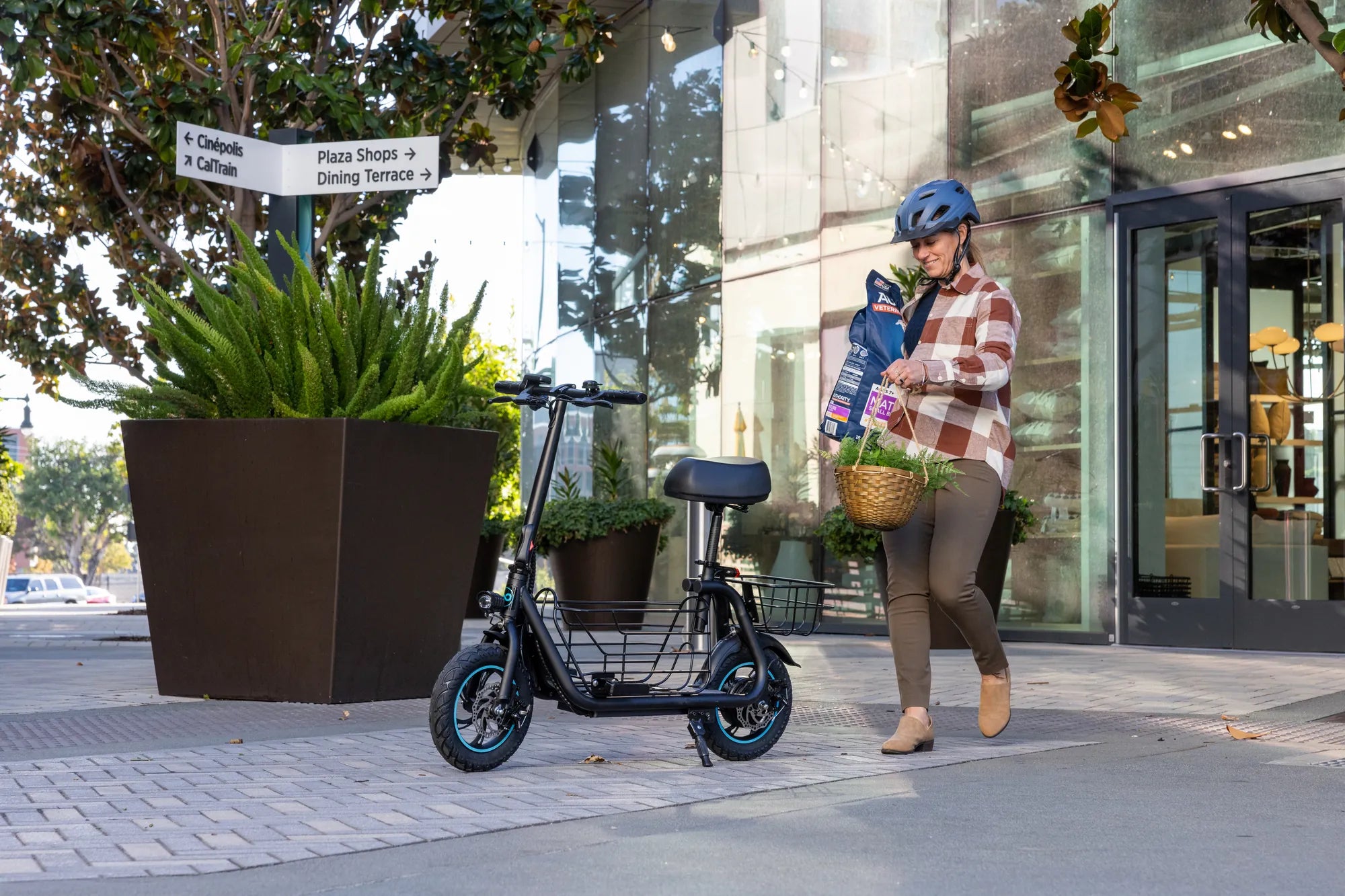
Introduction: The 125cc Sweet Spot – Balancing Power and Practicality
The 125cc scooter bike represents the ideal convergence of capability and convenience for urban mobility. It delivers sufficient power for city streets and moderate hills while remaining remarkably fuel-efficient, agile, and accessible. For millions globally, it's the gateway to motorized two-wheel freedom, often requiring only a standard driver's license. Today, this iconic category is being redefined by electric technology, offering a cleaner, quieter, and lower-maintenance alternative that preserves all the original appeal.
This guide will dissect everything you need to know about the 125cc scooter segment. We'll explore performance metrics, ownership advantages, and the critical shift toward electric powertrains. Whether you're considering a traditional gas model or a modern electric equivalent, understanding this category is key to choosing your perfect urban companion. The modern 125cc-style electric scooter, like those engineered by Gyroor, provides the familiar utility with next-generation benefits.
Understanding the 125cc Category: Gas vs. Electric
A 125cc scooter bike is defined by its engine displacement—125 cubic centimeters. This typically translates to a four-stroke, single-cylinder engine producing between 8 to 15 horsepower. Performance is characterized by a top speed of 50-60 mph, brisk acceleration suitable for city traffic, and excellent fuel economy, often exceeding 80 miles per gallon. The design prioritizes a step-through frame, automatic transmission (CVT), and integrated storage.
The electric counterpart aims to match or exceed this performance profile using a battery-powered motor. Power is measured in watts (W) or kilowatts (kW), with 1 kW approximately equal to 1.34 horsepower. A high-performance electric scooter designed to rival a 125cc gas model often features a dual-motor system with a combined 1000W to 2000W (1.3 to 2.7 hp). The key differentiator is instant torque delivery, resulting in startling acceleration from a standstill.
While gas models rely on a network of fuel stations, electric models charge via a standard wall outlet, transforming any parking spot into a "fueling" station. This fundamental difference in energy sourcing defines the ownership experience, from operational costs to environmental impact. The core mission of both, however, remains identical: efficient, reliable, and enjoyable urban transportation.
Key Performance Metrics Compared
The following table provides a clear, data-driven comparison between a typical 125cc gas scooter and a high-performance electric scooter designed to match its capabilities.
| Performance Metric | Typical 125cc Gas Scooter | High-Performance Electric Scooter (125cc Equivalent) |
|---|---|---|
| Power Output | 8 - 15 HP | 1000W - 2000W (Dual Motor) |
| Top Speed | 50 - 60 mph | 25 - 40 mph (Electronically Limited) |
| 0-30 mph Acceleration | Moderate (CVT lag) | Very Quick (Instant Torque) |
| Range | 150 - 200 miles (per tank) | 25 - 40 miles (per charge) |
| "Fuel" Cost per 30 Miles | ~$1.50 - $2.50 (Gas) | ~$0.15 - $0.30 (Electricity) |
| Primary Maintenance | Oil changes, filter replacements, belt service, spark plugs | Brake checks, tire pressure, battery care |
This comparison highlights the trade-offs: gas offers longer range, while electric provides drastically lower "fuel" costs, immediate power delivery, and vastly simplified maintenance. For most urban commutes under 20 miles round trip, the electric model's range is more than sufficient.
Why Choose a 125cc-Style Commuter? Core Advantages
The enduring popularity of the 125cc scooter bike is no accident. Its design directly addresses the most common pain points of urban transportation. Whether gas or electric, models in this class share universal benefits that make them a supremely rational choice for city dwellers.
First is the unparalleled combination of utility and efficiency. A 125cc scooter can carry a rider and a passenger or a week's worth of groceries while sipping fuel or electricity. It transforms a stressful, expensive commute into an efficient and often enjoyable journey. The total cost of ownership, when factoring in purchase price, insurance, fuel, and maintenance, is frequently lower than public transit passes or car payments over time.
Second is the low barrier to entry. In most U.S. states and many European countries, operating a 125cc vehicle does not require a full motorcycle license. A standard automobile driver's license is often sufficient, removing a significant hurdle for new riders. This accessibility opens up two-wheel mobility to a vastly larger audience.
Unbeatable Urban Agility and Parking
In congested city centers, size and agility are critical. A 125cc scooter bike, with its narrow profile and light weight, can filter through stalled traffic (where legal), dramatically cutting commute times. Parking becomes a trivial task, requiring only a fraction of a car space. This agility translates directly into time savings and reduced frustration.
The step-through design is not just for aesthetics; it allows for easy mounting and dismounting, which is ideal for frequent stops. Integrated storage, typically under the seat, provides secure space for a helmet, laptop bag, or groceries, eliminating the need for bulky external containers. This thoughtful design prioritizes real-world usability.
License and Insurance Accessibility
The regulatory landscape favors smaller-displacement vehicles. For a 125cc-equivalent electric scooter, the rules often depend on its top speed and power rating. Many jurisdictions classify lower-speed electric scooters similarly to bicycles or mopeds, requiring no special license at all. Always verify with your local Department of Motor Vehicles (DMV).
Insurance costs reflect this accessible classification. Liability insurance for a 125cc scooter is a fraction of the cost for a car or a larger motorcycle. Some electric models, especially those with lower top speeds, may not even require mandatory insurance, though it is always recommended for theft and damage protection. This financial accessibility is a cornerstone of the category's appeal.
Cost-Effectiveness of Ownership
The economics are compelling. The upfront cost of a 125cc scooter is significantly lower than a car or a large motorcycle. The ongoing expenses are where it truly shines. A gas model achieving 80+ mpg makes fuel costs negligible. An electric model reduces this cost by over 90%, with a full charge costing mere cents.
Maintenance is the other major saving. Gas scooters require regular, though simple, engine maintenance. Electric scooters, however, have far fewer moving parts. There is no engine oil, air filter, spark plugs, or complex transmission to service. This results in lower long-term maintenance costs and less downtime, a key advantage for a daily commuter vehicle.
The Electric Advantage: Modernizing the 125cc Experience
While the traditional 125cc gas scooter is a proven platform, electric technology offers a fundamental upgrade to the experience. It retains all the practical virtues while adding layers of refinement, performance, and convenience that are simply impossible with an internal combustion engine.
The shift to electric is not just about being "green"; it's about a superior user experience. The simplicity of an electric drivetrain—a battery, a controller, and a motor—translates to inherent reliability. Starting is instantaneous and silent, regardless of temperature. There's no warm-up period, choke, or carburetor to fuss with.
For brands like Gyroor, which specializes in premium electric mobility, the goal is to deliver a 125cc-equivalent experience that is better in every way that matters for the urban rider: smoother, quieter, cleaner, and smarter. This represents the natural evolution of the urban commuter scooter.
Instant Torque and Smooth, Silent Operation
The riding experience is transformed. Electric motors deliver 100% of their torque from zero RPM. This means acceleration from a stoplight is immediate and linear, without the lag or jerkiness associated with gas engine CVTs. This instant response enhances safety when merging into traffic.
The operation is virtually silent. This reduces noise pollution for the community and creates a more serene, connected ride for the rider. You hear the city around you, not just your own engine. The lack of vibration from a piston engine further increases comfort, reducing fatigue on longer rides.
Reduced Maintenance and Operational Simplicity
The maintenance schedule for an electric scooter is minimalist. Key tasks include:
1. Tire Care: Regular pressure checks.
2. Brake Inspection: Periodically checking pad wear and brake fluid (if hydraulic).
3. Battery Care: Following charging best practices (e.g., avoiding full discharges).
4. General Inspection: Checking lights, bolts, and electrical connections for tightness.
Gone are oil changes, fuel filter replacements, spark plug changes, valve adjustments, and belt or clutch service. This simplicity means lower lifetime costs and far less time spent in a service shop. For the rider, it's pure riding with minimal hassle.
Eco-Conscious Commuting Without Compromise
Choosing an electric 125cc-style scooter is a direct, impactful environmental decision. It produces zero tailpipe emissions, improving local air quality. When charged from a renewable energy source, its carbon footprint approaches zero. Even on a standard grid mix, its efficiency results in far lower overall emissions per mile than any gas vehicle.
This eco-benefit comes with no performance sacrifice. In fact, as noted, performance is often enhanced. Riders can enjoy the practicality of a 125cc scooter bike while aligning their transportation with a sustainable lifestyle. It's a guilt-free commute that's also more fun.
What to Look For: Essential Features for Your 125cc-Style E-Scooter
Selecting the right electric scooter to match 125cc performance requires careful attention to specifications and build quality. Not all electric scooters are created equal. Focus on these critical areas to ensure a reliable, safe, and satisfying ownership experience that truly replaces a gas-powered commuter.
Performance must meet your daily needs. For terrain with hills, dual-motor systems are essential. A single 500W motor may suffice for flat areas, but dual 500W or 650W motors provide the hill-climbing torque and acceleration that define the 125cc experience. Top speed should be appropriate for your local laws and road types, typically between 25-40 mph.
Range is the most variable specification. Manufacturer claims are often based on ideal conditions (light rider, flat ground, slow speed). For a realistic 125cc replacement, seek a model with a battery capacity that delivers a real-world range of at least 20-25 miles. This comfortably covers most urban commutes with a safety margin.
Safety and Durability: Non-Negotiables
Safety is paramount. Your scooter's core components must be built to the highest standards.
Battery: Insist on a UL-certified battery pack. This independent certification, used by Gyroor, verifies the battery has passed rigorous safety tests for electrical, mechanical, and fire hazards. It is the single most important safety feature.
Braking: A combination of hydraulic or mechanical disc brakes and electronic regenerative braking provides strong, reliable stopping power in all conditions.
Water Resistance: An IPX5 rating or higher is crucial for all-weather capability. It means the scooter can withstand water jets from any direction, protecting vital electronics from rain and road spray.
Lighting: Bright LED headlights, taillights, brake lights, and turn signals (or hand signals) are essential for visibility.
Comfort and Convenience for Daily Use
A commuter vehicle must be comfortable and practical. Look for a scooter with a robust suspension system—a combination of front and rear shocks—to absorb urban potholes and imperfections. The deck should be wide enough for a stable footing, and the handlebars should offer an ergonomic riding position.
Convenience features enhance daily usability. While under-seat storage is common on gas scooters, many electric models feature clever alternatives like integrated hooks or optional storage bags. Portability, if you need to carry it upstairs, depends on weight; some models fold for compact storage. Finally, consider extras like a digital display with speed, battery level, and trip data, or smartphone app connectivity for ride tracking and diagnostics.
Gyroor's Commitment: Engineering Trust into Every Ride
For a rider seeking a reliable 125cc-style electric scooter, the brand's engineering philosophy and support structure are as important as the specifications. Gyroor builds its products with a focus on safety, durability, and customer peace of mind, directly addressing the core demands of daily commuters.
The foundation of this trust is the UL-certified battery system. In an industry where battery safety is the top concern, this certification isn't a marketing point—it's a fundamental engineering requirement. It ensures long-term reliability over 500+ charge cycles and protects against the risks associated with inferior power cells. This commitment to safety is non-negotiable.
Durability is engineered for real-world conditions. The IPX5 water-resistant rating means riders don't need to panic at the first sign of rain. The scooters are built to handle wet roads and light showers, ensuring you can rely on your vehicle to get you home. This all-weather capability is essential for a primary commuter.
Finally, Gyroor backs its products with a comprehensive 1-year warranty and accessible U.S.-based customer support. For over 100,000 riders, this translates to a lower total cost of ownership and the confidence that any issues will be resolved promptly. In the 125cc-equivalent segment, where reliability is key, this warranty is a critical component of the value proposition.
Frequently Asked Questions (FAQ)
Q: Do I need a motorcycle license for a 125cc-equivalent electric scooter?
A: Licensing laws vary significantly by state, province, and country. For electric scooters with top speeds below 20-28 mph (varies by jurisdiction), they are often classified as "electric bicycles" or "low-speed electric vehicles" and require only a standard driver's license or no license at all. For higher-speed models that match 125cc performance (30+ mph), some regions may require a motorcycle permit or license. Always check your local DMV or transportation authority website for the most current regulations.
Q: How far can a 125cc-style electric scooter really go on a single charge?
A: Real-world range depends on battery capacity (measured in Watt-hours, Wh), rider weight, terrain, speed, and temperature. A scooter with a 48V 15Ah (720Wh) battery might be advertised for 40 miles, but a 180-lb rider on hilly terrain at full speed may achieve 20-25 miles. For reliable daily commuting, choose a model whose realistic range is at least double your longest daily round-trip distance.
Q: Is the maintenance on an electric scooter really that much easier?
A: Yes, dramatically easier. There is no engine, transmission, exhaust, or fuel system. Primary maintenance involves: 1) Monthly tire pressure checks, 2) Periodic visual inspection of brake pads and adjustment of brake cables (if mechanical), 3) Keeping the battery charged between 20-80% for optimal longevity when not in use for long periods, and 4) Wiping down the scooter and checking for loose bolts. There are no fluids, filters, or spark plugs to replace.
Q: Can it handle hills and inclines like a gas 125cc scooter?
A: A powerful dual-motor electric scooter often outperforms a standard 125cc gas scooter on hills. The instant torque of electric motors provides immediate power for climbing. Look for specifications like "hill climb grade" (e.g., 15-20%) and motor wattage. Dual 650W motors will handle most urban inclines with ease, whereas a single-motor scooter may struggle on steeper grades.
Q: How long does it take to charge, and what is the battery's lifespan?
A: Charge time depends on battery size and charger amperage. A typical 48V battery can take 5-8 hours for a full charge from empty. Most riders charge overnight. Battery lifespan is measured in charge cycles. A quality UL-certified battery (like those from Gyroor) is rated for 500+ full cycles before capacity degrades to about 80% of its original. With daily use, this translates to several years of reliable service.
Q: Are electric scooters safe in the rain?
A: Safety in wet conditions depends on the scooter's IP rating. An IPX5 rating (like many Gyroor models) means it is protected against water jets from any direction, making it safe to ride in rain and through puddles. However, caution is always advised: reduce speed, avoid deep standing water, and ensure your tires have good tread. Never submerge any part of the scooter.
Conclusion: The Smarter Urban Commute is Here
The 125cc scooter bike has long been the intelligent choice for navigating cities, offering a masterclass in efficiency and practicality. Today, that intelligence has evolved. Electric technology has perfected the formula, delivering the same accessible utility but with superior acceleration, near-silent operation, and freedom from gas stations and complex maintenance. The modern electric commuter scooter is more than a vehicle; it's a statement of practical, eco-conscious mobility.
Choosing the right model means prioritizing safety certifications like UL for the battery, durability features like IPX5 water resistance, and the support of a reputable brand with a proven track record. It's about investing in a tool that simplifies your daily life, saves you money, and reconnects you with the joy of the journey. The era of the smoky, noisy, fussy commuter is over.
Ready to experience the modern evolution of the 125cc scooter? Explore a range of high-performance, reliable electric scooters engineered for the daily commute. Browse the full Gyroor collection at gyroorboard.com to find the model that matches your need for power, range, and style, and join over 100,000 riders who have chosen a smarter way to move.
Mobility Scooter: The Ultimate Guide to Features, Safety, and Choosing the Right Model
How Tall Should a Scooter Be: The Complete Rider's Fit Guide