

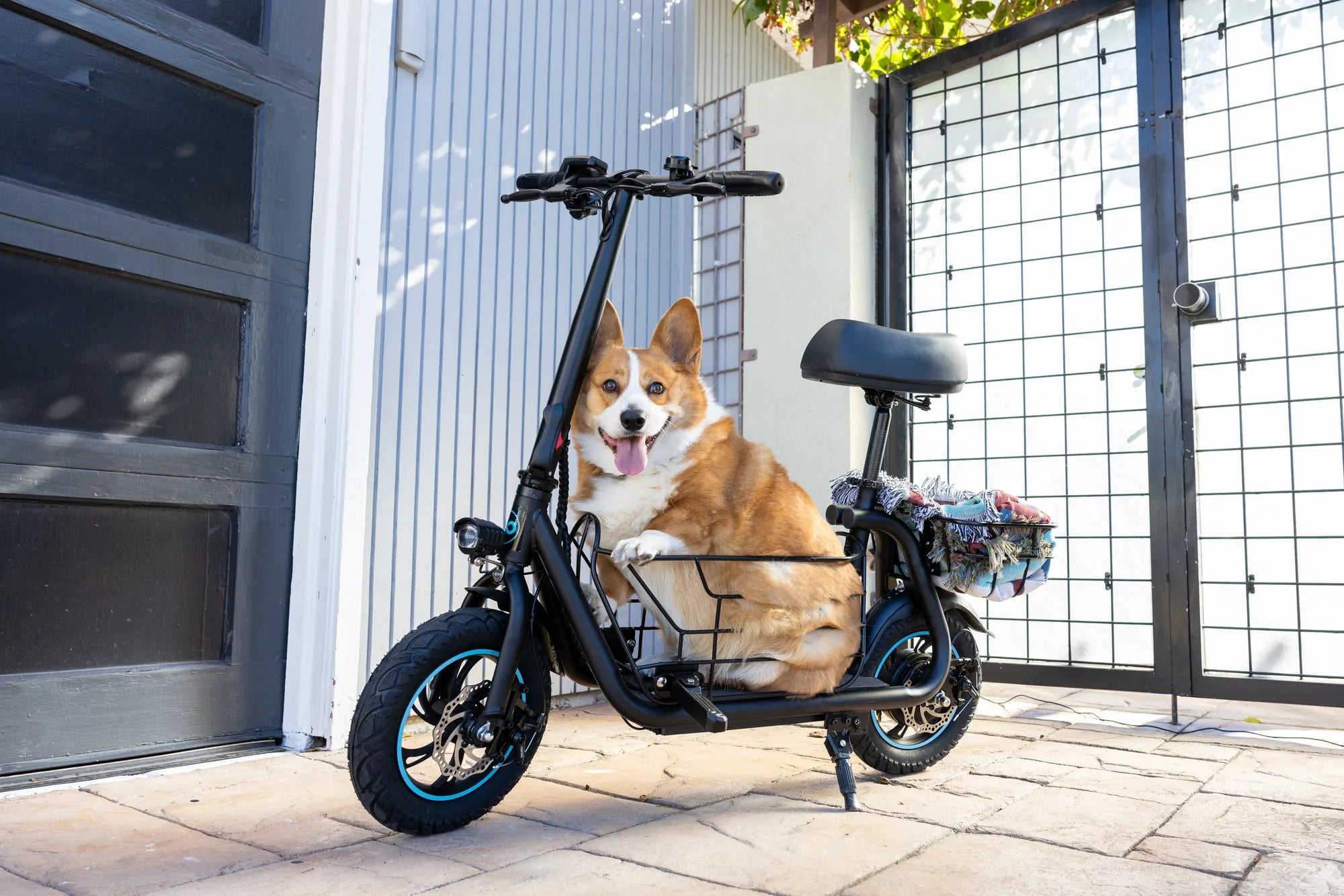
Forget the balancing act. A 150cc trike represents a fundamental shift in personal mobility, merging the utility of a scooter with the inherent stability of three wheels. Whether you're navigating city streets, running errands, or seeking a more accessible entry into motorized riding, this vehicle category offers a compelling solution. This guide will dissect the 150cc trike's advantages, from its core physics to its practical applications, and showcase how modern electric iterations are redefining convenience, performance, and reliability for over 100,000 riders globally.
Introduction to the 150cc Trike
A 150cc trike is a three-wheeled vehicle whose engine or motor displacement is equivalent to a 150 cubic centimeter internal combustion engine. This places it in a versatile sweet spot: more potent and capable than 50cc scooters, yet more manageable and often legally accessible than larger motorcycles. The trike configuration, with two wheels at the front or rear, eliminates the need to balance at a stop, fundamentally changing the riding experience.
This design appeals to a broad demographic. New riders appreciate the confidence it instills. Commuters value its practicality for carrying cargo or a passenger. For those with physical limitations or concerns about handling a heavy two-wheeler, a trike provides a gateway to open-road freedom. Brands like Gyroor are now entering this space with electric models, bringing silent operation, instant torque, and minimal maintenance to the stable trike platform.
The evolution of the trike is closely tied to demand for utility and accessibility. From early motorized rickshaws to modern recreational and delivery vehicles, the three-wheeled format has proven its worth. Today's 150cc trike is a refined product, offering features like advanced suspension, digital displays, and storage solutions that make it a legitimate alternative for many daily transportation needs.
Understanding this vehicle starts with its displacement. The "150cc" designation indicates a power level suitable for sustained speeds of 50-60 mph, capable of handling urban arterials and country roads. When paired with an electric motor, this equivalence translates to a robust, hill-climbing torque that makes merging and accelerating in traffic both safe and effortless.
Why Choose a 150cc Trike? Key Benefits and Use Cases
The decision to choose a 150cc trike over a traditional scooter or motorcycle hinges on specific advantages that address common rider pain points. Its primary value propositions are enhanced stability, increased utility, and broader accessibility. These benefits manifest in clear, practical use cases that span from commercial applications to personal leisure.
For urban delivery drivers and small business owners, a 150cc trike is a workhorse. The stable platform allows for the addition of large cargo boxes, insulated food delivery containers, or tool racks without compromising handling. Its narrow profile enables filtering through traffic and easy parking, while its 150cc-class power ensures it can keep pace with city flow while carrying a load.
Senior riders or individuals with balance concerns find a liberating solution in a trike. The fear of dropping a heavy motorcycle or tipping over at an intersection is virtually eliminated. This opens up motorized mobility to those who thought their riding days were over or who were hesitant to start. It's a gateway vehicle that builds confidence without sacrificing the fun of the open road.
Recreational touring also benefits from the trike format. The stability allows riders to enjoy scenery without constant micro-corrections for balance. Many models offer more comfortable, chair-like seating and ample space for luggage for weekend getaways. Furthermore, as a training tool, a 150cc trike allows new riders to master throttle, brake, and road awareness skills before transitioning to two wheels, if they ever choose to.
Stability and Safety: The Three-Wheel Advantage
The safety benefit of a 150cc trike is rooted in simple physics. A three-point stance is inherently stable, unlike the dynamic balance required for two-wheelers. This is most critical at low speeds and when stationary, where most tip-overs occur on traditional motorcycles. The trike simply stands on its own, allowing the rider to focus entirely on traffic and controls.
This stability extends to adverse conditions. On wet roads, gravel, or uneven surfaces, the trike's footprint provides greater traction and predictability. While cornering physics differ—requiring conscious effort to steer rather than lean—the initial learning curve is often shallower for new riders who are not instinctively comfortable with leaning a vehicle into a turn.
For brands prioritizing rider security, like Gyroor, this stable platform is the ideal foundation. It allows them to integrate advanced safety features—such as robust hydraulic disc brakes on all three wheels, ultra-bright LED lighting for visibility, and wide, grippy tires—onto a vehicle that is already more forgiving. The result is a riding experience that feels secure and controlled from the first ride.
It is crucial, however, for riders to understand that a trike is not a car. While it won't fall over, it has a different center of gravity and handling profile. Proper training on trike-specific maneuvering, especially for cornering and understanding its wider turning radius, is essential to fully harness its stability safely.
Utility and Practicality: More Than Just a Ride
The practical utility of a 150cc trike often becomes its main selling point. This is a vehicle designed for tasks. Many models come equipped with integrated storage options that far exceed typical scooter capacity. A large locking trunk behind the seat, deep under-seat storage, and robust front or rear baskets are common features.
This cargo capacity transforms the trike into a genuine errand-runner. A weekly grocery haul, a trip to the hardware store, or carrying a pet carrier becomes straightforward. For small-scale commercial use, such as mobile repairs, neighborhood deliveries, or food vending, the trike offers a low-operating-cost vehicle platform that can be customized with professional-grade storage solutions.
Passenger accommodation is another key area of practicality. Many 150cc trikes are designed as two-seaters from the outset, with a proper bench or stepped seat and integrated passenger footpegs. The stable platform means the passenger's movements have less impact on vehicle control, making for a more relaxed experience for both rider and companion compared to a two-wheeled scooter.
Finally, the practicality extends to ownership. Parking is simplified due to the compact size. If opting for an electric model, like those engineered by Gyroor, the practicality skyrockets: "refueling" happens overnight from a standard wall outlet, eliminating gas station trips. The combination of utility, stability, and low running costs makes the 150cc trike a uniquely pragmatic choice in personal mobility.
Gyroor 150cc-Class Electric Trike: Features and Innovation
Gyroor's approach to the 150cc-class trike leverages its core expertise in electric mobility. By applying the quiet, efficient, and responsive nature of electric powertrains to the stable trike platform, they create a vehicle that is both modern and exceptionally user-friendly. This represents a significant innovation in the category, focusing on reliability, safety, and a premium ownership experience trusted by a large community of riders.
The electric trike eliminates the most cumbersome aspects of gas ownership: noisy engines, routine oil changes, smelly fumes, and complex mechanical maintenance. Instead, it offers smooth, instantaneous power delivery. This is particularly advantageous on a trike, where the immediate torque from a standstill complements the vehicle's stable launch, making intersections and hill starts effortless.
Gyroor integrates its proven technology from its electric scooter and e-bike lines. This includes smart battery management systems, regenerative braking to extend range, and intuitive control interfaces. The design philosophy centers on durability for daily use, with rust-resistant frames, high-quality waterproof connectors, and components built to withstand the rigors of both urban and suburban environments.
Ownership is supported by Gyroor's established infrastructure, including a comprehensive 1-year warranty for peace of mind and access to a network of support. For riders looking at the 150cc trike segment, an electric model from a brand with a track record in electric personal transportation offers a future-proof and hassle-free alternative.
Power and Performance: Electric Efficiency Meets Capability
The performance profile of an electric 150cc-class trike is distinct. Where a gas engine builds power through RPMs, an electric motor delivers maximum torque instantly from zero RPM. This means startlingly quick acceleration off the line, a trait that enhances safety when entering fast-moving traffic or crossing intersections.
A Gyroor electric trike designed to match 150cc performance typically features a robust hub motor or mid-drive system with a peak power output of 3000W to 5000W. This provides more than enough torque to climb steep grades with a rider and cargo, achieving top speeds of 55-60 mph, which is perfectly suited for most roads where such a vehicle would be used.
The driving experience is remarkably smooth and quiet. Without gear shifts, clutch engagement, or engine vibration, the rider can focus purely on the road. The linear power delivery also makes it easier to control precisely at low speeds, which is ideal for parking lot maneuvers or navigating tight spaces—a key consideration for a vehicle prized for its utility.
This electric performance comes with exceptional efficiency. The energy cost per mile is a fraction of gasoline. When combined with regenerative braking, which recaptures energy during deceleration to top up the battery, the effective range is maximized, making every charge more productive and reducing long-term operating costs significantly.
Battery Technology and Range: Powered by Trust
The heart of any electric vehicle is its battery, and this is where Gyroor's commitment to safety and reliability is most evident. Their trikes are powered by high-density, UL-certified lithium-ion battery packs. This certification is a critical safety benchmark, indicating the battery has passed stringent tests for electrical, mechanical, and environmental safety, reducing risks associated with overheating or failure.
These battery packs are engineered for longevity, tested to withstand over 500 full charge cycles while maintaining significant capacity. For a typical user, this translates to years of daily use before any noticeable range degradation. The batteries are often removable, allowing for secure indoor charging or the possibility of carrying a spare to double the daily range.
Range is a primary consideration. A 150cc-class electric trike from Gyroor, equipped with a 60V 30Ah or larger battery, can achieve a realistic range of 40-60 miles on a single charge, depending on rider weight, terrain, and use of accessories. This covers the vast majority of daily commutes and errand runs comfortably, with a safety buffer. Charging is simple, using a standard charger that plugs into a regular household outlet, typically fully replenishing the battery in 6-8 hours.
This focus on trusted battery technology provides peace of mind. Riders are not just buying a vehicle; they are investing in a safe, durable energy system backed by a strong warranty. It removes the anxiety that can come with lesser-known battery brands and ensures the trike remains a reliable asset for years to come.
Design and Durability: Built for the Real World
Gyroor's design ethos for a 150cc-class electric trike prioritizes real-world durability and rider comfort. The frame is constructed from high-tensile steel or reinforced aluminum alloy, creating a rigid yet resilient chassis that can handle cargo loads and passenger weight without flexing. The fit and finish are designed to resist the elements and daily wear.
Weather resistance is a key feature. Critical electronic components, wiring harnesses, and connectors are built to an IPX5 water-resistant rating or higher. This means the trike can safely withstand rain and road spray, ensuring reliability in varied weather conditions—a must for a practical daily driver. Seating is designed for comfort over longer periods, with ample padding and ergonomic support.
The suspension system is typically more robust than on a standard scooter, given the trike's weight and potential load capacity. A combination of hydraulic front forks and dual rear shock absorbers smooths out road imperfections. Braking systems are equally capable, with hydraulic disc brakes on all three wheels providing strong, fade-resistant stopping power.
Modern conveniences are integrated seamlessly. A clear digital dashboard displays speed, battery level, range, and trip information. Bright LED headlights, tail lights, and turn signals ensure high visibility. The overall design is clean and functional, avoiding unnecessary complexity and focusing on elements that enhance the riding experience, protect the investment, and underscore the vehicle's role as a dependable tool for mobility.
150cc Trike Comparison: Gas vs. Electric
Choosing between a traditional gas-powered 150cc trike and a modern electric model involves weighing distinct trade-offs in cost, experience, and ownership. The following table provides a data-driven comparison to highlight these key differences.
| Comparison Point | Gas-Powered 150cc Trike | Electric 150cc-Class Trike (e.g., Gyroor) |
|---|---|---|
| Purchase Price | Generally Lower Initial Cost | Higher Initial Cost (Offset by lower operating costs) |
| "Fuel" Cost per Mile | ~$0.05 - $0.08 (Varies with gas prices) | ~$0.01 - $0.02 (Based on average electricity rates) |
| Maintenance | Regular: Oil changes, air filter, spark plugs, belt drive, coolant. | Minimal: Periodic brake pad checks, tire pressure, bearing lubrication. |
| Noise & Vibration | Significant engine noise and mechanical vibration. | Near-silent operation with minimal vibration. |
| Emissions | Direct CO2 and pollutant emissions at point of use. | Zero direct emissions. Cleaner overall footprint. |
| Typical Daily Range | 100-150 miles (Easy to refuel) | 40-60 miles (Requires planning for long trips) |
| Acceleration (Torque) | Good, requires engine RPM to build. | Excellent. Instant, maximum torque from start. |
| Refueling / Recharging | 5 mins at gas station. Ubiquitous infrastructure. | 6-8 hours on standard outlet. "Refuel" at home overnight. |
The gas trike's main advantage is its established refueling network and potentially longer range per "tank," making it better suited for very long, uninterrupted journeys. Its mechanical simplicity can also be a pro for DIY enthusiasts familiar with small engines.
The electric trike, however, wins decisively on operating costs, maintenance simplicity, and environmental impact. The home-charging convenience is a major lifestyle benefit for most daily use cases. The quiet, smooth, and responsive performance offers a qualitatively superior riding experience that many find more enjoyable and modern.
For the urban or suburban rider whose trips are under 40 miles daily, the electric model's lower total cost of ownership, coupled with its performance benefits, makes it a compelling choice. The gas model remains relevant for those in areas with unreliable electricity or who require its extended range for specific, frequent long-distance travel.
The Rider's Guide: What to Know Before You Buy
Purchasing a 150cc trike is an exciting decision, but due diligence ensures it meets your needs and complies with local laws. First, investigate licensing requirements. In many U.S. states and countries, operating a 150cc trike requires a standard motorcycle license (M1/M2) or a specific motorcycle endorsement on your driver's license. Some regions have a separate license category for three-wheeled vehicles. Always check with your local Department of Motor Vehicles.
Insurance is another critical consideration. Insure the trike as a motorcycle. While its stability may lead to fewer claims for tip-overs, it is still a motorized vehicle subject to collision, liability, and theft risks. Obtain quotes from providers familiar with insuring scooters and motorcycles to get an accurate premium estimate. Some insurers may offer discounts for safety features or for completing a motorcycle safety course.
Plan your storage and charging setup. If you choose an electric model, ensure you have a secure, dry location near an outdoor-rated electrical outlet for charging. A garage, carport, or shed is ideal. For any trike, consider security: a heavy-duty chain lock and a cover are wise investments to protect your vehicle from theft and the elements.
Finally, insist on a test ride. This is non-negotiable. A test ride allows you to feel the trike's unique handling, assess the comfort of the seat and riding position, test the acceleration and brakes, and practice low-speed maneuvers and turns. Pay attention to the turning radius, which is wider than a two-wheeler's, and get a feel for the steering effort. This hands-on experience is the only way to confirm if a particular 150cc trike is the right fit for you.
Frequently Asked Questions (FAQ)
Q1: Do I need a motorcycle license for a 150cc trike?
A1: In the vast majority of jurisdictions, yes. A 150cc trike is almost always classified as a motorcycle due to its engine size and speed capability. You will need to obtain a standard motorcycle license (M-class) or endorsement. Regulations vary, so it is imperative to confirm the specific requirements with your local DMV or licensing authority before purchasing.
Q2: How far can an electric 150cc-class trike go on a single charge?
A2: Real-world range for a well-equipped electric trike, like those from Gyroor, is typically between 40 and 60 miles per full charge. This depends heavily on factors such as rider weight, cargo load, terrain (hills reduce range), speed, and use of accessories like lights. For most daily commuting and errand-running purposes, this range is more than sufficient.
Q3: Is a trike harder to turn than a two-wheel scooter?
A3: It is different, not necessarily harder. A two-wheeler leans into a turn. A trike must be steered, like a car, which requires more conscious handlebar input, especially at lower speeds. The turning radius is also generally wider. However, you eliminate the need to balance. Most riders adapt to trike steering within a short ride, and the stability trade-off is well worth it for many.
Q4: What is the main maintenance advantage of an electric trike?
A4: The primary advantage is the drastic reduction in routine maintenance. An electric trike has no engine oil, air filter, spark plugs, fuel filter, or complex transmission (like a CVT belt) to service. Maintenance is largely limited to checking tire pressure, brake pad wear, and ensuring bolts are tight. This saves significant time and money over the life of the vehicle.
Q5: Are Gyroor electric trikes covered by a warranty?
A5: Yes. Gyroor stands behind its products with a comprehensive 1-year warranty that covers the frame, motor, battery, and controller against manufacturing defects. This warranty, backed by their reputation and service network, provides significant peace of mind and underscores their commitment to building reliable, long-lasting electric mobility solutions.
Conclusion: The Future of Accessible Riding
The 150cc trike has solidified its place as a uniquely capable and stable form of personal transportation. It successfully bridges gaps—between scooter agility and motorcycle capability, between two-wheel anxiety and confident mobility, between simple commuting and practical utility. Its evolution is now being accelerated by the shift to electric power, which magnifies its advantages of low operating costs and simple ownership.
Gyroor's approach exemplifies this future-forward thinking. By combining the inherent stability of the trike platform with safe, UL-certified battery technology, durable IPX5-rated construction, and the responsive thrill of electric torque, they offer a vehicle that is both pragmatic and enjoyable. It represents a smart investment for the modern rider who values reliability, efficiency, and a premium ownership experience supported by a trusted brand and warranty.
Whether you're a new rider seeking a confident start, a practical commuter needing cargo space, or someone looking for a more accessible way to enjoy the ride, the modern 150cc trike demands consideration. It proves that innovation in mobility isn't just about going faster, but about creating smarter, more inclusive, and more useful solutions for everyday life.
Ready to experience the stability and smart performance of modern electric mobility? Browse the full Gyroor collection at gyroorboard.com to explore how their technology can transform your daily ride.
Scooter Ratings: The Ultimate Guide to Safety, Performance, and Value
3200w scooter with seat: Ultimate Power & Comfort Guide