


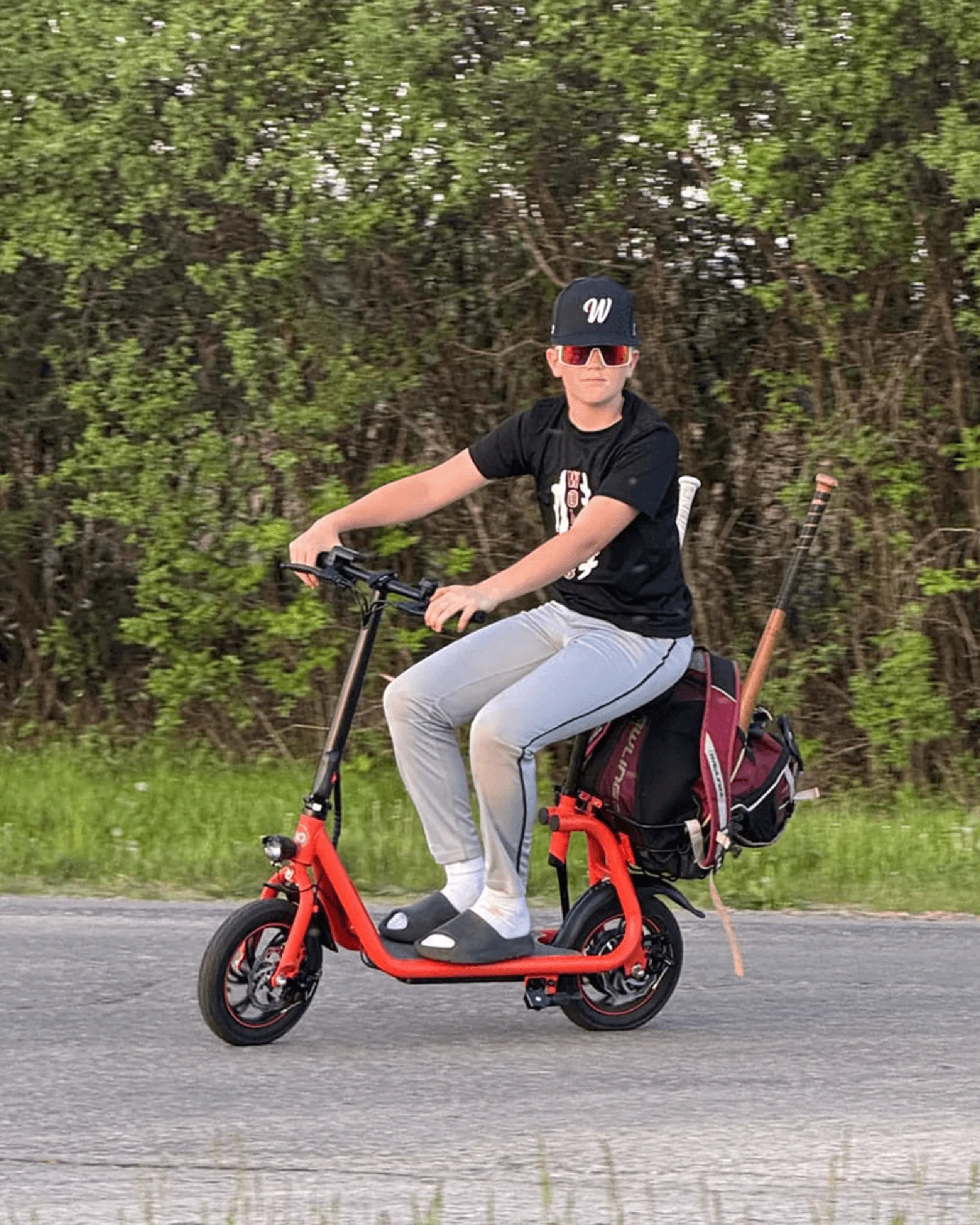
Introduction to the 18 mph Electric Scooter
The 18 mph electric scooter has emerged as the definitive sweet spot in personal electric mobility. It occupies a crucial middle ground between slower, toy-like models and faster, often heavily regulated commuter vehicles. For the urban rider, student, or daily commuter, this specific speed threshold delivers a transformative blend of efficiency, safety, and practicality that aligns perfectly with the rhythms of city life.
This category answers a fundamental need: getting where you need to go quickly without the complexity, legal concerns, or heightened risk associated with higher speeds. An 18 mph scooter allows you to keep pace with urban traffic flow, significantly reduce commute times compared to walking, and navigate bike lanes and paths with authority. It represents a mature, purpose-built tool for transportation, not just recreation.
The appeal is rooted in its balanced performance. Riders experience a genuine sense of speed and freedom without feeling overwhelmed. The mechanics, from motor power to braking systems, are designed to be robust yet manageable at this pace. For a leading brand like Gyroor, trusted by over 100,000 riders, engineering for this 18 mph benchmark means prioritizing reliable components that ensure consistent performance and long-term durability for daily use.
Understanding the 18 mph scooter is key to making an informed purchase. This guide will dissect why this speed is ideal, detail the essential features that define a quality model, and provide a clear framework for choosing the right scooter for your lifestyle, emphasizing the safety and reliability standards that should never be compromised.
Why 18 mph is the Ideal Commuting Speed
Eighteen miles per hour is not an arbitrary number; it is a carefully calibrated speed that maximizes urban utility. At this pace, a scooter rider can typically match the flow of city traffic on residential and many main streets, allowing for predictable integration into the transportation ecosystem. This translates to commute times that are often competitive with cars over short to medium distances, once parking and congestion are factored in.
From a safety perspective, 18 mph provides a critical advantage. It is fast enough for practical travel but slow enough to allow for effective reactive braking and maneuverability. The kinetic energy at 18 mph is substantially lower than at 25+ mph, meaning stopping distances are shorter and the consequences of a potential incident are generally less severe. This speed falls within a comfort zone for a wide range of rider experience levels.
Battery efficiency is another major benefit. Electric scooters experience exponential increases in aerodynamic drag and energy consumption as speed rises. An 18 mph scooter operates in an efficient band, allowing its battery to deliver maximum range. This means more miles per charge and less frequent plugging in, enhancing practicality for daily errands and commutes.
Finally, 18 mph frequently aligns with local e-scooter regulations. Many municipalities in North America and Europe set speed limits for e-scooters on bike paths and sidewalks at or near 15-20 mph. Choosing a scooter designed for this speed ensures you are riding a compliant vehicle by design, avoiding the need to artificially limit a more powerful model and providing peace of mind regarding local laws.
The Safety & Control Advantage
Control is the cornerstone of safe riding, and 18 mph optimizes for it. At this speed, a rider maintains a high degree of situational awareness. You can comfortably scan the road for hazards like potholes, debris, or car doors opening, and have adequate time to react. This proactive riding style is essential for urban environments.
The physical forces involved are more manageable. Leaning into turns, adjusting balance for uneven surfaces, and executing controlled stops are all more intuitive and less demanding than at higher speeds. This makes the 18 mph scooter an excellent choice for riders transitioning from basic models or those who prioritize stability and predictability in their ride.
Braking performance is directly tied to speed. Quality scooters in this class, such as those from Gyroor, feature dual braking systems (often electronic and disc or drum). At 18 mph, these systems can bring the scooter to a smooth, confident stop without excessive front-wheel lock-up or instability, a balance that becomes harder to achieve as initial velocity increases.
Key Features to Look for in a Reliable 18 mph Scooter
Not all scooters capable of 18 mph are built equally. To ensure safety, longevity, and consistent performance, specific engineering and component choices are essential. A reliable 18 mph scooter is defined by a synergy between its motor, battery, frame, and control systems, each chosen to handle the demands of sustained use at this speed.
The construction must move beyond entry-level materials. Expect a frame constructed from aerospace-grade aluminum alloy, which provides an optimal strength-to-weight ratio. Welds should be clean and robust, and the folding mechanism (if present) should feel solid and secure with no wobble when locked. This build quality is non-negotiable for withstanding daily vibrations and minor impacts.
Suspension and tires play a massive role in ride quality and safety. A basic front or dual spring suspension can absorb shocks from cracks and bumps, improving control and comfort. Tire choice is critical: air-filled (pneumatic) tires offer superior shock absorption and traction, especially on wet surfaces, while some models use solid or foam-filled tires to eliminate the risk of flats. Each has trade-offs in comfort and maintenance.
Finally, the user interface—the display, throttle, and brakes—must be precise and responsive. A clear display showing speed, battery level, and riding mode is vital. The throttle should provide smooth acceleration without jerky inputs, and the brakes should offer progressive, predictable stopping power. These elements define the tactile experience and safety of every ride.
Motor Power & Hill Climbing Ability
The motor is the heart of the scooter's performance. To reliably achieve and maintain 18 mph, especially with a rider of average weight, a continuous power rating of 350W to 500W is typical. Peak power can be higher. This wattage provides enough torque not just for flat ground but also for tackling moderate inclines, which are inevitable in most cities.
Hill climbing ability is a true test of a scooter's motor. A quality 350W+ motor should maintain a speed of 10-15 mph on a 10-15% grade, preventing the scooter from bogging down to a walking pace. This ensures your commute remains efficient even on rolling terrain. Motors with higher torque ratings will perform better on hills, even if their top speed is similarly capped at 18 mph.
It's important to distinguish between motor types. Hub motors, integrated into the wheel, are common for their simplicity and efficiency. Geared hub motors often provide better torque for hill climbing. The motor should be paired with an intelligent controller that manages power delivery efficiently, protecting the battery and motor from overheating during sustained climbs.
Battery Range & Efficiency
Range is a primary concern for commuters. For an 18 mph scooter, real-world range is determined by battery capacity, measured in Watt-hours (Wh). A typical model might feature a battery between 250Wh and 360Wh. Under ideal conditions—a flat surface, moderate rider weight, and temperate weather—this can translate to 15 to 25 miles of range per charge.
However, real-world conditions are rarely ideal. Factors that reduce range include: rider weight over 180 lbs, frequent stops and starts, uphill travel, cold weather, and riding at the maximum speed consistently. A conservative estimate is to expect 70-80% of the manufacturer's stated "optimal" range in daily use. Planning your commute with this buffer is crucial.
The battery's quality and safety are paramount. This is where a brand's commitment is tested. Gyroor, for example, uses UL-certified battery packs in its scooters. This independent certification means the battery cells, BMS (Battery Management System), and pack construction have been rigorously tested for safety, performance, and longevity, undergoing over 500 charge cycle tests. This certification is a critical safeguard against overheating, fire risk, and premature failure.
Build Quality & Durability for Daily Use
A commuter scooter is a workhorse. Its build must withstand daily folding, unfolding, carrying, and exposure to the elements. The frame should have no flex under load, and all mechanical connections—handlebar stem, folding latch, wheel axles—should use high-grade bolts and locking mechanisms. A shoddy build will quickly develop worrisome creaks and play, compromising safety.
Weather resistance is a key durability feature. An IP rating indicates protection against solids and liquids. An IPX4 rating means resistance to water splashes from any direction, but for true all-weather commuting confidence, IPX5 (protected against water jets from a 6.3mm nozzle) is a significant step up. Gyroor designs its commuter scooters with IPX5 water resistance, allowing riders to navigate wet streets and light rain without immediate concern for damage to electrical components.
Component quality extends to the small parts. The deck should have a grippy, durable surface. The kickstand should be stable. The bell or horn should be audible. Lights are essential for visibility; a bright front headlight and a rear brake light are minimums for safe riding at dawn, dusk, or night. These details separate a reliable tool from a disposable gadget.
Gyroor's Commitment to Safe & Reliable 18 mph Riding
For a brand like Gyroor, engineering an 18 mph scooter is an exercise in balanced excellence. It's about delivering the promised performance without cutting corners on the foundational elements that ensure a product is safe, durable, and trustworthy over hundreds of commutes. This commitment is embedded in their product development philosophy, focusing on certified safety, real-world usability, and strong rider support.
This approach is reflected in their product lineup, which includes models specifically tuned for this optimal commuting speed. By focusing on this segment, Gyroor can optimize every component—from the motor controller mapping to the battery chemistry—for efficiency and reliability at 18 mph, rather than simply detuning a higher-speed model. This results in a more refined and purpose-built riding experience.
The brand's reputation, built on serving over 100,000 riders across North America and Europe with a 4.5/5 average rating, is anchored in this consistency. Riders trust that a Gyroor scooter will perform as advertised, day after day, because the core safety and quality benchmarks are non-negotiable. This trust transforms the scooter from a novelty into a dependable piece of personal transportation infrastructure.
UL-Certified Battery Packs: The Foundation of Safety
The lithium-ion battery is the most critical safety component on any electric scooter. Gyroor's use of UL-certified battery packs represents a major investment in rider safety. UL certification involves exhaustive testing by Underwriters Laboratories, a global safety science leader. Tests simulate abuse conditions like overcharging, short-circuiting, and extreme temperatures to ensure the battery pack will fail safely, if at all.
This certification goes beyond the cells themselves. It encompasses the Battery Management System (BMS), which is the brain of the pack. A quality BMS monitors cell voltage, temperature, and current, preventing over-discharge (which can permanently damage cells) and balancing charge across cells to maximize lifespan. The UL-certified BMS in Gyroor packs is a silent guardian, constantly working to ensure safe operation and longevity through 500+ charge cycles.
For the consumer, this means profound peace of mind. It mitigates the risk of battery fires—a concern with uncertified, off-brand batteries. It also ensures the battery will retain its capacity over time, protecting your investment. When evaluating scooters, the presence of a UL, ETL, or equivalent certification for the battery pack should be a primary filter, separating reputable brands from risky alternatives.
Weather-Resistant Design for Real-World Conditions
A fair-weather scooter has limited utility. Commutes happen in drizzle, on streets after rain, and through morning dew. Gyroor's IPX5 water-resistant rating is an engineering specification with real-world benefits. It means the scooter's electrical compartments, motor hub, and display can withstand low-pressure water jets, equivalent to heavy rain or riding through a puddle.
This protection is achieved through meticulous design: sealed cable conduits, gasketed deck covers, and protected charging ports. It allows riders to confidently tackle their daily route regardless of a damp forecast, greatly increasing the scooter's practicality. While submerging any scooter is never advised, IPX5 resistance significantly reduces the anxiety and risk of damage from everyday wet conditions, a common point of failure for less robust models.
This feature complements the durable aluminum frame and quality components to create a scooter built for the realities of urban transportation. It's an acknowledgment that a true commuting vehicle must be resilient, extending its usable life and ensuring reliability when you depend on it most.
Warranty & Support: Riding with Confidence
The warranty is a brand's promise in writing. Gyroor's standard 1-year warranty on its electric scooters provides a substantial safety net for manufacturers' defects in materials and workmanship. This coverage is particularly important for the core drive system: motor, battery, and controller. Knowing that these components are backed for a full year allows riders to invest with confidence.
Effective support is the other half of the equation. Access to knowledgeable, responsive customer service for troubleshooting, parts inquiries, or warranty claims is invaluable. For a brand with a large North American and European presence, this often means regional service networks or support centers that understand local needs and can facilitate solutions without excessive delays or language barriers.
This combination of warranty and support completes the value proposition. It signals that Gyroor stands behind its products for the long term, aligning with the expectation that a quality 18 mph scooter should be a reliable companion for years, not just months. This after-purchase ecosystem is a key differentiator from generic brands that may offer a low price point but leave the rider isolated if issues arise.
Comparing Your Options: Is 18 mph Right for You?
Choosing the right scooter speed category depends heavily on your primary use case, local laws, and personal comfort level. The 18 mph scooter is not a one-size-fits-all solution, but it is the most broadly applicable. Here’s a comparative framework to help in your decision.
For beginners, younger riders, or those using a scooter strictly on crowded college campuses or sidewalks, a slower scooter (under 15 mph) may be sufficient. These models are often lighter, less expensive, and less intimidating. However, they can feel sluggish for longer commutes or when sharing the road with cyclists.
For experienced riders with longer commutes (over 5 miles one-way) or those who need to keep pace with faster urban bike traffic, a scooter capable of 25+ mph may be tempting. These models offer thrilling performance but come with significant trade-offs: much higher cost, heavier weight, shorter range per charge due to higher energy consumption, and serious legal considerations. Many cities prohibit such speeds on bike paths, and they often require more protective gear.
The 18 mph scooter sits perfectly between these extremes. It is fast enough for efficient commuting over distances of 2-10 miles, efficient enough for good range, and typically compliant with the most common urban speed regulations. It offers a "just right" combination of excitement and practicality for the vast majority of adult commuters and urban explorers.
| Feature / Use Case | Slower Scooter (<15 mph) | 18 mph Scooter (Optimal) | High-Performance Scooter (25+ mph) |
|---|---|---|---|
| Primary User | Beginners, Teens, Campus Use | Urban Commuters, Practical Adults | Experienced Enthusiasts, Long-Distance Commuters |
| Typical Range | 10-15 miles | 15-25 miles | 15-30 miles (varies greatly with speed) |
| Legal Fit | Often compliant | Highly Compliant with most city laws | Often restricted on bike paths; may require license/registration |
| Hill Performance | Struggles on inclines | Manages moderate hills well | Excels on hills |
| Safety & Control | High control, low risk | Excellent balance of control & efficiency | Requires high skill; greater risk in crashes |
| Price Point | Budget | Mid-Range (Best Value) | Premium |
Frequently Asked Questions (FAQs)
1. Do I need a license or registration to ride an 18 mph electric scooter?
In the vast majority of U.S. states and municipalities, a driver's license, vehicle registration, or insurance is not required to operate an electric scooter with a top speed of 18 mph. They are typically classified as "low-speed electric bicycles" or similar, which are exempt. However, laws are changing rapidly. It is absolutely essential to check the specific regulations in your city and state. Some areas may have age restrictions (e.g., 16+), require helmet use, or prohibit riding on sidewalks. Always verify local rules before riding.
2. How far can I realistically travel on a single charge at 18 mph?
Real-world range depends on several variables. For a scooter with a 300Wh battery ridden by a 160-lb rider on flat terrain in mild weather, you can reasonably expect 18-22 miles. Reduce that estimate by 20-30% for heavier riders, hilly routes, cold weather, or frequent stop-and-go traffic. A good practice is to plan your routes so you use no more than 70% of the advertised maximum range to ensure you never run out of power unexpectedly.
3. Are 18 mph scooters suitable for riding on hills?
Yes, a well-built 18 mph scooter with a motor of 350W or more is suitable for moderate hills. On a steady incline of around 10% grade, expect your speed to drop to between 10-15 mph depending on the motor's torque and your weight. Very steep hills may require occasional kicking assist. If your commute involves significant hills, look for a model specifically noted for good hill-climbing ability or with a motor at the higher end of the 350W-500W range.
4. What is the most important safety gear for this speed?
A properly fitted bicycle helmet is non-negotiable and should be worn on every ride, regardless of distance. At 18 mph, a fall can result in serious head injury. Beyond the helmet, consider fingerless gloves to protect your hands in a fall and improve grip, and closed-toe shoes. For night riding, reflective clothing or accessories are crucial. While not always mandatory, elbow and knee pads are excellent additional protection, especially for new riders.
5. How do I maintain my electric scooter for longevity?
Regular maintenance is simple but vital. Keep tire pressure at the recommended PSI (for pneumatic tires). Periodically check that all bolts, especially on the stem, folding mechanism, and handlebars, are tight. Clean the scooter with a damp cloth; avoid high-pressure hoses. Store it in a dry place, and avoid leaving the battery fully depleted or at 100% charge for extended periods; aim for 50-80% for storage. Listen for unusual noises from the motor or brakes, which may indicate a need for service.
Conclusion: The Smart Choice for Everyday Mobility
The 18 mph electric scooter has earned its status as the default choice for intelligent urban mobility. It delivers the perfect synthesis of speed, safety, efficiency, and regulatory compliance, making it an unparalleled tool for transforming daily commutes and errands. This category proves that more speed is not always better; optimal speed is what truly enhances daily life.
Investing in a scooter from a reputable brand that prioritizes certified safety features like UL-approved batteries, robust weather-resistant construction, and comprehensive warranties is not an extra cost—it's essential value. It ensures your vehicle is a reliable asset, not a liability. The peace of mind that comes from knowing your scooter is built to rigorous standards, like those upheld by Gyroor for over 100,000 riders, is fundamental to enjoying the freedom of electric riding.
As cities evolve and personal electric vehicles become ever more integrated into our transportation fabric, the 18 mph scooter stands as a mature, responsible, and highly effective solution. It represents a commitment to practical innovation, where engineering serves the real-world needs of the rider first. By choosing this balanced platform, you're choosing a smarter way to move.
Ready to experience the ideal balance of commuting efficiency and reliable performance? Explore Gyroor's range of purpose-built electric scooters, engineered with UL-certified safety, IPX5 weather resistance, and the durability demanded by daily riders. Find your perfect 18 mph match and browse the full Gyroor collection at gyroorboard.com.
Best Scooter for City Commute: The 2024 Urban Rider's Guide
Difference Between Scooter and Power Wheelchair: The Ultimate Guide