


Introduction: The Hoverboard Dilemma for Toddler Parents
You see it in parks and viral videos: a tiny toddler, often with a look of intense concentration, wobbling on a hoverboard. The immediate parental reaction is a mix of awe and deep anxiety. The core question is urgent and serious: Are hoverboards safe for 2-year-olds? This article provides a data-driven, safety-first analysis of the profound risks, developmental mismatches, and non-negotiable guidance required. We will dissect why the combination of a 2 year old on hoverboard presents unique dangers, referencing pediatric expertise, injury data, and manufacturer standards to empower parents with facts, not fear.
Our purpose is clear: to move beyond anecdotal "cute" moments and examine the hard evidence. The allure of these self-balancing scooters is undeniable, but the responsibility for a child's safety is paramount. We will explore the specific physical and cognitive reasons a two-year-old is ill-equipped for this activity, outline the strictest possible supervision protocols if use is attempted, and strongly advocate for superior alternatives. The guidance here prioritizes your child's long-term development and physical well-being over a momentary thrill.
Understanding the Risks: Why Age 2 Presents Unique Dangers
A 2-year-old on a hoverboard is not just a small rider on a small vehicle; it is a fundamental mismatch of capability and demand. The risks are not merely about falling—they are about the severity and likelihood of injury due to specific developmental limitations. Toddlers lack the prerequisite physical control, cognitive judgment, and reaction speed required to manage a self-balancing, motorized device. This creates a perfect storm for accidents.
The dangers are amplified by the hoverboard's design. Even "kid-sized" models are relatively heavy and powerful compared to a 25-30 pound child. A minor miscalculation in weight distribution can trigger an unexpected acceleration or sudden stop, easily overpowering a toddler's minimal strength. Furthermore, a young child's center of gravity is high, and their head is proportionally larger and heavier, making them more prone to dangerous head-first falls. The scenario of a 2 year old on hoverboard inherently multiplies kinetic forces against a vulnerable, developing body.
Physical Development vs. Hoverboard Demands
Pediatric developmental milestones for a typical 2-year-old include running with a wide gait, jumping off the ground with two feet, and kicking a ball. These skills represent emerging gross motor control. In stark contrast, operating a hoverboard demands precise, continuous micro-adjustments in balance, core stabilization, and coordinated weight-shifting between both feet independently. These are advanced neuromuscular skills often not consolidated until early school age.
A toddler's vestibular system—the internal balance center—is still maturing. Their ankle strength and proprioception (awareness of body position in space) are insufficient for the constant corrections a hoverboard requires. The machine's self-balancing mechanism is designed to respond to intentional lean, but a toddler's natural wobbles and jerky movements can be misinterpreted as commands, leading to unpredictable motion. This disconnect between the child's physical capability and the device's operational requirements is the primary source of danger.
Common Injury Statistics and Types
Data from the U.S. Consumer Product Safety Commission (CPSC) and studies in journals like *Pediatrics* paint a clear picture. Hoverboard-related injuries spiked significantly in recent years, with a substantial portion involving young children. While comprehensive data specifically for 2-year-olds is limited due to recommended age restrictions, the injury patterns for children under 8 are severe and informative.
The most common injuries are fractures, often to the wrist, forearm, and elbow, resulting from instinctive attempts to break a fall. Head injuries, including concussions and lacerations, are also prevalent and particularly concerning given the developing brain. Contusions, sprains, and dental trauma round out the typical injury profile. These occur because the fall from a hoverboard is often sudden and from a full standing height, with the child's momentum compounded by the device's own power. Placing a 2 year old on hoverboard effectively puts them at risk for injuries more commonly seen in older children engaging in riskier sports, but without the corresponding physical resilience or protective reflexes.
Safety Standards and Manufacturer Guidelines: What the Labels Say
Ignoring manufacturer warnings is a critical error. Nearly every reputable hoverboard on the market carries a clear age recommendation, most commonly "for ages 8 and up." This is not a marketing suggestion but a liability-informed guideline based on the device's power, speed (often 7-10 mph), and the assumed minimum skill level of the user. These guidelines are derived from risk assessments of motor control, cognitive ability to understand cause-and-effect, and the capacity to follow safety rules.
An essential certification to look for is UL 2272, which covers electrical system and fire safety for self-balancing scooters. This certification is crucial and non-negotiable, as it ensures protection against battery fires and electrical shocks. However, parents must understand a vital distinction: **UL 2272 certifies the device's electrical safety, not its age-appropriateness or crash safety.** A hoverboard can be UL 2272 certified and still be profoundly dangerous for a toddler due to its speed, balance requirements, and lack of physical crash protection. The presence of this certification does not override the age warning label.
The Critical Role of Protective Gear
If supervised use is to be attempted, full protective gear is an absolute, non-negotiable prerequisite. For a 2-year-old on a hoverboard, this is not optional equipment; it is essential armor. The kit must be specifically sized for a toddler and worn correctly every single time.
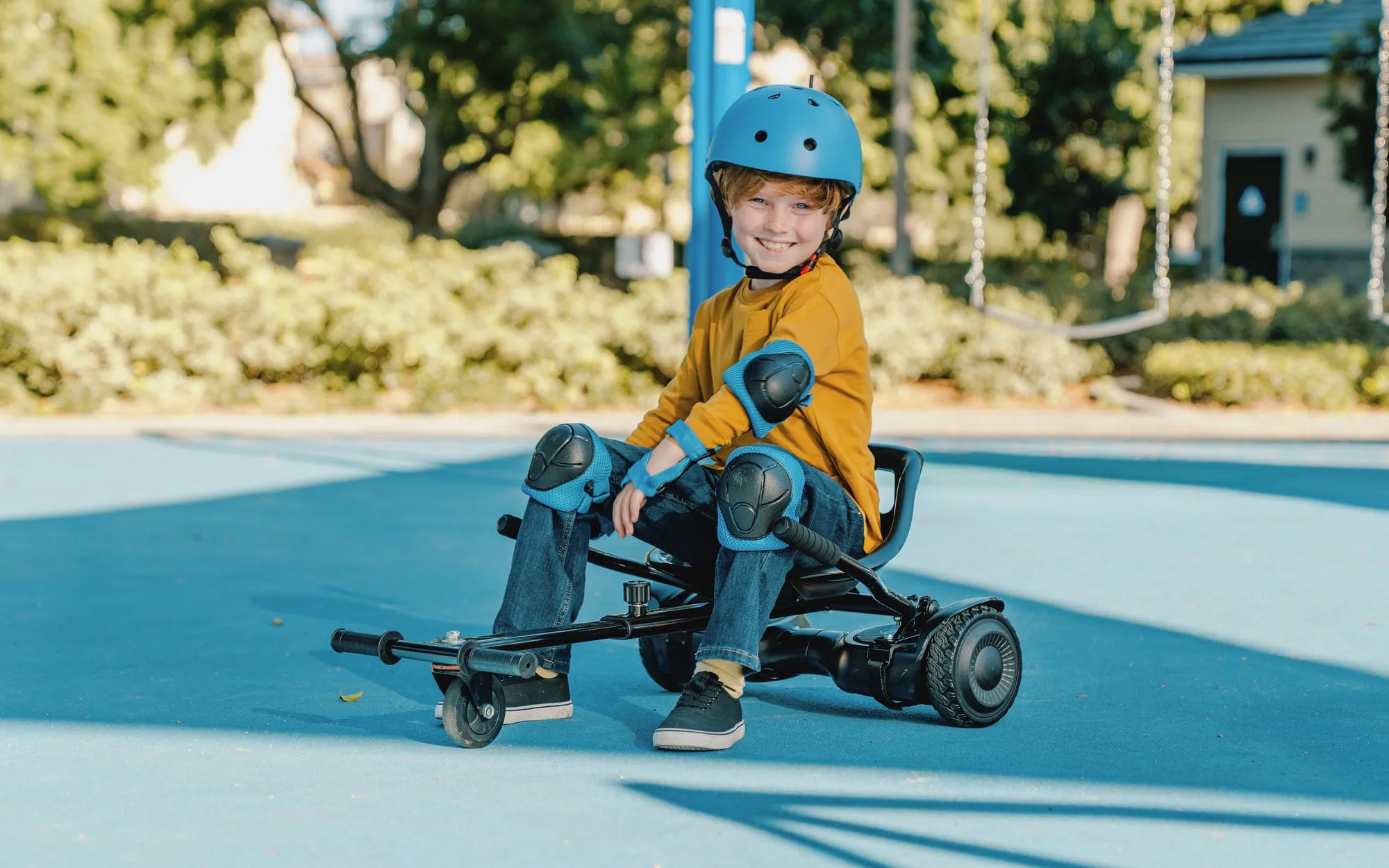
The cornerstone is a properly fitted, CPSC-certified bicycle helmet. It should sit level on the head, covering the forehead, with tight straps forming a "V" under the ears. Wrist guards are arguably the next most critical item, as they are designed to prevent the most common hoverboard injury: wrist fractures. Knee pads and elbow pads complete the set, protecting joints that are frequently scraped and impacted in falls. This gear does not make the activity safe, but it mitigates the severity of the inevitable falls. Parents should model this behavior by wearing their own gear, reinforcing that safety is non-negotiable.
Parental Guidance and Supervision: A Non-Negotiable Protocol
Parental guidance for a 2-year-old on a hoverboard must be redefined as direct, hands-on, active spotting—not passive observation from a nearby bench. Supervision in this context means you are physically involved in preventing a fall every second the child is on the device. The protocol below outlines the strictest possible framework, acknowledging that the safest choice is to avoid the activity entirely.
The first rule is total control over the device's power. Use a model with a parental remote control that allows you to limit speed to its absolute minimum (often a walking pace) and, more importantly, has a instant stop function. The child should not have independent control over the power button. Sessions must be extremely short, no more than 2-3 minutes, to match a toddler's attention span and physical stamina. Fatigue drastically increases the risk of a fall.
Creating a Safe Practice Environment
The practice environment is your first line of defense. Indoors, choose a large, open room with a wall-to-wall carpet. Carpet provides crucial friction to slow the board slightly and offers a softer landing surface. Remove all furniture with sharp edges, hard corners, or tripping hazards like rugs and toys. The area should be a clear, padded zone.
Outdoors, the only acceptable surface is a smooth, flat, and private area such as a driveway or empty tennis court. The surface must be dry and free of gravel, sand, or cracks. **Public sidewalks, parks near roads, or areas with any slope or decline are completely unsuitable.** Even a gentle slope can cause a hoverboard to accelerate beyond a toddler's—or a parent's—ability to control. The environment must be a controlled laboratory, not a public space with variables.
Teaching and Spotting Techniques
Effective spotting requires proper technique. Do not hold the child's hands or arms; if they fall, this can torque their joints and cause injury. Instead, stand directly behind or beside them, placing your hands firmly on their torso or under their armpits to support their core. Your goal is to bear their weight and stabilize their center of gravity.
Start with the hoverboard powered OFF. Practice mounting and dismounting repeatedly. Teach them to step off backwards, which is more stable than stepping forward. Once power is introduced at the lowest setting, focus solely on balance while you control all movement via the remote. Use clear, simple commands like "stand tall" and "look ahead." The moment they become distracted, wobbly, or upset, the session ends immediately. This is about control, not entertainment.
Alternative Options: Safer Ride-Ons for the Toddler Age Group
The best parental guidance often involves choosing a different, developmentally appropriate path. Numerous alternatives provide the fun of movement and the development of coordination without the extreme risks associated with putting a 2 year old on hoverboard. These options align with a toddler's actual abilities and promote foundational skills for future wheeled sports.
Investing in these alternatives is not a compromise; it is a smarter, safer strategy that fosters confidence through achievable success. These toys are designed with a toddler's proportions, strength, and cognitive level in mind, featuring lower speeds, greater stability, and simpler control mechanisms. They build the very skills—balance, steering, cause-and-effect—that would one day make hoverboard use conceivable.
Balance Bikes and Non-Motorized Scooters
A balance bike (run bike) is the premier tool for developing the core balance and coordination needed for all future two-wheeled activities. By propelling themselves with their feet, toddlers learn steering, leaning, and stopping intuitively. They build leg strength and, most importantly, learn to catch themselves with their feet—a critical safety reflex. This is the foundational training a hoverboard skips entirely.
For scooter-like fun, opt for a three-wheeled or four-wheeled non-motorized scooter. These models have a wide, stable base, often with two wheels in the front for easy steering. They require the child to push off the ground, allowing them to control their speed completely and stop instinctively by simply putting their feet down. Brands like Gyroor offer well-constructed, stable ride-ons that prioritize safety in design, giving children a sense of independence without the hidden dangers of a motorized balance device.
Powered Ride-On Toys with Low Speeds and Stability
If the appeal is battery-powered movement, choose a ride-on toy car or trike specifically designed for ages 2-4. These vehicles have key safety features: extremely low maximum speeds (typically 1-2 mph), a wide wheelbase that prevents tipping, a simple stop/go pedal or button, and often a parental remote override. They sit low to the ground, minimizing fall height.
These toys introduce the concept of powered motion in a controlled, stable environment. The child learns steering and basic traffic safety without grappling with a self-balancing mechanism. When considering brands, look for robust construction, reliable speed limiters, and a stable design. Gyroor's philosophy of UL-certified batteries and reliable engineering, applied to its younger-age-range products, exemplifies the focus on safe, durable play that grows with the child.
Comparison: Hoverboards vs. Age-Appropriate Alternatives for a 2-Year-Old
| Feature | Hoverboard (Typical Kid Model) | Balance Bike | 3-Wheel Non-Motorized Scooter | Powered Ride-On Car |
|---|---|---|---|---|
| Primary Skill Required | Advanced dynamic balance & core control | Basic balance & coordination | Basic standing balance & pushing | Steering & cause/effect (pedal) |
| Speed Control | Body lean (unintuitive), often too sensitive | Child's feet (natural, intuitive stop) | Child's feet (natural, intuitive stop) | Simple pedal or button (low max speed) |
| Stability | Unstable; requires constant correction | Stable when stopped; teaches balance in motion | Very stable due to multi-point design | Very stable; low center of gravity |
| Typical Max Speed | 7-10 mph (dangerously fast for age) | Walking/Running pace (child-determined) | Walking/Running pace (child-determined) | 1-2.5 mph (parent-controllable) |
| Fall Risk & Height | Very High; fall from full standing height | Moderate; feet are near ground to catch falls | Low; feet are near ground, easy to step off | Very Low; seated, low to ground |
| Developmental Benefit | Minimal; skills not yet developmentally accessible | High; builds foundational balance & coordination | Medium; builds coordination & confidence | Medium; introduces powered movement safely |
| Recommended Minimum Age | 8+ years | 18 months+ | 2-3 years+ | 2 years+ |
FAQ: Addressing Common Parental Questions
Q1: What is the absolute youngest age for a hoverboard?
Most safety experts, pediatricians, and manufacturers unanimously recommend age 8 as a reasonable minimum. For children under 5, and especially under 3, the risks of serious injury significantly outweigh any potential benefits. The physical and cognitive demands are simply too advanced for a toddler or preschooler.
Q2: Are there any hoverboards specifically made for 2-year-olds?
While some brands market "mini" or "kid" models, these are generally designed for children in the 5-8 year age range. True hoverboards engineered specifically for the physical and cognitive capabilities of a 2-year-old are virtually non-existent in the mainstream market. Any product making such a claim should be scrutinized extremely carefully, as it likely violates standard safety engineering principles for the age group.
Q3: My child is very advanced for their age. Can they try it?
Advanced verbal or cognitive skills do not translate to the necessary physical attributes: bone density, ligament strength, developed vestibular system, and adult-like reaction speeds. The age recommendations are based on median physical development and safety outcomes. "Advanced" does not make a toddler's skeleton less prone to fracture or their balance system mature enough for the task.
Q4: What about hoverboards with training wheels or handlebars?
Some accessories or models attempt to add stability. While these may slightly reduce the initial balance challenge, they do not address the core issue: the motorized, self-balancing response to lean. A child can still be thrown by an unexpected acceleration or jerk. These aids can create a false sense of security for both parent and child, potentially leading to riskier use.
Q5: What should I do if my child receives a hoverboard as a gift?
Thank the giver warmly for their generous intention. Then, calmly explain that you are following safety guidelines and will be saving it for when your child is much older. Immediately provide an age-appropriate alternative gift for your child to open and enjoy, such as a balance bike or ride-on car. Store the hoverboard safely out of sight and out of mind until the child reaches the recommended age.
Conclusion: Prioritizing Development and Safety Over Thrills
The evidence is clear and compelling. Placing a 2 year old on hoverboard introduces a high level of preventable risk with minimal developmental payoff. The combination of immature physiology, advanced skill requirements, and powerful machinery is a recipe for serious injury. Responsible parenting in this context means understanding that some technologies are not designed for every stage of childhood, and that is perfectly okay.
The journey of childhood mobility should be one of building confidence through achievable steps. By choosing alternatives like balance bikes, stable scooters, or slow-powered ride-ons, you actively foster the very skills—balance, coordination, spatial awareness—that form the foundation for all future athletic and recreational activities. You are not saying "no" to fun; you are saying "yes" to safe, appropriate, and confidence-building growth. The best parental guidance protects while it prepares, ensuring that the path to bigger thrills is built on a solid foundation of safety and skill.
When your child is older and ready for their first electric ride, choose a brand that prioritizes safety as much as you do. Explore the Gyroor collection, where UL-certified batteries, robust engineering, and age-appropriate designs meet the thrill of the ride. Browse the full Gyroor collection at gyroorboard.com for e-scooters and e-bikes built for safety and performance when the time is right.
Big Wheel Hoverboard: The Ultimate Guide to Choosing the Best Ride
Hoverboard Kart Attachment: The Ultimate Guide to Transforming Your Ride