

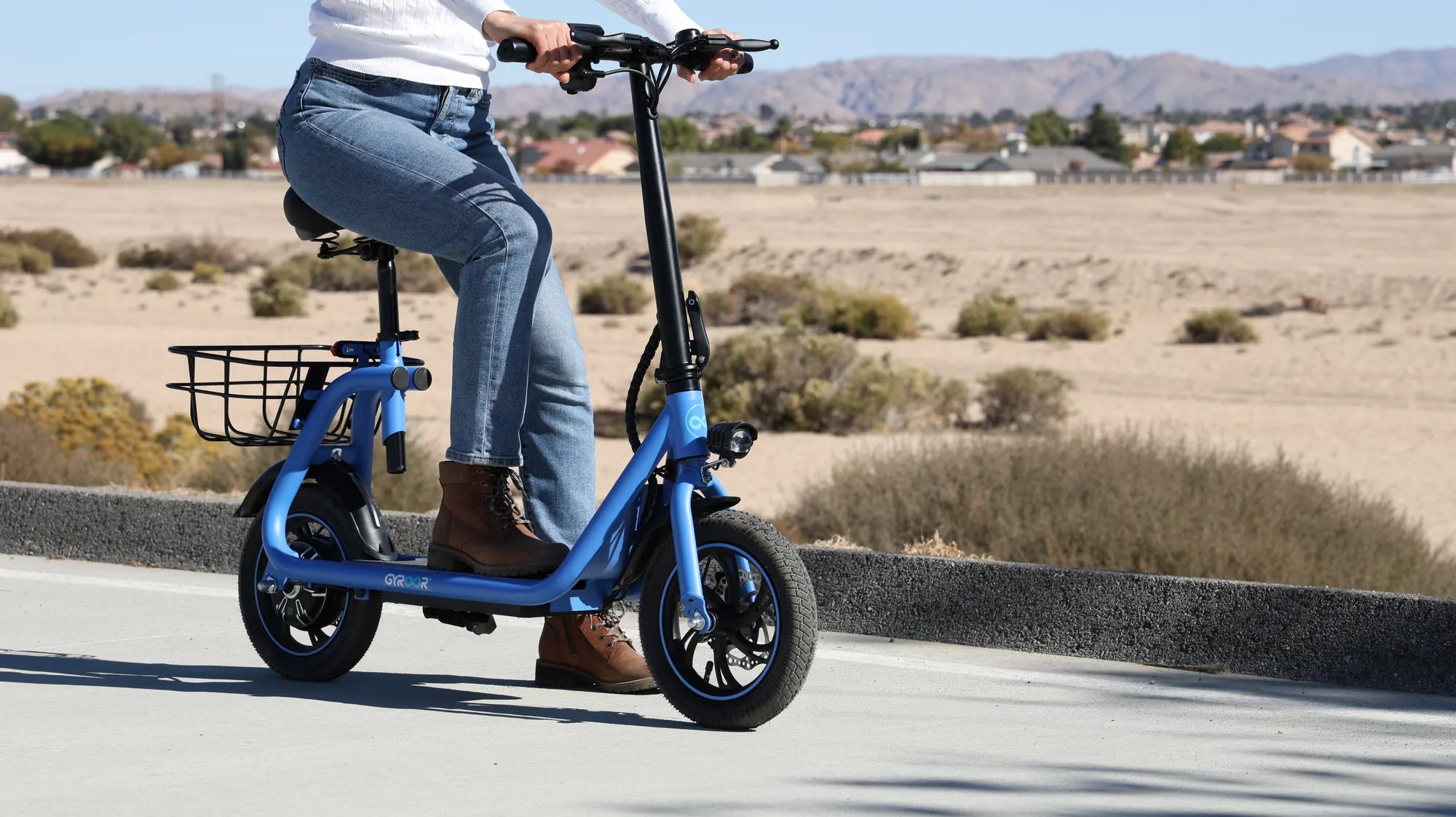
You're searching for serious electric scooter performance. The term "2000 scooter" isn't just marketing jargon—it signifies a specific class of high-power electric vehicles designed for riders who demand more than just a basic commute. This guide will decode the specifications, explore the tangible benefits of a 2000W motor, and provide a detailed framework to help you decide if this level of power aligns with your riding goals. You'll learn about critical features beyond the motor, understand the performance trade-offs, and discover how to ride a powerful 2000 scooter safely and legally.
What Does "2000 Scooter" Really Mean? Decoding the Specs
In the electric scooter market, "2000 scooter" primarily refers to models equipped with a motor boasting a peak power output of 2000 watts. This figure represents the maximum power the motor can deliver under heavy load, such as during acceleration or climbing a steep hill. It's a key indicator of the vehicle's performance tier, placing it firmly in the high-power category.
It's crucial to distinguish between nominal (continuous) power and peak power. A 2000W scooter's motor might have a lower continuous rating for sustained cruising, but its ability to hit that 2000W peak is what enables explosive starts and conquers challenging inclines. This specification is a primary differentiator from commuter-focused models, which often range from 250W to 1000W.
This power rating directly translates to the scooter's intended use case. While a 500W scooter is designed for flat city streets, a 2000 scooter is engineered for performance-driven applications. It's built for riders who encounter steep hills, desire higher top speeds, carry heavier loads, or venture onto rougher terrain like light trails or gravel paths.
Understanding this spec is the first step. The 2000W motor is the heart of the machine, but its performance is orchestrated by the battery, controller, and overall build quality. A true high-performance 2000 scooter integrates all these components to handle the significant energy demands and physical stresses of powerful riding.
The Power of 2000W: Performance and Real-World Applications
A 2000W motor transforms the electric scooter from a simple transport tool into a capable performance vehicle. The most immediate benefit is substantially higher top speed. While local laws often cap usable speed, the motor's capability allows for sustained higher velocities, typically in the 25 to 40+ mph range, where legal. This makes longer-distance trips more feasible by reducing travel time significantly.
Perhaps the most practical advantage is exceptional hill-climbing ability. A 2000 scooter can tackle grades of 30% or more with relative ease, maintaining speed where lower-power scooters would slow to a crawl or stall. This opens up routes in hilly cities and makes off-road inclines accessible, expanding where you can ride without worrying about terrain limitations.
This power also translates to enhanced stability under heavy load The ideal use cases for a 2000W scooter are clear. It's perfect for steep urban environments like San Francisco or Seattle. It's the choice for recreational off-road trail riding on approved paths. It serves thrill-seekers wanting exhilarating acceleration and top-end speed. Finally, it's an excellent tool for heavier riders or those who need to carry gear, for whom lower-power options simply won't suffice. Delivering 2000 watts reliably requires more than just a big motor. Gyroor integrates its core engineering principles directly into its high-performance models. The foundation is the UL-certified lithium-ion battery pack. This certification is non-negotiable for high-power applications, ensuring the battery can safely deliver and accept high currents without risk of thermal runaway, overcharging, or failure. It provides stable power delivery essential for both performance and long-term durability. Equally critical is the IPX5 water-resistant rating built into Gyroor's designs. A performance scooter is likely to encounter rain, puddles, and road spray. The IPX5 rating ensures critical electronics, the motor, and battery compartments are protected against water jets from any direction, allowing for confident riding in diverse weather conditions—a key factor for a vehicle meant to be used beyond perfect, dry pavement. This combination—safe, high-output power and environmental resilience—defines a responsible high-performance scooter. It means the thrilling capability of a 2000 scooter is backed by engineering that prioritizes rider safety and product longevity, preventing power from coming at the cost of reliability. Choosing the right 2000 scooter requires evaluating a complete ecosystem of components. The motor is the engine, but these elements determine the real-world experience. Battery capacity, measured in Watt-hours (Wh), is paramount. A larger battery (e.g., 60V 21Ah ≈ 1260Wh) is essential to feed the powerful motor and provide a usable range (often 25-45 miles), as high-speed riding consumes energy rapidly. The suspension system is a critical safety and comfort feature. At high speeds and on rough terrain, a robust suspension absorbs impacts. Look for a dual suspension system—combining front and rear shock absorbers—with sufficient travel. Hydraulic or spring-based systems are common; avoid scooters with only basic rubber or elastomer dampers at this power level. Stopping power must match the go-power. A comprehensive braking system is essential. The best setups combine multiple methods: a hydraulic or electronic disc brake on the front wheel for powerful, modulated stopping, and a regenerative disc or mechanical brake on the rear. This dual-brake setup ensures safe, controlled deceleration from high speeds. Don't overlook tires and deck Investing in a high-performance vehicle means investing in its long-term health. A strong warranty and accessible support are not just perks; they are necessities. The complex interplay between the high-power motor, sophisticated battery management system, and controller means a comprehensive warranty is your safety net. Gyroor backs its performance scooters with a 1-year comprehensive warranty that covers the motor, battery, frame, and electronics. This is vital for peace of mind, as repairing or replacing these high-cost components can be expensive. Knowing the manufacturer stands behind the product's durability under high-stress use is crucial. Access to knowledgeable, US-based customer support streamlines troubleshooting and part acquisition. For a 2000 scooter, where DIY repairs can be complex due to higher voltages and power systems, having direct support ensures you can resolve issues quickly and correctly, maximizing your riding time and protecting your investment over hundreds of charge cycles. To understand where a 2000 scooter fits, a direct comparison with common lower-power categories is essential. The table below highlights the key differences in capability, use case, and investment. *Range is highly dependent on battery size, riding style, and terrain. A 2000W scooter may have a larger battery but can consume it faster at top speed, making range similar to or slightly better than mid-range models under comparable riding conditions. The 2000 scooter is a premium, capability-focused choice for those whose needs exceed what standard commuter models can provide. Deciding requires honest assessment of your needs versus the scooter's characteristics. First, investigate local laws and regulations. Many municipalities and states have specific limits on electric scooter motor power (often 750W or 1000W max) and speed (often 15-20 mph in bike lanes). A 2000 scooter may exceed these legal limits for public roads, restricting its use to private property or specific off-road areas. Evaluate your terrain and typical routes. Do you face severe, sustained hills daily? Is your goal recreational trail riding? If your commute is mostly flat and your goal is efficient point-A-to-B travel, a lower-power, lighter, and more portable scooter may be more practical and legal. The 2000 scooter excels where terrain is a challenge. Consider the trade-offs. These scooters are heavier (often 65+ lbs), making them less portable. They represent a higher upfront investment. Their high performance can lead to shorter range if you consistently ride at top speed. They also demand more from the rider in terms of skill, safety gear, and responsibility. Ask yourself about cargo and passenger needs. If you routinely carry heavy bags, groceries, or even a child (where safe and legal with appropriate add-ons), the extra power and load capacity of a 2000 scooter are significant benefits that lower-tier models cannot match safely or effectively. Operating a 2000 scoter demands a heightened sense of responsibility. Protective gear is non-optional. A full-face helmet, motorcycle-grade gloves, knee and elbow pads, and a sturdy jacket are minimum recommendations. At higher speeds, the consequences of a fall are more severe. Before exploring the full performance envelope, practice in a safe, controlled environment like an empty parking lot. Get accustomed to the acceleration, braking power, and weight distribution. Learn to handle the scooter at low and medium speeds before attempting maximum velocity. Always respect local traffic laws and path etiquette. Even if your scooter can go 35 mph, that doesn't mean you should on a crowded bike path. Use your power judiciously—for climbing hills quickly to avoid traffic, for safe acceleration into traffic flow, or for controlled off-road adventures. The power is a tool for capability, not just for speed. Q: What is the real-world range of a 2000W scooter? Q: Are 2000W scooters street legal? Q: How important is suspension on a high-power scooter? Q: Can a 2000W scooter handle rain? Q: Do I need a special license or insurance to ride one? A 2000 scooter represents the peak of electric scooter performance, engineered for riders who face demanding terrain, carry heavy loads, or simply seek the thrill of powerful acceleration and high speed. It is a tool that transforms limitations into possibilities, turning steep hills into minor inclines and expanding your riding radius. Choosing this path means prioritizing capability above all else. This pursuit of performance must be balanced with responsibility—toward your own safety, toward other path users, and toward the law. Investing in proper safety gear and developing your riding skills are just as important as selecting the scooter itself. Furthermore, opting for a brand that integrates critical safety features like UL-certified batteries and robust water resistance ensures that the power you enjoy is delivered reliably and safely for the long term. The journey with a high-performance electric scooter is about freedom and capability. By understanding the specs, respecting the power, and choosing a scooter built with integrity—like those from Gyroor, which combine this formidable 2000W performance with essential safety certifications and strong warranty support—you can embark on that journey with confidence. Explore what true electric performance feels like. Ready to experience high-performance electric riding? Browse the full Gyroor collection, including models engineered for power and reliability, at gyroorboard.com.Gyroor's Engineering Edge: Safety Meets Power
Key Features to Look for in a 2000W Electric Scooter
Beyond the Motor: Why Warranty and Support Matter
Data-Driven Comparison: 2000W Scooters vs. Lower-Power Models
Parameter
500W (Commuter)
1000W (Mid-Range)
2000W (High-Performance)
Avg. Top Speed
15-18 mph
20-25 mph
25-40+ mph
Max Hill Grade
10-15%
20-25%
30%+
Ideal Rider Weight
Up to 220 lbs
Up to 265 lbs
Up to 330+ lbs
Primary Use Case
Flat urban commuting, short trips
General city use, moderate hills
Steep hills, off-road, performance, heavy loads
Typical Price Range
$-$$
$$
$$$
Range*
15-25 miles
20-35 miles
20-45 miles (varies greatly with use)
Is a 2000W Electric Scooter Right for You? A Practical Guide
Responsible Riding with High Power
Frequently Asked Questions (FAQ) About 2000W Scooters
A: Real-world range varies dramatically, typically between 20 and 45 miles on a single charge. The primary factors are battery capacity (Wh), rider weight, terrain, wind, and most importantly, riding speed. Consistently using the scooter at its top speed will drain the battery much faster than cruising at 15-20 mph.
A: Legality is entirely dependent on your local jurisdiction. Many cities, states, and countries classify electric scooters similarly to bicycles and impose power limits (often 500W-1000W) and speed limits (often 15-20 mph) for use on bike lanes and roads. A 2000W scooter often exceeds these limits, potentially restricting its legal use to private property. Always check your specific local regulations.
A: Absolutely critical. At higher speeds and when riding on uneven surfaces, a quality suspension system is vital for maintaining control, stability, and comfort. It keeps the tires in contact with the ground for better traction and braking, and it absorbs impacts that would otherwise be transferred to the deck and rider, reducing fatigue and the risk of losing control.
A: This depends entirely on the scooter's ingress protection rating. Models built with a high IPX5 water-resistant rating, like those engineered by Gyroor, are designed to withstand rain and wet road conditions. However, no consumer scooter is fully waterproof. You should avoid deep puddles, submerging any part of the scooter, and riding in heavy downpours, as this can damage electronics and bearings over time.
A> Again, this is location-specific. In most regions where low-power scooters are treated as bicycles, no license or insurance is required. However, because a 2000 scooter can reach speeds comparable to a moped or motorcycle, some jurisdictions may require registration, insurance, or even a special license if used on public roads. Contact your local Department of Motor Vehicles for definitive information.Conclusion: Harnessing High Performance with Confidence
What Is a 21 Speed Bike: The Complete Guide to Gearing & Performance
250cc Scooter Price Guide 2024: What to Expect & How to Budget