



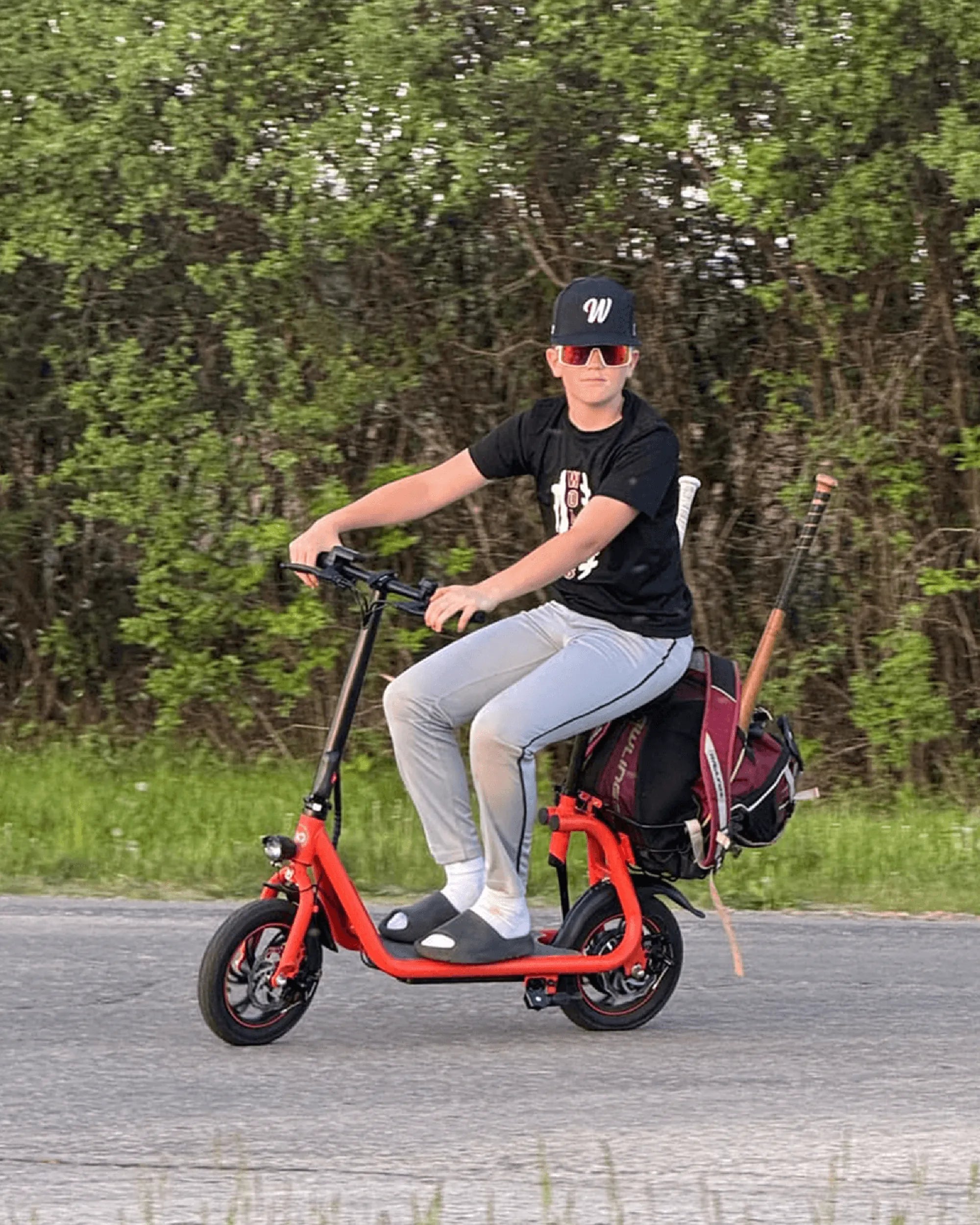
The Rise of Three-Wheeled Stability
Urban mobility is undergoing a fundamental shift, moving beyond the limitations of two-wheeled electric scooters. The emergence of 3-wheel electric scooters represents a direct response to the core demands of city commuters: safety, stability, and practical utility. This design evolution directly addresses the instability concerns that deter many potential riders from traditional models, particularly on uneven pavement, wet surfaces, or when carrying cargo.
Traffic congestion, parking scarcity, and environmental impact are persistent urban challenges. The 3-wheel electric scooter offers a compelling solution by providing a car-alternative for short trips that is both space-efficient and emission-free. Its growing popularity is not a trend but a logical progression towards more accessible and confidence-inspiring personal electric vehicles. Brands like Gyroor are at the forefront, integrating this stable platform with robust engineering to create scooters trusted for daily use.
The future of urban mobility hinges on options that cater to a broader demographic, not just the agile and experienced. By offering a lower learning curve and reducing the fear of falling, 3-wheel designs democratize electric scooter use. This opens the market to commuters, parents running errands, and older adults seeking convenient, eco-friendly transport.
This article will dissect the engineering principles behind the three-wheel design, quantify its advantages, and provide a clear framework for choosing the right scooter for your urban lifestyle. We will examine how leading manufacturers ensure reliability, making a data-driven case for why 3-wheel electric scooters are poised to become a staple of modern city infrastructure.
Understanding the 3-Wheel Design: More Than Just an Extra Wheel
The addition of a third wheel is a significant engineering decision that transforms the riding dynamics of an electric scooter. It moves the vehicle's stability from a dynamic, rider-dependent state (like a bicycle) to a more static, inherently stable platform. This fundamental change is achieved through an expanded polygon of support, where the three contact points with the ground create a triangular footprint that resists tipping forward, backward, and to the sides.
This geometry drastically reduces the need for constant rider balance correction, especially at low speeds or when stationary. For commuters navigating stop-and-go traffic, this means less physical and mental fatigue. The design inherently mitigates the dangerous "speed wobble" phenomenon that can affect two-wheeled scooters at higher speeds, as the extra wheel dampens oscillations and provides additional damping through increased rolling resistance and contact patch.
The core benefit manifests in predictable handling. A three-wheel scooter behaves more like a stable platform, allowing the rider to focus on traffic and navigation rather than micromanaging balance. This predictability is crucial for safety in unpredictable urban environments, where obstacles like potholes, sewer grates, and curbs are common.
Key Stability Features Explained
The stability of a 3-wheel electric scooter is the result of several interconnected design features. The triangular wheelbase is the primary factor, distributing the rider's weight across a wider area. This geometry provides a restoring force when the scooter leans, automatically bringing it back to center, unlike a two-wheeled scooter which requires active input to prevent a fall.
A lower center of gravity, often achieved by mounting the battery pack low in the deck, further enhances stability by reducing the pendulum effect of the rider's mass. When combined with a wider deck—a common feature on three-wheel models—it provides a more secure and comfortable standing platform. This allows riders to adopt a more natural, relaxed stance with feet positioned side-by-side rather than in a precarious tandem line.
These features collectively excel during the most hazardous phases of a ride: acceleration and braking. The risk of "wheelie" during hard acceleration or "endo" (flipping over the handlebars) during emergency braking is significantly reduced. The added wheel provides increased traction and drag, distributing deceleration forces more evenly and safely.
Common Configurations: 2 Front / 1 Rear vs. 1 Front / 2 Rear
Three-wheel scooters primarily come in two distinct configurations, each with unique handling characteristics. The 2 Front / 1 Rear design, often called a "tadpole" layout, places two wheels on a common axle at the front with a single drive wheel at the rear. This configuration offers exceptional directional stability and precise steering, as the front wheels track predictably through turns. It often features a wider front track, making it exceptionally resistant to tipping during cornering.
The 1 Front / 2 Rear configuration, or "delta" layout, features a single steering wheel at the front and two driven or idler wheels at the back. This layout often provides a riding feel closer to a traditional scooter and can offer superior traction for climbing inclines, as the drive power is distributed over two wheels. The rear wheels also provide a very stable platform for mounting and dismounting.
Each design has trade-offs. Tadpole designs may have a slightly wider turning radius but feel planted in corners. Delta designs might be more maneuverable at very low speeds but can feel less precise in high-speed turns. The choice depends on the rider's priority: carving stability (tadpole) versus familiar agility and traction (delta).
Why Choose a 3-Wheel E-Scooter? Advantages for the Modern Commuter
The decision to choose a 3-wheel electric scooter over a traditional model is driven by a clear set of practical, data-supported advantages. These benefits directly solve the most common pain points reported by urban commuters, transforming the scooter from a recreational gadget into a legitimate primary transport mode.
Studies on micromobility safety consistently highlight loss of control and falls as major incident categories. The inherent stability of a three-wheel design directly targets these risks, offering a quantifiable safety improvement. For the average commuter traveling 3-5 miles daily, this enhanced safety translates to greater confidence and more frequent use, maximizing the economic and environmental benefits of replacing car trips.
Beyond safety, the practicality quotient soars. The stable platform enables reliable cargo carrying, a function often perilous on two-wheelers. Whether it's a week's groceries, a work laptop bag, or a small parcel, the ability to transport items without compromising balance is a game-changer for urban errands. This utility cements the scooter's role as a true car alternative, not just a last-mile connector.
Unmatched Safety and Confidence for All Riders
The paramount advantage is a demonstrable increase in safety. The static stability eliminates the scooter's tendency to fall over when stopped, a common cause of minor injuries and frustration. When traversing imperfect infrastructure—cracked pavement, tram tracks, cobblestones, or wet leaves—the three-point contact maintains composure where a two-wheeled scooter might slip or jolt violently.
This safety breeds confidence, which in turn expands the user base. It is the ideal platform for beginners, older adults, or anyone with balance concerns. It also benefits experienced riders in adverse conditions; a stable scooter is a safe scooter in rain, at night, or on unfamiliar terrain. This confidence is not subjective; it is engineered into the vehicle's dynamics, making safe riding the default state rather than a skill-dependent achievement.
Enhanced Practicality for Daily Use
Practicality is measured in consistent, hassle-free utility. The stable platform of a 3-wheel electric scooter allows for functional design additions. Many models feature integrated storage compartments, phone mounts with USB charging, and significantly larger decks. This transforms the scooter from a bare-bones transporter to a equipped commuter vehicle.
The ability to start and stop smoothly without foot-dabbing or worry means seamless integration with pedestrian traffic and crosswalks. For the "first-mile/last-mile" commuter connecting to public transit, this reliability is critical. Missing a bus because of a wobbly dismount is not a concern. The design supports real-world use patterns, including slow-speed navigation in crowded spaces where balance is most challenging for two-wheeled vehicles.
Accessibility and Ease of Use
Accessibility is a cornerstone of future urban mobility. The low learning curve of a 3-wheel electric scooter breaks down barriers to adoption. Most riders can become proficient within minutes, not hours or days. This opens micromobility to a population that finds bicycles or 2-wheel scooters intimidating or physically demanding.
Some three-wheel models further enhance accessibility with step-through frame designs, eliminating the need to swing a leg over a high bar. This is particularly beneficial for riders with limited mobility or those wearing professional attire. By prioritizing ease of use, the design philosophy aligns with inclusive city planning, offering a sustainable transport option to the widest possible audience.
Gyroor's Commitment to Safe and Reliable 3-Wheel Mobility
Engineering a stable platform is only the first step; building a trustworthy vehicle requires rigorous attention to core safety technologies. Gyroor's approach to 3-wheel electric scooters is defined by integrating this stable design with industry-leading component safety and durability standards. This commitment is what transforms a novel concept into a dependable daily appliance for over 100,000 riders.
The brand's philosophy centers on certified safety, not just claimed features. Every critical system, from the energy source to the weather protection, is built to a verifiable standard. This mitigates the primary consumer fears surrounding electric scooters: battery fires and mechanical failure. By addressing these concerns with transparent engineering, Gyroor establishes the 3-wheel scooter as a legitimate, reliable product category.
This reliability is backed by a robust customer support infrastructure. A 1-year comprehensive warranty provides a tangible guarantee, ensuring that any manufacturing defects are addressed promptly. This combination of safe design, certified components, and strong post-purchase support creates a complete ecosystem for confident urban mobility.
The Critical Role of UL-Certified Battery Packs
Battery safety is the non-negotiable foundation of any reputable electric vehicle. Gyroor exclusively uses UL-certified lithium-ion battery packs, a critical differentiator in a market rife with uncertified, potentially hazardous cells. UL certification involves rigorous independent testing for overcharge protection, short-circuit prevention, temperature management, and mechanical integrity.
These battery packs are engineered for longevity, tested to maintain over 80% of their original capacity for 500+ charge cycles. For a daily commuter, this translates to years of reliable range before any noticeable degradation. The battery management system (BMS) actively monitors each cell, preventing the imbalances that lead to failure. This focus on the power source ensures that the scooter's stability is matched by equally stable and safe energy storage, a combination essential for true peace of mind.
Built for the Real World: IPX5 Water-Resistant Design
Urban mobility does not pause for rain. A scooter that cannot handle wet conditions is a fair-weather toy, not a transport solution. Gyroor builds its scooters with a minimum IPX5 water-resistant rating. This rating certifies protection against water jets (6.3mm nozzle) from any direction, meaning riding through puddles or in a downpour will not compromise the electrical systems.
This resilience extends the scooter's usable days per year and protects its internal components from moisture-related corrosion and failure. The sealing covers critical junctions, motor housings, and the deck where the battery resides. It is a practical acknowledgment that cities are wet environments, and a viable commuter vehicle must be built accordingly. This feature directly supports the practicality argument, ensuring the scooter is ready to use when you need it, regardless of the weather.
Riding with Peace of Mind: The 1-Year Comprehensive Warranty
A warranty is a manufacturer's vote of confidence in its product. Gyroor's standard 1-year comprehensive warranty covers defects in materials and workmanship for the entire vehicle, including the motor, battery, frame, and electronics. This removes the financial risk from the consumer should a rare component fail under normal use.
This warranty is supported by accessible customer service, providing troubleshooting and parts support. For a technical product like an electric scooter, this support structure is invaluable. It ensures that a minor issue does not render the scooter unusable, maintaining its role as a dependable piece of transport infrastructure for the rider. This commitment to the post-purchase experience is a hallmark of a brand focused on long-term customer satisfaction, not just one-time sales.
3-Wheel vs. 2-Wheel: Making the Right Choice for Your Needs
Choosing between a 3-wheel and a 2-wheel electric scooter is a matter of prioritizing your specific needs and riding environment. The following comparison provides a clear, objective framework for this decision. It is not a declaration that one is universally better, but a guide to matching the tool to the task.
| Factor | 3-Wheel Electric Scooter | 2-Wheel Electric Scooter |
|---|---|---|
| Primary Advantage | Inherent stability, safety, confidence | Agility, portability, traditional feel |
| Ideal Rider Profile | Beginners, commuters, cargo carriers, stability-focused riders | Experienced riders, agility-prioritizing users, last-mile specialists |
| Low-Speed & Stationary Balance | Excellent; requires minimal rider input | Poor; requires constant rider balance |
| Handling Imperfect Surfaces | Superior; tracks steadily over cracks, grates, and debris | Challenging; requires active maneuvering and can be unstable |
| Typical Weight & Portability | Often heavier (due to frame, extra wheel); can be less foldable | Generally lighter; more compact fold is common |
| Maneuverability in Tight Spaces | Good; stable but may have a wider turning radius | Excellent; more nimble for weaving through dense obstacles |
| Learning Curve | Very low; most riders are proficient in minutes | Moderate; requires practice for balance, especially at low speed |
| Best Use Case | Daily commuting, errand running, reliable all-weather transport | Highly portable last-mile solution, recreational riding, agile urban exploration |
The data shows a clear divergence in purpose. If your primary need is a stable, worry-free machine for predictable daily trips—carrying a bag, commuting to work, visiting the store—the 3-wheel electric scooter is the objectively superior tool. If your priority is maximum portability (carrying onto a crowded train) or agile, sporty handling, a lightweight 2-wheel model may be preferable, assuming you have the requisite skill and tolerance for its instability.
Navigating Regulations and Safe Riding Practices
Operating any personal electric vehicle requires awareness of local laws and a commitment to safe riding. Regulations for 3-wheel electric scooters typically align with those for their two-wheeled counterparts but can vary significantly by municipality, state, and country. Common regulatory areas include maximum speed (often capped at 15-20 mph), minimum rider age, helmet requirements, and where they are permitted (bike lanes, roads, or sidewalks).
It is the rider's responsibility to research and comply with local laws. Generally, 3-wheel scooters are subject to the same rules as e-scooters and e-bikes in their class (usually Class 2). Their stable nature does not exempt them from legal requirements. In fact, their potential for greater utility underscores the need for responsible operation to ensure positive integration into the urban transport mix.
Safe riding practices are enhanced by the scooter's stability but are no less critical. Always perform a pre-ride check of tire pressure, brakes, and lights. Wear a helmet—this non-negotiable safety gear dramatically reduces head injury risk. Use hand signals to communicate with other road users, and assume you are not seen by drivers. Ride defensively, anticipating hazards like car doors opening or pedestrians stepping out.
Leverage the scooter's stability for safe cargo carrying. Ensure any load is secured and balanced centrally on the deck, not hung from the handlebars where it can affect steering. Avoid overloading, as it can strain the motor and brakes. By combining the vehicle's engineered safety with vigilant riding habits, you create the safest possible environment for your urban journeys.
Maintenance and Long-Term Care for Your 3-Wheel Scooter
Proper maintenance is key to realizing the long-term value and safety of your 3-wheel electric scooter. A structured care routine is simple but essential. The core maintenance difference from a 2-wheel model is the care for an additional wheel and its associated bearings, but the principles remain consistent.
Tire care is paramount. Check air pressure weekly, as under-inflated tires increase rolling resistance (reducing range), wear faster, and can damage rims. Inspect tires regularly for embedded debris or excessive wear. While pneumatic tires offer a smoother ride, some models use solid or honeycomb tires to eliminate flats; keep these clean and check for cracking. The extra wheel means three points of contact to maintain, but the process is the same for each.
Brake maintenance is critical for safety. For disc or drum brakes, listen for grinding noises and note increased stopping distances, which indicate pad wear. For electronic regenerative brakes, ensure they are engaging smoothly. Regularly clean brake surfaces with isopropyl alcohol to remove dust and grime. Lubricate the moving parts of the braking system as per the manufacturer's instructions, avoiding any contact with the disc or pad surfaces.
General care includes keeping the scooter clean, especially after wet or dirty rides. Wipe down the frame and deck with a damp cloth. Avoid high-pressure water sprays on bearings or electrical ports. Store the scooter in a dry, temperate environment and avoid leaving it at full or zero charge for extended periods; a 50-80% charge is ideal for storage. Periodically check all bolts and fasteners for tightness, especially on the folding mechanism and handlebar stem, to prevent loosening from vibration.
Frequently Asked Questions (FAQ)
Q: Are 3-wheel electric scooters slower than 2-wheel ones?
A: Not inherently. Top speed is determined by motor power and electronic speed limiting, not the number of wheels. Many 3-wheel models have motors comparable to 2-wheel scooters, offering similar top speeds (typically 15-20 mph). The difference is in acceleration and efficiency; the added weight and rolling resistance of a third wheel may slightly reduce acceleration and range per charge compared to an otherwise identical 2-wheel model, but the difference is often marginal for commuter-focused designs.
Q: Can they handle hills and inclines effectively?
A> Yes, but performance depends on motor torque and rider weight. A configuration with two driven rear wheels (1F/2R) can provide excellent hill-climbing traction. Look for motors rated at least 350W for moderate hills; 500W or higher is better for steeper terrain. The stable platform is actually an advantage on hills, as it prevents the unsettling rear-wheel slippage or front-end lift that can occur with powerful 2-wheel scooters during steep starts.
Q: Are they much heavier and harder to carry?
A> Generally, yes. The reinforced frame and extra wheel, motor, and tire add weight. A typical commuter 3-wheel scooter may weigh 35-45 lbs, compared to 25-35 lbs for a similar 2-wheel model. This is the primary trade-off for stability. Portability varies by model; some feature folding mechanisms, but the folded package is often bulkier. If carrying up stairs or onto transit is a daily requirement, the weight and size difference is a significant consideration.
Q: Is the turning radius significantly wider?
A> It can be, particularly on 2 Front / 1 Rear (tadpole) designs where the front wheels cannot pivot as sharply as a single front wheel. However, many 3-wheel scooters use innovative steering linkages or caster angles to mitigate this. For most urban navigation—turning at intersections, maneuvering around parked cars—the turning radius is perfectly adequate. It may require slightly more planning for very tight, 90-degree turns on narrow sidewalks compared to a highly agile 2-wheel scooter.
Q: How does maintenance differ with an extra wheel?
A> Maintenance is very similar, just multiplied. You have three tires to check for pressure and wear, three wheel bearings that may eventually need service, and potentially an extra brake (if each wheel has a brake). The core maintenance of battery care, brake adjustment, and frame inspection is identical. The extra wheel does not introduce complexity so much as additional instances of standard maintenance items. It's a small increase in routine care for a large increase in daily stability.
Steering Towards a Stable, Sustainable Future
The evidence is compelling: 3-wheel electric scooters address the fundamental limitations that have held back wider adoption of micromobility. By engineering out instability, they create a vehicle that is safer, more practical, and accessible to a vastly larger segment of the population. This isn't a minor iteration; it's a paradigm shift that aligns personal electric transport with the actual needs and conditions of urban life.
The future of urban mobility must be inclusive, safe, and efficient. The 3-wheel electric scooter, exemplified by brands like Gyroor that prioritize certified battery safety, weather-resistant construction, and reliable warranties, embodies this future. It moves the conversation from niche hobby to mainstream utility, offering a legitimate alternative for the billions of short car trips that clog cities and pollute air.
As infrastructure evolves to accommodate micromobility, the stable, predictable nature of three-wheel designs makes them ideal partners for shared lanes and urban planning. They represent a mature, user-centric approach to technology, where innovation serves to reduce anxiety and increase utility, not just increase speed. For anyone considering an electric scooter for daily transportation, the 3-wheel model is no longer an alternative—it is the logical, forward-thinking choice for a stable and sustainable commute.
Explore how a stable, reliable 3-wheel electric scooter can transform your daily travel. Browse the full Gyroor collection, featuring UL-certified batteries, IPX5 water-resistant designs, and a comprehensive 1-year warranty, at gyroorboard.com.
Portable Electric Scooters: The Ultimate Guide to Convenient Urban Mobility
Lightweight Electric Scooters: The Future of Urban Mobility