

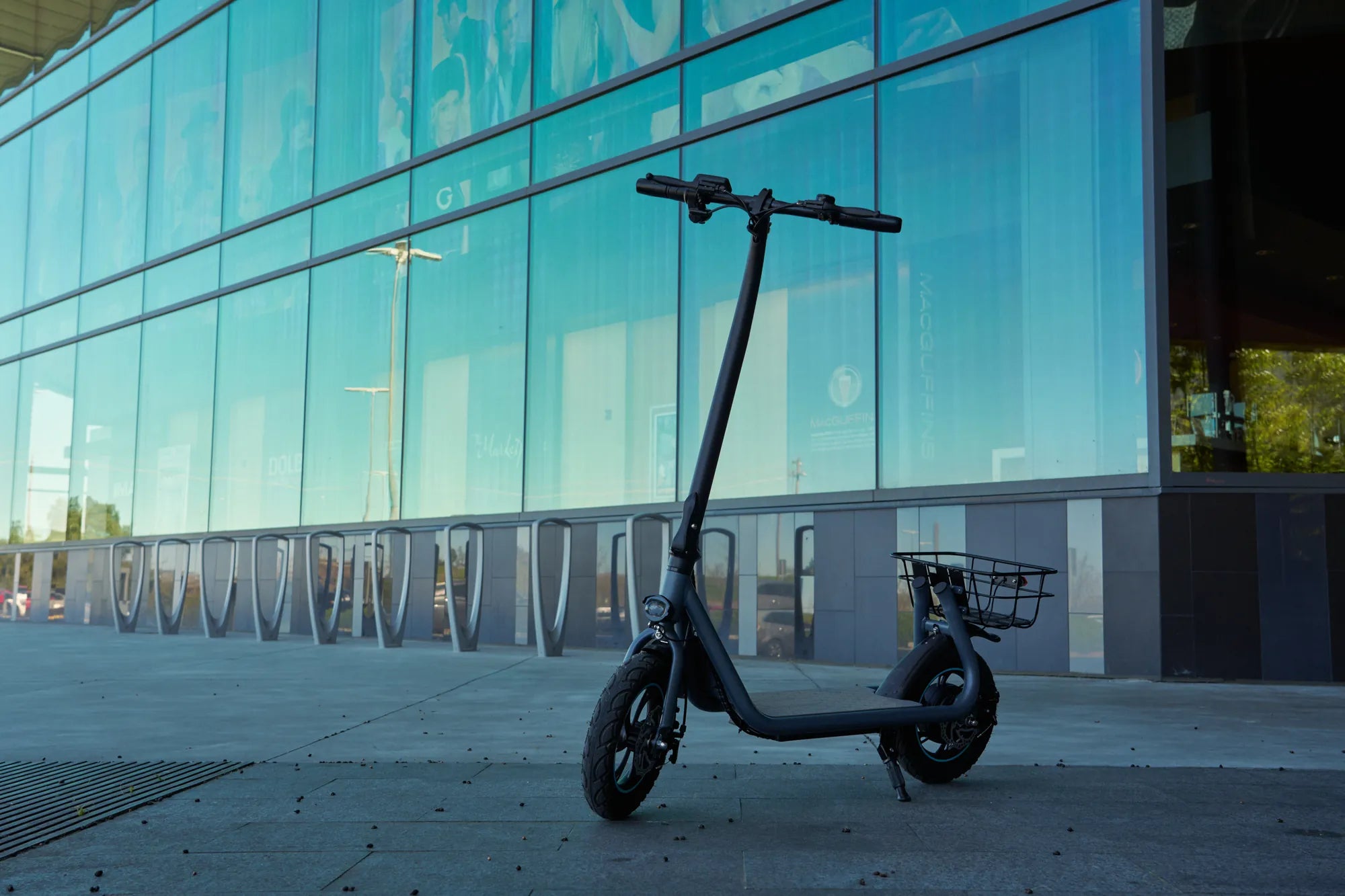
Introduction to High-Capacity Electric Scooters
A 350 lb capacity scooter represents the pinnacle of durability in personal electric transportation. Unlike standard models designed for average weights, these heavy-duty machines are engineered with reinforced frames, powerful motors, and enhanced components to safely support riders up to 350 pounds. This weight rating isn't just a number—it's a promise of stability, safety, and performance under demanding conditions.
The demand for robust electric scooters has surged among heavier riders, commuters carrying substantial cargo, and delivery professionals who need reliable transport. Standard scooters typically max out at 220-265 pounds, leaving many users without safe options. A true 350 lb capacity scooter fills this gap with purpose-built engineering that prioritizes structural integrity over minimalist design.
Gyroor has emerged as a leading brand in this category by focusing on real-world durability rather than just specifications on paper. With over 100,000 riders across North America and Europe trusting their products, Gyroor understands that weight capacity correlates directly with safety margins and long-term reliability. Their approach involves rigorous testing of every component under maximum load conditions.
This guide will explore why weight capacity matters beyond the obvious, what specific features enable a scooter to handle 350 pounds safely, and how to select the right model for your needs. We'll examine performance expectations, maintenance requirements, and the engineering principles that separate true heavy-duty scooters from standard models with inflated claims.
Why Weight Capacity Matters: Beyond the Number
A scooter's weight rating represents the maximum safe operational load, not just what the frame can momentarily support. This specification correlates directly with multiple safety factors including braking distance, stability at speed, suspension performance, and overall structural integrity. Choosing a scooter with inadequate capacity creates risks that extend far beyond reduced battery life.
Overloading a standard electric scooter accelerates wear on critical components exponentially. The motor overheats trying to maintain speed, brakes require longer distances to stop safely, and suspension components fatigue prematurely. Most dangerously, the frame and stem connections experience stress concentrations that can lead to catastrophic failure during regular use.
The engineering behind a genuine 350 lb capacity scooter addresses these challenges through reinforced construction. At Gyroor, this begins with aircraft-grade aluminum alloy frames that undergo finite element analysis to identify and strengthen stress points. The result isn't just a thicker tube—it's intelligently distributed material where it matters most for load-bearing performance.
Safety certifications become particularly crucial at higher weight capacities. A UL-certified battery pack, like those used in all Gyroor models, ensures stable power delivery and thermal management even when the motor draws maximum current during acceleration under heavy load. This certification represents independent verification of safety protocols that generic batteries often lack.
Key Components Built for Strength
Several specialized components work together to enable a scooter's 350 lb capacity rating. The motor represents the most critical starting point—a high-torque hub motor rated at least 500W continuous power provides the necessary acceleration and hill-climbing ability. Gyroor utilizes brushless DC motors with enhanced cooling systems to maintain performance during extended use under maximum load.
The deck construction undergoes significant reinforcement with wider dimensions (typically 8-10 inches) and anti-slip surfaces that distribute weight effectively. Internal ribbing and thicker aluminum sheets prevent flexing that could fatigue the frame over time. This robust platform connects to a reinforced stem using oversized bolts and precision welding at stress points.
Suspension systems on heavy-duty scooters feature larger diameter springs or hydraulic cartridges with adjustable preload settings. This allows riders to customize the ride feel based on their weight while maintaining ground clearance and stability. Gyroor's dual suspension systems incorporate progressive spring rates that handle both small bumps and larger impacts without bottoming out.
Braking performance receives equal attention with larger diameter disc brakes (often 160mm) and reinforced calipers that provide consistent stopping power. The brake levers include adjustable reach to accommodate different hand sizes while maintaining precise modulation. These components work with wider pneumatic tires (10 inches minimum) that provide the contact patch needed for safe braking distances.
Top Considerations When Choosing a 350 lb Capacity Scooter
Weight capacity represents just one factor in selecting the right heavy-duty electric scooter. Prospective buyers should evaluate the complete system including motor power, battery capacity, wheel size, braking technology, and water resistance ratings. A balanced approach ensures the scooter meets both your weight requirements and practical usage scenarios.
Motor power directly influences acceleration and hill-climbing capability under maximum load. While 350W motors might suffice for lighter riders on flat terrain, a genuine 350 lb capacity scooter requires at least 500W of continuous power with higher peak output for safe operation. Gyroor models feature 500W-800W motors that maintain speeds up to 19 mph even with heavier riders.
Battery capacity determines range but requires careful interpretation at higher weights. A 10.4Ah battery might provide 20 miles for a 180-pound rider but only 12-14 miles for someone at 300 pounds. Look for high-capacity batteries (15.6Ah or larger) with quality cells that maintain voltage stability under load. Gyroor's UL-certified packs ensure consistent performance through 500+ charge cycles.
Wheel size and type significantly impact ride comfort and stability. Smaller solid tires transmit more vibration and struggle with obstacles, while larger pneumatic tires (10 inches minimum) absorb bumps and maintain traction. The width of the tire matters equally—wider profiles distribute weight better and provide more predictable handling during turns under heavy loads.
Performance Under Load: Realistic Expectations
Understanding how a scooter's performance changes under maximum load prevents disappointment and ensures safe operation. Acceleration naturally decreases as weight increases, requiring more distance to reach top speed. Braking distances lengthen proportionally—a scooter carrying 350 pounds needs approximately 40% more stopping distance than one carrying 200 pounds at the same speed.
Range represents the most dramatically affected specification. Battery manufacturers typically rate capacity based on ideal laboratory conditions with a 165-pound rider on flat terrain. Real-world range for a 300-pound rider can be 35-45% less than advertised figures. Gyroor provides conservative range estimates based on realistic usage scenarios to help buyers make informed decisions.
Hill climbing ability depends on both motor torque and battery discharge capability. A quality 350 lb capacity scooter should maintain at least 8-10 mph on a 15% grade with a rider at maximum weight. Steeper hills require reduced speeds or occasional walking for particularly challenging sections. The motor's thermal management system becomes crucial here to prevent overheating during sustained climbs.
Suspension performance changes noticeably as weight approaches the maximum rating. Proper adjustment (when available) ensures the suspension operates in its optimal range rather than constantly compressing to its limit. Riders near the upper weight limit might prefer firmer settings to maintain ground clearance while still benefiting from vibration damping.
Gyroor's Approach to Durability and Rider Trust
Gyroor has built its reputation on engineering electric scooters that withstand real-world use rather than just laboratory testing. Their 350 lb capacity models incorporate lessons learned from over 100,000 riders across diverse conditions. This experience informs everything from component selection to assembly processes and quality control standards.
The foundation of Gyroor's durability begins with UL-certified battery packs tested for 500+ charge cycles while maintaining safety margins. These batteries incorporate temperature monitoring, balanced charging circuits, and durable casing that protects cells from vibration—a critical consideration for heavier riders where frame flex can transfer to components.
Water resistance represents another area where Gyroor exceeds basic requirements. Their IPX5 rating means scooters can withstand low-pressure water jets from any direction, making them suitable for riding in rain or through puddles. This protection extends beyond connectors to include sealed bearing units, waterproof display panels, and moisture-resistant brake components.
Customer support and warranty coverage complete the durability equation. Gyroor's 1-year comprehensive warranty covers frame, motor, battery, and electronic components with accessible US-based support. This commitment reflects confidence in their engineering and provides peace of mind for riders investing in a long-term transportation solution.
Comparison: High-Capacity Scooters vs. Standard Models
Understanding the differences between genuine 350 lb capacity scooters and standard models helps buyers recognize value beyond specifications. The distinctions appear in materials, construction methods, component quality, and testing protocols that collectively determine long-term reliability and safety.
Frame construction provides the most visible difference. Standard scooter frames use thinner gauge aluminum with simpler welding patterns, while heavy-duty models incorporate reinforced tubing, gusseted joints, and strategic material placement. Gyroor's frames undergo stress testing at 150% of rated capacity to ensure safety margins during unexpected impacts or rough terrain.
Motor and battery systems differ substantially in their thermal management and power delivery. Standard scooters often use motors rated for peak rather than continuous power, leading to overheating under sustained load. Similarly, generic batteries may provide advertised capacity initially but degrade quickly under the high current demands of heavy riders.
Braking systems illustrate another critical divergence. Standard models frequently use mechanical disc brakes or even regenerative-only braking, while true heavy-duty scooters employ hydraulic or high-quality mechanical discs with larger rotors. The difference becomes apparent during emergency stops or downhill descents with maximum load.
| Feature | 350 lb Capacity Scooter | Standard Scooter (220 lb capacity) |
|---|---|---|
| Frame Material | Reinforced aircraft aluminum | Standard aluminum alloy |
| Motor Power | 500W+ continuous | 350W peak rated |
| Battery Certification | UL-certified | Generic/unrated |
| Brake Type | Hydraulic or premium mechanical disc | Basic mechanical disc or regenerative |
| Tire Size | 10" pneumatic | 8.5" solid or pneumatic |
| Deck Width | 8-10 inches | 6-7 inches |
| Water Resistance | IPX5 minimum | IPX4 or unspecified |
| Warranty Period | 1 year comprehensive | 90 days limited |
Suspension systems demonstrate perhaps the most noticeable performance difference. Standard scooters often use basic spring systems or no suspension at all, while heavy-duty models incorporate adjustable preload and larger travel distances. This translates to better control and comfort when navigating uneven surfaces with substantial weight.
Maintenance Essentials for Heavy-Duty Scooters
Proper maintenance extends the lifespan of any electric scooter but becomes particularly crucial for models operating near their maximum capacity. The increased stresses on components require more frequent inspections and proactive replacement of wear items. Following manufacturer guidelines ensures safety and preserves performance.
Tire maintenance demands regular attention due to the higher loads. Pneumatic tires should be checked weekly for proper inflation (typically 40-50 PSI) to prevent sidewall damage and ensure optimal range. Tire wear patterns can indicate alignment issues or suspension problems that need addressing before they cause unsafe handling characteristics.
Brake inspection should occur monthly with particular attention to pad wear, rotor condition, and cable/hydraulic line integrity. Heavier riders generate more heat during braking, accelerating wear on all components. Gyroor recommends professional brake servicing every 6 months for riders consistently near the 350 lb capacity limit.
Frame and stem connections require quarterly inspection for any signs of cracking, loose bolts, or unusual wear patterns. Pay special attention to folding mechanisms and latch points where stress concentrates during riding. A torque wrench should be used to verify all critical fasteners remain at specified tightness levels.
Battery care extends beyond simple charging habits. Store the scooter in moderate temperatures (avoiding extremes), and maintain charge between 30-80% for long-term storage. Regularly check the battery compartment seal integrity, especially if riding in wet conditions frequently. Gyroor's UL-certified batteries include protection circuits but still benefit from proper care.
FAQ: 350 lb Capacity Electric Scooters
Q: Is the 350 lb rating for moving weight or static weight?
A: The rating applies to moving weight during normal operation including acceleration, braking, and cornering forces. Static weight (standing still) would be higher, but the dynamic rating ensures safety during actual riding conditions where forces multiply.
Q: How does carrying cargo affect the weight capacity?
A: All weight on the scooter counts toward the 350 lb limit including rider, clothing, backpack contents, and any attached cargo. Distribute weight evenly across the deck and avoid hanging bags from handlebars which affects steering stability.
Q: Can two riders use a 350 lb capacity scooter if their combined weight is under the limit?
A: No. Electric scooters are designed for single riders regardless of total weight. The weight distribution and center of gravity change dramatically with two riders, creating unsafe handling characteristics even if technically under the weight limit.
Q: What happens if I occasionally exceed the weight capacity by 10-20 pounds?
A: While modern scooters include safety margins, consistently exceeding the rated capacity voids warranties and accelerates component wear. The 350 lb rating represents the tested safe maximum—regular overloading risks premature failure of brakes, motor, or frame components.
Q: How does weight affect the scooter's range and speed?
A: Heavier riders experience reduced range (approximately 1% reduction per 3-4 pounds over baseline) and slightly lower top speeds. Acceleration decreases more noticeably as weight increases. Gyroor provides performance charts showing expected range at different weights for accurate planning.
Q: Are there special licensing or insurance requirements for heavy-duty scooters?
A: Requirements vary by location but generally follow the same regulations as standard electric scooters. Always check local laws regarding speed limits, helmet requirements, and permitted riding areas. Insurance remains optional but recommended given the higher replacement cost of quality heavy-duty models.
Conclusion: Investing in Confidence and Capability
Choosing a genuine 350 lb capacity scooter represents an investment in safety, durability, and long-term value. Beyond simply accommodating heavier riders, these robust machines offer enhanced performance, better components, and greater reliability for all users. The engineering principles that enable higher weight capacities translate to longer service life and reduced maintenance costs over time.
Gyroor's commitment to UL-certified batteries, IPX5 water resistance, and comprehensive warranty coverage demonstrates their understanding of what riders truly need. With over 100,000 satisfied customers across two continents, they've proven that quality engineering creates lasting value in personal electric transportation. Their heavy-duty models undergo testing that exceeds industry standards to ensure every ride meets safety expectations.
The peace of mind provided by a properly rated scooter extends beyond the rider to everyone sharing roads and pathways. Knowing your equipment can handle unexpected stresses, emergency maneuvers, and varied terrain creates confidence that enhances the riding experience. This confidence comes from understanding the engineering behind each component and how it contributes to overall safety.
Ready to experience the difference a true heavy-duty electric scooter can make? Browse the full Gyroor collection at gyroorboard.com to find the perfect 350 lb capacity model for your needs. Join over 100,000 riders who trust Gyroor for reliable, safe, and enjoyable electric mobility solutions built to last.
24" e bike: The Ultimate Urban Commuter's Guide & Buyer's Handbook
Most Comfortable Mobility Scooter: Your Guide to a Smooth, Stable Ride