


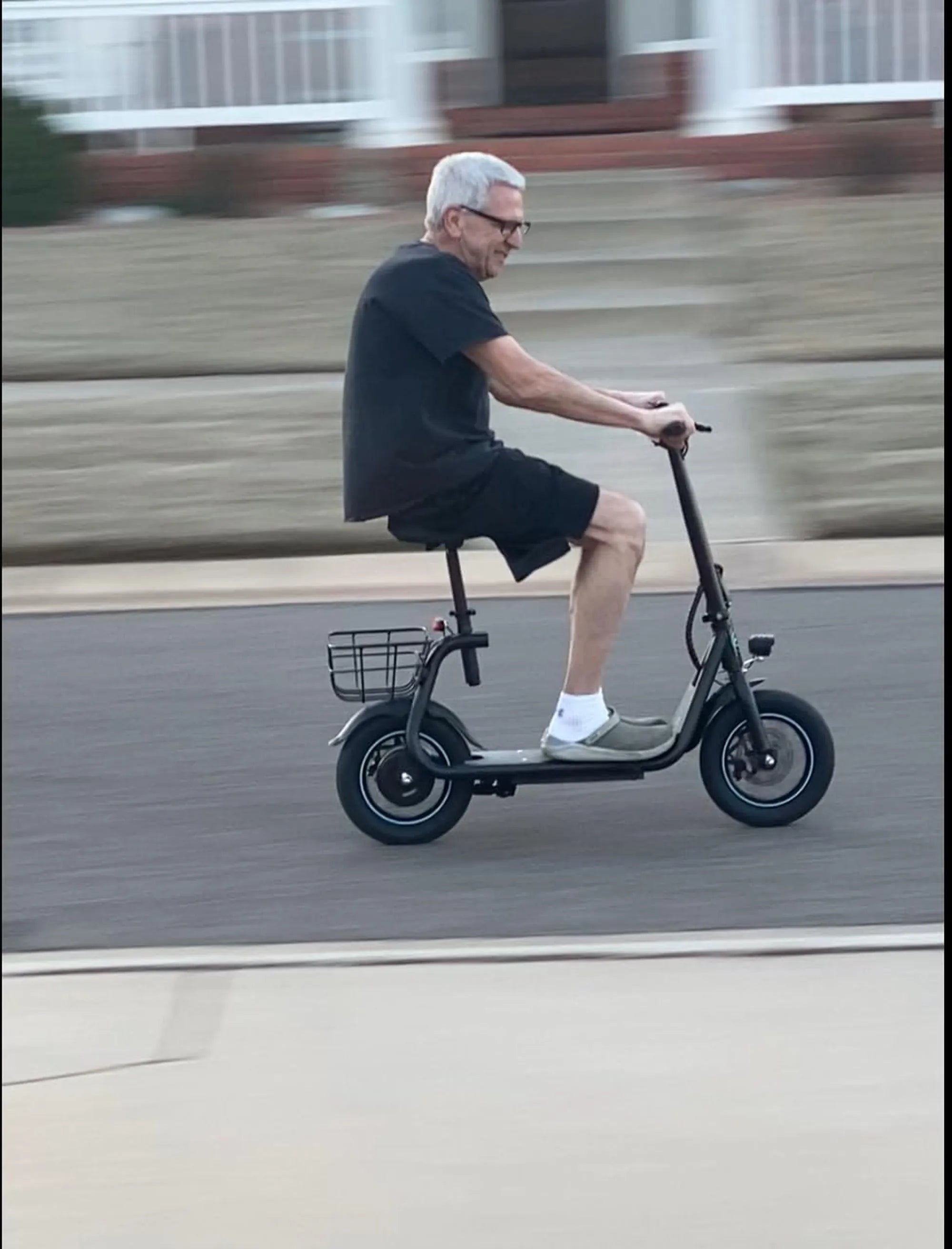
Introduction to Heavy-Duty Mobility Scooters
Navigating the world with confidence requires equipment you can trust, especially when standard mobility aids fall short. A 500 lb mobility scooter is engineered for users who need a higher weight capacity, typically defined as supporting the combined weight of the rider and any cargo, such as groceries, medical equipment, or personal items. This category is essential for bariatric individuals, taller users, or anyone who requires the ability to transport heavier loads regularly.
The need for robust, high-weight-capacity models goes beyond simple transportation. It's about safety, stability, and preserving the user's independence without compromise. Standard scooters, often rated for 250-350 lbs, can be unsafe and perform poorly under heavier loads, leading to premature component failure, reduced battery life, and potential safety hazards.
This guide will provide a detailed, data-driven analysis of what makes a true heavy-duty scooter. We'll dissect the critical engineering features, compare design priorities, and explain why certified components are non-negotiable for this application. As a leader in personal electric mobility, Gyroor's commitment to safety and durability informs this exploration, focusing on the engineering principles that deliver reliable performance under maximum stress.
Key Features to Look for in a 500 lb Capacity Scooter
Selecting a scooter rated for 500 lbs requires careful scrutiny of its specifications. The advertised weight limit is only valid if the entire system—frame, motor, battery, and brakes—is designed to handle the associated stresses consistently. Here are the non-negotiable elements that separate a capable heavy-duty model from a merely labeled one.
Frame Construction and Deck Design
The frame is the scooter's skeleton. For a 500 lb capacity, look for frames constructed from reinforced, welded steel or high-grade, thick-walled aluminum alloys. These materials provide the necessary tensile strength to resist flexing and torsion, which can lead to structural fatigue over time. The deck should be significantly widened and lengthened compared to standard models.
A broader deck improves stability by lowering the center of gravity and providing a secure platform for the user. It should feature a non-slip surface, often textured rubber or composite, to ensure foot placement remains firm. Anti-tip features, such as a longer wheelbase and/or a rear-mounted anti-tip wheel, are critical safety additions that prevent the scooter from tipping backward when ascending steep inclines.
Motor Power and Hill Climbing Ability
Motor wattage is a primary indicator of performance under load. For a 500 lb mobility scooter, a motor in the 500W to 1000W range is typically necessary. However, wattage alone doesn't tell the full story; torque is the key metric for hill climbing and acceleration. A high-torque motor maintains speed on inclines where a less powerful motor would stall or slow to a crawl.
Real-world performance means the scooter should be capable of climbing grades of at least 10-12 degrees while carrying its maximum rated weight. Manufacturers should provide a clear hill grade specification. Underpowered scooters will struggle on modest slopes, drain the battery rapidly, and overheat the motor controller, potentially causing damage and creating a safety issue during ascent or descent.
Battery Range and Real-World Performance
Battery specifications are often given for ideal conditions with a lighter rider. Weight has a direct, exponential impact on range. Dragging 500 lbs requires significantly more energy than 250 lbs. Therefore, a high-capacity battery is essential. Look for lithium-ion (Li-ion) battery packs with capacities of 30Ah (Ampere-hours) or higher to ensure usable range under full load.
More important than raw capacity is battery safety and certification. A UL-certified battery pack, like those used in Gyroor models, has undergone rigorous independent testing for electrical, mechanical, and thermal safety. This certification is crucial for a high-stress application, as it ensures protection against overcharging, short circuits, and thermal runaway—risks that increase with battery size and discharge rates. A quality battery should also be rated for 500+ full charge cycles with minimal capacity degradation.
Braking Systems and Safety
Reliable stopping power is paramount. At high weights, momentum increases, making effective brakes a critical safety system. Dual braking systems are standard for heavy-duty models. This typically includes a primary brake—often a dual disc brake system—and a secondary electromagnetic (regenerative) brake.
Disc brakes offer superior stopping power and heat dissipation compared to drum brakes, especially important for sustained use on downhill slopes. The electromagnetic brake engages when the throttle is released, providing smooth deceleration and helping to recharge the battery slightly. This dual-system approach ensures redundancy; if one system were to fail, the other can still bring the scooter to a controlled stop. Always verify the brake type and look for models with larger brake rotors for increased surface area and stopping force.
Comparing Top Considerations: Comfort vs. Portability
When choosing a 500 lb mobility scooter, buyers often face a fundamental trade-off between all-day comfort and practical portability. Understanding these two design philosophies is key to matching the scooter to the user's primary lifestyle needs.
Full-Size, Comfort-Focused Models
These scooters prioritize stability, ride quality, and user amenities. They are built on a longer, wider chassis with a larger wheelbase, which inherently improves smoothness and handling. They feature captain-style, high-back seats with ample padding, adjustable armrests, and swivel functionality for easier mounting. Legroom is generous, and the floorboard is fully covered.
For outdoor and variable terrain use, full-size models often come equipped with full suspension systems—combining front and rear shock absorbers—and larger wheels (10 inches or more). This combination absorbs bumps from sidewalks, grass, and minor obstacles, drastically reducing fatigue. The trade-off is size and weight; these are not designed for frequent disassembly. They are best for users who primarily use the scooter from their home, require maximum comfort for extended periods, and transport it via a dedicated van lift or trailer.
Heavier-Duty Portable/Folding Models
Innovations in frame design have made some high-capacity scooters more manageable for transport. These models feature a reinforced folding mechanism or a quick-disconnect system that allows the scooter to separate into two or three main components (e.g., seat, frame, battery). The goal is to reduce the weight of the largest individual piece to a manageable level, often around 50-70 lbs.
While portable, these models make subtle compromises. The seat may be slightly smaller, the suspension less comprehensive, or the wheelbase shorter to achieve the folding design. They are ideal for users who need to transport the scooter in a car trunk or SUV frequently, travel, or have limited storage space at home. The key is to ensure the folding mechanism is robust, uses high-strength locking pins, and does not introduce flex or weakness into the frame when deployed.
Why Gyroor's Engineering Stands Out for High-Weight Needs
With over 100,000 riders trusting its products across North America and Europe, Gyroor's approach to heavy-duty mobility is defined by certified safety and durable engineering. For a user relying on a 500 lb mobility scooter, these principles translate directly into reliability and peace of mind.
The cornerstone of this reliability is the UL-certified battery. In a high-capacity scooter, the battery pack is under constant, significant load. Gyroor's use of independently tested and certified battery cells and management systems mitigates the risk of fire or failure, a concern that is paramount with larger, more powerful batteries. This certification is a tangible commitment to safety that goes beyond marketing claims.
Furthermore, an IPX5 water-resistant rating is a practical necessity for real-world use. It means the scooter's electrical components are protected against low-pressure water jets from any direction. This allows for confident use in light rain, on damp roads, or when crossing sprinkler systems, without fear of water ingress causing a short circuit or corrosion. Durability in everyday conditions is a key component of true independence.
Finally, the value of a 1-year comprehensive warranty with accessible support cannot be overstated. A heavy-duty scooter is a significant investment. A robust warranty that covers the frame, motor, battery, and electronics provides essential financial protection. Knowing that support is available from a US-based team ensures that any issues can be resolved promptly, minimizing downtime and maintaining the user's mobility.
Data-Driven Decision Making: Specifications Checklist
Use this checklist to evaluate any 500 lb mobility scooter. Do not rely solely on the manufacturer's headline weight rating; verify these supporting specifications.
| Feature | Minimum Recommended Specification | Why It Matters |
|---|---|---|
| Weight Capacity | Clearly rated for 500 lbs (user + cargo) | Base requirement. Ensure the rating is from a reputable brand, not just a sticker. |
| Motor Power | ≥ 750W continuous power | Provides necessary torque for hills (≥10° grade) and acceleration under max load. |
| Battery | ≥ 30Ah Li-ion, UL-certified | Ensures usable range (e.g., 15-20 miles under load) and critical safety standards. |
| Braking System | Dual Disc Brakes + Electromagnetic Brake | Provides reliable, fade-resistant stopping power with system redundancy. |
| Frame Material | Reinforced Steel or Aircraft-Grade Aluminum | Ensures structural integrity and resists flexing under maximum stress. |
| Deck Size | Wider and longer than standard models | Improves stability and provides secure footing for the user. |
| Max Speed | Adjustable, up to 10-15 mph | Allows for safe, controlled travel at speeds appropriate for the environment. |
| Warranty | Comprehensive 1-year (min.) on frame, motor, battery | Protects your investment and indicates manufacturer confidence. |
Frequently Asked Questions (FAQ)
Q: What does a 500 lb weight capacity actually mean?
A: This is the maximum safe operating weight for the scooter. It includes the weight of the user, any clothing or carried items (like a backpack), and any additional cargo placed on the scooter (e.g., groceries in a basket, an oxygen tank mounted on the frame). Exceeding this limit can void the warranty, damage components, and create a serious safety hazard.
Q: Can a 500 lb mobility scooter be used indoors?
A>Yes, but with consideration. Full-size models have a larger turning radius and may be too wide for very narrow doorways or cramped home layouts. Measure your doorways, hallways, and intended storage space. Portable models are often more indoor-friendly due to their slightly smaller dimensions when assembled. Always check the scooter's overall width and turning radius specifications.
Q: How does weight affect the scooter's range and speed?
A>Significantly. Advertised range and speed are typically measured under ideal conditions with a ~180 lb rider. At a full 500 lb load, expect the actual range to be 40-50% of the advertised maximum. Speed, especially on inclines, will also be reduced as the motor works harder to maintain torque. Always plan your trips based on "real-world under load" estimates, not peak specifications.
Q: Are there special transportation or storage considerations?
A>Absolutely. Due to their size and weight, these scooters often require a wheelchair lift or ramp for van transport. For car transport, a folding/disassembling model is almost mandatory. Consider the weight of the heaviest component you will need to lift. Storage requires more space; a garage, shed, or dedicated indoor area is typical. Outdoor storage is not recommended unless the scooter is specifically rated for it and protected from the elements.
Q: What maintenance is required for a heavy-duty scooter?
A>Regular maintenance is crucial for safety and longevity. Key tasks include: checking tire pressure monthly (if pneumatic), inspecting brakes for wear, ensuring all frame bolts and folding mechanisms are tight, keeping the battery terminals clean, and storing/charging the battery as per manufacturer instructions (typically in a cool, dry place). An annual professional check-up is advisable.
Conclusion: Investing in Confidence and Freedom
Choosing a 500 lb mobility scooter is a decision that prioritizes foundational safety and durable performance over basic convenience. It requires looking beyond the weight rating to the engineering that supports it: the robust frame, the powerful motor and battery system, and the reliable brakes. This investment is ultimately in your confidence, independence, and ability to engage with the world on your terms.
Brands that build with certified components, like UL-certified batteries, and stand behind their products with strong warranties offer more than a product—they offer a partnership in mobility. They provide the reliable foundation necessary for true, worry-free independence. Use the specifications checklist provided to critically evaluate your options and ask detailed questions of retailers.
For those seeking a balance of heavy-duty capability, certified safety, and thoughtful design, exploring proven engineering is a logical next step. Browse the full Gyroor collection at gyroorboard.com to see how a commitment to quality components and user-focused design creates mobility solutions built for the demands of real life.
8 Speed Road Bike: The Complete Guide to Simplicity, Value & Performance
90/90-14 Scooter Tire: The Complete Guide to Size, Safety & Performance