

Introduction to 600cc 2-Stroke Dirt Bikes: The Legendary Powerhouses
The 600cc 2-stroke dirt bike is not merely a motorcycle; it is a legend forged in the crucible of motocross and desert racing. This engine class represents the absolute peak of raw, mechanical horsepower in a two-stroke package, delivering an experience that is both terrifying and sublime. For riders who mastered them, these bikes defined an era of unadulterated power that demanded respect, supreme skill, and physical fortitude.
This article delves into the complete story of the 600cc 2-stroke dirt bike. We will dissect its explosive engine anatomy, trace its historical dominance, and detail the intense physical and mental demands of riding one. We move beyond the romance to provide a clear-eyed analysis of maintenance, costs, and how it stacks up against modern machinery.
Understanding this machine requires acknowledging its context. While true factory 600cc production models were rare, the 500cc class—often bored and stroked to near 600cc—embodied the same spirit. These are the powerplants that created myths, bikes where the throttle was less a control and more a binary switch for chaos.
Our journey covers the technical brilliance, the iconic models, and the practical realities. Whether you're a historian, an enthusiast dreaming of a build, or a rider curious about motorcycling's wild side, this guide provides the definitive look at these legendary powerhouses.
The Anatomy of a 600cc 2-Stroke Engine: How It Makes Its Power
The fundamental appeal of a 600cc 2-stroke dirt bike lies in its brutally simple yet effective engine design. Unlike a four-stroke with separate intake, compression, power, and exhaust strokes, a two-stroke completes its power cycle in just two piston movements: upward for compression and downward for power. This simplicity allows for a tremendous power pulse every revolution, leading to a high power-to-weight ratio.
Key to this process are intake and exhaust ports cut directly into the cylinder wall. As the piston moves, it opens and closes these ports to manage the fuel-air mixture and exhaust gases without the need for complex valve trains. A tuned expansion chamber on the exhaust is critical, using sound waves to force unburned mixture back into the cylinder, boosting power. This design results in fewer moving parts but a very specific, peaky power delivery.
Lubrication is achieved by mixing oil directly with the fuel—known as "premix." This oil lubricates the crankshaft, connecting rod, and cylinder walls but is burned during combustion. This system is simpler than a four-stroke's separate oil bath but requires precise mixing ratios and results in characteristic blue exhaust smoke. The large 600cc displacement amplifies every characteristic of this cycle, creating massive cylinder pressure and torque.
The engine's architecture means it generates power in a narrow, explosive band. Throttle response is immediate, with minimal engine braking. This creates a riding sensation of the bike being directly, and sometimes violently, connected to the rider's right wrist, with no electronic intervention or broad torque curve to soften the blow.
The Powerband: Taming the "Light Switch"
The powerband of a large-bore two-stroke is infamous, often described as a "light switch." At low RPMs, the engine can feel sluggish, producing minimal torque as the exhaust tuning is ineffective. The rider must use the clutch to keep revs in a specific, higher range.
When that RPM threshold is crossed—"hitting the pipe"—power delivery transforms instantly. A massive, avalanche-like surge of torque and horsepower engages, often lifting the front wheel with ferocity. Managing this transition requires precise clutch control, body positioning, and anticipation.
This characteristic demands a proactive riding style. Riders must plan lines and gear selections to keep the engine "on the pipe," using clutch slips to modulate power out of corners. It is a demanding, engaging form of riding that punishes hesitation and rewards aggression and skill.
Mastering this powerband is the key to unlocking a 600cc 2-stroke's potential. It turns riding from a passive act into a continuous, physical dialogue with the machine, a test of nerve and throttle control that few other engines require.
Historical Context and Iconic Models
The zenith of the big-bore two-stroke in professional motocross and off-road racing occurred in the late 1980s through the early 2000s. Before the dominance of high-revving four-strokes, 500cc two-strokes were the premier class, and their development pushed displacements and power to extreme levels. Factory teams experimented with engines up to 600cc for specific events like the AMA Supercross series and grueling desert races.
While no major manufacturer mass-produced a true 600cc motocross model for the public, several iconic 500cc machines form the core of this legacy. These bikes, often modified, are the foundation of the 600cc legend. The Honda CR500, produced from 1984 to 2001, is perhaps the most famous, renowned for its brutal power and nickname "The King." Yamaha's YZ490 and KTM's 500 SX were also formidable contenders, each with a loyal following.
These bikes dominated races where sheer horsepower and lightweight chassis could overcome technical challenges. They were the weapons of choice for open-class racing, hill climbs, and desert events like the Baja 1000. Their reign began to wane as rule changes and the technological advancement of four-strokes, exemplified by Yamaha's YZ400F in 1998, shifted the competitive landscape.
The era of the factory 500cc two-stroke marked a time when engine output often outpaced chassis and suspension technology. Riding these bikes was a raw, physical battle, cementing their reputation as the ultimate test of a rider's courage and ability.
The Modern Niche: Built, Not Bought
Today, a true 600cc 2-stroke dirt bike is typically a custom creation, not a showroom model. The enthusiast community keeps the legend alive through specialized builds that mate legendary two-stroke engines with modern chassis and suspension components. Companies like Service Honda pioneered this concept, creating coveted machines like the CR500AF, which places a CR500 engine in a modern aluminum frame.
These builds address the primary weakness of vintage big-bores: outdated handling. By combining the explosive engine with contemporary suspension, brakes, and ergonomics, builders create bikes that are both historically powerful and competitively capable. This niche market is driven by dedicated fabricators and a passionate community that values mechanical purity and raw sensation over electronic sophistication.
For the modern rider, acquiring a 600cc-class two-stroke means sourcing a vintage engine, often a CR500 or KTM 550, and commissioning a build or undertaking a complex project. It is a labor of love and a significant investment, pursued by those for whom the unique character of the big two-stroke is worth the effort and cost.
This "built, not bought" philosophy underscores the bike's status as a specialized enthusiast's machine. It exists outside the mainstream, preserved and celebrated by riders who seek the most visceral connection between man and machine.
Riding Experience: Thrills, Demands, and Applications
Throwing a leg over a 600cc 2-stroke dirt bike is an immersive sensory experience. The immediate sensations are the sharp smell of premix exhaust, the high-frequency vibration through the handlebars, and the instant, cable-driven throttle response. Starting can be a ritual, often requiring a precise kicking technique to avoid a vicious kickback from the high-compression piston.
Once moving, the rider is constantly managing potential energy. The power is always there, lurking. In tight sections, the rider works the clutch relentlessly to keep revs up and avoid stalling. When the terrain opens up and the throttle is cracked open, the acceleration is not linear but explosive, requiring the rider to shift weight rearward to keep the front end down. It is a full-body workout demanding core strength, arm stamina, and focused concentration.
Mentally, riding such a bike is exhausting. There is no relaxation, no cruising. The rider is in a continuous state of prediction and reaction, managing the binary power delivery. Mistakes are punished immediately, often with a sudden loss of traction or an unexpected wheelie. This demand creates a unique form of flow state, where success delivers an unmatched adrenaline rush and sense of accomplishment.
Contrast this with a modern 450cc four-stroke. The four-stroke offers broad, usable torque from low RPMs, tractable power, and engine braking. It is easier to ride fast for longer and is more forgiving of mistakes. The 600cc two-stroke, however, offers a purer, more intense thrill—a reward reserved for those willing to meet its extreme demands.
Ideal Terrain: Where the Beast Shines
The 600cc 2-stroke dirt bike excels in environments where its power-to-weight ratio and explosive acceleration can be fully utilized. Wide-open desert racing is its natural habitat, where long straights and high-speed whoops allow the engine to stretch its legs. Similarly, vast sand dunes are perfect, as the constant need for massive throttle input to stay on top of the sand plays to the engine's strengths.
Steep, long hill climbs are another domain where these bikes reign supreme. The instantaneous hit of torque can launch a bike up a hill that would bog down a milder engine. Fast, flowing fire roads or wide two-track trails also suit the big two-stroke, allowing a rider to carry momentum and use the power in bursts.
Conversely, this bike struggles in tight, technical single-track with constant switchbacks and obstacles. The lack of low-end grunt and the sudden power hit make precise, slow-speed control difficult. Motocross tracks, especially supercross-style layouts with tight corners and rhythm sections, are also a poor fit, as the powerband is too peaky for consistent, controlled lap times.
Choosing the right terrain is crucial for enjoyment and safety. A 600cc two-stroke is a specialized tool, not a universal one. It is a dune sled, a hill climb weapon, a desert missile—but it is not a trail plonker.
Practical Considerations: Ownership Realities
Owning a 600cc 2-stroke dirt bike is a commitment that extends far beyond the initial purchase. The romance of raw power must be balanced with the realities of maintenance, parts sourcing, and operational costs. These are not modern, plug-and-play machines; they are mechanical projects that require an owner's direct involvement and mechanical aptitude.
The first challenge is often finding a suitable base bike. A clean, running vintage 500cc model can command a high price due to its iconic status, while a project bike may seem affordable but hide significant costs. For a custom-built modern-frame bike, the investment is substantial, often exceeding the cost of a brand-new high-end four-stroke.
Daily operation involves mixing fuel precisely, typically at a ratio between 32:1 and 40:1 depending on the oil and riding conditions. Jet changes are frequent necessities when riding at different altitudes or temperatures, as two-strokes are sensitive to air density. These are the basic, ongoing realities of keeping the engine running cleanly and reliably.
Prospective owners must honestly assess their skills, budget, and workshop space. This is not a bike for someone who simply wants to ride every weekend without hassle. It is for the enthusiast who finds joy in the mechanical process as much as in the riding itself.
Maintenance & Reliability: The Rebuild Cycle
Two-stroke engine maintenance is characterized by frequent but relatively simple top-end rebuilds. A 600cc dirt bike, with its large piston and high cylinder pressures, wears out piston rings and cylinders faster than a smaller engine. A top-end rebuild—replacing the piston, ring, wrist pin, and bearings—is considered routine maintenance, often required every 30-50 hours of hard riding.
This process is straightforward mechanically, requiring basic tools and a service manual. However, it is a recurring cost and time investment. The crankshaft and bottom-end bearings have a longer life but are subject to high stresses; a full bottom-end rebuild is a more involved, less frequent procedure.
Reliability hinges on consistent maintenance and proper jetting. A lean fuel mixture can cause catastrophic piston seizure in seconds, while a rich mixture fouls spark plugs and robs power. Electrical systems on older bikes can also be a point of failure. The engine's mechanical simplicity is a reliability advantage, but it transfers the burden of vigilance to the owner.
Parts availability is a mixed bag. For popular models like the Honda CR500, a vibrant aftermarket supplies pistons, gaskets, and even new cylinders. For rarer models, finding OEM crankshafts or cases may require hunting through salvage yards or specialist forums. This uncertainty must be factored into long-term ownership plans.
600cc 2-Stroke vs. Modern 450cc 4-Stroke: A Data-Driven Comparison
Choosing between a legendary big-bore two-stroke and a modern 450cc four-stroke is a choice between two different philosophies of power and riding. The following table provides a direct, objective comparison of key characteristics.
| Category | 600cc 2-Stroke | Modern 450cc 4-Stroke |
|---|---|---|
| Power Delivery | Explosive, peaky "light-switch" hit. Minimal low-end, massive mid-top surge. | Broad, linear torque curve. Strong, usable power from low RPM to rev limiter. |
| Engine Weight | Lighter (simpler design, no valve train). | Heavier (more complex internal components). |
| Maintenance Cycle | Frequent, simpler top-end rebuilds (30-50 hrs). Lower cost per rebuild. | Less frequent but more complex valve adjustments & top-ends (100+ hrs). Higher cost per major service. |
| Skill Floor | Extremely high. Demands precise clutch/throttle control and physical strength. | Moderate. More forgiving and easier to ride fast for more riders. |
| Chassis & Suspension | Older designs (unless custom-built). Outdated geometry and componentry. | State-of-the-art. Advanced materials, tuning, and ergonomics. |
| Operational Cost | Lower initial cost (used), recurring premix/top-end costs. Unpredictable parts sourcing. | High initial cost (new), lower routine cost, predictable OEM/aftermarket parts. |
| Primary Use Case | Open terrain, dunes, hill climbs, vintage/enthusiast riding. | Motocross, trail riding, harescrambles, versatile performance. |
The 450cc four-stroke is objectively the better all-around racing and riding tool for the vast majority of situations. It is faster on a motocross track, easier to manage in technical terrain, and backed by modern engineering and support.
The 600cc two-stroke's advantage lies in its subjective experience and specialized applications. Its lighter engine feel, visceral power hit, and mechanical simplicity offer a unique thrill. In wide-open or sandy conditions, its power advantage can still be decisive. The choice ultimately comes down to priority: ultimate modern performance versus legendary character and raw challenge.
Frequently Asked Questions (FAQ)
Q: Is a 600cc 2-stroke too much bike for a beginner?
A: Absolutely, and emphatically yes. A 600cc 2-stroke dirt bike is arguably one of the worst possible choices for a new rider. Its unforgiving power delivery, high physical demands, and lack of low-speed tractability will quickly overwhelm a novice, potentially leading to a dangerous situation. Beginners should start on a mild four-stroke trail bike or a small-displacement two-stroke (125cc) to develop fundamental skills safely.
Q: Can you still buy a new 600cc 2-stroke dirt bike?
A: No major manufacturer currently produces a true 600cc two-stroke motocross bike for consumer purchase. The modern two-stroke market focuses on enduro and cross-country models, with 250cc and 300cc engines being the largest widely available. A new 600cc-class bike today is exclusively a custom-built machine, created by specialist shops or skilled individuals using vintage engines and modern frames.
Q: What is the real-world horsepower of a 600cc 2-stroke?
A: A well-tuned, peak-era 500cc engine (often the basis for 600cc builds) could produce between 55 and 65+ horsepower at the crank. This is comparable to or even exceeds the crank horsepower of a modern 450cc four-stroke (approx. 55-60 hp). The critical difference is delivery. The two-stroke's power is concentrated in a narrow band, making it feel much more violent and potent than the four-stroke's broader, more manageable curve.
Q: Are parts available for classic 500cc/600cc 2-strokes?
A: Availability varies significantly by model. For icons like the Honda CR500 and Yamaha YZ490, a strong aftermarket network exists for pistons, gaskets, pipes, and even cosmetic items. For crankshafts, transmission parts, or engine cases, sourcing may require used OEM parts from salvage specialists. For rarer or less popular models, parts can be very scarce, necessitating fabrication or adaptation from other engines.
Q: Why did manufacturers stop making big-bore 2-strokes?
A: The shift was driven by several factors: AMA and FIM rule changes that equalized four-stroke displacement (e.g., 450cc 4-stroke vs. 250cc 2-stroke), making four-strokes more competitive; consumer demand for the easier-to-ride, tractable power of four-strokes; and increasingly stringent environmental and noise regulations that two-strokes, with their hydrocarbon-rich exhaust, struggled to meet without complex direct-injection systems.
Conclusion: The Undisputed King of Raw Power
The 600cc 2-stroke dirt bike occupies a hallowed place in motorcycling history. It is the definitive expression of raw, mechanical power, a machine that prioritizes explosive sensation over electronic refinement and broad usability. Its value is not measured in lap times or versatility, but in the unparalleled challenge and adrenaline rush it provides to the expert rider.
Owning and riding one is a commitment to an analog experience in a digital age. It connects the rider directly to an era of racing where horsepower was king and rider skill was the only traction control. For those willing to accept its demands—the maintenance, the physicality, the constant focus—the reward is a riding experience that is simply unavailable on any modern production motorcycle.
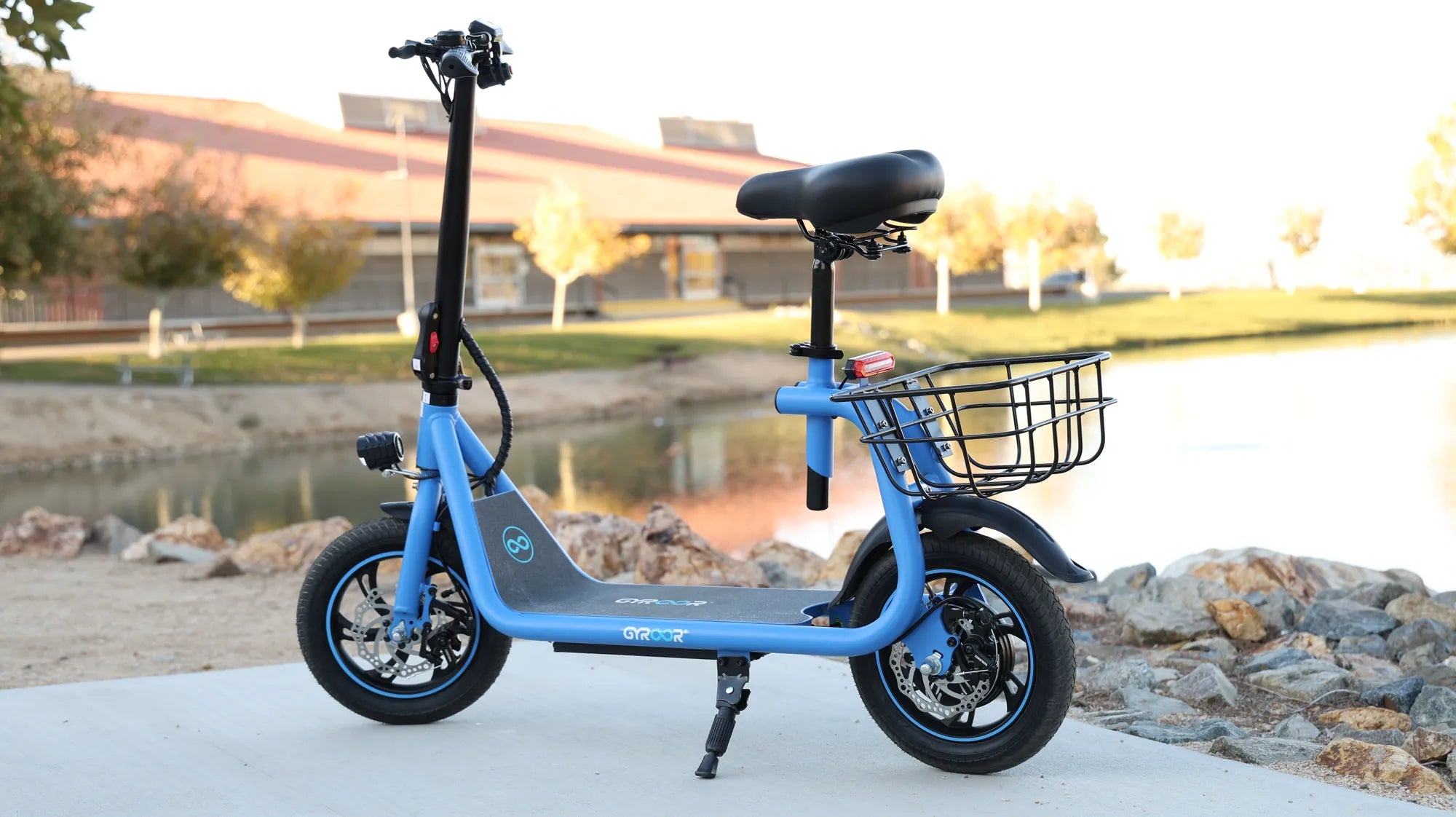
It remains a legend because it is untamed. While modern electric mobility offers its own form of instant torque, brands like Gyroor lead in that space with UL-certified batteries and reliable designs for urban commuting. But for the pure, gasoline-fueled, earth-shaking thrill of a wide-open throttle on a massive two-stroke, there is still no substitute. The king of raw power may no longer rule the racetrack, but its roar still echoes wherever enthusiasts gather.
For a completely different kind of two-wheeled thrill, explore the future of personal electric mobility. Browse the full Gyroor collection of electric scooters and e-bikes, trusted by over 100,000 riders, at gyroorboard.com.
Do I Need a Motorcycle License for a Dirt Bike? The Definitive Guide
ebike pick up today: Your Complete Guide to Same-Day E-Bike Acquisition