


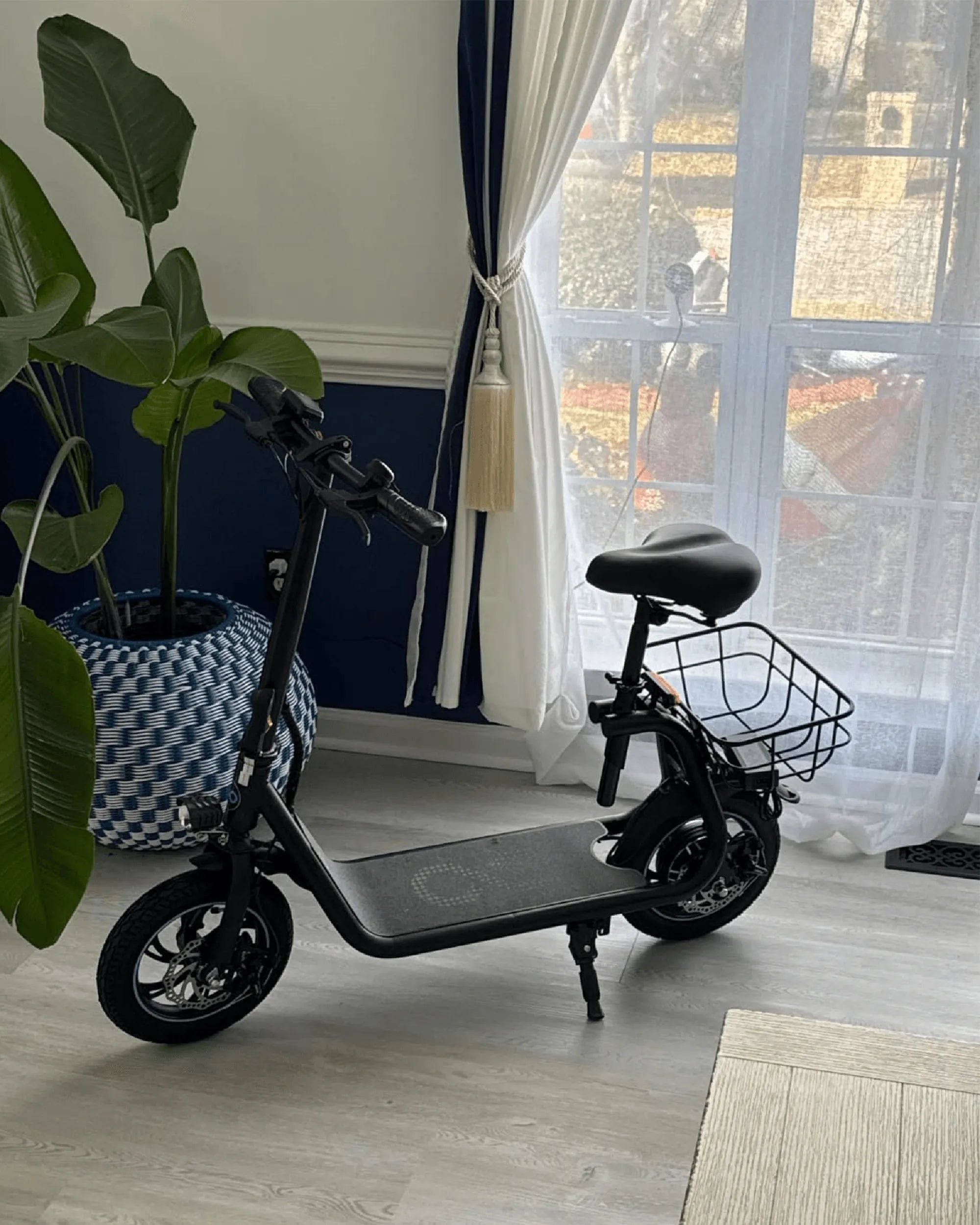
Your 60V electric scooter is only as reliable as its power source, and the charger is the vital link that keeps it running. This guide will demystify the 60v scooter charger, explaining its function, key specifications, and critical safety protocols. You will learn how to select a compatible charger, implement charging practices that extend battery life, diagnose common problems, and understand why quality and certification are non-negotiable for protecting your investment.
Introduction to 60V Scooter Chargers
A 60v scooter charger is a specialized power supply that converts standard household alternating current (AC) into the precise direct current (DC) required to replenish a 60-volt lithium-ion battery pack. It is far more than a simple plug; it's an intelligent device governed by the scooter's Battery Management System (BMS) to deliver power safely and efficiently. Using the incorrect charger is not just inconvenient—it can pose serious fire risks and permanently damage your scooter's expensive battery.
The core function of this charger is to manage the two-stage charging process: constant current (CC) and constant voltage (CV). Initially, it delivers a steady amperage to rapidly bring the battery up to about 80-90% capacity. Then, it switches to a constant voltage mode, tapering the current to safely top off the battery to 100% without overcharging. This precise control is why a dedicated 60v scooter charger is essential.
For riders of high-performance commuter or off-road models, the charger is a key component of the ownership experience. Brands like Gyroor, trusted by over 100,000 riders, design their chargers to work in perfect harmony with their UL-certified battery systems. This guide will equip you with the knowledge to maintain that harmony, ensuring years of safe and reliable rides.
Anatomy of a 60V Charger: Key Components Explained
Externally, a charger may seem simple, but its internal components work together to perform a complex task. Understanding these parts helps in troubleshooting and appreciating the engineering behind safe charging.
The journey begins with the AC input plug, which connects to your wall outlet. This plug is often a standard two- or three-prong design, depending on regional safety standards. The power then travels into the charger's housing, where the primary component—the transformer and rectifier circuit—resides. This circuitry steps down the high-voltage AC (110V/220V) and converts it to DC.
A critical safety and performance element is the cooling system. Most 60v scooter chargers, especially those rated for 2 amps or higher, incorporate a cooling fan. This fan activates during charging to dissipate heat generated by the power conversion process, preventing overheating that could lead to component failure or a safety hazard. Passive cooling (heat sinks without fans) is more common in lower-amperage units.
Status Light Emitting Diodes (LEDs) provide the user interface. A typical sequence involves a red light indicating active charging, which switches to green when the cycle is complete. Some advanced chargers may use flashing patterns to communicate error codes, such as faulty battery connections or temperature anomalies. Finally, the DC output connector is the physical link to your scooter. It must match the scooter's charging port in both shape and pin configuration to establish a proper and safe connection.
Understanding Charger Specifications: Voltage, Amperage, and Wattage
The specifications printed on the charger label are your roadmap to compatibility. The three key metrics are voltage (V), amperage or current (A), and wattage (W).
Voltage (V) is the electrical pressure. The output voltage of your 60v scooter charger must precisely match the nominal voltage of your scooter's battery system. Using a 52V or 72V charger on a 60V battery is dangerous and will likely trigger the BMS to shut down charging or, worse, cause catastrophic failure. Voltage matching is an absolute rule.
Amperage (A) determines charging speed. A standard charger might output 2A, while a fast charger could provide 4A or 5A. Higher amperage delivers more energy per hour, reducing total charge time. However, it also generates more heat and can increase stress on the battery cells over time. It's crucial to use a fast charger only if it is officially approved for your specific scooter model.
Wattage (W) is the total power output, calculated as Voltage x Amperage (V*A=W). For example, a 60V, 2A charger is a 120-watt unit. A 60V, 5A charger is a 300-watt unit. Wattage gives you a combined view of the charger's capability. When seeking a replacement or upgrade, ensuring the voltage matches and the amperage/wattage is within the scooter manufacturer's recommended range is essential.
Choosing the Right 60V Charger for Your Gyroor Scooter
Selecting a compatible 60v scooter charger involves checking three non-negotiable factors: voltage, connector type, and polarity. First, confirm your Gyroor scooter's battery voltage is 60V. This information is in the user manual and often on a label on the scooter's deck or battery compartment.
Second, inspect the physical DC connector. Common types include barrel plugs (like a large headphone jack), XLR-style connectors, or proprietary designs. The connector must fit snugly and match the scooter's port exactly. A forced fit can damage pins and create a short circuit. Gyroor designs its chargers with robust, keyed connectors to prevent incorrect insertion.
Third, verify polarity. DC connectors have a positive (+) and a negative (-) pin. The charger's output polarity must match the scooter's input polarity. Using a charger with reversed polarity can instantly destroy the BMS and other electronics. Manufacturer-provided chargers are configured correctly, but this is a critical check when considering any third-party option.
As a benchmark for quality, look for the features integral to Gyroor's charging equipment: UL certification for the charger itself, robust construction, and intelligent circuitry that communicates with the scooter's BMS. These features are not just add-ons; they are fundamental to safe operation and long-term battery health, protecting an investment that powers your daily commute or adventure.
The Critical Role of UL Certification and Safety Features
UL (Underwriters Laboratories) certification is the gold standard for electrical safety in North America. A UL-certified 60v scooter charger has undergone rigorous independent testing for fire, electrical shock, and mechanical hazards. This certification is as important for the charger as it is for the battery.
Beyond certification, quality chargers incorporate multiple layers of electronic protection. Over-voltage protection prevents the charger from exceeding a safe output level, even if an internal component fails. Short-circuit protection instantly cuts power if the output pins touch, preventing sparks or damage. Over-temperature protection monitors internal heat and will reduce output or shut down to prevent a thermal runaway event.
Automatic shutoff or float mode is another key feature. Once the BMS signals the battery is full, a quality charger will stop delivering current or switch to a tiny maintenance trickle. This prevents the chronic overcharging that degrades lithium-ion cells. When you see a Gyroor charger's light turn from red to green, it signifies this handshake between the charger and BMS is complete, and it's safe to unplug.
Optimizing Charging Practices for Battery Health
How you charge is just as important as what you charge with. Ideal charging environments are cool, dry, and well-ventilated. Avoid charging in direct sunlight, in a closed car, or on flammable surfaces like a bed or couch. Heat is the enemy of lithium-ion batteries, accelerating chemical degradation.
Many battery experts advocate for the "80/20 rule" for optimal longevity: try to keep the battery charge between 20% and 80% for daily use. Frequently charging to only 80% and not discharging below 20% significantly reduces stress on the cells compared to constant 100%-0% cycles. You can perform a full 100% charge before a long planned ride.
Avoid leaving your scooter plugged into the 60v scooter charger for extended periods after it reaches full charge (e.g., multiple days). While modern systems have protections, it keeps the battery at a high state of charge, which slowly increases wear. Similarly, it's best not to charge immediately after a ride when the battery is warm; let it cool to near room temperature first.
Most importantly, only use the manufacturer-provided or officially approved charger. Substituting with a physically similar but electronically different "universal" charger risks mismatched voltage, lack of proper safety protocols, and voided warranties. The cost savings are never worth the risk of battery failure or a safety incident.
Data & Comparison: Standard vs. Fast Charging
The choice between a standard and a fast 60v scooter charger involves a trade-off between convenience and long-term battery lifespan. The following table illustrates this balance for a hypothetical 60V, 20Ah (1200Wh) battery pack.
| Charger Type | Output Specs | Estimated Charge Time (0-100%) | Impact on Battery Cycle Life | Recommended Use Case |
|---|---|---|---|---|
| Standard Charger | 60V, 2A (120W) | ~6-7 hours | Minimal. The slower, cooler charge is ideal for cell longevity. | Daily/overnight charging at home. The primary charger for most riders. |
| Fast Charger | 60V, 4A (240W) | ~3-3.5 hours | Moderate. Increased heat and stress can reduce total cycles by 10-20% if used exclusively. | Occasional top-ups during the day, long trips where a quicker turnaround is needed. |
| Rapid Charger | 60V, 5A+ (300W+) | ~2-2.5 hours | Significant. High heat generation. Not recommended for daily use without explicit manufacturer approval. | Commercial or rental fleets with managed battery rotation. Use with caution. |
As the data shows, frequent use of a fast charger acts as a form of accelerated aging for the battery. For the vast majority of owners, the standard 60v scooter charger provided with the scooter offers the best balance of reliability and battery preservation.
Troubleshooting Common 60V Charger Issues
When your 60v scooter charger isn't working, a logical diagnostic approach can often identify a simple fix. Always start with the basics: ensure the wall outlet is live by testing it with another device, and check that the AC plug is fully seated in the outlet and the DC connector is clean and fully inserted into the scooter's port.
If the charger shows no lights at all, the issue is likely with the AC power input, the internal fuse of the charger (if user-replaceable), or a catastrophic internal failure. Try a different outlet and cable first. If the charger LED lights up but does not switch from green to red when connected to the scooter, the problem may be with the scooter's BMS, the battery's internal fuse, or a poor connection at the battery terminals.
An excessively hot charger casing (too hot to touch comfortably) is a warning sign. While warmth is normal, extreme heat indicates potential internal failure, inadequate ventilation, or the charger being asked to operate beyond its design limits (e.g., in a hot garage). Unplug it immediately and let it cool in a well-ventilated area before attempting to use it again. Persistent overheating requires replacement.
A charger that powers on (green light) but immediately goes out or flashes an error code when connected often indicates a fault recognized by the protection circuitry. This could be reverse polarity, an over-voltage condition from the battery, or a short circuit. In these cases, consult your scooter's manual for error code meanings and contact the manufacturer's support—continued forced use can be dangerous.
FAQ: Your 60V Scooter Charger Questions Answered
Q: Can I use a 52V charger on my 60V scooter?
A: Absolutely not. A 52V charger cannot raise the battery voltage to the required 60V for a full charge. This will result in a chronically undercharged battery, causing cell imbalance and potentially damaging the BMS as it tries to manage an incomplete charge cycle.
Q: What does a solid green light vs. a flashing red light mean?
A>A solid green light typically means the charger is plugged into AC power but not connected to the scooter, or the charge cycle is complete. A flashing red light usually indicates a fault: poor connection, battery temperature out of range, a communication error with the BMS, or an internal charger problem. Refer to your specific model's manual for the exact code.
Q: Is it safe to leave my charger plugged into the wall all the time?
A: It is not recommended. While modern chargers have standby circuits, keeping any electronic device perpetually plugged in consumes phantom energy and presents a small but unnecessary fire risk. It's best practice to unplug the charger from the wall when not in use.
Q: Can I use a third-party or generic 60V charger?
A: It is strongly discouraged. Even if the voltage and connector fit, a generic charger likely lacks the specific communication protocol with your scooter's BMS and may not have the same rigorous safety certifications. This can lead to improper charging, void your warranty, and create safety hazards. Always opt for a manufacturer-approved replacement.
Q: How long should a quality 60v scooter charger last?
A: With proper care (keeping it cool, dry, and avoiding physical damage), a quality charger from a reputable brand like Gyroor should last for the functional life of the scooter itself, often 3-5 years or more. The first component to wear is typically the cooling fan in actively cooled models.
Investing in Safety and Performance
Your 60v scooter charger is the guardian of your scooter's most valuable and potentially hazardous component: the battery. Choosing a compatible, high-quality, and safety-certified charger is not an accessory purchase—it's a critical investment in the longevity of your vehicle and your personal safety. The guidelines outlined here, from understanding specifications to adopting smart charging habits, will help you maximize performance and minimize risk.
When the time comes for a replacement or you need a secondary charger, prioritize equipment that meets the high standards set by leading manufacturers. Genuine parts ensure seamless compatibility and preserve the integrated safety systems designed to protect you. For riders of Gyroor scooters, this means seeking out official chargers built to work in perfect harmony with their UL-certified battery packs and robust BMS.
Ready to ensure your ride is powered safely and efficiently? Browse the full Gyroor collection, including genuine replacement parts and accessories, at gyroorboard.com. Equip yourself with the right tools for the journey ahead.
Lightweight 26 Inch Bike: The Ultimate Guide to Agile, Versatile Riding
3000W Scooter: The Ultimate Guide to High-Performance Electric Riding