



Navigating the Gray Area of Personal Transport
Are electric scooters considered motorized vehicles? This seemingly simple question lies at the heart of a modern transportation revolution, creating legal confusion for daily commuters, city planners, and law enforcement alike. The answer is not universal; it varies dramatically by jurisdiction and hinges on specific technical specifications of the scooter itself. This ambiguity directly impacts where you can legally ride, what safety gear you must wear, and whether you need a driver's license or insurance. Understanding this legal landscape is the first, most critical step to becoming a responsible and lawful rider.
The rapid proliferation of electric scooters has outpaced the creation of clear, consistent regulations. Many traffic codes, written decades ago, struggle to categorize a device that is part bicycle, part motor vehicle, and entirely new. This guide will provide a comprehensive exploration of the legal and practical implications of this classification debate. We will dissect the definitions, map the regulatory patchwork across North America and Europe, and translate legalese into actionable advice for riders.
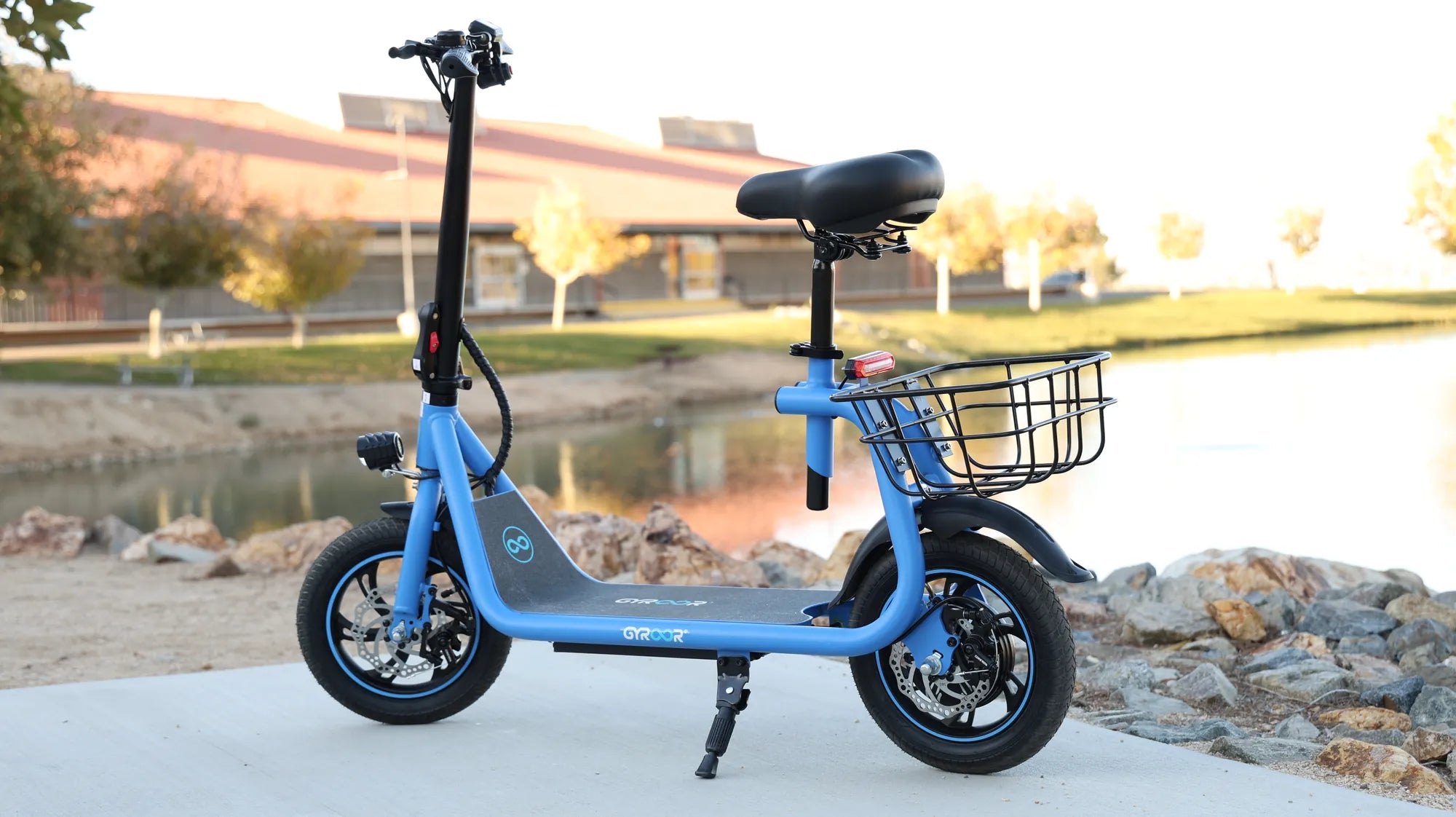
Your choice of e-scooter also plays a pivotal role in navigating this gray area. Brands that prioritize design compliance and rider safety, like Gyroor—a leading electric scooter and e-bike brand trusted by over 100,000 riders across North America and Europe—offer models built with these legal considerations in mind. From UL-certified batteries to adherence to common speed thresholds, the right scooter can simplify your path to compliant riding.
Defining "Motorized Vehicle": A Legal and Technical Framework
To answer "Are electric scooters considered motorized vehicles?" we must first define the term. Legally, a "motor vehicle" is typically defined as a self-propelled vehicle designed for travel on public roadways. This definition often includes requirements for registration, licensing, and insurance. Technically, a motorized vehicle uses an engine or motor—be it combustion or electric—to provide primary propulsion.
Electric scooters, by their nature, possess an electric motor, which immediately places them in a gray zone. However, they differ from traditional motor vehicles in key aspects:他们没有封闭的驾驶室、通常具有更低的最高速度(通常低于 20-28 mph)、重量更轻,并且设计用于单人短途出行。正是这些差异促使监管机构重新考虑一刀切的分类方式。
The core of the debate lies in whether the electric motor is the primary means of propulsion. Many e-scooters can be kick-started, introducing human power into the equation. This hybrid functionality challenges traditional binary classifications, forcing a re-evaluation of what constitutes a "vehicle" in the modern mobility ecosystem.
Key Technical Factors That Determine Classification
Authorities do not make classification decisions arbitrarily. They rely on a set of specific, measurable criteria. The most critical factors include:
- Maximum Speed: This is the single most important determinant. Devices capped at or below 15-20 mph are frequently treated differently (and more leniently) than those capable of 30+ mph. Many jurisdictions use speed thresholds to create a new category, such as "Low-Speed Electric Bicycle."
- Motor Wattage: The power output of the motor, measured in watts (W), is a direct indicator of potential speed and acceleration. A 250W scooter may be classified with bicycles, while a 2000W high-performance model may be treated as a motor vehicle.
- Presence of a Seat: Some laws differentiate between standing scooters and seated scooters or e-bikes, with the latter sometimes facing stricter rules.
- Operator-Initiated Movement: Whether the scooter requires a kick-push to start (operator-initiated movement) or can accelerate from a standstill via a throttle can influence its legal status in certain areas.
The Legal Landscape: How Cities and States Categorize E-Scooters
The regulatory approach to electric scooters is a patchwork, with significant variation between countries, states, and even neighboring cities. There is no single answer to "Are electric scooters considered motorized vehicles?" but there are clear trends in how governments are responding.
In the United States, regulation is primarily handled at the state level. A growing number of states have passed laws explicitly defining "electric scooters" as a distinct vehicle class, separate from motor vehicles, bicycles, and mopeds. For example, California's AB 2989 legally defines an e-scooter and permits its use in bike lanes and on streets with speed limits up to 25 mph, while generally prohibiting sidewalk riding.
In the European Union, the framework is more unified but equally nuanced. The EU has established a category for "Personal Light Electric Vehicles" (PLEVs), which includes e-scooters. To be classified as a PLEV, devices must have a maximum designed speed of 25 km/h (15.5 mph) and a motor with a continuous rated power of 500W or less. PLEVs are generally allowed on cycle paths and roads, subject to member state implementation.
The overarching trend is the creation of new, specific categories like "micro-mobility device" or "low-speed electric vehicle." This approach avoids forcing e-scooters into ill-fitting existing boxes and allows for tailored rules regarding helmet use, minimum age, and permissible riding areas.
Where Riders Stand: Rights, Restrictions, and Responsibilities
Legal classifications translate directly into real-world rules that every rider must follow. Understanding your local classification is the key to knowing your rights and responsibilities.
- Where to Ride: If classified as a vehicle, you are typically restricted to roads. If classified with bicycles, you gain access to bike lanes and paths. Sidewalk riding is widely prohibited for adult riders, regardless of classification, due to pedestrian safety concerns.
- Age and Helmet Laws: Most jurisdictions impose a minimum age (often 16+). Helmet requirements frequently depend on the rider's age or the scooter's top speed; helmets are almost universally required for minors.
- Licensing, Registration, and Insurance: If an e-scooter is legally a "motor vehicle," it may require a driver's license, vehicle registration, and liability insurance. However, in areas with specific e-scooter laws, these requirements are often waived for lower-speed models.
- DUI Laws: Crucially, operating any electric scooter while under the influence of alcohol or drugs is illegal everywhere. You can be charged with DUI/DWI even if the device is not officially a "motor vehicle," as laws often cover "vehicles" or "devices" more broadly.
Why Gyroor's Design Philosophy Prioritizes Clarity and Compliance
Navigating this complex legal environment is easier when your e-scooter is designed with compliance in mind. Gyroor's product development is guided by a philosophy that prioritizes rider safety and regulatory alignment. By engineering scooters that meet common international thresholds for speed and power, Gyroor helps riders avoid the legal pitfalls associated with unregulated, high-performance models.
For instance, several Gyroor commuter-focused models are designed with top speeds that align with common "low-speed electric bicycle" or EU PLEV classifications (e.g., 15.5-20 mph). This intentional design choice means a rider is more likely to be operating a device that fits into favorable legal categories, granting access to bike lanes and avoiding licensing requirements. It’s a proactive approach to product design that respects the evolving legal framework.
Furthermore, Gyroor's commitment to using UL-certified battery packs in all its models is not just a safety feature; it's a compliance and insurance advantage. UL certification is a globally recognized safety standard. In the event of an incident or an insurance inquiry, demonstrating that your scooter uses certified components can be critically important, especially as insurers become more familiar with micro-mobility claims.
The Safety and Warranty Advantage in a Regulated Environment
Proper legal classification is intrinsically linked to operational safety. A scooter that is reliable, predictable, and built to withstand real-world conditions is safer for the rider and everyone around them. Gyroor builds this ethos into every model.
Features like IPX5 water-resistant ratings ensure that a sudden rain shower or a wet road doesn't lead to a short circuit or failure—a critical safety consideration for a vehicle used on public thoroughfares. The robust 1-year warranty, backed by US-based customer support, provides peace of mind that any manufacturing defect will be addressed promptly, maintaining the scooter's roadworthiness.
This combination of compliant design, verified component safety, and strong warranty support creates a holistic safety net for the rider. It means you can focus on the journey, confident that your vehicle meets high standards for performance and durability in an environment where local laws are increasingly strict about device safety and construction.
Practical Rider Scenarios: From Urban Commutes to Recreational Paths
Let's apply the legal framework to real-world riding situations. The rules change dramatically based on location and scooter type.
Scenario 1: The Urban Commuter. You use a Gyroor commuter scooter (max speed 19 mph) to travel 3 miles to work in a major city that has adopted specific e-scooter laws. You are likely required to ride in the bike lane or on the road, not the sidewalk. You must obey all traffic signals. A helmet may be required. Your scooter's compliant speed makes this a legal and efficient commute.
Scenario 2: The Suburban Errand-Runner. Riding in a town without specific e-scooter ordinances is trickier. The scooter may default to being classified under state law, which might treat it as a "vehicle" or a "device." You must research state-level rules. Riding on multi-use recreational paths may be permitted, but riding on main arterial roads might be illegal or dangerously unadvisable.
Scenario 3: Off-Road or Trail Use. This is one of the most restrictive areas. Most protected wilderness trails, mountain biking trails in parks, and natural surface paths explicitly prohibit all motorized vehicles. If your e-scooter has a motor, it is almost certainly banned on these trails, regardless of its legal classification on city streets. Always check the specific rules of the park or trail authority before riding.
| Use Case | Typical Legal Classification | Key Rules & Restrictions | Gyroor Model Consideration |
|---|---|---|---|
| City Commuting (Bike Lanes) | Personal Light Electric Vehicle / Micro-mobility Device | Helmet often required. Must use bike lane/road. No sidewalk riding. Speed limit may apply. | Gyroor F1 Pro (Commuter-focused, balanced speed) |
| Suburban Neighborhood Riding | Varies; often falls under state "vehicle" or "device" laws | Check local ordinances for sidewalk use. Likely prohibited on highways. May be allowed on local roads. | Gyroor F1 (Versatile for varied pavement) |
| Private Property / Closed Courses | Largely Unregulated (but liability remains) | Owner/operator discretion, but safety gear is strongly recommended. Normal product liability applies. | Gyroor Off-Road Models (Built for durability) |
| Shared-Use Recreational Paths (Paved) | Often treated like bicycles IF speed is low | Yield to pedestrians. Maintain safe speed (e.g., under 15 mph). May be banned by local rule. | Any Gyroor model with speed settings |
Frequently Asked Questions (FAQ)
Q: Do I need a driver's license to ride an electric scooter?
A> It depends entirely on local law. In many jurisdictions that have created a specific e-scooter category, no driver's license is required for adults riding lower-speed models. However, some states or countries may require a license. Always check your local regulations.
Q: Can I ride my e-scooter on the sidewalk?
A> In the vast majority of cities and towns, sidewalk riding is prohibited for adult riders. This is primarily for pedestrian safety. E-scooters are generally intended for bike lanes or roadways (where permitted and safe). Some areas may allow sidewalk riding for very low-speed devices or may have no specific law, but prohibition is the norm.
Q: Does my homeowner's or renter's insurance cover my e-scooter?
A> Maybe. You must review your policy or contact your agent. Some policies may cover personal property like e-scooters against theft or damage, but there may be exclusions for "motorized vehicles." Liability coverage (if you cause injury or damage) is less common under standard policies. Specific e-scooter or micro-mobility insurance is becoming available.
Q: What happens if I get a DUI on an e-scooter?
A> You will be charged with DUI/DWI. Impaired driving laws universally apply to operators of vehicles on public ways, and e-scooters are almost always included under these statutes. The legal penalties (fines, license suspension) can be just as severe as driving a car drunk.
Q: How can I find out the specific laws for my area?
A> Start with your city or town's official website, searching for "electric scooter" or "micro-mobility" ordinances. Then, check your state's or province's vehicle code or transportation laws. The website of your state's Department of Motor Vehicles (DMV) or equivalent is often a reliable resource.
Empowering Your Ride with Knowledge and the Right Equipment
The question "Are electric scooters considered motorized vehicles?" ultimately has a contextual answer: it depends on your location and your scooter's capabilities. This ambiguity underscores the rider's responsibility to be informed. Before you ride, invest time in understanding your local laws. This knowledge is as crucial as wearing a helmet for your safety and legal protection.
Equally important is choosing an e-scooter from a brand that respects this complex landscape. A brand like Gyroor, with its focus on compliant design, verified safety through UL certification, and durable construction backed by a strong warranty, provides a foundation for confident and lawful riding. Over 100,000 riders trust Gyroor not just for performance, but for the peace of mind that comes with reliable, well-engineered personal transportation.
Don't let legal uncertainty slow you down. Arm yourself with information and equip yourself with a scooter built for the real world of rules and roads. Explore the full range of Gyroor electric scooters and e-bikes, designed to deliver thrilling rides within the frameworks of safety and compliance. Browse the full Gyroor collection at gyroorboard.com and find the model that empowers your journey.
Best Electric Scooters for Commuting 2025: Top Picks for a Smooth Ride
Best Electric Scooters for Commuting 2025: Top Picks for a Smooth Ride