



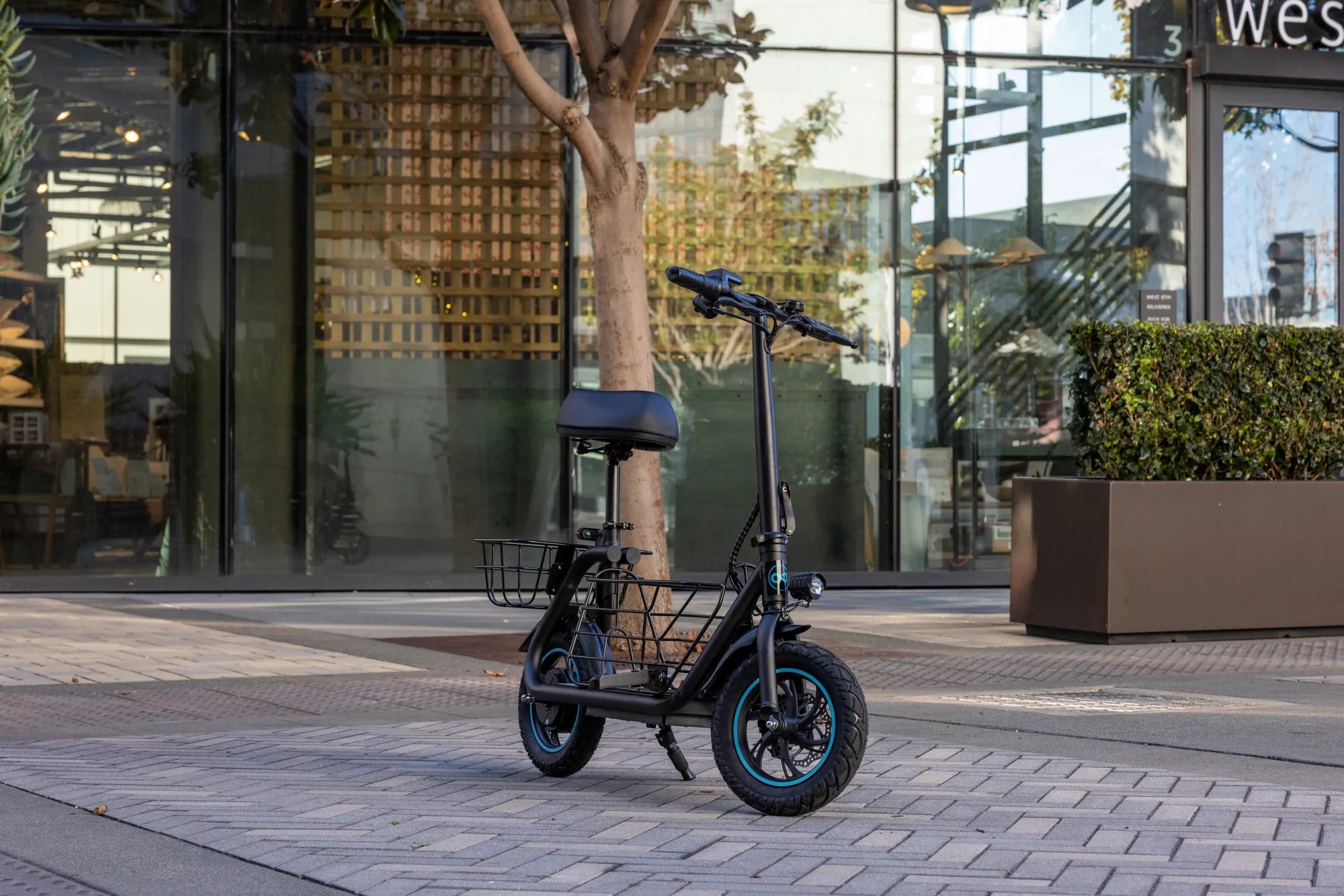
If you're considering buying or riding an electric scooter in Wales, you must understand a critical legal fact: using a privately owned e-scooter on any public land is currently a criminal offence. This article cuts through the confusion to deliver a clear, authoritative guide on the law, the significant risks of illegal use, and the legal alternatives available right now. You will learn the exact legal framework, where you can and cannot ride, the financial and legal consequences of breaking the law, and what the future might hold for e-scooter legislation in Wales.
Navigating the Confusing E-Scooter Laws in Wales
The landscape of electric scooter legality in Wales is defined by a simple, strict rule with complex underpinnings. While you can legally purchase an e-scooter, riding it on public roads, pavements, bridleways, or in parks is illegal. This prohibition stems not from a specific e-scooter law but from their classification under existing transport legislation.
Public interest has surged as e-scooters promise a convenient, eco-friendly solution for short urban journeys. However, this has clashed with a legal system that hasn't yet adapted to this new technology. The core question, 'Are Electric Scooters Illegal in Wales?' has a nuanced answer: ownership is legal, but almost all practical public use is not.
The confusion often arises from seeing rental schemes in other UK nations and from the legal status of similar devices like e-bikes. Understanding this distinction is crucial for anyone looking to use personal transport in Wales safely and legally. This guide provides the definitive breakdown you need to avoid penalties and make informed choices.
The Current Legal Landscape: The 1988 Road Traffic Act
The legal status of private electric scooters in Wales is governed by UK-wide law, specifically the Road Traffic Act 1988. Under this act, e-scooters are classified as "Powered Transporters." This classification is the root of the issue, as it treats them like motor vehicles.
For any motor vehicle to be used legally on public roads, it must meet a series of requirements. These include having a valid insurance policy, being registered with the DVLA, paying vehicle tax, and having proper lighting, signalling, and braking systems. Crucially, the rider must have a valid driving licence.
Privately owned e-scooters cannot meet these requirements. There is no available insurance product for them, they cannot be registered with the DVLA, and they lack the mandatory construction standards. Therefore, by default, their use on public highways is illegal. This law applies equally across England, Wales, and Scotland, with Northern Ireland having its own similar regulations.
Key Points of Illegality: Where You Cannot Ride
The prohibition is comprehensive regarding public spaces. It is illegal to ride a private e-scooter on public roads, regardless of speed or power. This includes all A-roads, B-roads, and residential streets.
It is also illegal to ride on pavements (footpaths), as governed by the Highway Act 1835. Riding on pavements endangers pedestrians and can result in prosecution for driving on a footpath. Dedicated cycle lanes and tracks are also off-limits, as they are considered part of the public highway network.
Furthermore, public spaces like parks, promenades, and town squares are generally covered by local by-laws that prohibit the use of motorised vehicles. Enforcement in these areas is at the discretion of local authorities and police.
Where Can You Legally Ride a Private E-Scooter in Wales?
Given the widespread restrictions, the legal avenues for using a privately owned e-scooter are extremely limited. Knowing these boundaries is essential to avoid inadvertently breaking the law.
The primary legal space is on private land. You may ride an e-scooter on your own property, such as a driveway or garden, or on another person's private land with their explicit permission. This could include private estates, farmland, or closed-off business premises.
Some private venues, like specific off-road tracks or leisure complexes, may permit e-scooter use. Always obtain written permission from the landowner or managing authority to ensure you are covered. Without this, you could be liable for trespassing.
The Exception: Official Rental Trial Schemes
The only exception to the public use ban has been government-approved rental trials. These trials, which have operated in selected English towns and cities, use specially approved e-scooters that are insured, limited to 15.5 mph, and equipped with identification and geo-fencing technology.
It is critical to note that, as of 2024, there are no active official rental e-scooter trials anywhere in Wales. Previous plans or discussions have not materialised into operational schemes. Therefore, any e-scooter seen on Welsh public roads is almost certainly a private, illegal vehicle. Riders cannot assume rental scheme rules apply.
Risks and Consequences of Illegal Riding
Choosing to ride a private e-scooter illegally in Wales carries serious and multi-faceted consequences. The risks extend beyond a simple telling-off from police to substantial legal and financial penalties.
Police forces across Wales are increasingly aware of the issue and are conducting enforcement operations. The consequences are designed to be a deterrent, reflecting the potential danger unregulated vehicles pose to riders and the public.
Legal Penalties: Fines, Points, and Confiscation
If caught riding a private e-scooter on a public road, you face a Fixed Penalty Notice (FPN) of £300 and six penalty points on your driving licence. For riders without a licence, the points will be applied if and when they obtain one.
Perhaps the most immediate penalty is the seizure of the scooter itself under police powers. You will have to pay a recovery fee and storage charges to get it back, often making it economically unviable. In more serious cases, such as riding whilst intoxicated or causing danger, you could face prosecution in court, leading to a larger fine, disqualification from driving, or even a custodial sentence.
Safety and Insurance Implications
The legal penalties are severe, but the practical risks are greater. Riding an illegal e-scooter means you are automatically uninsured. If you cause an accident involving injury to a pedestrian or damage to a vehicle or property, you are personally liable for all costs.
This could mean facing civil lawsuits for tens of thousands of pounds in medical bills or repair costs. Furthermore, if you are injured in an accident while riding illegally, you have no recourse to claim against an insurance policy for your own losses. The lack of regulated construction standards for private e-scooters also raises safety concerns regarding brake failure, battery fires, or component defects.
E-Bikes: The Fully Legal and Powerful Alternative
For those seeking electric-assisted personal transport in Wales, electrically assisted pedal cycles (EAPCs), commonly known as e-bikes, offer a fantastic, fully legal alternative. The law distinguishes them clearly from e-scooters, making them permissible on roads and cycle paths without the need for insurance, tax, or a licence.
To be classified as an EAPC, the bike must have pedals that propel it, a motor with a maximum power output of 250 watts, and the motor must only assist the rider until a speed of 15.5 mph (25 km/h). Beyond that speed, the motor must cut out, and the rider must pedal. Bikes meeting these criteria are treated exactly like conventional bicycles.
Brands like Gyroor, a leading electric scooter and e-bike brand trusted by over 100,000 riders across North America and Europe, offer robust e-bike models that combine legality with performance. These models feature UL-certified battery packs tested for 500+ charge cycles, IPX5 water-resistant designs, and reliable 1-year warranties, providing a safe and dependable commuting solution.
E-bikes provide similar benefits to e-scooters—easing hills, reducing sweat on commutes, extending range—but with greater stability, comfort for longer journeys, and full legal compliance. They are a future-proof investment in personal mobility.
The Future of E-Scooters in Wales: Potential for Law Reform
The current blanket ban is under scrutiny. The UK government has held consultations on how to regulate private e-scooters, recognising their potential for sustainable transport. However, progress has been slow, and any change will require primary legislation.
Potential future regulation is likely to mirror rental trial rules: a minimum rider age (likely 16+), a maximum design speed of 15.5 mph, mandatory helmet use, a ban on pavement riding, and requirements for lights, indicators, and brakes. Insurance may become a mandatory product, similar to car insurance.
It is vital to understand that no law changes are imminent. The Welsh Government has expressed caution, emphasising safety and integration with active travel plans. Any legalisation will come with strict safety regulations. Riders should not purchase a private e-scooter today in anticipation of a law change tomorrow.
Responsible Alternatives for Urban Mobility in Wales
While the wait for e-scooter law reform continues, Wales offers numerous legal and eco-friendly transport options. Integrating these can create a seamless and sustainable commute.
E-bikes, as detailed, are the standout alternative for private electric mobility. They can be used on the growing network of dedicated cycle paths across Welsh cities and connected to public transport for longer journeys.
Wales is investing heavily in active travel infrastructure. Combining walking or traditional cycling with bus and train services, often equipped with bike racks, is a completely legal and healthy way to travel. Schemes like Nextbike offer traditional bike rentals in cities like Cardiff, providing another flexible option.
Frequently Asked Questions (FAQ)
Can I buy an electric scooter in Wales?
Yes, you can legally purchase one. However, you cannot legally ride it on any public road, pavement, cycle path, or public space. Its use is restricted to private land with permission.
Are rental e-scooters, like those in England, legal in Wales?
No. There are currently no government-approved rental e-scooter trials operating anywhere in Wales. Any e-scooter on a public road is a private vehicle and is being used illegally.
What happens if the police stop me riding my e-scooter?
You are likely to receive a £300 fine and six penalty points on your driving licence. The police will also likely seize your e-scooter, and you will incur costs to retrieve it.
Will the law change soon to legalise them?
While debated, change is not expected imminently. Any future legalisation will come with strict new safety rules on speed, insurance, and rider age. Do not assume current purchases will be grandfathered in.
Are e-bikes treated the same as e-scooters?
No. E-bikes that meet EAPC regulations (250W motor, pedal assist to 15.5mph) are treated as bicycles. They are fully legal on roads and cycle paths without insurance, tax, or a licence, making them a perfect alternative.
Is it illegal to ride an e-scooter on an empty pavement at night?
Yes. The law does not make exceptions for time of day or foot traffic. Riding on a pavement is always illegal, regardless of circumstances.
Comparison: E-Scooter vs. E-Bike Legality in Wales
| Feature | Private E-Scooter | Compliant E-Bike (EAPC) |
|---|---|---|
| Legal on Public Roads | No | Yes |
| Legal on Cycle Paths | No | Yes |
| Insurance Required | Yes (Not Available) | No |
| Driving Licence Required | Yes | No |
| Vehicle Tax & Registration | Yes (Not Possible) | No |
| Helmet Legally Required | No (But strongly advised) | No (But strongly advised) |
| Typical Use Case | Private land only | Commuting, leisure, errands |
| Practical Status in Wales | Effectively unusable for transport | Fully legal and practical |
Staying Safe and Legal on Your Journey
The central message is unequivocal: using a privately owned electric scooter on public land in Wales is currently illegal, carrying significant financial, legal, and personal risks. The law, rooted in the 1988 Road Traffic Act, offers no ambiguity for public use. While future reform is possible, it is not a guarantee and will certainly introduce new regulations.
For now, the responsible path is to respect the current laws and explore the legal alternatives that provide similar benefits without the legal peril. Electrically assisted pedal cycles (e-bikes) stand out as the premier choice, offering a powerful, eco-friendly, and completely lawful way to navigate Welsh towns and cities. By choosing a compliant vehicle from a reputable brand, you invest in safe, reliable, and stress-free mobility.
If you are seeking a legal electric vehicle for your commute or leisure in Wales, explore the range of compliant e-bikes designed for performance and safety.
Browse the full Gyroor collection of UL-certified, road-legal e-bikes and explore responsible mobility solutions at gyroorboard.com.
Best Electric Scooters for Women: Top Picks for Comfort and Style
Top Rated Electric Scooters India 2025: The Future of Urban Commuting