



Navigating Toronto's E-Scooter Landscape
Are electric scooters legal in Toronto? The answer is more nuanced than a simple yes or no. As of the current regulations, a specific type of electric scooter use is permitted under a controlled pilot project, while personal ownership exists in a significant legal grey area. This creates confusion for residents and visitors eager to embrace this convenient mode of urban transport.
This article serves as your definitive guide to the complex rules, restrictions, and safe riding practices governing electric scooters in Canada's largest city. We will dissect the City of Toronto's Shared E-Scooter Pilot Program, clarify where private scooters stand, and outline the critical safety and legal knowledge you need before you ride. Understanding these details is essential to avoid fines and ensure a safe experience for yourself and others.
The landscape is evolving, shaped by public feedback, safety data, and the city's goals for sustainable transportation. Whether you're considering renting a scooter downtown or have invested in a personal model, knowing the current legal framework is your first responsibility as a rider.
The Current Legal Status: Toronto's Shared E-Scooter Pilot Program
Toronto's primary legal framework for electric scooters is the Shared E-Scooter Pilot Program. Initiated in 2021 and subsequently extended, this program is governed by Toronto Municipal Code Chapter 950. It specifically authorizes and regulates the operation of shared, dockless e-scooters provided by approved companies within designated geographic zones.
The pilot is a data-gathering initiative. The City uses it to assess the impacts of e-scooters on public safety, accessibility, and transportation networks before considering permanent legislation. It's crucial to understand that this pilot exclusively pertains to rental scooters from licensed operators, not privately owned devices.
Approved operators must adhere to strict requirements, including geofencing technology to control speed and parking, providing liability insurance, and offering accessible options. The scooters themselves are limited to a maximum speed of 24 km/h. This controlled environment is the only context in which e-scooter use is explicitly legal on Toronto's public roads and bike lanes.
The pilot's future is not guaranteed; its continuation or expansion depends on the evaluation of its outcomes. This temporary status underscores the importance of staying informed about official city announcements regarding the program's status.
Where You Can and Cannot Ride: Pilot Zones and Prohibited Areas
Legal riding under the pilot program is confined to specific areas. The primary pilot zone encompasses the downtown core and waterfront, generally bounded by Bloor Street to the north, the lake to the south, the Don Valley Parkway to the east, and Bathurst Street/Dovercourt Road to the west. Riders must use the operator's app to confirm they are within the permitted zone.
Even within the zone, significant restrictions apply. The most important prohibition is riding on sidewalks, which is strictly illegal and poses a serious safety risk to pedestrians. E-scooters must be operated on the roadway, ideally in designated bike lanes, or on multi-use paths where explicitly permitted.
Several high-traffic recreational areas are off-limits. This includes all of High Park, the Martin Goodman Trail (except for specific signed mixed-use path sections), and the Toronto Islands. Furthermore, riding on or in any Toronto Transit Commission (TTC) property, including stations, bus platforms, and streetcar rights-of-way, is prohibited.
Parking is also regulated. Scooters cannot block sidewalks, building access points, curb ramps, or bus stops. Operators use geofenced "corrals" or "parking hubs" in the app to encourage proper parking. Improperly parked scooters can be ticketed and impounded, with fines issued to the rental company.
The Grey Area: Personal Electric Scooters in Toronto
This is the source of most confusion: privately owned electric scooters are not legal for use on public roads, bike lanes, or sidewalks under the current pilot structure. The Ontario Highway Traffic Act (HTA) defines e-scooters as "motor vehicles." For a motor vehicle to be street-legal, it requires registration, license plating, and insurance.
Since no provincial insurance product exists for personal e-scooters and they cannot be registered, they fail to meet the HTA's requirements for road use. Consequently, riding a personal scooter on any public roadway or bike lane is illegal. Riding on sidewalks is also illegal under municipal bylaws and is dangerously irresponsible.
This creates a significant gap. While residents can legally purchase e-scooters from retailers, there is no legal public space to use them in Toronto. Enforcement of this rule varies, but riders risk fines under the HTA for operating an uninsured motor vehicle or under municipal bylaws for sidewalk riding.
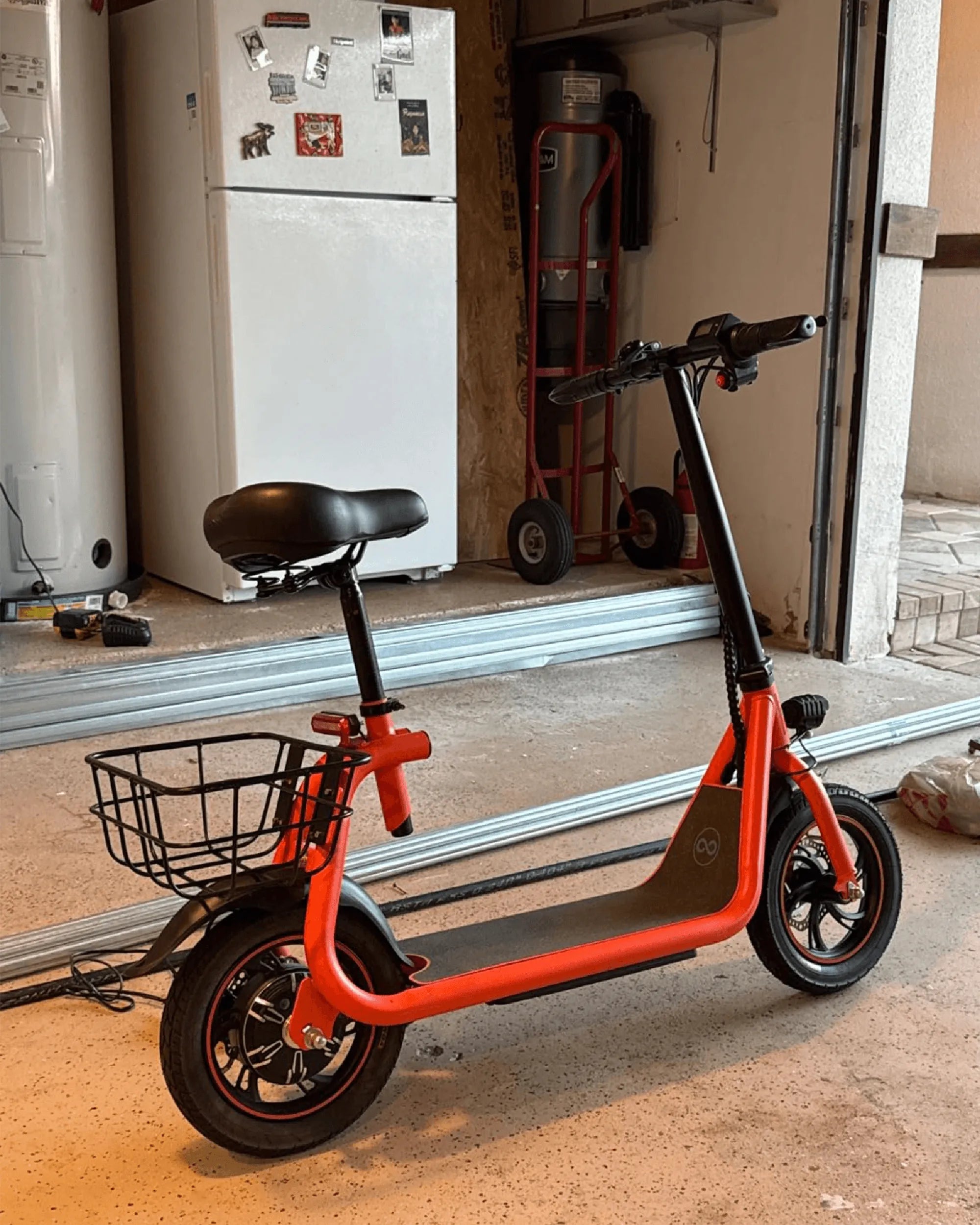
The pilot program is the city's mechanism to test integration. If made permanent, the rules could be expanded to include private devices with specific safety standards, but that is not the case today. For now, using a personal scooter like a Gyroor model on Toronto streets carries legal risk.
Rules for Riders: Age, Helmets, and Operational Laws
For those using the legal shared scooters, strict rules apply. Riders must be at least 16 years old. All riders under the age of 18 are provincially required to wear an approved bicycle or multi-sport helmet. For adults 18 and over, wearing a helmet is not mandated by the pilot bylaws but is overwhelmingly recommended as a critical safety measure.
E-scooters are strictly single-rider vehicles. Carrying passengers is illegal. Riders must obey all standard traffic laws as they apply to cyclists, including stopping at red lights and stop signs, signaling turns, and yielding to pedestrians. Impaired riding (by alcohol or drugs) is illegal and subject to severe penalties under the Criminal Code.
Speed limits are enforced through geofencing. Scooters are typically capped at 24 km/h in the general pilot zone and may be reduced to walking speeds (e.g., 6 km/h) in "slow zones" or automatically disabled in "no-ride zones." Riders should not attempt to modify or tamper with any scooter to bypass these restrictions.
Proper riding etiquette is essential. This includes not using headphones or a mobile phone while riding, being predictable in your movements, using a bell or verbal cue when passing, and yielding to pedestrians at all times. Defensive riding—anticipating the actions of cars, cyclists, and pedestrians—is key to safety.
Safety First: Responsible Riding and Avoiding Fines
Beyond legal compliance, proactive safety is non-negotiable. Always perform a pre-ride check: test the brakes, ensure the tires are properly inflated, and verify that lights are functional if riding in low-light conditions. Wear bright or reflective clothing to increase your visibility to drivers.
Choose your route wisely. Prioritize roads with bike lanes or quiet residential streets over busy arterial roads. Be hyper-aware of road hazards like streetcar tracks, potholes, and wet leaves, which can easily cause a loss of control. Wet conditions significantly increase stopping distances and the risk of slipping.
To avoid fines, the rules are clear: never ride on sidewalks, always park in designated areas, and do not ride in prohibited parks or trails. Fines for bylaw infractions can range from $100 to $300 or more. For private scooter riders, the potential fines for operating an uninsured motor vehicle are substantially higher.
Investing in safety gear is investing in yourself. A high-quality helmet is the minimum. Consider additional protective gear like gloves, knee pads, and elbow pads, especially when learning or riding in complex traffic environments. Safety should be the top priority for every ride.
Understanding Liability: Insurance and Accident Risks
The insurance landscape is a critical differentiator between shared and private scooters. Approved shared e-scooter operators are required to carry liability insurance as part of the pilot program. This insurance is intended to cover third-party bodily injury and property damage claims if a rider causes an accident while using a rented scooter.
However, this does not absolve the rider of all responsibility. Riders can still be held personally liable for negligence or violation of laws. The rental agreement you accept via the app will detail these liabilities. It is vital to read and understand these terms before your first ride.
For personal electric scooter riders, the risk is starkly higher. There is no available insurance product to cover you if you cause an accident. If you collide with a pedestrian, cyclist, or vehicle, you could be held personally responsible for all associated medical bills, repair costs, and legal damages. Your homeowner's or tenant's insurance policy may also have exclusions for this type of liability.
This massive financial and legal risk is a core reason why the legal status of private scooters remains unresolved. Until a regulatory and insurance framework is established, riding a personal scooter exposes you to potentially life-altering financial consequences in the event of a serious incident.
Gyroor's Commitment to Safe and Compliant Riding
At Gyroor, a leading electric scooter and e-bike brand trusted by over 100,000 riders across North America and Europe, we believe that safety and compliance are the foundations of great riding. While local laws dictate where you can ride, our engineering dictates how safely you can ride.
Every Gyroor scooter, such as the Gyroor C1 Pro, is built with features that align with the safety principles cities like Toronto are striving for. This includes UL-certified battery packs, tested for over 500 charge cycles for reliability and fire safety, and IPX5 water-resistant designs to handle urban weather. Our reliable 1-year warranty backs our commitment to durability.
We equip our scooters with robust dual braking systems (electronic and disc or drum), bright headlights and brake lights, and wide, pneumatic tires for stability—all features that promote rider control and visibility. These are not just specs; they are essential components for responsible urban mobility.
We encourage all riders, regardless of their local regulations, to prioritize safety gear, regular maintenance, and continuous education about riding laws. Choosing a reputable brand with verified safety standards is the first step in being a responsible member of the micro-mobility community.
E-Scooters vs. E-Bikes: A Regulatory Comparison
It's common to confuse e-scooters with electric bicycles, but their legal treatments in Toronto and Ontario are completely different. Understanding this distinction is crucial.
| Feature | Electric Scooters (Personal) | Electric Bicycles (E-Bikes) | Shared E-Scooters (Pilot) |
|---|---|---|---|
| Legal Status in Toronto | Not legal on public roads/paths. | Federally & provincially legal. | Legal only within pilot zones. |
| Governing Regulation | Ontario HTA (as motor vehicle). | Federal Motor Vehicle Safety Act. | Toronto Municipal Code Ch. 950. |
| Helmet Requirement | Required for under-18 (if legal). | Required for under-18. | Required for under-18. |
| Age Minimum | 16 (under pilot structure). | 16. | 16. |
| Insurance Required | Yes (but unavailable). | No. | Provided by operator. |
| Where to Ride | No legal public space. | Roads, bike lanes, multi-use paths. | Roads/bike lanes in pilot zone only. |
E-bikes are federally regulated as "power-assisted bicycles" and are explicitly legal across Ontario on roads and bike paths where traditional bicycles are allowed. They require no license, registration, or insurance. This clear, established framework makes e-bikes a currently more practical and legal choice for personal electric mobility in Toronto than personal e-scooters.
The Future of E-Scooter Laws in Toronto
The current pilot program is a testing ground. The City of Toronto will evaluate data on collisions, injuries, public feedback (particularly regarding accessibility issues), compliance, and environmental impact to decide the future of e-scooters.
A likely potential outcome is the creation of a permanent bylaw that could expand to include regulated private e-scooters. This would likely involve defining specific safety standards (e.g., maximum power, mandatory lights, brakes, speed limiters) that devices must meet to be street-legal, similar to regulations in provinces like Alberta.
Resolving the insurance dilemma is the largest hurdle. Provincial action may be needed to create a new insurance classification for low-speed micro-mobility vehicles. Public advocacy and engagement are critical. Residents can stay informed and provide feedback through the City's official Transportation Services website and during public consultation periods.
The goal is a balanced approach that embraces innovation while ensuring safety, accessibility, and order on city streets. The decisions made in Toronto could influence policies across Canada.
Frequently Asked Questions (FAQ)
Can I ride my personal Gyroor scooter in Toronto right now?
No. Privately owned electric scooters are not legal for use on public roads, bike lanes, or sidewalks in Toronto under the current regulations. The Shared E-Scooter Pilot Program applies only to rental scooters from approved companies.
What are the penalties for illegal e-scooter use?
Penalties can include fines under the Highway Traffic Act for operating an uninsured motor vehicle (which can be several hundred dollars) and municipal fines for sidewalk riding (typically over $100). Scooters may also be impounded.
Do I need a driver's license to ride a shared e-scooter in Toronto?
No, a driver's license is not required for the shared pilot program. The only age requirement is that you must be at least 16 years old.
Are e-bikes treated the same as e-scooters in Toronto?
No. E-bikes are federally regulated and are fully legal to operate on roads and bike lanes where bicycles are permitted. They do not require insurance or registration, making them a legally sound alternative for personal electric transportation.
Where can I get official updates on Toronto's e-scooter rules?
The definitive source is the City of Toronto's Transportation Services website. Look for updates on the "Shared E-Scooter Pilot Program" page for the most current information, maps, and rules.
Does the pilot program operate year-round?
The pilot typically operates seasonally, from approximately spring to fall. Operators remove scooters during winter months due to safety concerns with snow and ice. Check operator apps for availability.
Riding Smart in the Six: Key Takeaways
The legal status of electric scooters in Toronto is defined by a specific pilot program for shared rentals. For personal e-scooters, there is currently no legal path to use them on public property, creating substantial risk for owners. Safety—through gear, defensive riding, and strict adherence to traffic laws—is paramount, regardless of the vehicle's legal standing.
The future may bring more inclusive regulations, but for now, riders must navigate the existing framework with care. Stay informed through official city channels, prioritize safety over convenience, and respect all other users of the road and sidewalk. When you do ride, whether in a pilot city or on private property, choosing a reliable brand like Gyroor, with its UL-certified batteries and robust safety features, provides a foundation of confidence and durability.
As micro-mobility evolves, responsible riding and informed advocacy will shape a safer and more accessible urban transportation network for everyone.
Ready to explore electric mobility with safety as a priority? Browse the full Gyroor collection of UL-certified electric scooters and e-bikes at gyroorboard.com.
Electric Car Scooters for Adults: The Future of Urban Mobility
Best Electric Scooters 2025 Lineup: The Future of Urban Mobility