



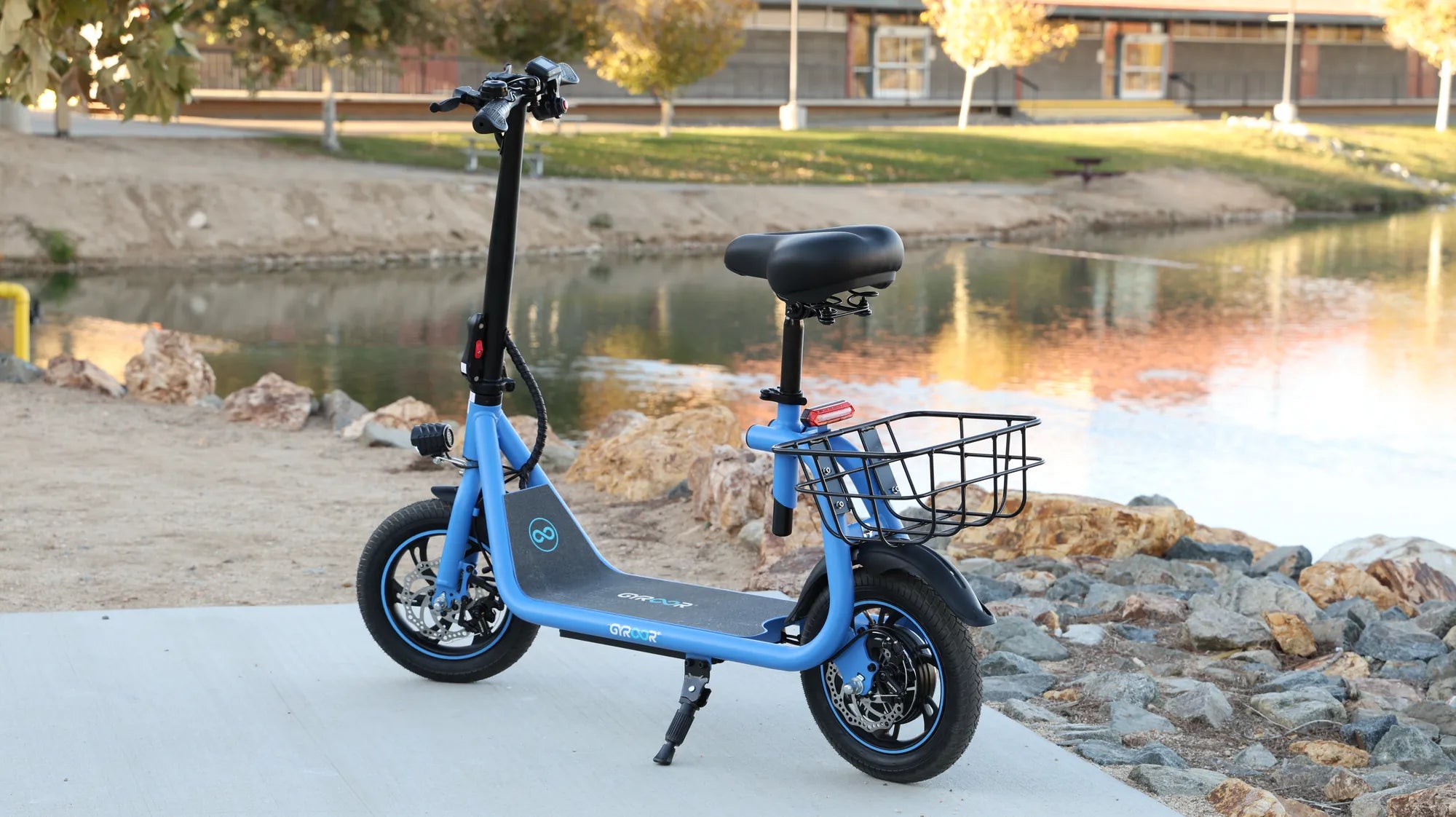
The Rise of the Pure Electric Scooter: A New Urban Mobility Standard
Urban landscapes are evolving, and with them, the way we navigate short distances. The pure electric scooter has emerged from a novelty to a serious contender for daily commuting and last-mile travel. This comprehensive review cuts through the hype to answer the pivotal question: Are pure electric scooters any good? We will deliver a verdict based on empirical data, examining performance metrics, safety standards, durability, and overall value. As a leader in the micro-mobility space, trusted by over 100,000 riders across North America and Europe, Gyroor's commitment to UL-certified batteries and robust engineering provides a benchmark for what constitutes a 'good' scooter. You will learn how to evaluate key specs, understand real-world usability, and determine if an electric scooter aligns with your transportation needs.
Defining "Good": The Key Metrics for Evaluation
Labeling any product as "good" requires objective criteria. For an electric scooter, quality is a multi-dimensional equation. A scooter that excels in one area but fails in another is not a reliable investment.
We evaluate scooters across four primary pillars: Performance, Build Quality, Safety, and Value. Performance encompasses the tangible riding experience—speed, range, and hill-climbing ability. Build quality dictates longevity, examining materials, water resistance, and tire construction. Safety is non-negotiable, covering braking systems, lighting, and overall stability. Finally, value synthesizes the upfront cost with long-term ownership expenses and the utility provided.
Performance Under the Microscope: Speed, Range, and Real-World Riding
Advertised specifications often tell a partial story. A 350W motor might be sufficient for flat city streets but will struggle on a 10% grade incline. Real-world performance depends on the synergy between motor power, battery capacity, rider weight, and terrain.
Speed is governed by motor wattage and local regulations. Most commuter models cap at 15-20 mph, which is ideal for bike lanes and urban paths. Range is the most variable metric. A scooter advertised for 20 miles might deliver 12-15 miles for a 180 lb rider on a route with hills and stop-and-go traffic. Battery capacity, measured in Watt-hours (Wh), is a more reliable indicator than voltage or amp-hours alone.
For a typical 3-5 mile urban commute, a scooter with a real-world range of 15 miles offers a comfortable buffer, reducing range anxiety. Advanced models feature multiple speed modes and regenerative braking, which can recapture minimal energy during deceleration, slightly extending range.
Build Quality and Durability: What Separates Premium from Cheap
The chassis is the scooter's skeleton. Aerospace-grade aluminum alloys offer the ideal blend of strength and light weight, resisting the fatigue of daily folding and riding. Steel frames are heavier but can be more robust, while cheap alloys may crack under stress.
Water resistance is critical for all-weather viability. The IP (Ingress Protection) rating defines this. An IPX5 rating, like those found on Gyroor scooters, means the unit is protected against water jets from any direction, making it safe to ride in rain or through puddles. Models with lower or no rating risk severe electrical damage from moisture.
Tire choice defines ride comfort and maintenance. Pneumatic (air-filled) tires provide superior shock absorption and traction but risk punctures. Solid or honeycomb tires are virtually maintenance-free but transmit more road vibration. The deck surface should be wide and textured for secure footing, and the folding mechanism must feel solid, with no wobble when locked open.
The Safety and Practicality Imperative
Safety is the cornerstone of a positive ownership experience. A fast scooter with poor brakes is a liability. The braking system is the most critical safety component. A combination of a front electronic brake and a rear disc or drum brake provides balanced, reliable stopping power in all conditions.
Visibility is equally important. A bright front headlight, a rear brake light, and side reflectors are essential for being seen at dawn, dusk, or night. Deck lighting can also enhance rider visibility to others. Practicality encompasses portability and legality. A commuter scooter should fold compactly and have a manageable weight (typically 30-45 lbs) for carrying up stairs or onto public transit.
Riders must know local laws, which vary widely. Many cities limit scooter speeds to 15-20 mph in bike lanes and prohibit riding on sidewalks. Wearing a helmet is strongly recommended, regardless of local requirements.
The Gyroor Advantage: How Certified Components Build Trust
Trust in micro-mobility is built on battery safety and component reliability. Gyroor's foundational commitment to UL-certified battery packs directly addresses the paramount concern of fire risk. These batteries undergo rigorous testing for over 500 charge cycles, ensuring stable chemistry and built-in protection circuits.
The IPX5 water-resistant rating is not just a spec sheet bullet point; it's a design philosophy that allows confident riding in wet conditions, protecting the motor, controller, and battery from water ingress. This is coupled with a reliable 1-year warranty and accessible customer support, providing peace of mind that the brand stands behind its products. This combination of certified safety, environmental durability, and support is what separates reputable brands from the rest.
Pure Electric Scooters vs. Alternatives: A Value Comparison
To understand the value proposition of a pure electric scooter, it must be contextualized against other common modes of transport. The following table compares key factors over a one-year period for a 5-mile daily commute (one-way).
| Transport Mode | Upfront Cost | Annual Operating Cost* | Commute Time (5 miles) | Key Considerations |
|---|---|---|---|---|
| Pure Electric Scooter | $500 - $1,200 | $15 - $30 (electricity) | 20 - 25 min | Door-to-door, fun, parking easy, weather-sensitive. |
| Public Transit | $0 (monthly pass) | $800 - $1,500 | 35 - 50 min | Reliant on schedules, crowded, multi-modal. |
| Ride-Sharing (e.g., Uber) | $0 | $3,000 - $5,000+ | 15 - 30 min | Extremely high cost, traffic-dependent. |
| Traditional Bicycle | $300 - $800 | $0 (maintenance ~$50) | 25 - 35 min | Healthy, free, but requires physical effort, arrive sweaty. |
| Electric Bike | $1,200 - $3,000+ | $20 - $40 (electricity) | 20 - 25 min | More comfortable for long distances, less portable, higher theft risk. |
*Costs are estimates; public transit is a monthly/annual pass fee; ride-sharing is per-trip cost aggregated.
The data shows that while a quality electric scooter requires a significant initial investment, its annual operating cost is the lowest of all powered options. It offers a direct, time-efficient commute without the physical exertion of a traditional bike, making it a compelling middle-ground solution.
Frequently Asked Questions (FAQ)
Q: Are pure electric scooters safe for beginners?
A> Yes, when proper precautions are taken. Beginners should start in a safe, open area, always wear a helmet, and begin on the lowest speed setting to get accustomed to the acceleration, braking, and balance. Choosing a model with a wide, stable deck and reliable brakes is crucial.
Q: How much do they cost to maintain?
A> Maintenance costs are relatively low. Regular upkeep includes checking tire pressure (for pneumatic tires), ensuring bolts are tight, and keeping the scooter clean. The main consumables are tires and brake pads, which may need replacement every 6-12 months with regular use. Electricity costs are negligible.
Q: Can they handle hills and rain?
A> Hill-climbing ability depends on motor power. A 350W motor can handle moderate inclines, while 500W or dual-motor setups are better for steeper hills. For rain, a scooter with a sufficient IP rating (IPX5 or higher) is essential. Even with a good rating, riders should reduce speed, avoid deep puddles, and dry the scooter after use.
Q: What's the typical lifespan of an electric scooter?
A> The lifespan varies greatly with build quality and usage. A well-built scooter from a reputable brand, used for daily commuting, can last 2-5 years or more. The battery is the primary wear component and will gradually lose capacity after 2-3 years of heavy use, but it is often replaceable.
Q: Where am I allowed to ride one?
A> Laws differ by city, state, and country. Generally, electric scooters are permitted in bicycle lanes and on roads with speed limits at or below 25-35 mph. Riding on sidewalks is frequently prohibited. Always check your local Department of Transportation or city government website for the most current regulations regarding speed limits, helmet laws, and approved riding areas.
Are Pure Electric Scooters Any Good? The Data-Driven Verdict
The evidence points to a resounding yes—pure electric scooters are a very good choice for a specific set of urban transportation needs. They excel as cost-effective, efficient, and enjoyable solutions for short-to-medium distance commuting, last-mile connectivity, and local errands. The key to a positive experience lies in aligning your expectations with reality and choosing a model built to last.
A 'good' scooter is not defined by its top speed alone, but by its holistic package: reliable performance from certified components, a durable and water-resistant build, comprehensive safety features, and backed by legitimate customer support. For the urban dweller looking to escape traffic, save money on transit, and add a dose of fun to their daily routine, investing in a quality electric scooter from a trusted brand like Gyroor is a smart and sustainable mobility decision. The comprehensive review of performance, safety, and value confirms their place as a legitimate and practical tool for modern life.
Ready to experience the freedom and efficiency of a premium electric scooter? Browse the full Gyroor collection, featuring UL-certified batteries, IPX5 water-resistant designs, and a reliable 1-year warranty, at gyroorboard.com.
Will Electric Scooters Become Legal? The Future of Urban Mobility
Highest Range Electric Scooters: The Ultimate Guide to Long-Distance Riding