



Introduction: The Critical Question for Urban Travelers
For modern commuters and urban explorers, the electric scooter has become an indispensable tool for navigating cities efficiently. This leads to a natural and pressing question for travelers: are scooter luggage allowed in airports? The answer isn't a simple yes or no; it's a nuanced landscape defined by battery chemistry, airline policies, and device classification. Understanding these rules is essential to avoid last-minute gate denials, hefty fees, or the heartbreaking prospect of abandoning your vehicle.
This comprehensive guide will dissect every layer of regulation, from international dangerous goods codes to individual airline fine print. We'll clarify the crucial distinction between personal light electric vehicles and medical mobility aids, as this difference fundamentally changes your rights and restrictions. Whether you're a frequent flyer with a compact commuter scooter or planning a trip with an assistive device, knowing the rules is the first step to a stress-free journey.
You'll learn how to decode your scooter's battery specifications, prepare for the security checkpoint, and communicate effectively with airline staff. We'll also explore practical alternatives, such as rental services and ground shipping, for when flying with your scooter isn't feasible. The core principle is that with proper preparation and knowledge, you can navigate airport policies confidently and avoid disruptive travel surprises.
Defining "Scooter Luggage": Personal Electric vs. Medical Mobility
The term "scooter luggage" is ambiguous in aviation contexts, and its interpretation dictates everything that follows. Airports, airlines, and security agencies categorize these devices into two legally distinct groups, each with its own set of rules and protections. Misunderstanding this classification is the most common source of traveler frustration and conflict at check-in counters.
For personal electric scooters, the journey is governed by regulations for lithium-ion batteries and oversized baggage. For medical mobility devices, the journey is protected by disability rights legislation. Knowing which category your device falls into is the absolute first step in planning your travel.
Personal Light Electric Vehicles (PLEVs)
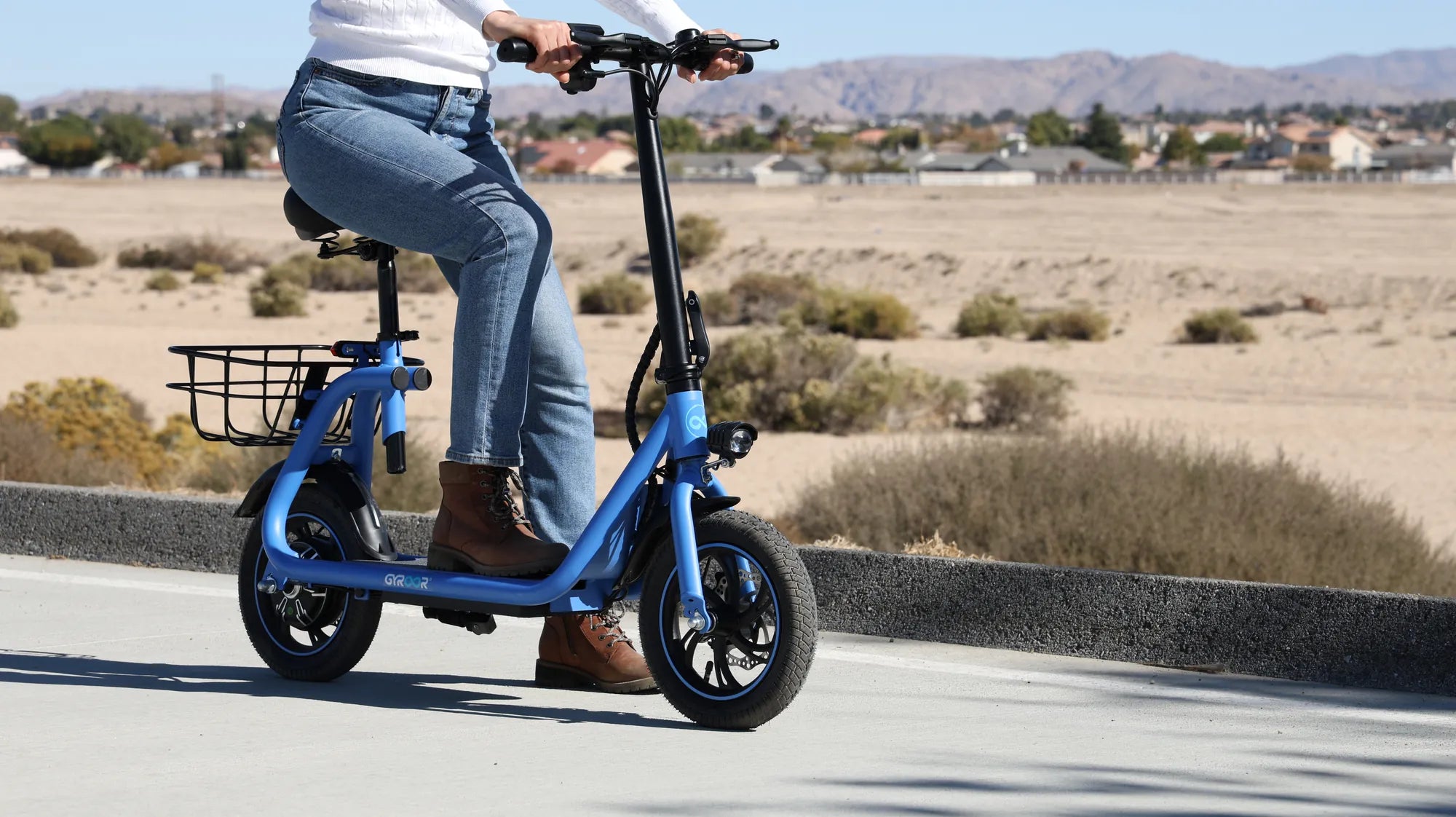
This category includes foldable, stand-up electric scooters designed for personal urban transport, such as models from brands like Gyroor. These are considered powered personal items or recreational equipment, not essential medical devices. As such, they are subject to the strictest regulations concerning lithium battery transport, size, and weight.
Airlines view these primarily as potential fire hazards due to their batteries, and secondarily as oversized luggage. Their allowance is a privilege, not a right, and is contingent upon compliance with specific dangerous goods regulations. Even if the scooter itself is permitted, it may incur significant oversize or overweight baggage fees.
Medical or Assistive Mobility Scooters
These are typically larger, non-foldable or semi-foldable devices designed for individuals with mobility impairments. In the United States, their transport is protected under the Air Carrier Access Act (ACAA), which mandates that airlines accommodate them free of charge.
While medical scooters also contain batteries, they are given more leeway under regulations, often being allowed with larger battery capacities when necessary for the device's function. However, airlines still require advance notification and specific preparation, such as disabling the device and protecting battery terminals. Documentation from a medical professional is rarely required but can be helpful in case of disputes.
The Universal Governing Factor: Lithium-Ion Battery Regulations
Regardless of scooter type, the single most important factor determining air travel eligibility is the lithium-ion battery. These powerful, energy-dense batteries power everything from smartphones to electric vehicles but pose a thermal runaway fire risk if damaged or defective. Aviation authorities worldwide have established unified rules under the International Air Transport Association (IATA) and the International Civil Aviation Organization (ICAO).
The regulations focus on the battery's watt-hour (Wh) rating, a measure of its total energy capacity. This rating, not voltage or amp-hours alone, is the metric used by all airlines. The rules are designed to mitigate risk by limiting the amount of lithium content and energy permitted in the pressurized cabin and cargo hold.
Understanding and Finding Your Battery's Watt-Hour (Wh) Rating
To determine your scooter's air travel fate, you must first find its battery's Wh rating. This is often printed on the battery pack itself or in the user manual. If not stated directly, you can calculate it using the formula: Voltage (V) x Amp-Hours (Ah) = Watt-Hours (Wh). For example, a common Gyroor commuter scooter battery rated at 36V and 10Ah has a 360 Wh capacity (36 x 10 = 360).
Once you have the Wh number, you can apply the universal thresholds. Batteries with 100 Wh or less are generally permitted in carry-on baggage, often without airline approval. Batteries between 100 Wh and 160 Wh usually require advance airline approval and are limited to two spare batteries per passenger. Batteries over 160 Wh are typically prohibited on passenger aircraft altogether.
The Cardinal Rule: Carry-On vs. Checked Baggage
A fundamental and non-negotiable rule in aviation is: Lithium-ion batteries must be carried in the aircraft cabin. They are strictly forbidden in checked baggage. This rule exists so that if a battery begins to smoke or catch fire, flight crew can immediately access and extinguish it using the cabin's fire suppression equipment.
For scooters with non-removable batteries, this means the entire scooter must be capable of being carried on and stored in an overhead bin or approved cabin location—an impossibility for most full-sized models. For scooters with removable batteries, the strategy is to remove the battery, carry it in the cabin (within the Wh limits), and check the now-powerless scooter frame as luggage, subject to size and weight fees.
Navigating Airline-Specific Policies and Security Checkpoints
While IATA sets the baseline, individual airlines have the final authority and often impose stricter rules. Furthermore, the Transportation Security Administration (TSA) in the U.S. and equivalent agencies globally enforce security protocols. Success requires researching both layers of authority.
Airlines publish their policies on "special items," "sporting equipment," or "dangerous goods" sections of their websites. These documents detail size restrictions, approval processes, fees, and packaging requirements. Never assume a policy is universal; a device allowed on one airline may be banned by another.
The Essential Pre-Flight Research and Preparation Checklist
1. Identify Your Battery Specs: Calculate the Wh rating as described above. This is your starting point.
2. Research Airline Policy: Go beyond a simple search. Find the official PDF policy document for your airline regarding "electric transportation devices" or "lithium batteries."
3. Call to Confirm: Contact the airline's special assistance or baggage desk at least 72 hours before your flight. Get a confirmation reference number if possible.
4. Physically Prepare the Device: Disconnect the battery, discharge it to between 30-50% capacity (reduces stored energy), and protect the terminals with non-conductive tape and original caps. Place it in a separate, protective case.
5. Pack the Frame: If checking the frame, fold and secure it. Use a protective case or padded bag to prevent damage and ensure no loose parts can move.
What to Expect at the Security Checkpoint
At the TSA checkpoint, you will need to remove the lithium battery from your carry-on bag and place it in a bin for X-ray screening, just like a laptop. Be prepared to answer questions about the device. TSA officers may swab the battery and scooter components for explosive residue.
Communicate clearly and calmly. State, "This is a lithium battery for my personal electric scooter. It is rated at [X] watt-hours, which is under the airline's approved limit." Having the battery specifications and airline policy printed or saved on your phone can expedite the process. Allow extra time for this security screening.
Data-Driven Analysis: Traveling with a Gyroor Commuter Scooter
Let's apply these rules to a real-world scenario using a typical model from a reputable brand. Gyroor, a leading electric scooter and e-bike brand trusted by over 100,000 riders, offers models with various battery configurations. Their commuter-focused models prioritize range and power, which directly impacts air travel feasibility.
For instance, a Gyroor commuter scooter equipped with a high-capacity 36V 12.5Ah battery provides excellent range for daily use. However, its 450 Wh rating (36 x 12.5) far exceeds the 160 Wh limit for passenger aircraft. This scooter would be prohibited from both carry-on and checked baggage on any commercial airline, regardless of how it is packed.
This highlights a key point: the very features that make an e-scooter excellent for urban commuting—a large, UL-certified battery for safety and long range—are what make air travel so challenging. Travelers must check their specific model's specs against airline thresholds before making any plans.
Airline Policy Comparison for Sub-100Wh Devices
For smaller, compact scooters or devices with batteries under the critical 100Wh threshold, policies are more permissive but still vary. Below is a hypothetical snapshot of how major U.S. airlines might treat such a device. Always verify with the airline directly.
| Airline | Battery Limit (Carry-On) | Advance Notice Required? | Scooter Frame as Checked Bag? | Potential Fees |
|---|---|---|---|---|
| Delta Air Lines | ≤ 160 Wh (approval needed 100-160 Wh) | Yes, for 100-160 Wh | Yes, subject to size/weight | Standard checked bag fee + possible oversize |
| American Airlines | ≤ 100 Wh (no approval) | No, for ≤ 100 Wh | Yes, must be < 45 linear inches | Standard checked bag fee |
| Southwest Airlines | ≤ 100 Wh | Recommended | Yes, counts as one of two free bags | Possible oversize fee if >62 inches |
| United Airlines | ≤ 160 Wh (approval needed 100-160 Wh) | Yes, at least 1 hour before flight | Yes, must be < 50 lbs | Standard checked bag fee |
Practical Alternatives When Flying Isn't an Option
For riders whose scooters exceed airline limits or who wish to avoid the hassle, several practical alternatives exist. These solutions can often be more convenient and cost-effective than attempting to navigate complex air travel regulations.
Exploring these options is part of smart travel planning for the modern micro-mobility enthusiast. Brands like Gyroor understand this need for flexibility, designing products for robust daily use while acknowledging that alternative transport methods may be best for long-distance travel.
Renting a Scooter at Your Destination
The rise of scooter-share programs in major cities worldwide presents an ideal solution. Companies like Bird, Lime, and local operators offer app-based rentals by the minute. This eliminates all travel-related stress, fees, and risk of damage to your personal device.
Before your trip, research the availability of rental services in your destination city. Some hotels and resorts also offer complimentary or rental scooters and e-bikes for guests. This option provides ultimate flexibility and often includes insurance and maintenance handled by the provider.
Shipping Your Scooter via Ground Transport
For those who must travel with their own scooter, ground shipping is the only viable method for devices with batteries over 160 Wh. Specialized freight carriers and some postal services offer "dangerous goods" or "lithium battery" shipping options for fully certified batteries.
This process requires proper UN-specified packaging, documentation, and labeling. It can be costly and must be arranged well in advance to ensure your scooter arrives before you do. Compare this cost against the value and necessity of having your specific scooter at your destination.
FAQ: Your Top Questions on Scooters and Air Travel, Answered
Q: Can I check my electric scooter as baggage if I remove the battery?
A: Yes, in most cases, the inert scooter frame can be checked as luggage, subject to standard size, weight, and fee policies. The removed battery must be carried in the cabin, and it must comply with the airline's Wh limit (typically under 100Wh without approval, under 160Wh with approval).
Q: Are hoverboards or electric skateboards treated the same as scooters?
A: Yes, and often more strictly. Due to past safety incidents, many airlines explicitly list hoverboards and self-balancing boards as prohibited items entirely, regardless of battery size. Electric skateboards fall under the same lithium battery regulations as scooters. Always check your airline's specific banned items list.
Q: What about traveling on trains, buses, or cruise ships?
A: Policies are generally more permissive but vary wildly. Amtrak allows scooters under certain size limits. Intercity buses like Greyhound may treat them as baggage. Cruise lines have specific policies, often requiring storage in a designated area. Always contact the carrier directly for their most current rules.
Q: Does a doctor's note allow me to bring a larger personal scooter?
A: No. A doctor's note only applies to devices that are medical mobility aids. It does not reclassify a personal recreational scooter into a medical device. The battery Wh limits for personal devices are strict safety regulations, not subject to medical exemption.
Q: How do I pack my scooter battery for carry-on?
A> Place the individually protected battery (terminals taped) in a sturdy, non-conductive case or the original retail packaging. It should be placed in your carry-on bag or a separate personal item. Do not place loose batteries in pockets or elsewhere. Having the manufacturer's specifications and airline approval handy is advised.
Smart Planning for Effortless Mobility and Travel
The journey with your scooter begins long before you reach the airport. It starts with understanding the fundamental question: are scooter luggage allowed in airports? The answer hinges on a clear-eyed assessment of your device's battery capacity and a meticulous review of your chosen airline's published policies. For personal electric scooters, the powerful, UL-certified batteries that enable reliable performance—like those in Gyroor's range of models—are the very components that make air travel complex.
The key to success is treating your scooter not as an afterthought, but as a central element of your travel logistics. By knowing your battery's Wh rating, securing necessary approvals in advance, and preparing the device correctly, you can navigate the process smoothly. When flying isn't practical, embrace the growing ecosystem of rental services or reliable ground shipping to ensure you have mobility at your destination without the stress.
Ultimately, the freedom offered by personal electric vehicles is best enjoyed with foresight. Invest time in research, communicate clearly with carriers, and always prioritize safety regulations. This proactive approach ensures that your focus remains on the adventure ahead, not on baggage claim complications. For urban explorers seeking reliable and innovative mobility solutions designed for real-world use, exploring a brand that prioritizes safety and performance is the first step.
Ready to find the perfect electric scooter for your city life? Browse the full Gyroor collection, featuring UL-certified batteries, IPX5 water-resistant designs, and a reliable 1-year warranty, at gyroorboard.com.
Dirt Bike for 8 Year Old Girl: The Ultimate 2024 Parent's Guide
Scooter for Five Year Old: The Ultimate Safety & Buying Guide