



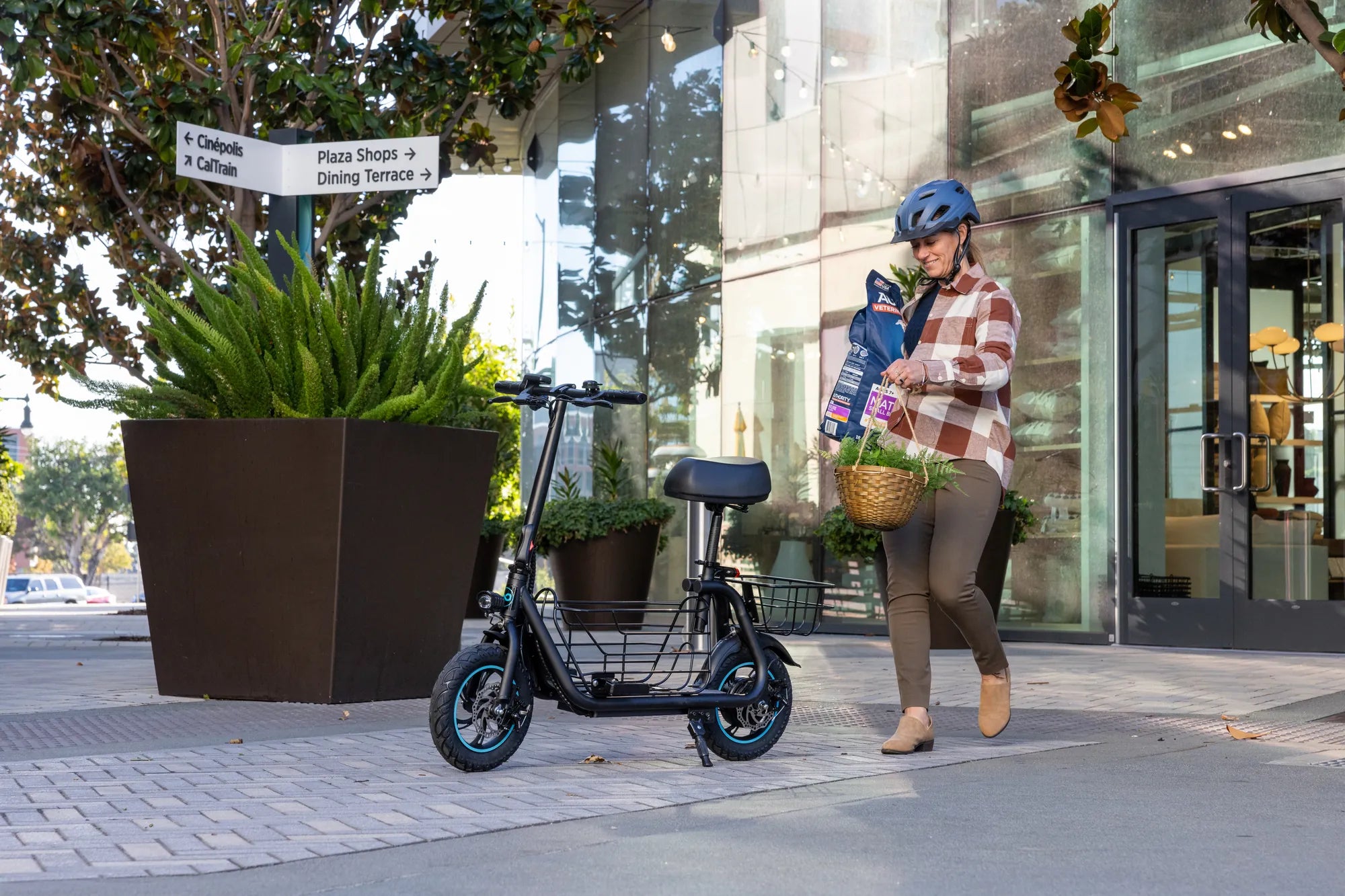
Navigating the Rules of the Road (and Sidewalk)
The simple question, "Are you allowed to ride electric scooters on the sidewalk?" has a frustratingly complex answer. It's a legal gray area that varies dramatically from one city block to the next, leaving many riders confused and potentially at risk of fines. This guide cuts through the noise to provide a definitive, location-aware framework for understanding these rules. You will learn how to find your local laws, the safety principles behind them, and how to ride responsibly whether you're commuting on a city street or cruising a suburban path.
The Legal Landscape: It's All About Local Jurisdiction
There is no single federal law in the United States or blanket regulation in Europe that dictates where you can ride an e-scooter. The regulatory hierarchy typically flows from broad state guidelines to hyper-specific municipal ordinances. State laws often classify e-scooters as "electric personal assistive mobility devices" or similar, providing a permissive framework but delegating traffic control to local authorities.
The most critical layer of regulation is the Local Municipal Ordinance. Your city or county council passes laws that specify exactly where e-scooters can operate, their speed limits, and parking rules. These ordinances can change frequently as cities adapt to micro-mobility trends. The rider's fundamental responsibility is to know and adhere to their specific city's code, not just the state's general rules.
Ignorance of a local law is rarely a valid defense. A scooter rider in Chicago faces completely different rules than one in Dallas or a small town in Vermont. This patchwork system means a practice that is perfectly legal in one neighborhood could result in a significant fine just a few miles away in a different jurisdiction.
Common Regulatory Models Across Cities
Most cities adopt one of three primary stances toward sidewalk riding, each with distinct rationales and enforcement levels. Understanding these models helps you anticipate the rules in a new area.
1. Sidewalks Strictly Prohibited: This is common in dense urban cores like New York City and San Francisco. E-scooters are treated like bicycles and must use bike lanes or the road, traveling with the flow of traffic. The primary driver is pedestrian safety and maintaining clear walkways in high-foot-traffic areas.
2. Sidewalks Permitted with Restrictions: Many cities, including Austin, Texas, allow sidewalk riding but impose strict conditions. These often include a reduced speed limit (e.g., 8-10 mph), a requirement to yield the right-of-way to all pedestrians, and sometimes a prohibition on riding in specific business districts. The scooter may also be required to have an audible bell.
3. Unregulated or Gray Areas: Smaller towns or suburbs may not have explicit ordinances addressing e-scooters. In these cases, state vehicle codes may apply by default, often prohibiting motorized vehicles on sidewalks. However, enforcement is typically lax. This "gray area" is where riders must exercise the most caution and judgment, erring on the side of pedestrian safety.
Why Sidewalk Riding is Often Restricted or Discouraged
The restrictions aren't arbitrary; they are rooted in concrete safety and liability concerns. Sidewalks are designed for pedestrian traffic moving at 3-4 mph, not for vehicles capable of 15-20 mph. The mismatch in speed and user expectations creates predictable hazards.
Pedestrian safety is the paramount concern. Seniors, children, and individuals with disabilities are particularly vulnerable to collisions. A scooter moving at even 10 mph can cause serious injury in an impact. Furthermore, riders weaving around pedestrians, signs, and street furniture create an environment of unpredictability and anxiety for those walking.
Liability for the rider is severe. If you collide with a pedestrian on a sidewalk—even if it's technically legal to ride there—you are almost certainly liable for their medical bills and other damages. Your personal insurance may not cover this, leading to significant financial risk. The legal and financial consequences far outweigh any convenience.
Finally, sidewalks themselves are hazardous for scooters. Uneven pavement, cracks, raised tree roots, and driveway cutouts are major trip hazards for small-wheeled vehicles. These obstacles, which a pedestrian steps over, can easily cause a scooter rider to crash, leading to personal injury.
The Data on Safety and Conflicts
Public health studies provide a data-driven backbone for these regulations. A 2021 study published in the Journal of Urban Mobility analyzing emergency room data found that over 28% of e-scooter related injuries involved a collision with a pedestrian, and a majority of these occurred on sidewalks or other pedestrian spaces.
The U.S. Centers for Disease Control and Prevention (CDC), in a landmark study of Austin, Texas, found that only 1 in 190 injured e-scooter riders was wearing a helmet, highlighting a broader safety culture issue. While not solely about sidewalks, this data informs cities about overall rider risk.
Common accident scenarios on sidewalks include: collisions at blind corners of buildings, conflicts at crosswalks and driveways where drivers aren't expecting fast-moving traffic from the sidewalk, and trips/falls from pavement defects. This evidence directly informs policymakers who must balance innovation with public safety.
How to Find and Understand Your Local E-Scooter Laws
Conducting your own research is a non-negotiable part of responsible scooter ownership. Start with your city's official website. Look for departments like Transportation, Public Works, or the City Clerk's office. Search their municipal code for terms like "motorized foot scooter," "electric stand-up scooter," or "micro-mobility device."
Your local police department's website often has an FAQ section covering traffic laws for bicycles and scooters. These are valuable resources for understanding enforcement priorities. Additionally, reputable micro-mobility apps and advocacy groups (like the League of American Bicyclists) often compile city-by-city law summaries.
When reading the law, don't just look for the word "scooter." Older ordinances might classify them under "toy vehicles" or "motorized play vehicles," which often carry stricter prohibitions. The specific legal definition matters more than the colloquial term.
Key Law Components to Look For
Your research should aim to answer these specific questions. Treat this as a compliance checklist for your city:
- Allowed Areas: Where can you ride? (Sidewalk, bike lane, road, multi-use path?)
- Speed Limits: Are there different limits for sidewalks (often 6-8 mph) vs. roads?
- Age Requirements: Is there a minimum age to operate an e-scooter? (Commonly 16+).
- Helmet Laws: Are helmets required for all riders, or only for minors?
- DUI Applicability: Are DUI/DWI laws applicable to e-scooter operation? (They almost always are).
- Parking Rules: Where can you legally park? Are there prohibitions against blocking sidewalks, ramps, or building entrances?
Compliance with these components isn't just about avoiding tickets; it's about being a responsible member of the shared transportation ecosystem.
Responsible Riding Practices: Safety First, Legality Second
Even if your local law permits sidewalk riding, best practices dictate extreme caution. The safest default is to use a bike lane or a calm residential street. When you must use a sidewalk, treat it as a privilege, not a right.
Always yield to pedestrians—this means slowing to a walking speed or dismounting completely. Use an audible signal, like a bell or a polite verbal cue ("On your left!"), well before passing. Never assume a pedestrian can hear you approaching from behind. Be hyper-vigilant at driveways, alleyways, and intersections where cars may not be looking for fast-moving traffic on the sidewalk.
Night riding requires extra precautions. Ensure your scooter has bright front and rear lights. Wear reflective clothing or accessories. Visibility is critical for being seen by both drivers at crossings and pedestrians on shared paths. Proper lighting is often a legal requirement for road use and a lifesaving practice everywhere.
The Gyroor Rider's Advantage: Built for Compliance and Safety
Choosing a scooter from a reputable brand like Gyroor provides inherent advantages for legal and safe riding. For instance, UL-certified battery packs (standard across the Gyroor lineup) directly address a top municipal concern: fire risk. Cities are increasingly mandating such certifications for all micro-mobility devices, making Gyroor scooters compliant by design.
Features like IPX5 water-resistance ensure reliability when you must use the road in wet conditions, reducing the temptation to illegally jump onto a dry sidewalk. Reliable brakes, stable deck designs, and clear lighting systems all contribute to predictable control, which is essential for navigating legal riding surfaces safely.
With a 1-year warranty and support trusted by over 100,000 riders, Gyroor owners have the peace of mind that their vehicle is built for the legitimate demands of daily commuting on bike lanes and roads, not just short recreational use. This reliability supports a riding lifestyle that prioritizes planned, legal routes over risky shortcuts.
Comparison of Riding Environments
Understanding the trade-offs between different riding surfaces can guide your route planning. This table compares key factors for common riding environments.
| Riding Environment | Typical Legal Status | Safety Considerations | Ideal For |
|---|---|---|---|
| Sidewalk | Often prohibited or restricted in urban areas. | High conflict risk with pedestrians, trip hazards from pavement. | Last resort for short distances when road is unsafe; must ride at walking speed. |
| Bike Lane | Almost universally permitted and encouraged. | Watch for car doors opening, merging traffic at intersections. | Primary route for urban commuting; provides dedicated space. |
| Residential Street (Low Traffic) | Permitted; follow all traffic laws. | Low speed but watch for parked cars and children. | Neighborhood travel, connecting to bike lanes. |
| Multi-Use Path | Usually permitted unless signed otherwise. | Mix of pedestrians, cyclists, scooters; control speed and announce passes. | Recreational riding, longer distance commutes away from traffic. |
| Roadway (With Traffic) | Permitted in many areas; act like a bicycle. | Highest risk from motor vehicles; requires confidence and visibility. | When no bike lane exists; take the lane and be predictable. |
Frequently Asked Questions (FAQ)
Q: What's the typical fine for riding an e-scooter on the sidewalk where it's banned?
A: Fines vary widely but can be substantial. In cities like San Francisco, fines start at over $100 for a first offense. In New York City, violations can result in fines ranging from $50 to $200. The penalty is often similar to that for bicycling on a sidewalk.
Q: Can I ride on the sidewalk if the road feels dangerously unsafe?
A: Legally, usually no. A perceived lack of safe infrastructure does not override the law. The safer course is to find an alternate route using calmer streets, dismount and walk your scooter on the sidewalk for the dangerous stretch, or advocate for better bike lanes. Your safety is paramount, but breaking the law shifts liability to you.
Q: Do these laws apply to my private e-scooter (like a Gyroor), or just to rental scooters?
A> The laws almost always apply to all e-scooters, regardless of ownership. Municipal ordinances govern the operation of a "device" on public property. Rental companies just have additional permitting rules. As a private owner, you are responsible for knowing and following all general operating laws.
Q: If I'm involved in a collision on the sidewalk, who is at fault?
A> Fault is determined by the circumstances, but the scooter rider is frequently found liable, especially if riding in a prohibited area or above a safe speed. If you hit a pedestrian, you will likely be responsible for damages. If a car hits you while you're crossing a driveway from the sidewalk, complex shared fault rules may apply. This highlights the extreme legal and financial risk of sidewalk riding.
Q: How can I advocate for better bike lane infrastructure in my city?
A> Effective advocacy starts with local government. Attend city council or transportation committee meetings. Join or support local cycling/pedestrian advocacy groups. Use official city channels to report dangerous roads and request bike lane reviews. Data and polite, persistent citizen input are powerful tools for change.
Empowered and Informed Riding
The core truth about electric scooter sidewalk laws is that they are local, specific, and rooted in shared safety. The most empowered rider is an informed one who takes the time to research their route and local ordinances. While the patchwork of laws can be confusing, the guiding principle is clear: prioritize the safety of pedestrians and yourself.
The sustainable future of micro-mobility depends on responsible ridership today. By using bike lanes and roads where possible, riding predictably, and respecting all traffic laws, you represent the scooter community positively. This responsible behavior helps build public and political support for the expanded, safer infrastructure that all riders want.
For riders who value performance, safety, and reliability built to handle legitimate riding environments, the choice is clear. Explore a scooter designed for the real world of commuting and adventure. Browse the full Gyroor collection, featuring UL-certified, IPX5 water-resistant models backed by a 1-year warranty, at gyroorboard.com.
Best Electric Scooters for Heavy Riders: Power & Durability Tested
Can You Rent Electric Scooters at Disney World? The Complete Guide