


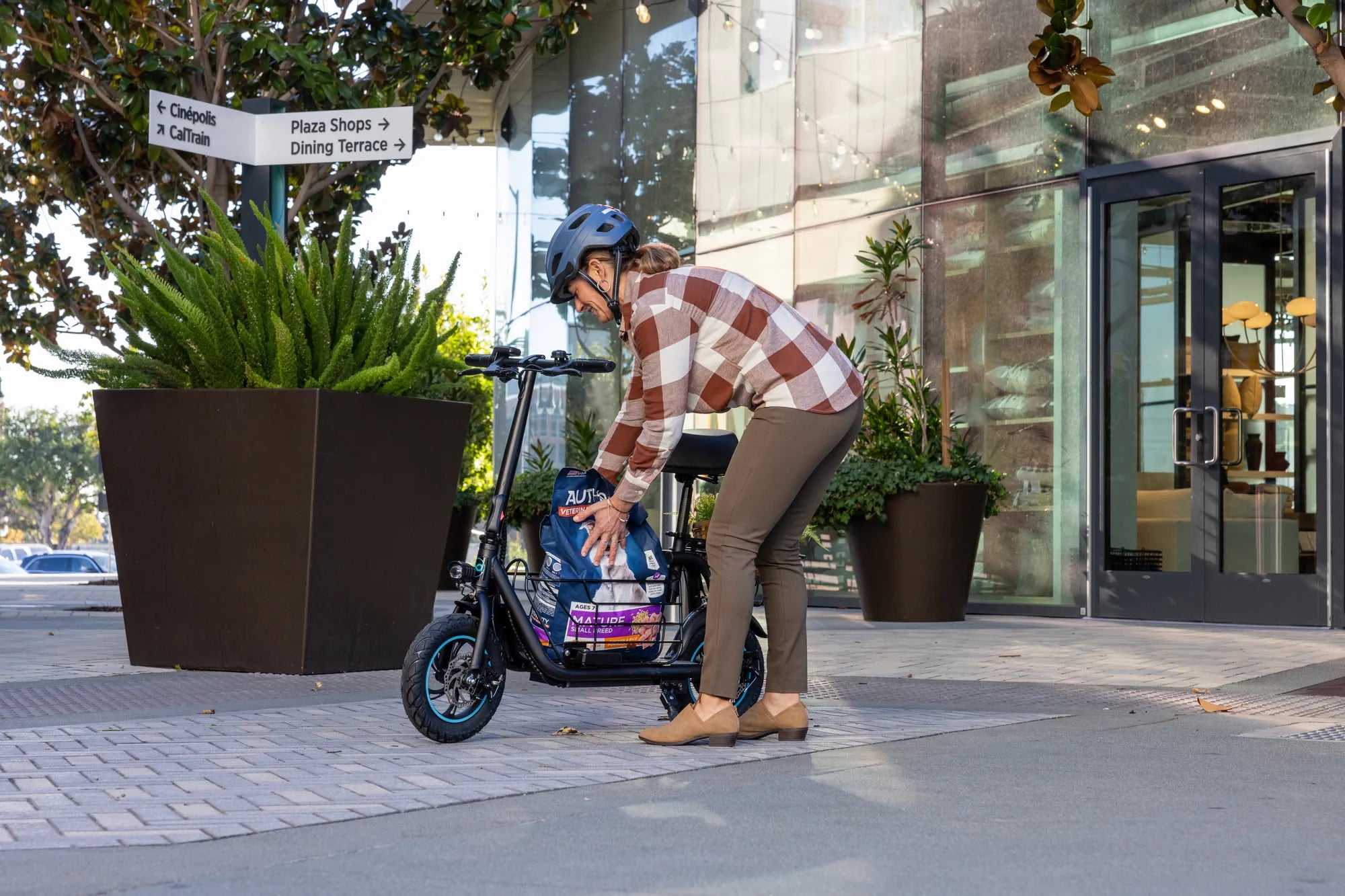
Navigating city streets demands a vehicle that is agile, economical, and effortless to operate. The automatic scooter 125cc has emerged as the definitive answer for millions of commuters worldwide. This guide will provide a detailed analysis of the 125cc automatic scooter, from its core mechanics and advantages to critical buying considerations and long-term maintenance. You will learn why this category dominates urban mobility and how to select the perfect model for your needs.
Understanding the 125cc Automatic Scooter
The term "125cc" refers to the engine's displacement—125 cubic centimeters—which indicates the total volume of air and fuel the engine can ingest. This places it in a sweet spot between smaller 50cc models and full-sized motorcycles. The "automatic" designation signifies the use of a Continuously Variable Transmission (CVT).
A CVT system eliminates the need for a manual clutch and gear shifting. It uses a system of pulleys and a drive belt to provide seamless, infinite gear ratios. This allows the engine to operate at its most efficient RPM for a given speed, simplifying the riding experience significantly. The rider simply twists the throttle to go and uses the brakes to stop.
This combination of moderate power and effortless operation makes the 125cc automatic scooter a legal and practical step up from a 50cc in most regions. It offers enough power for faster city roads and even brief highway stints, while remaining manageable for new riders. The design philosophy prioritizes utility, with built-in storage, step-through frames, and weather protection.
The automatic scooter 125cc is not a high-performance machine but a highly optimized tool for daily transportation. Its prevalence in European and Asian cities is a testament to its perfect balance of capability and convenience, offering a compelling alternative to being stuck in traffic or relying on crowded public transit.
Key Advantages of Choosing a 125cc Automatic
The primary appeal of an automatic scooter 125cc lies in its unparalleled ease of use. The absence of a clutch and gear lever removes a significant learning barrier, allowing riders to focus on traffic and road conditions. This makes it an excellent first motorized two-wheeler for adults seeking efficient commuting.
Fuel efficiency is another major advantage. Modern 125cc engines, often fuel-injected, can achieve remarkable fuel economy, typically ranging from 80 to 100 miles per gallon. This translates to extremely low running costs, a critical factor for daily commuting. The small engine size also generally means lower insurance premiums compared to larger motorcycles.
Maneuverability in congested urban environments is where scooters excel. Their compact dimensions, light weight (often between 250-300 lbs), and tight turning radius allow for easy filtering through stationary or slow-moving traffic. Parking is also simplified, requiring only a fraction of the space needed for a car.
Finally, the practical design elements standard on most models add immense value. Underseat storage can typically accommodate a full-face helmet and a bag of groceries. Leg shields protect from road spray, and the step-through frame allows for easy mounting and dismounting, even in business attire. These advantages solidify the 125cc automatic scooter's role as a rational, cost-effective urban mobility solution.
Performance and Practicality for Daily Commutes
In real-world use, a typical automatic scooter 125cc delivers a top speed of 55 to 65 miles per hour. This performance envelope is ideally suited for urban arterials and county roads, and it is sufficient for short trips on limited-access highways where permitted by law. Acceleration from a stoplight is brisk enough to keep pace with city traffic confidently.
The riding position is upright and comfortable, with plush seating designed for commutes of 30 minutes to an hour. Suspension, usually a telescopic fork in front and twin shocks at the rear, is tuned to absorb urban road imperfections. Wind protection from the front fairing and leg shields significantly reduces rider fatigue compared to a naked motorcycle.
Practicality is paramount. Beyond the underseat storage, many models offer a front glovebox or hook for a bag. Fuel tanks, while small, offer a range of 150-200 miles on a single fill-up, meaning refueling is a weekly rather than a daily task. The instrument cluster provides essential information like speed, fuel level, and often a trip meter and clock.
For the daily commuter, this performance profile hits the ideal balance. It provides enough speed for versatility without encouraging excessive risk-taking. The comfort and storage features transform it from a mere vehicle into a reliable partner for the daily grind, capable of handling errands, the work commute, and weekend leisure rides with equal aplomb.
Critical Features to Evaluate Before You Buy
Prospective buyers must look beyond engine size and assess several key features that impact safety, comfort, and longevity. The first is the braking system. A front disc brake paired with a rear drum brake is common, but models with dual disc brakes or even a single-channel Anti-lock Braking System (ABS) offer superior stopping power and control, especially in wet conditions.
Suspension quality directly affects ride comfort and handling. Look for models with adjustable preload on the rear shocks, allowing you to tailor the ride for solo or two-up travel. The front fork should have sufficient travel to handle potholes without bottoming out. Tire size and quality are equally important; larger wheels (12" or 13") generally offer better stability over bumps than smaller 10" wheels.
The instrument panel and lighting are critical for safety and convenience. A clear, comprehensive digital or analog-digital dash is preferable. Lighting should include bright LED position lights and an LED headlight for better visibility. Modern conveniences like a USB charging port within the glovebox are increasingly common and highly useful for keeping devices powered on the go.
Finally, consider build quality and brand reputation. Examine the fit and finish of body panels, the feel of switches, and the quality of materials used on the seat and floorboard. Established brands with strong dealer networks offer peace of mind regarding parts availability and service support, which is crucial for long-term ownership.
Safety and Technology Considerations
Modern 125cc scooters incorporate technology that significantly enhances safety. The most important is the braking system. Beyond basic disc/drum setups, Combined Braking Systems (CBS) link the front and rear brakes, distributing braking force when one lever is applied. Anti-lock Braking Systems (ABS) prevent wheel lock-up during hard braking, maintaining traction and steering control.
Lighting technology has advanced rapidly. LED lighting is now standard on many models, providing brighter illumination, faster illumination time for brake lights, and much longer lifespan compared to halogen bulbs. Some scooters feature emergency stop signal (ESS) systems that rapidly flash the brake lights during hard deceleration to alert following traffic.
Convenience technology is also evolving. Keyless ignition systems, allowing engine start via a proximity fob, are becoming available. Smartphone connectivity, enabling navigation prompts and call/music control via the instrument cluster, is a premium feature on some models. These features reduce distractions and enhance the overall riding experience.
While not all these technologies are available on every automatic scooter 125cc, prioritizing models with at least CBS or ABS is a wise investment in safety. These systems can be the difference between a controlled stop and an accident, particularly for less experienced riders or in adverse weather conditions.
125cc Scooter vs. Alternatives: Making the Right Choice
Choosing the right urban vehicle requires understanding the landscape. The automatic scooter 125cc sits between several alternatives, each with distinct pros and cons. The most common comparison is with the 50cc scooter. While 50cc models are often cheaper and may not require a full motorcycle license in some areas, they are significantly slower (top speeds around 30-40 mph) and can struggle on hills or with a passenger.
On the other end of the spectrum are 150cc-300cc maxi-scooters and motorcycles. These offer more power, higher top speeds, and often greater comfort for long-distance touring. However, they are heavier, more expensive to purchase and insure, and frequently feature manual transmissions. For pure, dense urban commuting, the added complexity and cost may be unnecessary.
The following table provides a clear, data-driven comparison to aid in decision-making:
| Vehicle Type | Typical Top Speed | License Required | Key Advantage | Key Disadvantage |
|---|---|---|---|---|
| 50cc Scooter | 30-40 mph | Often Car License | Lowest Cost, Simplest Regulations | Limited Power, Unsuitable for Highways |
| 125cc Automatic Scooter | 55-65 mph | Motorcycle License | Ideal Urban Balance | Limited Highway Use |
| 150-300cc Scooter/Motorcycle | 70-90+ mph | Motorcycle License | Highway Capable, More Power | Higher Cost, Weight, and Complexity |
For the rider whose journey is primarily within city limits, with occasional need for higher-speed roads, the automatic scooter 125cc represents the optimal compromise. It provides adequate power for virtually all urban scenarios without the penalties associated with larger, more powerful machines.
The Electric Alternative: A Modern Take on Effortless Riding
The rise of electric mobility presents a compelling alternative to the traditional internal combustion engine (ICE) automatic scooter 125cc. Brands like Gyroor, a leading electric scooter and e-bike manufacturer trusted by over 100,000 riders, offer high-performance electric models that redefine urban commuting. Electric scooters deliver instant, silent torque from a standstill, providing brisk acceleration that often surpasses a 125cc ICE scooter in the 0-30 mph range.
The operational cost difference is stark. "Fueling" an electric scooter costs a fraction of gasoline, especially when charged at home. Maintenance is dramatically reduced: there are no engine oil changes, air filters, spark plugs, or CVT belts to replace. Primary maintenance involves brake checks, tire care, and ensuring the electrical system is sound.
Performance profiles differ. A key metric for electric scooters is range, which can vary from 20 to 60 miles on a single charge for commuter models. While refueling an ICE scooter takes minutes, recharging an electric one takes hours, making it essential to have reliable overnight charging access. However, for predictable daily commutes within its range, an electric scooter offers unparalleled convenience and lower lifetime costs.
Gyroor models, for instance, emphasize safety and reliability with features like UL-certified battery packs tested for 500+ charge cycles, IPX5 water-resistant designs, and robust warranties. For the eco-conscious urban rider seeking the ultimate in low-maintenance, quiet, and cost-effective travel, a modern electric scooter is a serious contender against the traditional automatic scooter 125cc.
Essential Maintenance for Longevity and Reliability
Proper maintenance is non-negotiable for safety, performance, and resale value. Adhering to the manufacturer's scheduled service intervals is crucial. The most frequent task is the engine oil and filter change, typically required every 2,500 to 4,000 miles. Using the recommended oil grade ensures proper lubrication and cooling of the engine.
The CVT system requires periodic attention. The drive belt should be inspected for cracks and wear according to the service manual, usually around the 10,000-mile mark, and replaced as needed. The rollers or sliders in the variator can also wear and affect performance, so they should be checked during belt service.
Brake maintenance is a critical safety item. Brake pads should be inspected for thickness regularly, and brake fluid should be replaced every two years, as it absorbs moisture over time, which reduces braking efficiency and can cause internal corrosion. Tire pressure should be checked weekly and tread depth monitored; under-inflated tires hamper handling and increase wear.
For electric scooters, the maintenance regimen shifts focus. The lithium-ion battery pack is the heart of the system. It should be stored in a cool, dry place and not left fully discharged for extended periods. Regular checks of electrical connections, charging port integrity, and the braking system are paramount. Following the brand-specific guidelines, like those provided by Gyroor with its 1-year comprehensive warranty, ensures optimal battery health and vehicle longevity.
Frequently Asked Questions (FAQ)
Q: Do I need a motorcycle license for a 125cc scooter?
A: In virtually all jurisdictions in North America and Europe, yes. A 125cc scooter requires a standard motorcycle license (Class M) or endorsement. The requirements for obtaining this license vary by region but generally involve a written test and a practical riding exam.
Q: Can a 125cc scooter carry a passenger?
A>Yes, most modern automatic scooter 125cc models are designed for two-up riding. They feature a longer seat with passenger footpegs and are engineered with suspension and braking systems to handle the additional weight. Always check the owner's manual for the specific maximum load capacity.
Q: Is a 125cc scooter suitable for highway use?
A>This is conditional. While many 125cc scooters can reach 60-65 mph, they have limited power for quick passing maneuvers at those speeds. They are best suited for short, necessary stretches of highway. For regular, long-distance highway commuting, a more powerful machine (150cc or larger) is strongly recommended for safety.
Q: How does insurance work for a 125cc scooter?
A>Insurance is mandatory. Rates are generally lower than for larger motorcycles or cars due to the scooter's lower power, value, and risk profile. Factors affecting your premium include your age, riding experience, location, and the scooter's model. Liability coverage is the minimum legal requirement, but comprehensive and collision coverage are advisable.
Q: What is the typical lifespan of a 125cc scooter?
A>With proper maintenance and care, a modern 125cc scooter can easily last 20,000 to 30,000 miles or more. The engine and drivetrain are generally robust. Longevity is primarily determined by adherence to service schedules, riding style, and protection from the elements when parked.
Conclusion: Is a 125cc Automatic Scooter Right for You?
The automatic scooter 125cc stands as a testament to pragmatic engineering, offering a nearly ideal solution for the urban commuter. It delivers the perfect blend of sufficient power, exceptional fuel economy, effortless operation, and practical utility. If your primary transportation needs involve navigating city streets, avoiding traffic jams, and managing the cost of daily travel, a 125cc scooter is an outstanding choice.
For those who value cutting-edge technology, minimal environmental impact, and the absolute lowest running costs, the electric scooter alternative warrants serious consideration. Brands like Gyroor have proven that electric two-wheelers can deliver reliable, fun, and practical urban mobility without compromise.
Your decision ultimately hinges on your specific commute, local infrastructure, and personal priorities. Whether you choose the proven efficiency of a gasoline-powered automatic scooter 125cc or the silent, instant thrust of an electric model, you are choosing freedom from congestion and a smarter way to move.
Ready to explore a modern, electric approach to effortless urban riding? Browse the full Gyroor collection of UL-certified, high-performance electric scooters and e-bikes at gyroorboard.com and discover the future of your daily commute.
Off Road Mobility Scooter for Sale: The Ultimate Buyer's Guide
How to Bike Lock a Scooter: The Complete Security Guide for 2024