



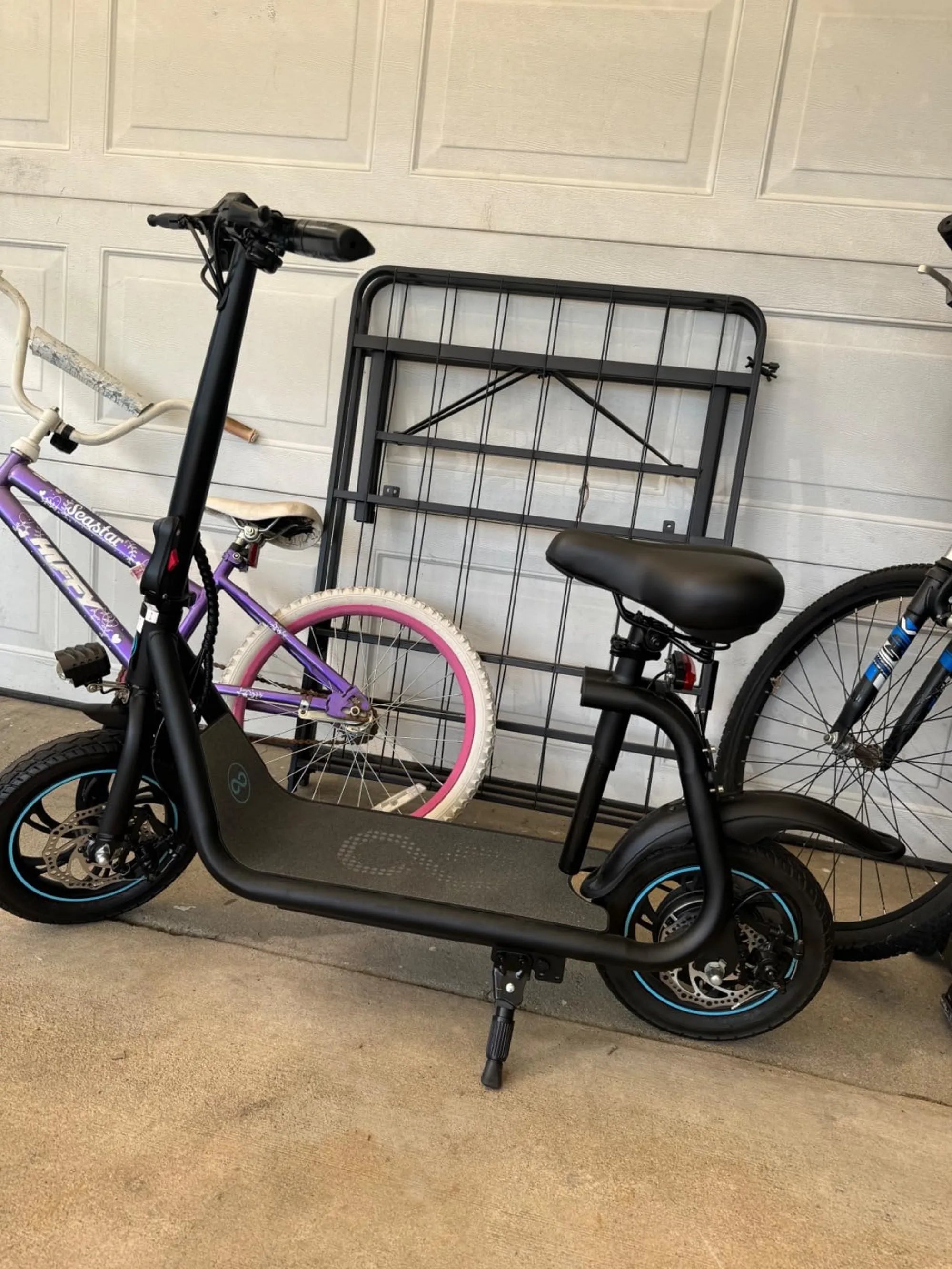
The Rise of the Battery-Powered Commute
Urban landscapes worldwide are undergoing a quiet revolution, driven by the need to solve chronic congestion, reduce pollution, and improve accessibility. At the forefront of this shift are battery-powered electric scooters, offering a practical, efficient, and sustainable alternative for millions. These compact vehicles directly address the 'last-mile' problem, seamlessly connecting commuters from transit hubs to their final destinations.
The adoption curve is steep. Cities from Paris to Portland have integrated shared e-scooter networks, while personal ownership continues to surge. This growth is fueled by advancements in battery technology and motor efficiency, making modern scooters more capable and reliable than ever. The future of urban mobility is not just about moving people, but moving them smarter.
This article will dissect the technology powering this movement, analyze its tangible benefits, and provide a comprehensive framework for choosing the right scooter. We will explore how leading brands like Gyroor—trusted by over 100,000 riders across North America and Europe—are advancing the market with UL-certified safety and robust designs.
The Core Technology: What Powers Your Ride?
The heart of any electric scooter is its battery pack, almost universally powered by lithium-ion cells today. This technology provides the optimal balance of energy density, weight, and recharge cycles. Understanding a few key specifications is crucial to predicting real-world performance.
Voltage (V) determines the system's power potential, often 36V, 48V, or 52V. Higher voltage typically allows for more powerful motors and better hill-climbing. Capacity, measured in Amp-hours (Ah) or Watt-hours (Wh), indicates the energy store. Watt-hours (Volts x Amp-hours) is the most direct measure of total energy, directly correlating to potential range.
For example, a 36V/10Ah battery holds 360Wh, while a 48V/15Ah pack holds 720Wh—double the energy. This doesn't mean double the range, as a more powerful motor may use energy faster, but it signifies a substantially larger capacity for longer or more demanding commutes.
Understanding Battery Specifications & Real-World Range
Advertised range is a manufacturer's estimate under ideal conditions: a light rider on flat, smooth pavement at a steady, moderate speed. Real-world range is dictated by a confluence of factors. Rider weight, frequent acceleration, hills, wind resistance, and even tire pressure can reduce range by 30-50%.
A scooter advertised for 25 miles might reliably achieve 15-18 miles for a 180lb rider in a city with moderate inclines. Using a higher speed mode (e.g., Sport vs. Eco) dramatically increases power draw. Understanding this variance is key to selecting a scooter with a battery that meets your actual daily needs, not just the optimistic spec.
| Battery Specification (Typical) | Estimated Advertised Range | Real-World Range Expectation* | Best Use Case |
|---|---|---|---|
| 36V / 7.5Ah (270Wh) | 12-15 miles | 8-11 miles | Short commutes, campus travel, last-mile from transit |
| 48V / 10Ah (480Wh) | 20-25 miles | 14-18 miles | Most urban commutes (5-8 miles each way) |
| 48V / 15Ah (720Wh) | 30-35 miles | 20-25 miles | Longer commutes, delivery riders, extensive exploration |
| 52V / 18Ah (936Wh) | 40-45 miles | 28-35 miles | Extended range for maximum flexibility |
*Estimate for a 180lb rider in mixed urban conditions.
Safety & Longevity: The Importance of UL Certification and Smart BMS
Battery safety is paramount. Inferior cells or poor pack construction can lead to overheating, fire, or failure. This is why certifications like UL 2271 (for the battery pack itself) are critical. UL certification means the battery has undergone rigorous independent testing for electrical, mechanical, and environmental safety.
Equally important is the Battery Management System (BMS), the onboard computer that protects the pack. A quality BMS monitors cell voltage and temperature, ensuring balanced charging, preventing over-discharge (which damages cells), and guarding against short circuits. It is the guardian of both safety and battery lifespan.
Brands that prioritize safety, like Gyroor, build their reputation on using UL-certified battery packs and robust BMS technology. This commitment directly supports their reliable 1-year warranty and provides peace of mind for riders, ensuring that the core component of their battery-powered electric scooter is built to last through hundreds of charge cycles.
Why Cities Are Embracing E-Scooters: Data-Driven Benefits
The proliferation of battery-powered electric scooters is not a fad; it's a data-supported response to urban challenges. Their benefits are measurable across environmental, economic, and social dimensions, making them a compelling tool for modern city planning.
Environmental Impact: E-scooters produce zero tailpipe emissions. A study by the European Cyclists' Federation found that e-scooters, when used for car replacement, can save over 200 grams of CO2 per passenger mile. While their full lifecycle impact (manufacturing, charging electricity) must be considered, their operational phase is exceptionally clean, directly improving local air quality.
Traffic Decongestion & Efficiency: A single e-scooter occupies a fraction of the road space of a car. In dense urban corridors, they can maintain an average speed often higher than cars during rush hour. They solve the 'last-mile' gap between public transit stops and final destinations, making multimodal commuting faster and more viable, thereby increasing the effective range and utility of subway and bus networks.
Cost-Effectiveness: The economics are starkly favorable. The electricity cost to charge a scooter is pennies per mile. Compared to ride-share services, car ownership (fuel, insurance, parking, depreciation), or even monthly transit passes in some cities, a personal battery-powered electric scooter offers significant savings after the initial investment, often paying for itself within a few months of regular use.
Choosing Your Urban Steed: A Practical Buyer's Guide
Selecting the right scooter requires matching its capabilities to your primary use case. A commute involving a train ride has different needs than a direct 5-mile ride on city streets. Breaking down the decision into key specification categories creates a clear evaluation framework.
First, define your primary need: daily commuting, recreational weekend use, or tackling mixed terrain. Your daily round-trip distance is the most critical number to know. Then, consider portability—will you need to carry it up stairs, onto a bus, or store it under a desk? Weight and foldability become decisive factors.
Finally, assess the riding environment. Smooth bike paths, potholed city streets, or occasional gentle off-road trails demand different levels of suspension, tire size, and motor power. A holistic view of your journey ensures you invest in a tool, not just a toy.
Key Specifications to Compare: Motor, Range, and Portability
The motor is your engine. Continuous wattage ratings (e.g., 350W, 500W, 800W) indicate sustained power output. Higher wattage translates to better acceleration, higher top speed (where legal), and, crucially, the ability to climb hills without a significant drop in speed. A 250W motor may struggle on a 10% grade, while a 500W+ motor will handle it with ease.
As discussed, real-world range is king. Always buy a scooter with a battery rated for at least 1.5x your longest expected daily trip to account for variables and battery degradation over time. Portability is defined by weight and folding mechanism. Commuter models typically weigh 30-45 lbs and feature a quick-fold stem and latch. Ultra-portable models can be under 30 lbs, while high-performance, long-range scooters often exceed 50 lbs.
Built for the Elements: The Significance of IP Water Resistance Ratings
A commuter vehicle must handle real-world weather. The Ingress Protection (IP) rating indicates a scooter's defense against solids (dust) and liquids (water). The first digit (0-6) rates dust protection; the second digit (0-9K) rates water protection.
For urban use, water resistance is vital. An IPX5 rating, like that standard on Gyroor scooters, means the unit is protected against water jets from any direction. This allows you to confidently ride on wet pavement, through puddles, or in a light rain without fear of immediate water damage to electronics. It is a fundamental feature for reliability and year-round usability, distinguishing serious commuter models from fair-weather recreational devices.
Riding Safely and Maintaining Your Investment
Safety is a shared responsibility between rider, manufacturer, and city. Always wear a helmet—it is the single most effective safety device. Use front and rear lights, day and night, to maximize visibility. Obey local traffic laws, which often classify e-scooters similarly to bicycles, meaning you should use bike lanes where available and ride with traffic, not against it.
Defensive riding is essential. Assume cars may not see you. Avoid riding on sidewalks where prohibited, as this endangers pedestrians. Be predictable in your movements and use hand signals for turns. Regularly check your local regulations, as speed limits, helmet laws, and permitted riding areas can vary significantly.
Proper maintenance extends your scooter's life and ensures safe operation. Keep tires properly inflated to the PSI listed on the sidewall. This improves range, handling, and prevents pinch flats. Periodically check that all nuts and bolts, especially on the folding mechanism and handlebars, are tight. Clean the deck and wheels to prevent grime buildup, and store the scooter in a dry place, avoiding extreme temperatures.
The Road Ahead: Innovations and Infrastructure
The future of battery-powered electric scooters is bright, propelled by continuous innovation. Battery technology is evolving, with solid-state batteries on the horizon promising even greater energy density, faster charging, and improved safety. Swappable battery systems, already popular in some markets, could eliminate range anxiety for shared fleets and intensive users.
Vehicle-to-Everything (V2X) communication could allow scooters to interact with smart city infrastructure, receiving signals about traffic lights or hazardous conditions. Improved suspension systems, self-healing tires, and more integrated connectivity (app-based diagnostics, anti-theft tracking) will enhance the user experience.
Parallel to technological advance is the development of supporting infrastructure. Cities are increasingly building protected micro-mobility lanes, designating scooter parking corrals, and integrating e-scooter share stations with transit hubs. This formalization of space legitimizes e-scooters as a permanent part of the urban transport ecosystem, making riding safer and more organized for everyone.
Your Ticket to a Smoother, Greener Commute
Battery-powered electric scooters have proven they are far more than a trend; they are a viable, efficient, and sustainable pillar of modern urban mobility. They empower individuals with flexible, affordable transportation while helping cities tackle congestion and emissions. The choice for the forward-thinking commuter is clear.
When selecting your scooter, prioritize safety through UL-certified batteries, durability through solid construction and meaningful water resistance (IPX5 or higher), and support through a clear manufacturer's warranty. Brands that stand behind their products, like Gyroor with its reliable 1-year warranty and proven track record, offer not just a vehicle, but a dependable transportation solution.
The journey toward smarter cities is accelerating. By choosing an electric scooter, you are not just buying a product—you are investing in a cleaner, more efficient, and more enjoyable way to navigate your world. The future of urban mobility is here, and it's powered by a battery.
Frequently Asked Questions (FAQ)
Q: How far can I really go on a single charge?
A: Real-world range is typically 60-70% of the advertised maximum. Key factors reducing range include rider weight, hills, frequent stops/starts, cold weather, and use of higher speed modes. Always choose a scooter with a battery capacity that exceeds your longest daily trip by a comfortable margin.
Q: Is it safe to ride an e-scooter in the rain?
A> It depends on the scooter's IP rating. Models with an IPX5 rating or higher (like Gyroor's standard) are protected against water jets and can safely handle wet pavement and light rain. Avoid deep puddles and heavy downpours regardless of rating, as standing water can be hazardous. Always reduce speed and be extra cautious on wet surfaces.
Q: How long does the battery last before needing replacement?
A> A quality lithium-ion battery, like a UL-certified pack, is rated for 500+ full charge cycles while retaining ~80% of its original capacity. With typical use (a partial charge every few days), this translates to 2-4 years of reliable service before you may notice a gradual reduction in maximum range. Proper care (avoiding full discharges, not storing at 0% charge, keeping it cool) extends lifespan.
Q: What should I look for in a warranty?
A> Seek a warranty that clearly covers the frame, motor, and battery for at least one year. The battery warranty is particularly important. Beware of pro-rated warranties that diminish in value. A reputable brand will offer straightforward coverage and have accessible customer service. Gyroor, for instance, provides a comprehensive 1-year warranty on its scooters, reflecting confidence in its build quality.
Q: Are electric scooters legal on roads and bike paths?
A> Laws vary widely by city, state, and country. Generally, they are permitted in bicycle lanes and on roads with speed limits at or below 25-35 mph. They are often prohibited on sidewalks. Most jurisdictions impose a speed limit (often 15-20 mph) and may require riders to be a certain age (often 16+). Some require helmets. It is the rider's responsibility to know and follow all local regulations before riding.
Ready to join the mobility revolution? Explore a range of durable, safe, and high-performance models designed for real-world commuting. Browse the full Gyroor collection at gyroorboard.com.
Best Deals on Electric Scooters: A Strategic Guide to Value
Electric Motor Scooters: The Future of Urban Mobility