


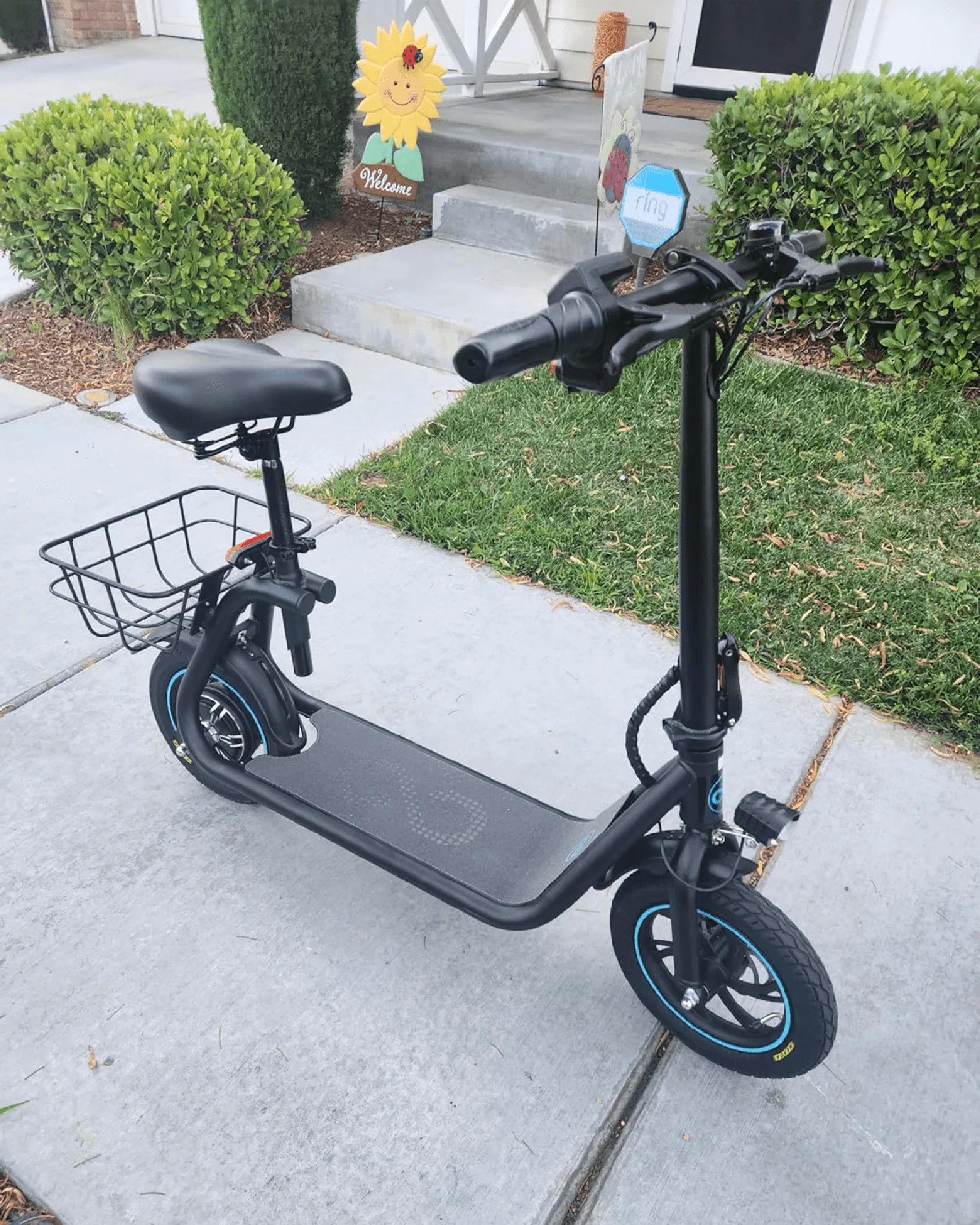
Introduction: The Rise of Hands-Free Commuting
Personal mobility is undergoing a quiet revolution, moving beyond simple electrification to a new paradigm of intuitive, seamless travel. At the forefront of this shift is the automatic scooter, a device that redefines convenience through self-balancing gyroscopic technology. For urban commuters, students, and tech enthusiasts, the best automatic scooter offers a uniquely futuristic and efficient solution to the last-mile problem, transforming short trips into an engaging experience.
This guide will dissect what makes these scooters 'automatic,' explore their core benefits, and provide a detailed framework for selecting a high-quality model. We'll examine the critical technologies, compare them to traditional options, and offer practical advice for new riders. As a leader in innovative personal electric transport, Gyroor has leveraged its expertise in UL-certified batteries and robust design to become a trusted name for over 100,000 riders seeking reliable, hands-free mobility.
What Makes an Electric Scooter "Automatic"?
The term 'automatic' in this context refers specifically to a scooter's ability to self-balance and be controlled primarily through body movement, not manual handlebar steering. Unlike a traditional electric kick scooter where you throttle, brake, and steer with your hands, an automatic scooter uses a combination of gyroscopes, accelerometers, and microprocessors to maintain equilibrium. The rider controls speed, direction, and braking almost entirely by shifting their weight and leaning.
This fundamental difference creates a riding experience that feels more organic and connected. There is no throttle to twist or lever to pull; intention translates directly into motion. The absence of a mandatory handlebar (though some models include a stabilizing pole for beginners) is the most visible distinction, resulting in an incredibly compact and portable form factor. The best automatic scooter masters this complex technology to deliver a ride that is both stable and responsive.
Core Technologies: Gyroscopes, Sensors, and AI
The magic of self-balancing hinges on a suite of sophisticated sensors. Multiple gyroscopes and accelerometers constantly measure the scooter's tilt angle, angular velocity, and acceleration hundreds of times per second. This real-time data is fed to a central microprocessor, which acts as the brain of the device.
This processor runs complex algorithms that calculate the precise adjustments needed to keep the platform level. It then commands the electric motors in the wheels to spin forward or backward at specific speeds to correct any imbalance instantly. Advanced models incorporate simple AI or machine learning to adapt to a rider's style and weight distribution, offering a smoother learning curve. For a brand like Gyroor, integrating these technologies with robust, UL-certified battery systems is key to delivering a safe and dependable product.
Top Benefits of Choosing an Automatic Scooter
The unique design of automatic scooters confers several compelling advantages over other forms of micro-mobility. First is unparalleled portability. Most models are lightweight (often under 30 lbs) and feature a compact, single-unit design without folding mechanisms that can fail. You can easily carry it onto a bus, store it under a desk, or tuck it in a car trunk.
Second is the intuitive learning curve. While mastering full agility takes practice, most adults can learn the basics of going forward, stopping, and gentle turning within 30-60 minutes. The hands-free operation also offers a significant safety benefit in urban environments; riders can keep their head up and maintain better situational awareness without looking down at controls.
Finally, the riding experience itself is a major benefit. The sensation of gliding effortlessly controlled by subtle body movements is inherently fun and engaging. This makes the commute not just a means to an end, but an enjoyable activity, encouraging more frequent use for short trips where a car would be inefficient.
The Practical Advantage: Commuting and Last-Mile Travel
For the urban dweller, the best automatic scooter solves a specific and common problem: the last mile. Studies show that a significant portion of car trips in cities are under three miles. An automatic scooter excels in this 1-5 mile range, easily covering the distance from a transit station to an office or from a parking lot to a final destination.
Its compact size makes it ideal for multi-modal commuting. You can ride it to the subway, pick it up and carry it onboard during crowded periods without inconveniencing others, and then ride the final leg to your door. This seamless integration can cut total commute time significantly while providing a dose of fresh air and activity. Its agility also allows for safe navigation on crowded sidewalks (where local laws permit) or bike lanes at low speeds, where a bulkier e-bike or traditional scooter might be cumbersome.
Key Features to Look For in the Best Automatic Scooter
Selecting a high-quality model requires careful evaluation of several performance and build specifications. Motor power, typically ranging from 250W to 800W per wheel, determines hill-climbing ability and acceleration. For moderate inclines, a dual-motor system with at least 500W total is recommended.
Battery capacity, measured in Watt-hours (Wh), dictates range. A realistic range for most models is 10-15 miles per charge, though this is heavily influenced by rider weight, terrain, and speed. Look for batteries with reputable cell brands and UL certification for safety. Charge time is another critical factor, with 3-4 hours being standard for a full charge.
Other vital specs include maximum speed (often capped between 10-15 mph for safety), weight capacity (should accommodate at least 220 lbs), and wheel size. Larger, air-filled (pneumatic) tires provide a smoother ride over cracks and bumps, while solid rubber tires are maintenance-free but offer less cushioning. Portability, defined by the scooter's total weight and whether it has a carrying handle, is a non-negotiable feature for this category.
Safety and Durability: Non-Negotiables
When your transportation device balances for you, safety and build integrity are paramount. The battery is the most critical component; insist on UL 2272 certification, which ensures rigorous testing for electrical and fire safety—a standard all Gyroor models meet. Water resistance is equally important for real-world use. A rating of IPX5 means the scooter can withstand water jets from any direction, making it safe to ride in light rain or on wet pavement.
The deck should be made of a robust, slip-resistant material like reinforced ABS plastic or aluminum alloy. Integrated lighting—bright front LED and rear brake lights—is essential for visibility at dawn, dusk, or night. An audible warning system, like a bell or electronic beep, is crucial for alerting pedestrians. Finally, a comprehensive warranty, such as Gyroor's 1-year coverage on the vehicle and 6 months on the battery, signals a manufacturer's confidence in its product's durability.
Automatic Scooters vs. Traditional E-Scooters: A Side-by-Side Look
Choosing between an automatic and a traditional handlebar e-scooter depends largely on your primary use case and preferences. The table below outlines the key differences.
| Feature | Best Automatic Scooter | Traditional Handlebar E-Scooter |
|---|---|---|
| Primary Control | Body leaning, weight shift | Handlebars (throttle, brakes, steering) |
| Learning Curve | Moderate (30-60 min for basics) | Very Easy (almost instant) |
| Portability | Excellent (lightweight, often no fold needed) | Good to Fair (requires folding, can be bulky) |
| Typical Max Speed | 10-15 mph | 15-25+ mph |
| Typical Range | 10-15 miles | 15-40 miles |
| Ride Experience | Agile, fun, intuitive | Stable, familiar, speed-oriented |
| Ideal Use Case | Last-mile, crowded areas, multi-modal transit, fun | Longer commutes, faster paced travel, road use |
As the data shows, the best automatic scooter shines in scenarios demanding maximum portability and agility over pure speed or long distance. It's a specialist in short-range, urban environments.
Maximizing Your Ride: Tips for New Automatic Scooter Riders
Your first experience with a self-balancing scooter sets the tone for your long-term enjoyment. Start in a wide-open, flat, and smooth area like an empty parking lot or a quiet cul-de-sac. Avoid grass, gravel, or slopes initially. Use any beginner mode or speed limiter feature your scooter offers; this reduces sensitivity and max speed while you build confidence.
Master mounting and dismounting first. Place the scooter upright, put one foot on the deck to activate it, then step up quickly and confidently with the other foot. Look forward, not down at your feet. To move forward, lean slightly from your ankles; to slow down or stop, lean back slightly. Steering is controlled by applying gentle pressure with one foot—pressing with your right toe turns you left, and vice versa. Always wear a helmet, and consider knee and elbow pads during the learning phase.
Practice emergency stops by leaning back more assertively in a controlled environment. Understand that wet surfaces, sand, and loose gravel drastically reduce traction. Regular maintenance is simple but crucial: keep tire pressure correct (if applicable), check for loose bolts periodically, clean the deck with a damp cloth, and store the scooter in a dry, temperate place, avoiding full battery discharge for extended periods.
Frequently Asked Questions (FAQ)
Q: How long does it really take to learn to ride an automatic scooter?
A: Most adults can achieve basic competency—riding in a straight line, stopping, and wide turns—within 30 to 60 minutes of focused practice. Full comfort and agility, including tight turns and navigating obstacles, typically develop over several days of regular use.
Q: Are automatic scooters safe to ride in the rain?
A> Safety depends on the scooter's water resistance rating. A model with an IPX5 rating, like those from Gyroor, is designed to withstand water jets and is safe for riding on wet roads and in light rain. However, you should avoid deep puddles, heavy downpours, and always reduce speed significantly as traction is reduced on wet surfaces.
Q: What is the real-world range I can expect?
A> The advertised range is usually a best-case scenario. Real-world range is affected by rider weight, terrain (hills reduce range), temperature (cold weather reduces battery efficiency), and riding speed. For a typical 165 lb rider on flat ground, you can expect approximately 70-80% of the advertised maximum. For a scooter rated for 15 miles, plan for a reliable 10-12 mile range.
Q: Can automatic scooters handle hills?
A> Hill-climbing ability is determined by motor power and rider weight. Dual-motor models with a combined 500W or more can typically handle moderate hills with gradients up to 15%. Steeper hills may require dismounting and walking. Always check the manufacturer's specified hill grade capability.
Q: What maintenance is required?
A> Maintenance is minimal. Key tasks include: regularly checking and tightening any fasteners, ensuring the tire pressure is correct for pneumatic tires, cleaning the deck and wheels to prevent debris buildup, and avoiding extreme temperatures when charging or storing the battery. The electronic systems generally require no user maintenance.
Conclusion: Is an Automatic Scooter Right for You?
The journey to find the best automatic scooter culminates in a simple question of priority and lifestyle. If your primary needs revolve around ultra-portability, seamless integration with public transit, and a uniquely fun and engaging ride for short urban trips, then a self-balancing scooter is an exceptional choice. It represents a blend of innovative gyroscopic technology with practical, durable design that redefines convenience.
Success lies in choosing a model built with safety as a cornerstone—featuring UL-certified batteries, robust water resistance, and a warranty that backs its quality. For those ready to embrace this hands-free future of mobility, the exploration begins with trusted innovators. Discover the combination of cutting-edge technology and reliable performance engineered for the modern commuter. Browse the full Gyroor collection at gyroorboard.com to find the automatic scooter that matches your stride.
Scooter Size Guide: Find Your Perfect Fit for Comfort & Safety
Regular Scooter for Adults: The Ultimate Guide to Simple, Smart Mobility