



Navigating India's Budget Electric Scooter Market in 2025
Finding the best budget electric scooters India 2025 has to offer requires a sharp focus on value, not just the lowest price. The surge in affordable electric mobility is reshaping urban commutes, driven by volatile fuel costs and a growing environmental consciousness. This guide cuts through marketing claims to identify scooters that deliver reliable, efficient, and safe transportation without straining your finances.
We evaluate models based on a balanced mix of real-world range, build quality, safety features, and after-sales support. The term "budget" no longer means a compromise on essential features. Brands are now packing impressive technology and robust construction into accessible price points, making 2025 an ideal year to make the switch.
Our analysis focuses on providing you with the data and context needed to make an informed decision. We will define the current budget segment, spotlight top contenders, and dissect the critical specifications that truly matter for daily use on Indian roads.
You will learn how to prioritize features, understand total cost of ownership, and select a scooter that aligns perfectly with your daily commute, ensuring your investment is both affordable and efficient for the long term.
Defining "Budget" in the 2025 Indian EV Context
For the 2025 market, the "budget" segment for electric scooters in India is firmly positioned between ₹70,000 and ₹1,20,000 (ex-showroom). This bracket captures a wide array of offerings that balance upfront cost with legitimate utility, moving beyond the basic, low-range options of previous years.
The sticker price is only the beginning. The effective cost is significantly influenced by central and state government subsidies. The FAME-II scheme and various state EV policies can reduce the on-road price by ₹15,000 to ₹30,000, bringing well-equipped models solidly into this affordable range.
True budget value is determined by features, safety, and service, not just the initial payment. A scooter costing ₹85,000 with a certified battery, good warranty, and reliable service network offers far greater long-term value than a ₹70,000 model with questionable components and poor support.
This segment now demands features like digital displays, decent storage, and adequate suspension. The competition has raised the bar, ensuring that the best budget electric scooters India 2025 promotes are genuinely capable vehicles for the urban commuter.
Top Contenders: Best Budget Electric Scooters for 2025
The market is crowded, but a few models stand out for delivering a compelling mix of price, performance, and practicality. The following scooters represent the strongest contenders in the budget category, each with a distinct value proposition.
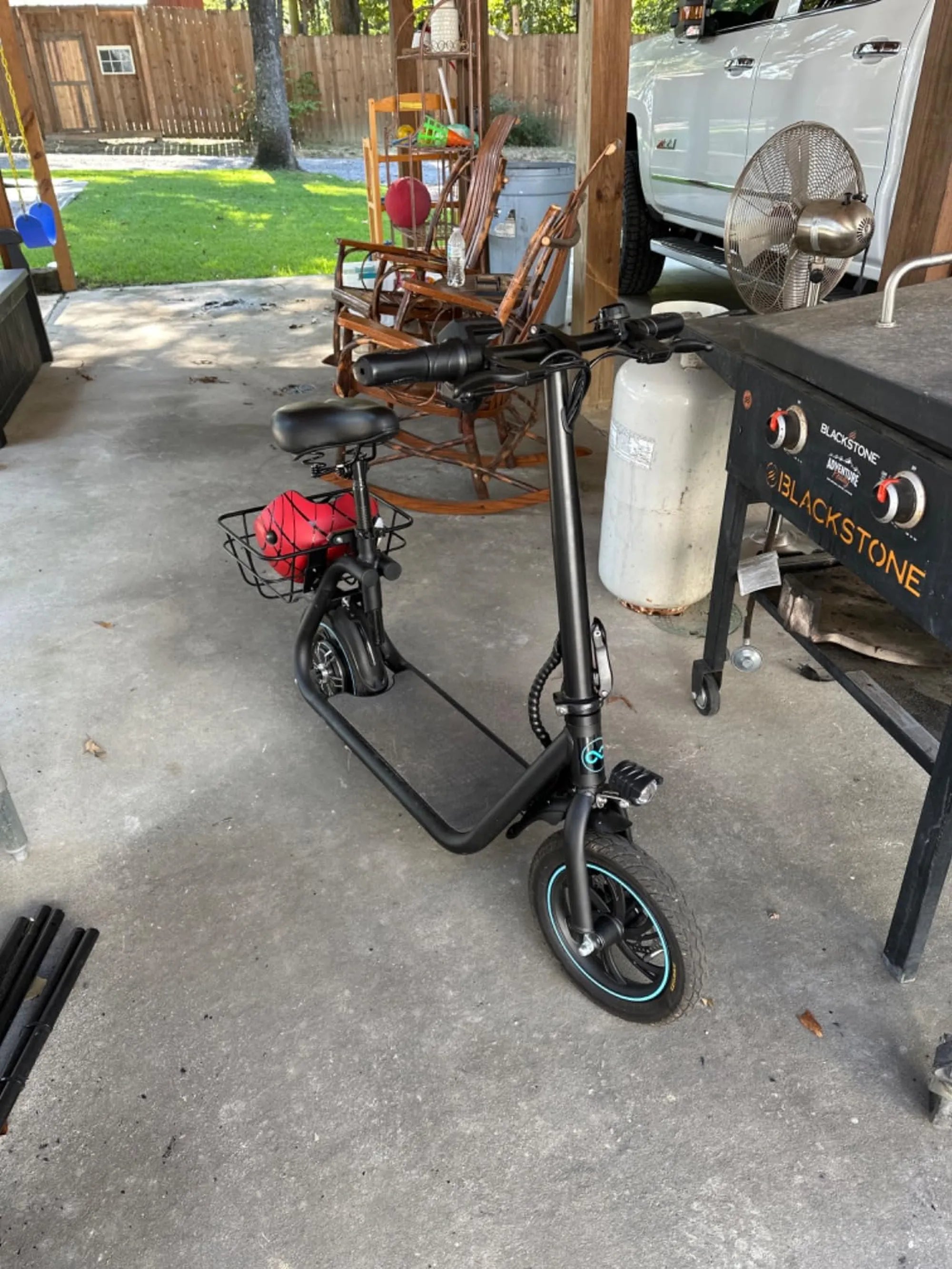
Gyroor C1 Urban Commuter
The Gyroor C1 is engineered for the demands of daily city travel, emphasizing safety and durability. Its compact and agile design makes it ideal for navigating congested streets and tight parking spaces, a common challenge in Indian metros.
A key differentiator is its focus on certified safety. The scooter utilizes a UL-certified battery pack, a critical feature often overlooked in the budget segment. This ensures protection against overheating and electrical faults, providing peace of mind.
Further enhancing its reliability for India's diverse climate is an IPX5 water-resistant rating. This means the scooter can confidently handle sudden monsoon showers and wet roads without performance degradation or safety concerns.
With a 1-year comprehensive warranty and a design ethos trusted by over 100,000 riders globally, the Gyroor C1 positions itself as a safety-first choice for the value-conscious buyer seeking dependable daily transportation.
TVS iQube
The TVS iQube leverages the formidable strength of an established automotive brand's service network. This is a primary advantage, offering buyers widespread access to maintenance and spare parts, a significant factor for long-term ownership ease.
It presents a balanced performance package with adequate power for city commuting and a realistic range that aligns with its claims. The build quality reflects TVS's manufacturing experience, resulting in a solid and well-put-together vehicle.
The scooter integrates smart features seamlessly, including connectivity options that provide vehicle diagnostics and ride statistics via a smartphone app. This blend of traditional reliability and modern tech is a strong draw.
For buyers who prioritize brand trust, a proven service ecosystem, and a no-surprises ownership experience, the TVS iQube remains a top-tier recommendation in the budget electric scooter segment.
Ola S1 Air
The Ola S1 Air disrupts the segment by offering a expansive tech suite at a highly competitive price point. Its standout feature is the large boot space, which is among the best in class, addressing a major practical need for Indian riders.
Its software-driven features, including multiple ride modes and a comprehensive digital dashboard, appeal to tech-savvy users. The company's direct-to-consumer sales model also contributes to its aggressive pricing strategy.
Performance is geared towards urban efficiency, with a focus on providing a smooth and connected riding experience. The design is modern and spacious, enhancing rider comfort.
While the service network is still evolving compared to legacy brands, the Ola S1 Air's value proposition is undeniable for those who prioritize cutting-edge features, space, and a lower upfront cost above all else.
Bajaj Chetak
The Bajaj Chetak brings a premium design language and exceptional build quality to the budget conversation. Its retro-modern aesthetic and robust metal bodywork stand out, offering a sense of premium ownership at an accessible price.
It benefits from the immense trust associated with the Bajaj brand, which is rapidly expanding its dedicated EV service network, known as Chetak Cafés. This focus on a specialized ecosystem is a major plus.
Ride quality and handling are key strengths, with a well-tuned suspension that comfortably absorbs urban road imperfections. The performance is refined and linear, favoring comfort over outright aggression.
For the buyer who views a scooter as a long-term asset and values timeless design, superior fit-and-finish, and the backing of a automotive giant, the Bajaj Chetak presents a very persuasive case.
Critical Buying Considerations Beyond the Price Tag
Choosing the best budget electric scooter requires looking past the brochure. Several technical and practical factors directly impact your daily experience, safety, and long-term costs. Ignoring them can turn a seeming bargain into a problematic ownership experience.
Battery & Range: Real-World vs. Claimed Figures
The battery is the heart of the scooter. Most budget models use Lithium-ion packs, but the quality and certification vary wildly. Always prioritize models with internationally recognized safety certifications like UL, which test for hundreds of charge cycles and operational safety.
Claimed range (IDC) is a standardized figure; real-world range can be 20-30% lower. Factors like rider weight, frequent stops/starts, hilly terrain, and use of headlights/features significantly reduce distance. For a true budget electric scooter, a real-world range of 70-90 km is practical for most urban commutes.
Battery warranty terms are crucial. Look for a guarantee that covers a minimum number of years *and* a minimum retained capacity (e.g., 70% after 3 years). This protects your investment as the battery naturally degrades over time.
Charging time and infrastructure are also key. Most budget scooters take 4-6 hours for a full charge from a regular 5A socket. Assess if this fits your daily routine and whether you have secure parking with access to a plug point.
Performance & Practicality for Indian Roads
Motor power, measured in watts (W), determines acceleration and hill-climbing ability. For budget scooters, a motor between 1200W and 2000W is adequate for city speeds and moderate inclines. Top speeds are typically capped at 60-80 kmph, which is sufficient for urban and peri-urban use.
Ground clearance is a non-negotiable for Indian roads. Aim for at least 160mm to confidently clear speed breakers and potholes without scraping the underbody. Suspension type and travel directly affect comfort; a combination of telescopic forks at the front and twin shock absorbers at the rear is standard and effective.
Practicality encompasses storage, seat length, and footboard space. A water-resistant boot that can fit a full-face helmet is a huge advantage. A long, flat footboard adds to carrying utility. These elements define daily usability as much as any performance spec.
Consider the scooter's weight and whether it has reverse or walk-assist modes. Maneuvering a 100+ kg scooter in tight parking spots can be challenging, and these features, while not universal in the budget segment, are valuable additions.
Safety & Build Quality: Non-Negotiables
Safety should never be compromised for price. At a minimum, look for a front disc brake and a Combined Braking System (CBS). CBS distributes braking force between both wheels when one lever is applied, preventing skids and reducing stopping distance significantly.
Tubeless tyres are essential. They are more resistant to punctures and allow for safer, controlled deflation compared to tube-type tyres, which can fail suddenly. Some models now offer alloy wheels, which are more durable than steel rims.
Build quality is evident in panel gaps, paint finish, and the feel of switches. A robust chassis and good welding are fundamental to durability. Brands with automotive experience, or those like Gyroor with a focus on international durability standards, often excel here.
Additional safety features like regenerative braking (which recovers energy and reduces brake wear), side-stand cut-off, and bright LED lighting all contribute to a safer, more reliable ride. These are markers of a well-engineered product.
The Total Cost of Ownership (TCO)
The purchase price is just the first expense. Total Cost of Ownership (TCO) includes charging costs, maintenance, insurance, and potential battery replacement. Calculating TCO reveals the true economic advantage of an EV.
Charging costs are remarkably low. Assuming a 2 kWh battery charged daily, the monthly electricity cost is roughly ₹200-₹300, compared to ₹2000+ for a similar petrol scooter. This is where the most significant savings accumulate.
Scheduled maintenance for EVs is simpler and cheaper—no engine oil, spark plugs, or air filters. Costs are primarily for brake pads, tyres, and suspension checks. A strong warranty, like the 1-year comprehensive coverage offered by Gyroor, can cover many early issues.
Factor in insurance (which is mandatory) and potential depreciation. However, the massive savings on fuel often allow the scooter to "pay for itself" in operational savings within 2-3 years, making even a slightly higher upfront investment worthwhile for lower TCO.
Head-to-Head Comparison: 2025 Budget Scooter Specs
This table provides a clear, at-a-glance comparison of key specifications for leading models in the best budget electric scooters India 2025 segment. All figures are approximate and based on manufacturer claims.
| Model | Ex-Showroom Price Range (₹) | Claimed Range (IDC) | Motor Power | Top Speed | Key Feature Highlight |
|---|---|---|---|---|---|
| Gyroor C1 | 85,000 - 95,000 | 75-90 km | 1500W | 65 kmph | UL-Certified Battery, IPX5 Rating |
| TVS iQube | 1,05,000 - 1,15,000 | 100 km | 4500W | 78 kmph | Extensive Service Network, Balanced Package |
| Ola S1 Air | 95,000 - 1,05,000 | 125 km | 4500W | 85 kmph | Large Boot Space, Tech-Features |
| Bajaj Chetak | 1,10,000 - 1,20,000 | 108 km | 4080W | 73 kmph | Premium Build, Brand Trust |
The Verdict: Matching the Right Scooter to Your Needs
Selecting the best budget electric scooter India 2025 offers is about aligning a model's strengths with your personal priorities. There is no single "best for everyone" option, but clear winners emerge for specific rider profiles.
For the Safety-First Buyer, certifications are paramount. A model like the Gyroor C1, with its UL-certified battery and IPX5 water resistance, prioritizes long-term reliability and risk mitigation, offering peace of mind that is worth its weight in gold.
The Brand-Conscious & Service-Minded rider should lean towards established players like TVS or Bajaj. Their deep-rooted service networks and proven automotive quality translate to a hassle-free ownership experience where help is never far away.
If you are a Tech Enthusiast & Value Maximalist, the Ola S1 Air is compelling. It packs the most features and space per rupee, ideal for those who want a connected, modern ride and are comfortable with an evolving service ecosystem.
Ultimately, test ride your shortlisted models. Feel the suspension, assess the seating posture, and check the storage. Your perfect match among the best budget electric scooters India 2025 has launched will be the one that feels right for your daily journey and offers trustworthy credentials for the long road ahead. For those prioritizing certified safety and durable design, exploring the Gyroor collection is a logical next step.
Frequently Asked Questions (FAQs)
Q1: What is the average lifespan of a budget e-scooter's battery?
A1: A quality Lithium-ion battery, like a UL-certified pack, typically lasts for 4-5 years or 800-1000 full charge cycles before degrading to about 70-80% of its original capacity. Proper charging habits (avoiding full discharges, not overcharging) can extend this lifespan.
Q2: How much can I realistically save per month compared to a petrol scooter?
A2> Savings are substantial. For a daily commute of 30 km, a petrol scooter (at ₹110/litre, 50 kmpl) costs about ₹2000/month in fuel. Charging an e-scooter costs ₹200-₹300/month. You save approximately ₹1,700-₹1,800 monthly, plus reduced maintenance costs.
Q3: Is the public charging infrastructure a major problem?
A3> For most budget scooter owners, no. With a real-world range of 70-90 km, daily charging at home or office is sufficient. Public infrastructure is growing rapidly in cities, but it's primarily crucial for longer trips. Home charging remains the most convenient and cost-effective method.
Q4: Are budget electric scooters powerful enough for ghat sections or hilly areas?
A4> It depends on the motor. A 1500W+ motor can handle moderate slopes common in city overpasses. For sustained steep climbs in ghats, a more powerful motor (2500W+) is advisable. Check the scooter's gradeability rating (often 10-15 degrees) and consider a test ride on an incline if you live in a hilly region.
Q5: What exactly should I look for in the warranty?
A5> Scrutinize three areas: 1) Battery Warranty: Look for a minimum of 3 years/30,000 km and a guaranteed minimum capacity retention (e.g., 70%). 2) Motor Warranty: Should be at least 3 years. 3) Comprehensive Vehicle Warranty: Covers parts like controller, charger, and frame for 1-2 years. Longer and more comprehensive warranties indicate manufacturer confidence.
Q6: Can I use a budget electric scooter in heavy rain?
A6> Yes, if it has a good Ingress Protection (IP) rating. An IP rating of IPX5 or higher (like the Gyroor C1's rating) means the scooter is protected against water jets from any direction, making it safe for heavy rain and wet roads. Always avoid submerging any part of the scooter, especially the battery compartment.
The search for the best budget electric scooters India 2025 has to offer ends with a simple truth: value is defined by safety, reliability, and cost-effectiveness over years, not just the lowest sticker price today. By prioritizing certified components, realistic range, and a strong service proposition, you secure not just a vehicle, but a dependable partner for your daily commute. For a range of electric scooters built to these rigorous standards, browse the full Gyroor collection at gyroorboard.com.
Electric Scooters for Tall Adults: The Ultimate Guide to Comfort and Performance
Electric Scooters in Stock: The Ultimate Guide to Finding Your Perfect Ride