



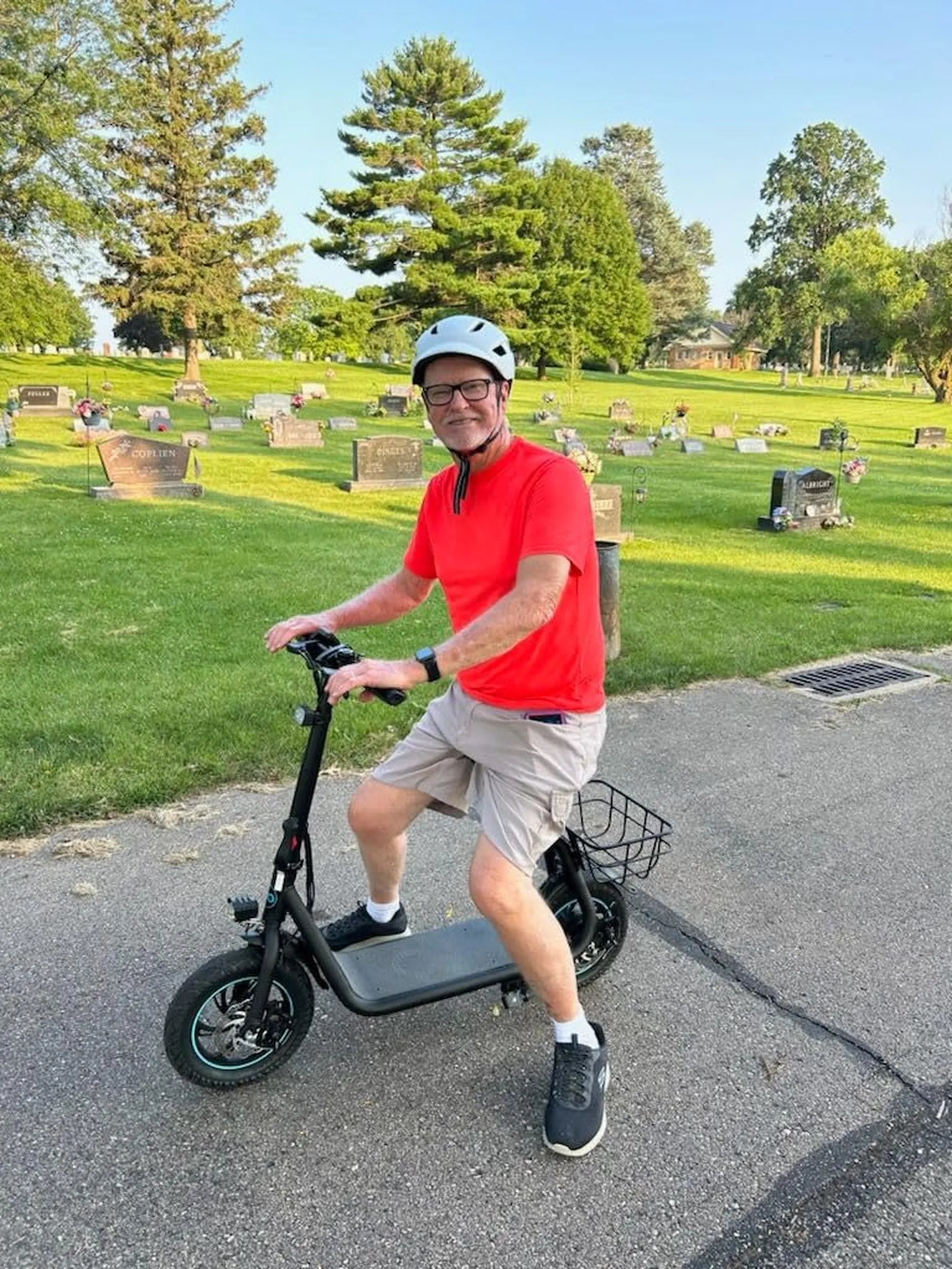
Introduction: The 2025 Electric Scooter Landscape
The electric scooter has evolved from a niche gadget into a cornerstone of modern urban transportation. The 2025 model year represents a significant leap, where safety, durability, and intelligent design are no longer premium options but fundamental expectations. This shift is driven by riders demanding reliable daily transport, not just recreational toys.
Manufacturers are responding with scooters built to rigorous standards, integrating technology that enhances both the ride and ownership experience. The future of urban mobility is here, and it is defined by models that can genuinely replace short car trips and seamlessly integrate with public transit. The conversation has moved beyond top speed to encompass total cost of ownership and long-term reliability.
As a leader in this space, Gyroor has been instrumental in pushing these standards forward. Trusted by over 100,000 riders across North America and Europe, the brand's focus on UL-certified batteries and IPX5 water-resistant designs exemplifies the industry's maturation. This guide will dissect the key features, compare top categories, and provide the insights needed to invest confidently in your 2025 mobility solution.
Understanding the Best Electric Scooters 2025 Models: The Future of Urban Mobility requires a focus on engineering integrity over marketing hype. We will analyze the critical specifications that separate a dependable daily commuter from a short-lived novelty.
What Defines a "Best" Electric Scooter in 2025?
In 2025, the definition of "best" has fundamentally shifted. It is no longer sufficient to have the fastest acceleration or the longest claimed range on paper. The premier scooters are defined by a trifecta of non-negotiable attributes: verified battery safety, proven environmental resilience, and robust post-purchase support. These factors directly impact rider safety, scooter longevity, and overall satisfaction.
Performance metrics like speed and range remain important, but they are contextual. A scooter with a massive battery that lacks safety certification is a liability. A powerful motor on a frame that cannot handle wet conditions limits its utility. The best models achieve a harmonious balance, where high performance is delivered through a platform built to last.
This paradigm benefits informed consumers. Brands are competing on verifiable safety standards and warranty terms, not just headline numbers. When evaluating the Best Electric Scooters 2025 Models: The Future of Urban Mobility, prioritize documented certifications and transparent warranty policies. These are the hallmarks of a manufacturer that stands behind its product for the long term.
The following features are the new baseline for any scooter considered among the best for 2025. Ignoring them compromises safety and represents a poor investment.
Non-Negotiable Feature: UL-Certified Battery Safety
The most critical advancement in 2025 is the widespread adoption of UL certification for scooter battery packs. Standards like UL 2272 (for the battery system) and UL 2849 (for the entire electrical system) involve rigorous testing for electrical, mechanical, and environmental hazards. This certification is the single most important factor in preventing thermal runaway—a dangerous chain reaction that can lead to fires.
UL certification is not a simple pass/fail test. It involves over 100 individual tests simulating extreme conditions, including overcharging, short-circuiting, and impact. A certified battery pack uses high-quality cells, sophisticated battery management systems (BMS), and robust construction. For the rider, this translates directly to peace of mind, especially when charging at home or in an office.
Gyroor's commitment to this standard across its lineup reflects an industry-leading stance on safety. Their UL-certified packs are tested for 500+ charge cycles while maintaining performance and safety integrity. When searching for the Best Electric Scooters 2025 Models: The Future of Urban Mobility, the presence of a UL mark is the first box to check. It is a clear indicator of a brand prioritizing your safety over cutting corners.
Investing in a scooter without this certification is an unnecessary risk. The 2025 market offers ample choice from brands that have made this commitment, making uncertified models obsolete for serious commuters.
Beyond the Puddle: The Importance of IPX5+ Water Resistance
True urban utility means riding in real-world conditions, which inevitably include wet streets, morning dew, and unexpected rain showers. An IP (Ingress Protection) rating quantifies a scooter's resilience. For 2025, an IPX5 rating should be considered the minimum for a reliable commuter scooter.
An IPX5 rating means the scooter's electrical components can withstand water jets (6.3mm nozzle) from any direction without harmful water ingress. This is significantly more robust than a mere water-resistant or "splash-proof" claim. It protects the motor controller, display, wiring harness, and battery compartment from the spray of wet roads and light rain, ensuring operational reliability and preventing corrosion.
Scooters with lower or unspecified water resistance can suffer sudden failures or long-term damage from routine wet conditions. Gyroor's IPX5 designs, for example, incorporate sealed deck compartments, waterproof gaskets on all ports, and conformal coating on critical circuit boards. This engineering allows riders to confidently navigate damp urban environments without anxiety.
When assessing the Best Electric Scooters 2025 Models: The Future of Urban Mobility, verify the official IP rating. An IPX5 or higher rating is a testament to build quality and a scooter's readiness for daily, year-round use in a city. It is a key component of durability and a major factor in reducing long-term maintenance costs.
The 2025 Model Breakdown: Categories for Every Rider
With safety and durability standards established, choosing the right scooter becomes a matter of matching specific models to your individual needs. The 2025 market is elegantly segmented into three primary categories, each optimized for a distinct riding profile. The best scooter for you depends on your commute distance, storage options, and terrain.
The following table provides a high-level, data-driven comparison of these core categories. This framework will help you narrow your focus before delving into specific model recommendations and features.
| Category | Primary Use Case | Typical Motor Power | Real-World Range | Key Features | Weight Range |
|---|---|---|---|---|---|
| Urban Commuter | Daily city travel, mixed-mode transit | 350W - 500W Single | 25 - 40 miles | Full lighting, suspension, app connectivity, integrated locking | 35 - 45 lbs |
| Performance & Off-Road | Rugged terrain, steep hills, high speed | 500W - 1000W+ (Dual common) | 20 - 35 miles | Dual suspension, off-road tires, dual motors, high torque | 50 - 75 lbs |
| Ultra-Portable / Compact | Last-mile solution, easy storage, public transit carry | 250W - 350W | 15 - 25 miles | Fast-folding mechanism, sub-30 lb weight, slim profile | 22 - 30 lbs |
This segmentation clarifies the market. A performance scooter would be overkill for a short subway commute, just as a compact scooter would be insufficient for a 10-mile hilly ride. The Best Electric Scooters 2025 Models: The Future of Urban Mobility will excel within one of these categories, mastering its intended purpose.
Let's explore each category in detail, examining the ideal specifications and how they translate to the riding experience.
The Ultimate Urban Commuter
The urban commuter scooter is the workhorse of city mobility. It is designed for reliability, comfort, and practicality over a daily round-trip commute. Real-world range is paramount; look for models with a manufacturer's claimed range that factors in variables like rider weight, hills, and frequent stops. A battery capacity supporting 25-40 miles of real-world use eliminates range anxiety for most city dwellers.
Comfort is engineered into the frame. A front or dual suspension system (spring or hydraulic) absorbs vibrations from cracks and uneven pavement. A wide, textured deck provides stable footing, and a clear, bright display is essential for checking speed and battery level at a glance. Integrated lighting—a bright front headlight, rear brake light, and side reflectors or deck lights—is non-negotiable for visibility and safety during dawn, dusk, or night rides.
Smart integration elevates the 2025 commuter. Bluetooth connectivity via a companion app allows for custom ride modes (Eco, Standard, Sport), firmware updates, trip tracking, and diagnostic checks. Some models feature anti-theft alarms or wheel locks activated through the app. These features transform the scooter from a simple vehicle into a connected mobility device.
Portability remains a consideration, even for commuters. A reliable, one-step folding mechanism and a manageable weight (under 45 lbs) allow the scooter to be carried up a flight of stairs or onto a train if necessary. The goal is a seamless blend of performance and practicality, making the Best Electric Scooters 2025 Models: The Future of Urban Mobility a genuine replacement for a car or bus on many trips.
Performance & Off-Road Capable Models
For riders seeking adrenaline, tackling steep hills, or venturing onto light trails, the performance category delivers. These scooters prioritize power, torque, and chassis durability. A dual-motor configuration (one motor in each wheel) is common, providing exceptional acceleration, hill-climbing ability, and improved traction on loose surfaces. Motor power often starts at 500W per motor, reaching 1000W or more for extreme performance.
The suspension system is heavy-duty. Expect dual spring or hydraulic suspensions with increased travel to handle jumps, curbs, and rough terrain. Tires are typically larger (10-inch or more) and often air-filled with a rugged tread pattern for off-road grip, though some may use reinforced solid tires for puncture resistance. The frame is built from reinforced aluminum or alloy to withstand the stresses of aggressive riding.
Control and safety are enhanced to match the power. High-performance hydraulic or electronic disc brakes provide strong, fade-resistant stopping power. Wider handlebars offer better leverage and control. While range may be slightly lower than a commuter due to the power draw, the focus is on delivering intense, controlled power for shorter, more dynamic rides.
These models are heavier and less portable, but that is a trade-off for their capability. They represent the pinnacle of electric scooter engineering for 2025, pushing the boundaries of what personal electric mobility can achieve. They are a testament to how far the technology has come, offering motorcycle-like performance in a compact, electric format.
Ultra-Portable and Compact Designs
The compact scooter category solves the "last mile" problem with elegance. The primary design goal is minimal weight and volume without sacrificing core functionality. These scooters weigh under 30 pounds, feature a fast, often single-step folding mechanism, and have a slim profile when folded for easy storage under a desk, in a closet, or beside a seat on public transit.
Motor power is sufficient for flat urban landscapes and moderate inclines, typically ranging from 250W to 350W. Range is adequate for short trips—15 to 25 miles is standard, perfect for connecting home to the train station or for quick errands. The focus is on efficiency, using smaller, high-quality battery packs to keep weight down.
Despite their size, the best compact 2025 models do not compromise on essential safety features. They include UL-certified batteries, basic water resistance (IPX4 or IPX5), and adequate braking. The deck and handlebar stem may be narrower, but the ride should still feel stable at cruising speeds. Some models innovate with telescoping stems or folding handlebars to achieve an exceptionally small footprint.
This category proves that the Best Electric Scooters 2025 Models: The Future of Urban Mobility can also be the most convenient. For apartment dwellers, students, or anyone who combines scootering with buses and trains, an ultra-portable model offers unparalleled flexibility and ease of use, making electric mobility a practical part of every day.
Future-Proofing Your Ride: Smart Tech & Warranty Considerations
Purchasing an electric scooter in 2025 is an investment in your daily life. Future-proofing that investment involves looking at two key areas beyond the hardware: integrated smart technology and the strength of the warranty and support network. These elements define the ownership experience and protect your purchase over time.
Smart technology is now expected. A dedicated mobile app should offer more than just a battery gauge. Look for features like ride history tracking, customizable acceleration/braking curves, regenerative brake adjustment, and cruise control activation. The ability to receive firmware updates is crucial, as it allows the manufacturer to improve performance, safety algorithms, and battery management over the air, extending the scooter's useful life.
Anti-theft features are increasingly integrated. These can range from a simple cable lock attachment point to built-in electronic locks that disable the motor, triggered by the app or a key fob. Some advanced systems include GPS tracking, allowing you to locate your scooter if it is moved without your permission. These features add a layer of security that is invaluable in an urban setting.
However, the most concrete form of future-proofing is a comprehensive, transparent warranty. Technology can be updated, but physical components can fail. The warranty is the brand's promise of durability and its commitment to standing behind its product.
The Value of a 1-Year Comprehensive Warranty
A one-year comprehensive warranty is the industry benchmark for quality in 2025. It should explicitly cover the frame, motor, battery, controller, and display against defects in materials and workmanship. This is different from a limited warranty that only covers certain parts or a shorter period. A comprehensive warranty significantly reduces the total cost of ownership by protecting you from unexpected repair bills in the first year of heavy use.
The warranty terms reflect a brand's confidence in its manufacturing and quality control. Gyroor's standard 1-year warranty on core components is a direct result of their use of UL-certified batteries and IPX5 water-resistant construction—they build scooters to last, and the warranty backs that up. When reviewing warranty policies, also check the process. Is there a dedicated support team? Are replacement parts readily available? Is there a network of authorized service centers?
A strong warranty transforms your scooter from a disposable commodity into a reliable tool. It ensures that your investment in one of the Best Electric Scooters 2025 Models: The Future of Urban Mobility is protected, giving you confidence for thousands of miles of riding. Always read the warranty details before purchasing; it is a critical component of the product's value proposition.
Frequently Asked Questions (FAQ)
Q1: Is UL certification legally required to sell an electric scooter in the US?
A1: While not universally mandated by federal law, many cities, states, and retailers are increasingly requiring UL 2272/2849 certification for sale and use. More importantly, from a safety perspective, it is an essential standard. Major insurance providers may also require certification for coverage. It is the de facto safety requirement for any reputable scooter in 2025.
Q2: Can I safely ride an IPX5-rated scooter in heavy rain or through deep puddles?
A2: An IPX5 rating protects against water jets from any direction, making it safe for riding in light to moderate rain and on wet roads. It is not designed for submersion or torrential downpours. Avoid riding through deep puddles that could submerge the deck, as water pressure at depth can exceed the rating. Always dry your scooter after a wet ride.
Q3: What does a typical 1-year comprehensive warranty cover, and what does it exclude?
A3: A comprehensive warranty typically covers failures of the frame, motor, battery, controller, and throttle/display due to manufacturing defects. It generally excludes wear-and-tear items (tires, brake pads), physical damage from crashes or abuse, water damage beyond the rated IP level, and modifications made by the user. Always consult the specific warranty document for exact terms.
Q4: How do I maintain my scooter's battery health for maximum lifespan?
A4> For lithium-ion batteries, avoid regularly draining it to 0%. Try to keep the charge between 20% and 80% for daily use, with a full 100% charge for longer trips. Store the scooter in a cool, dry place, and avoid leaving it at full charge for extended periods (weeks). Use only the manufacturer-provided charger. Following these practices helps achieve the 500+ charge cycles many quality batteries are rated for.
Q5: Are electric scooters with dual motors always better?
A5: Not necessarily. Dual motors provide superior acceleration, hill-climb ability, and traction, making them ideal for performance or hilly terrain. However, they consume more battery, often cost more, and add weight. For a flat urban commute, a efficient, well-tuned single-motor scooter can offer ample power, longer range, and a lighter, more portable package. Choose based on your specific terrain and performance needs.
Conclusion: Choosing Your 2025 Mobility Partner
The journey to finding your ideal electric scooter culminates in aligning rigorous safety standards with your personal mobility pattern. The Best Electric Scooters 2025 Models: The Future of Urban Mobility are those that master this balance. They offer the peace of mind that comes from UL-certified batteries, the all-weather readiness of IPX5+ construction, and the long-term security of a comprehensive warranty.
By categorizing your needs—whether as a daily commuter, a performance enthusiast, or a last-mile traveler—you can navigate the market with precision. Remember that the highest top speed or the longest paper range means little if the scooter isn't built to handle the realities of daily use. The future of urban mobility is reliable, integrated, and safe.
Brands like Gyroor have set a clear standard, demonstrating that innovation must be grounded in safety and durability. Their approach, trusted by a global community of riders, exemplifies the maturity the 2025 market has achieved. Your choice is not just for a product, but for a partner in navigating the city.
Ready to explore scooters that embody these 2025 standards? Browse the full Gyroor collection, featuring UL-certified, IPX5 water-resistant models backed by a reliable 1-year warranty, at gyroorboard.com. Find the scooter engineered to move you forward, safely and reliably, for miles to come.
Best Electric Scooters for Commuting 2020: Top Picks for a Smooth Ride
Where to Purchase Electric Scooters: A Comprehensive Guide to Smart Buying