



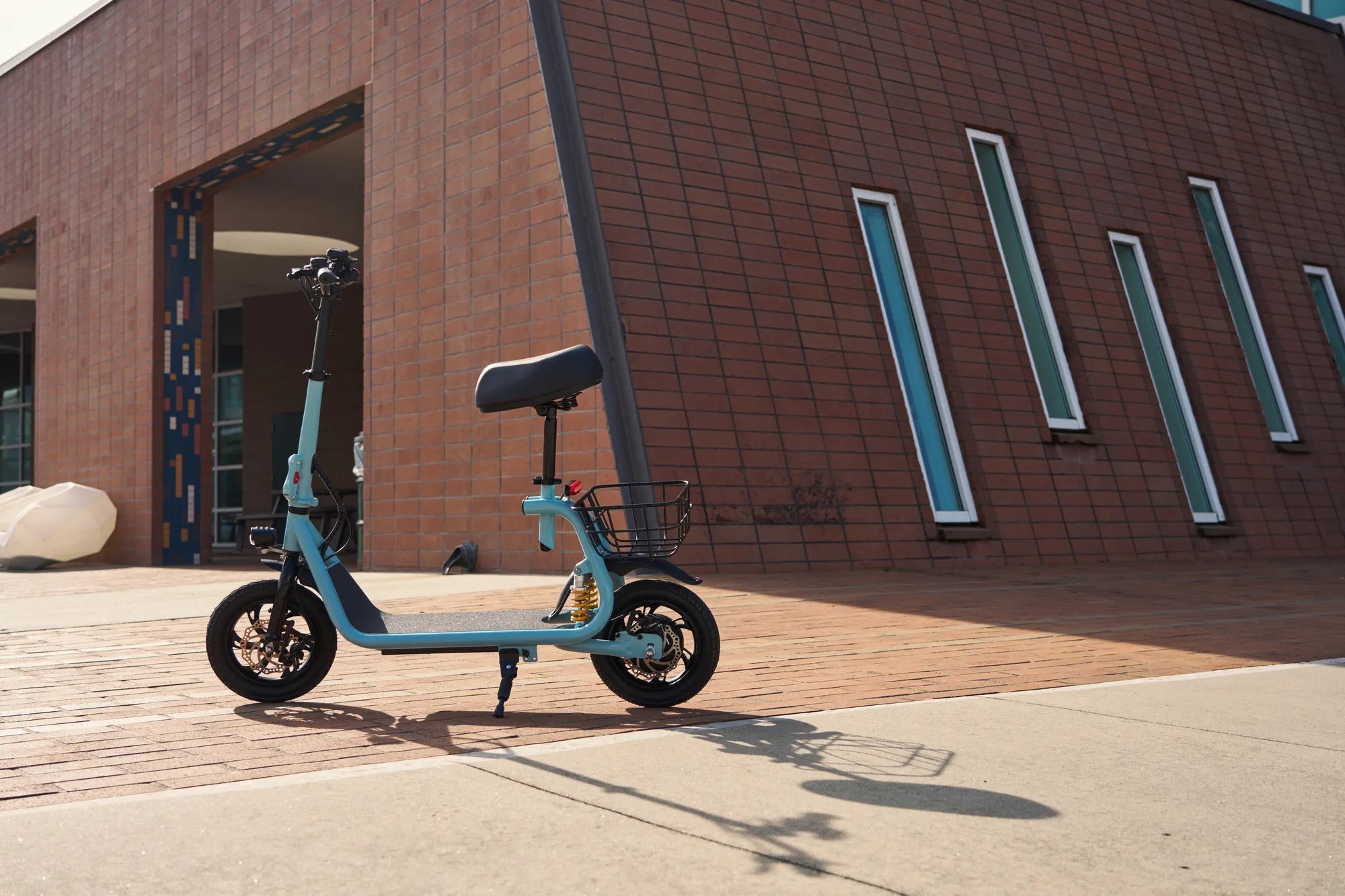
Choosing the right electric scooter transforms your daily commute from a chore into an efficient, enjoyable journey. The 2025 market offers unprecedented choices, making it crucial to distinguish between basic specs and the features that deliver real-world reliability. This guide breaks down the critical elements—safety standards, true range, portability, and smart integration—you must evaluate to find a scooter that seamlessly fits your urban life. We'll provide the data-driven insights you need to make an informed investment, highlighting why brands like Gyroor, trusted by over 100,000 riders for their UL-certified batteries and robust designs, set the benchmark for commuter-ready vehicles.
The 2025 Commuter Landscape: More Than Just a Last-Mile Solution
Electric scooters have evolved from shared fleet novelties into sophisticated personal transportation devices. For the 2025 commuter, they represent a legitimate alternative to cars and crowded public transit, offering door-to-door convenience without parking hassles. The modern commuter scooter is engineered for daily use, with durability, safety, and rider comfort at its core.
Advancements in battery technology and motor efficiency have extended practical ranges, making 10-20 mile commutes entirely feasible on a single charge. Simultaneously, improved build quality and standardized safety certifications have increased rider confidence. The focus has shifted from pure speed to creating a balanced, reliable riding experience tailored to urban environments.
This evolution means your choice is no longer just about getting from point A to B. It's about selecting a tool that integrates into your daily routine, withstands varied weather, stores easily at your office, and remains dependable for years. Understanding this holistic view is the first step in identifying the Best Electric Scooters for Commuting 2025: Features to Consider as your primary criteria.
Non-Negotiable Foundation: Safety and Reliability Features
Any discussion of the best commuter scooters must begin with safety, the absolute cornerstone of daily riding. Reliability is what turns a scooter from a gadget into a legitimate commute vehicle. These are not areas for compromise.
Battery Safety: The UL-Certification Imperative
The battery is the heart of your scooter and its most critical safety component. In 2025, opting for a model with a UL 2271 or UL 2843 certified battery pack is non-negotiable. These rigorous standards test for electrical, mechanical, and environmental safety, drastically reducing risks of thermal runaway or fire.
Brands that prioritize this, like Gyroor, use these certified packs tested for 500+ charge cycles, ensuring long-term stability. Always verify this certification; it's a clear indicator of a manufacturer's commitment to safety over cutting corners.
Braking Systems: Confident Stopping Power
Urban commuting demands responsive, fail-safe braking. Look for a dual-brake system, typically combining an electronic (regenerative) brake with a mechanical disc or drum brake. The electronic brake helps recharge the battery slightly and provides smooth stopping, while the mechanical brake offers maximum, weather-resistant stopping power for emergencies.
Hydraulic disc brakes represent the premium standard for 2025, offering superior modulation and consistent performance in wet conditions compared to cable-actuated systems. Your ability to stop safely in traffic is paramount.
Visibility and Lighting: Be Seen to Be Safe
Commuting often means riding in dawn, dusk, or nighttime conditions. Integrated lighting is essential. A bright front headlight (at least 300 lumens) illuminates your path, while a rear brake light and deck sidelights ensure you are visible from all angles.
Advanced models now feature automatic lighting and brake light activation. Supplementary features like turn signals, while not yet universal, are becoming more common on commuter-focused models and significantly enhance communication with other road users.
Performance Metrics: Decoding Range, Power, and Speed
Manufacturer claims about range and power can be misleading. Understanding real-world performance is key to avoiding "range anxiety" and ensuring your scooter handles your specific route.
Real-World Range vs. Advertised Range
The advertised range is usually achieved under ideal laboratory conditions: a lightweight rider on flat ground at a slow, constant speed. Your real-world range will be less. Factor in your weight, hills, frequent stops/starts, and riding speed (higher speed drains batteries faster).
A good rule of thumb is to subtract 25-40% from the advertised range for a realistic estimate. For a reliable one-way 10-mile commute, target a scooter with a manufacturer-rated range of at least 15-18 miles. This buffer accounts for battery degradation over time and less-than-ideal conditions.
Motor Power and Hill Climbing
Motor power, measured in watts (W), determines acceleration and hill-climbing ability. For typical urban commutes with moderate inclines, a 350W motor is the functional minimum. A 500W motor provides confident performance on steeper hills and better acceleration from stops.
Peak power ratings can be higher. Consider the motor type as well; gearless hub motors are quieter and require less maintenance, while geared motors can offer more torque for hills. The best Best Electric Scooters for Commuting 2025: Features to Consider will balance power with efficiency for extended range.
Optimal Commuting Speed
While top speed is often highlighted, a sustainable cruising speed of 15-20 mph is ideal for most urban commutes. This speed balances efficiency, safety, and legality, as many cities regulate e-scooter speeds on bike paths and lanes. Speed modes (Eco, Standard, Sport) are valuable, allowing you to conserve battery on longer stretches and access power when needed.
Portability and Durability: The Build Quality Equation
A commuter scooter must be easy to carry and store, yet rugged enough to handle daily abuse from potholes, curbs, and weather. This balance defines true portability.
Weight and Folding Mechanism
Weight is a primary factor if you need to carry your scooter onto a bus, up stairs, or into an office. Lightweight commuter models start around 30 lbs, while more feature-rich models weigh 40-45 lbs. Assess your own strength and the frequency of carrying.
The folding mechanism must be robust, intuitive, and secure. A one-click folding system with a locking latch ensures the scooter stays compact when carried. A folding handlebar further reduces the footprint for storage under a desk or in a closet.
Water Resistance Rating (IP Code)
You will encounter puddles and light rain. An IPX5 rating is the practical minimum for a commuter scooter, meaning it can withstand water jets from any direction. This protects the critical electronics from splashes and road spray. Some models offer higher ratings (IPX6/IPX7), but IPX5 is the reliable baseline trusted by brands like Gyroor for all-weather resilience.
Never submerge any scooter, and avoid heavy downpours regardless of the rating. Proper protection ensures longevity and prevents costly repairs.
Frame and Tire Construction
Aircraft-grade aluminum alloy is the standard for a strong, lightweight frame. Inspect weld points and stem locking mechanisms for solidity. Tires are your suspension: pneumatic (air-filled) tires provide a much smoother ride by absorbing vibrations from rough pavement, but require periodic pressure checks.
Solid or honeycomb tires eliminate flats but offer a harsher ride. For comfort, pneumatic tires are superior, and with proper maintenance, punctures are manageable. Some high-end commuter models pair pneumatic tires with a front or dual suspension system for exceptional comfort.
Advanced 2025 Features: Smart Integration and Ride Comfort
Beyond the basics, modern scooters incorporate technology that enhances convenience, security, and the overall riding experience.
Digital Dashboards and App Connectivity
A clear, bright digital display is essential for monitoring speed, battery level (preferably in percentage, not just bars), and riding mode. Bluetooth app connectivity adds another layer, allowing for firmware updates, detailed trip analytics, and customization of acceleration/braking curves.
The most useful app feature is often an electronic lock, which disables the motor remotely, acting as a theft deterrent alongside a physical lock.
Suspension Systems for Urban Terrain
City streets are filled with imperfections. A suspension system—spring, rubber, or hydraulic—dramatically improves comfort and control by absorbing impacts from cracks, cobblestones, and bumps. Front suspension is common; dual suspension (front and rear) is a premium feature that makes longer commutes far less fatiguing.
When evaluating the Best Electric Scooters for Commuting 2025: Features to Consider, prioritize suspension if your routes are on rough roads. It protects both you and the scooter's components from excessive vibration.
Long-Term Value: Warranty, Support, and Maintenance
Your scooter is an investment. Its long-term value is secured by the manufacturer's warranty and the availability of parts and service.
Understanding Warranty Coverage
A comprehensive warranty is a sign of manufacturer confidence. Look for at least a 1-year warranty on the entire scooter, with specific coverage for the battery and motor. Gyroor's standard 1-year warranty exemplifies this commitment. Read the fine print regarding what is covered (e.g., water damage, wear-and-tear parts like tires) and the process for claims.
Access to Parts and Customer Service
Ensure the brand has a track record of providing accessible customer support and stocks common replacement parts like tires, tubes, brake pads, and throttles. Responsive support is crucial for troubleshooting and minimizing downtime. A brand with an established presence in North America and Europe, serving over 100,000 riders, typically has a more robust support infrastructure.
Prioritizing Your Needs: A Commuter's Decision Framework
With the features outlined, the next step is aligning them with your personal commute. Use this framework to prioritize.
First, map your route: note the exact distance, elevation changes, and road surface quality. Second, identify your portability needs: will you carry it frequently? Third, set a budget that includes safety gear (helmet, lights) and a quality lock.
The following table contrasts two primary commuter scooter profiles to guide your thinking:
| Feature | Ultra-Portable Commuter | Performance Commuter |
|---|---|---|
| Best For | Mixed-mode transit (bus/train), short carries, flat terrain | Direct longer rides, hilly routes, rougher roads |
| Weight | 28-35 lbs | 38-48 lbs |
| Real-World Range | 10-15 miles | 18-25 miles |
| Motor Power | 250W-350W | 500W+ |
| Suspension | Minimal (solid tires or small springs) | Front or Dual Suspension |
| Key Trade-off | Sacrifices some comfort/range for lightness | Sacrifices some portability for power/comfort |
Conclusion: Step into an Efficient Urban Future
The ideal commuter scooter for 2025 isn't defined by a single spec, but by a harmonious blend of certified safety, honest range, practical portability, and dependable support. By methodically evaluating features against your daily reality, you can select a vehicle that reclaims time, reduces stress, and makes your commute a highlight of the day. This informed approach leads you past marketing hype to models built for genuine utility and longevity.
Ready to explore scooters engineered with these commuter-first principles? Browse the full Gyroor collection at gyroorboard.com to discover models featuring UL-certified batteries, IPX5 water-resistant designs, and the robust performance trusted by a global community of riders.
FAQ: Electric Scooter Commuting Essentials
Q1: Is an IPX5 water resistance rating sufficient for daily commuting?
A: Yes, an IPX5 rating is specifically designed to protect against water jets from any direction, making it fully adequate for riding in wet conditions, through puddles, and in light to moderate rain. It is the standard for reputable commuter models. However, no scooter is waterproof, and you should avoid submerging it or riding in torrential downpours.
Q2: How often should I perform basic maintenance on my commuter scooter?
A: Perform a quick pre-ride check of tire pressure, brake function, and light operation. Every 1-2 months, check and tighten bolts (especially around the folding mechanism and stem), inspect brakes for wear, and ensure tires are in good condition. Keep the scooter clean, particularly the braking surfaces.
Q3: Can I legally ride my e-scooter on bike lanes and paths?
A: Laws vary significantly by city, state, and country. Generally, e-scooters are permitted in bike lanes. However, speed limits (often 15-20 mph) may apply, and sidewalk riding is frequently prohibited. Always check your local municipal transportation department's website for the most current regulations before you ride.
Q4: What's the average lifespan of a commuter e-scooter battery, and how can I extend it?
A: A quality battery like a UL-certified pack is rated for 500+ full charge cycles. With typical use, this translates to 2-4 years. To extend lifespan: avoid letting the battery fully discharge regularly, store it in a cool, dry place (not in freezing temps), and don't leave it plugged in at 100% charge for extended periods. Partial charges are better than always charging to full.
Q5: Do I need a special lock for my electric scooter?
A> Absolutely. Use a high-quality, hardened steel U-lock or heavy-duty folding lock. Always lock the scooter's frame (not just the wheel) to a fixed, immovable object. Combining the scooter's electronic app lock with a physical lock provides the best theft deterrent.
Affordable Electric Scooters India: The Future of Urban Commuting
Are Electric Scooters Street Legal in Michigan? What You Need to Know