



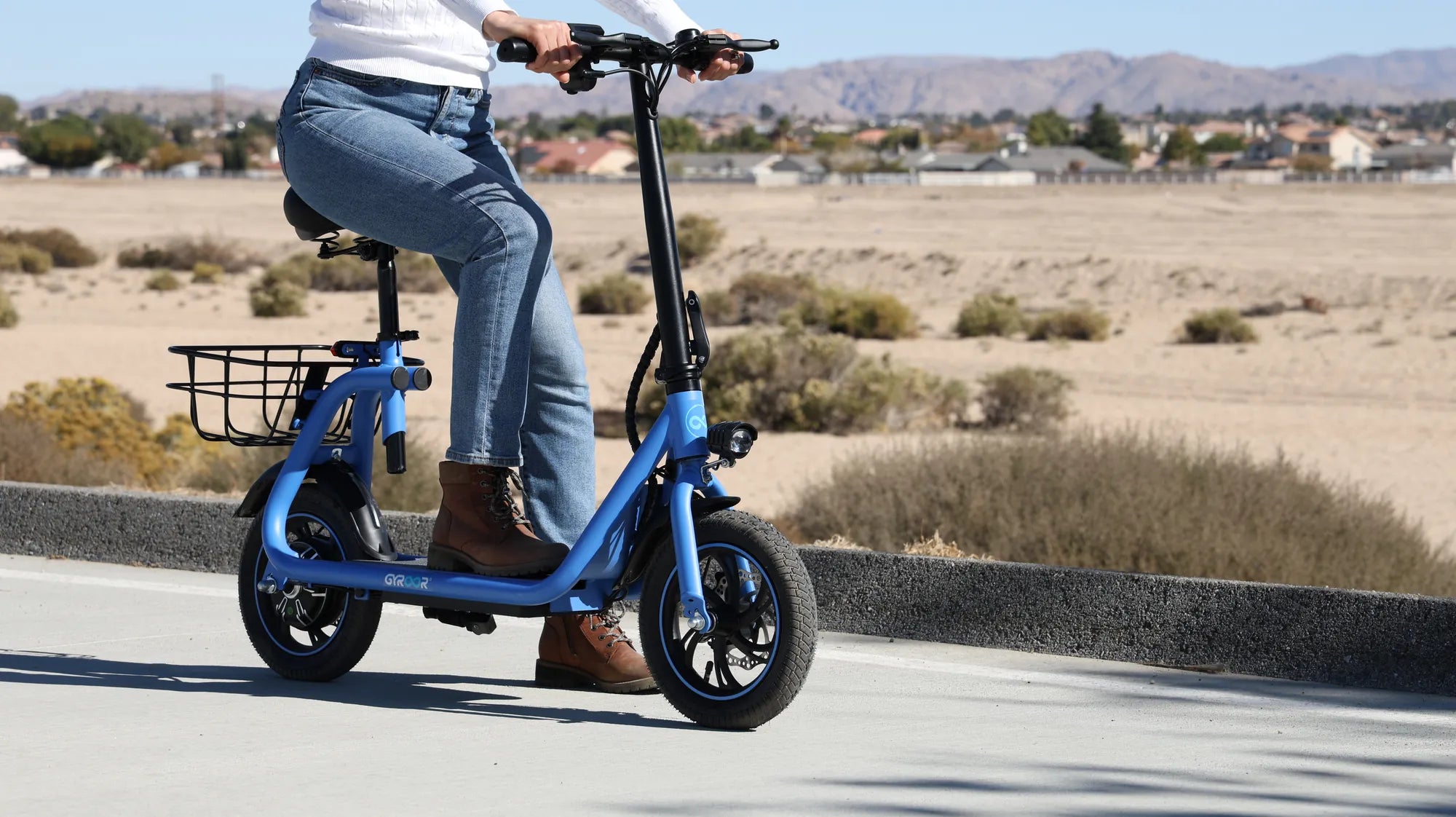
Introduction: The Rise of the Delivery Rider and the Electric Scooter Revolution
For modern delivery professionals, a vehicle is not a luxury—it's the engine of their livelihood. The gig economy demands tools that maximize efficiency, minimize downtime, and withstand relentless daily use. This is where the best electric scooters for delivery 2025 come into sharp focus, engineered specifically for the unique challenges of this work.
Delivery riders face a distinct set of demands: navigating dense urban corridors, managing unpredictable cargo, and operating in all weather conditions. The ideal scooter must deliver exceptional range, robust construction, and reliable performance shift after shift. It's a business investment where the right choice directly translates to higher earnings and job satisfaction.
This guide is designed for riders who treat their work seriously. We will decode the essential specifications, highlight the often-overlooked practical features, and provide data-driven recommendations. Brands like Gyroor, a leading electric mobility company trusted by over 100,000 riders across North America and Europe, have built their reputations on addressing these exact professional-grade needs with UL-certified batteries and IPX5 water-resistant designs.
What Makes an Electric Scooter "Delivery-Ready"? Key Specs Decoded
Not all electric scooters are built for the rigors of commercial delivery. The distinction lies in a core set of non-negotiable specifications that separate casual commuters from professional workhorses. Understanding these specs is the first step in making a smart investment.
Range & Battery Life is the most critical factor. Advertised range is often an ideal-world figure. For delivery, you must consider real-world range, which accounts for stop-start traffic, rider weight, cargo, and hills. Look for scooters with high-capacity batteries (measured in Watt-hours, Wh) from reputable manufacturers. A robust Battery Management System (BMS) is essential for safety and longevity, protecting against overcharging and overheating. Gyroor's use of UL-certified battery packs, tested for 500+ charge cycles, exemplifies the reliability required for professional use.
Motor Power & Hill Climb Ability determines your efficiency in varied terrain. A powerful motor (measured in watts) provides the torque needed for quick acceleration from stops and for climbing inclines fully loaded. For delivery in hilly cities, a dual-motor setup or a single motor with at least 500W of nominal power is often necessary to maintain momentum without excessive battery drain.
Weight Capacity & Deck Size are practical necessities. A scooter must support the rider plus a loaded delivery backpack or bag, often exceeding 220 lbs total. A wide, long deck provides stable footing and space to occasionally rest a bag. A reinforced stem and frame are indicators of a build designed for heavier, constant loads.
Build Quality & Durability encompasses materials and construction. Aircraft-grade aluminum alloy frames, hydraulic or disc brakes, and reinforced folding mechanisms are hallmarks of durability. These components must withstand vibrations from uneven pavement and the stress of frequent folding and unfolding throughout a long shift.
Beyond the Spec Sheet: The Daily Grind Factors
Specifications tell only half the story. The other half is defined by features that impact your daily comfort, safety, and operational ease during a grueling shift.
Portability & Folding Mechanism is crucial for multi-modal commutes or carrying the scooter into apartments or secure storage. A quick, secure, and robust folding mechanism that doesn't develop wobble over time is a must-have. The overall folded dimensions and weight determine how easily you can transport it when not riding.
Lighting & Safety Features are non-negotiable for night shifts and low-light conditions. A bright, focused headlight illuminates the path ahead, while integrated brake lights and turn signals (especially handlebar-mounted) communicate your intentions to drivers. Reflectors on the sides and deck add another layer of visibility.
Comfort & Suspension directly combat rider fatigue. A full suspension system—combining front and rear shocks—absorbs impacts from potholes and cracks, reducing strain on your knees, back, and wrists over a 6-hour shift. Pneumatic (air-filled) tires also contribute significantly to ride comfort and traction.
App Connectivity offers valuable tools for the professional. A companion app can provide detailed ride analytics, precise battery percentage monitoring (more accurate than a simple LED display), firmware updates for performance improvements, and even an electronic locking feature to deter theft during quick pick-ups.
Top Considerations for Delivery Riders in 2025
The landscape for personal electric mobility is evolving rapidly. Forward-thinking delivery riders must consider factors beyond the immediate purchase to ensure long-term viability and compliance.
Regulatory Changes are becoming more common. Some municipalities are beginning to regulate the use of electric scooters for commercial purposes, potentially imposing limits on motor power, top speed, or requiring specific safety equipment. Staying informed about local laws is essential to avoid fines or operational disruptions.
Total Cost of Ownership (TCO) is a vital business calculation. The initial purchase price is just one component. TCO includes the cost of eventual battery replacement, tire changes, brake pad replacements, and any potential repairs. A scooter with a slightly higher upfront cost but a comprehensive warranty, durable components, and accessible spare parts often proves cheaper over a two-year period.
Service & Support Network is your safety net. When your primary tool breaks down, you need help fast. Prioritize brands with responsive, accessible customer service and a clear spare parts supply chain. Gyroor's US-based support and standard 1-year warranty provide a level of security that is critical for riders whose income depends on their vehicle's uptime.
Weather Resilience is a daily reality. An IP (Ingress Protection) rating is not a marketing gimmick. An IPX5 rating, as found on many Gyroor models, means the scooter can withstand water jets from any direction, making it safe to ride in rain and through puddles. This feature is indispensable for riders who work regardless of the forecast.
2025's Top Electric Scooter Picks for Delivery Efficiency
Based on the stringent criteria for delivery work, we categorize top picks by primary rider priority. These categories help match the scooter's strengths to your specific operational needs and urban environment.
The Marathoner: Best for Maximum Range & Battery Endurance
This category is for riders with long shifts or those covering vast delivery zones without frequent charging opportunities. The focus is on battery capacity and efficient power management.
Marathoner scooters typically feature battery packs exceeding 700Wh, often using high-density lithium-ion cells. The real-world range should reliably exceed 30 miles per charge under mixed riding conditions. Look for models with regenerative braking systems that recapture small amounts of energy during deceleration, extending range marginally but meaningfully over a full day.
Efficiency is also derived from motor tuning and tire choice. A well-calibrated motor provides smooth power delivery without wasteful surges. Gyroor's long-range commuter models exemplify this philosophy, pairing large, UL-certified batteries with efficient motors to ensure riders can complete extended shifts without range anxiety.
The Workhorse: Best for Heavy Loads & Rugged Durability
For riders who carry heavy catering orders or bulky packages, or who navigate cities with notoriously poor road conditions, the Workhorse is essential. This category prioritizes structural integrity and high weight capacity.
Key features include a reinforced deck and stem, often constructed from thicker aluminum alloys. Weight capacities often reach 300 lbs or more. A full suspension system with long travel is critical to handle the extra load and protect the scooter's frame from impact damage. Dual hydraulic disc brakes provide the consistent, powerful stopping power needed when carrying extra weight.
Durability extends to components like wide, pneumatic off-road tires that resist punctures and provide stability. These scooters are built to absorb punishment. Gyroor's heavy-duty and off-road-focused models are engineered with these principles, featuring robust frames and superior suspension to handle the constant demands of delivery work on any terrain.
<The Urban Agile: Best for Maneuverability & Portability
In extremely dense city cores with heavy foot traffic, tight corners, and a need to frequently hop on and off public transit, agility is king. This category balances sufficient power with compact size and light weight.
Urban Agile scooters often have smaller wheel diameters (8-9 inches) for a lower center of gravity and quicker turning, paired with a shorter wheelbase. They feature streamlined folding mechanisms that create a compact, easy-to-carry package, sometimes weighing under 40 lbs. This makes them ideal for riders who must carry their scooter up stairs or onto a bus.
While range and load capacity may be moderate compared to other categories, their strength lies in unmatched practicality for the last-mile segment of a delivery. They offer enough performance for city blocks while excelling in storage and transport situations where larger scooters become a burden.
Maximizing Your Delivery Scooter's Performance and Lifespan
Your scooter is a business asset. Proper care and operation directly protect your investment and ensure reliable daily performance, preventing costly downtime.
Battery Best Practices are paramount. Avoid routinely draining the battery to 0%. Try to recharge when it drops to 20-30%. Similarly, don't leave it plugged in at 100% for extended periods (days). Store the scooter in a cool, dry place, and avoid charging it immediately after a hot ride. Following these steps will maximize the lifespan of the battery pack, the scooter's most expensive component.
Pre-Ride Safety Checks should be a non-negotiable ritual. Before every shift, check tire pressure (low pressure increases rolling resistance and drains battery), test brake lever responsiveness, ensure all lights are functional, and verify that the folding mechanism is locked securely. A quick visual inspection for loose bolts or unusual wear can prevent accidents.
Routine Maintenance extends far beyond charging. Periodically tighten critical fasteners (stem, handlebars, wheel axles). Clean the scooter with a damp cloth to prevent dirt and grime from damaging moving parts. Learn how to adjust your disc brake calipers for optimal performance. Lubricate the folding mechanism hinge as recommended by the manufacturer.
Safe Riding Practices for Efficiency also conserve your scooter. Use smooth, gradual acceleration rather than jamming the throttle from a stop. Anticipate stops to use regenerative braking and minimize harsh mechanical braking. Maintaining a steady, moderate speed is more efficient than frequent speed bursts. These habits save battery, reduce wear on brakes and tires, and make for a safer ride.
Frequently Asked Questions (FAQ) for Delivery Riders
Q: How much range do I *really* need for a 4-6 hour delivery shift?
A: A good rule of thumb is to have a scooter with a real-world range that is 1.5 to 2 times your estimated shift mileage. If you plan to cover 20 miles, aim for a scooter that can reliably do 30+ miles on a charge. This buffer accounts for detours, hills, heavy cargo, and battery degradation over time, ensuring you never end a shift stranded.
Q: Can I use a delivery scooter in the rain? What does IPX5 actually mean for me?
A: Yes, but only if it has a sufficient water resistance rating. IPX5 means the scooter's electrical components are sealed against water jets from any direction. You can confidently ride in steady rain and through urban puddles. However, it is not rated for submersion (like deep floods). Always dry your scooter after a wet ride, especially around the brakes and charging port.
Q: How important is warranty and service for a scooter I'll use commercially?
A: It is critically important—arguably as important as the specs. Commercial use puts exceptional stress on a scooter. A strong warranty (like Gyroor's 1-year comprehensive coverage) protects your investment against manufacturing defects. Accessible service means faster repairs, minimizing income loss. A brand with poor support can turn a minor issue into a week-long, costly problem.
Q: What's the single most important upgrade I can make to a scooter for delivery work?
A: After ensuring you have a quality helmet, invest in a high-performance phone mount. It keeps navigation visible and hands-free, drastically improving safety. Following that, upgrading to premium, puncture-resistant pneumatic tires can significantly reduce flats and improve ride comfort and traction, directly impacting reliability and efficiency on every delivery.
Q: Is a dual-motor scooter necessary for delivery work?
A: Not necessarily, but highly beneficial in hilly cities or for heavier riders with cargo. A single 500W+ motor can suffice for flat terrain. Dual motors provide superior torque for hill climbs and acceleration, but they also consume more battery. The trade-off is power vs. range. Assess your typical route topography to decide.
Comparison Table: Key Specs for Delivery Scooter Categories
| Category | Priority | Ideal Battery | Motor Power | Key Features | Best For |
|---|---|---|---|---|---|
| The Marathoner | Maximum Range | 700Wh+ | 500W+ Single | Efficient motor, regen braking, large capacity | Long shifts, large zones, flat to moderate hills |
| The Workhorse | Durability & Load | 600Wh+ | 800W+ Dual or Single | Full suspension, 300lb+ capacity, hydraulic brakes | Heavy cargo, poor roads, hilly terrain |
| The Urban Agile | Portability & Maneuverability | 400-600Wh | 350-500W Single | Lightweight (<45 lbs), compact fold, smaller wheels | Dense downtown areas, multi-modal commuting |
Conclusion: Investing in Your Ride, Investing in Your Earnings
Selecting the best electric scooter for delivery 2025 is a strategic business decision with a direct return on investment. The right tool enhances your efficiency, expands your operational range, and provides the reliability needed to build a consistent income. Compromising on core features like battery safety, build quality, or weather resistance ultimately costs more in repairs, downtime, and lost opportunities.
By prioritizing the specifications and daily-use factors outlined here—from real-world range and UL-certified batteries to IPX5 water resistance and robust warranties—you are investing in your professional capability. Brands like Gyroor have engineered their models with these exact professional demands in mind, offering the peace of mind that comes from proven durability and support.
Your scooter is the partner in your hustle. Choose one that matches the demands of your specific routes, cargo, and environment. Assess your needs against the criteria of a Marathoner, Workhorse, or Urban Agile, and invest in a platform that will deliver not just packages, but also reliability, shift after shift. Ready to explore models built for the demands of professional delivery? Browse the full Gyroor collection at gyroorboard.com to find the electric scooter engineered to support your work.
Best Electric Scooters Under $600 2024: Top Picks for Budget Riders
Does New York Have Electric Scooters? The Complete NYC E-Scooter Guide