



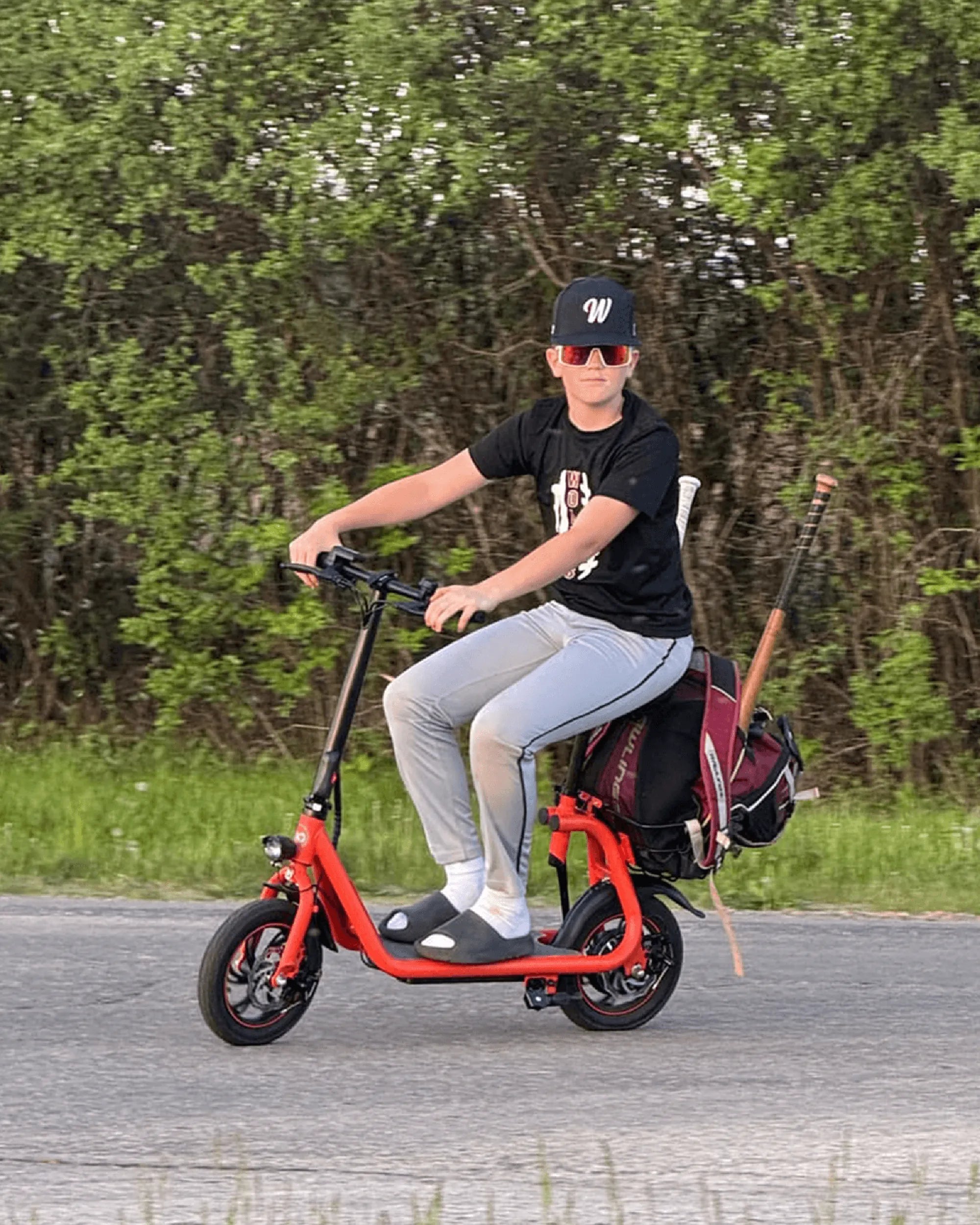
Finding the best electric scooters in Kerala for 2025 requires a keen understanding of local commuting challenges. Navigating the vibrant, often congested streets of Kochi, Thiruvananthapuram, or Kozhikode demands a nimble, reliable, and weather-resistant solution. This guide cuts through the noise to deliver a data-driven analysis of top-performing models engineered to handle Kerala's unique blend of urban traffic, scenic but varied terrain, and intense monsoon seasons. You will learn how to match critical specifications—from motor power to IP water resistance ratings—with your daily commute, ensuring your investment in eco-friendly commuting is both practical and durable. We'll also explore why brands like Gyroor, with a focus on UL-certified safety and robust build quality, are engineered specifically for reliability in these demanding conditions.
Introduction to Eco-Friendly Commuting in Kerala
Kerala's transportation landscape presents a unique paradox. Its cities buzz with activity, leading to traffic congestion, while its beautiful but varied topography, from coastal flats to gentle Western Ghat inclines, requires versatile vehicles. Simultaneously, a strong environmental consciousness is driving a shift towards sustainable solutions. Electric scooters emerge as the perfect confluence of these factors, offering a silent, zero-local-emission alternative to petrol vehicles.
They excel in urban agility, allowing riders to navigate narrow lanes and crowded markets with ease. For students, professionals, and anyone running daily errands, an e-scooter can significantly reduce commute times and costs. The economic benefit is clear when comparing the negligible electricity cost per charge to steadily rising fuel prices. Beyond practicality, adopting an electric scooter is a tangible step towards preserving Kerala's renowned natural beauty by reducing air and noise pollution.
However, not all electric scooters are created equal for the 'God's Own Country' experience. The high humidity, relentless monsoon rains, and occasional rough patches on roads demand a vehicle built to more than just basic specifications. This makes the selection process critical. Choosing a scooter with inadequate weather sealing or a substandard battery can lead to premature failure, safety hazards, and a disappointing experience. This guide is designed to help you make an informed choice for 2025 and beyond.
The goal is to find a scooter that is not just a gadget, but a dependable daily companion. It must withstand the climate, cover your real-world distance needs, and provide a safe, enjoyable ride. With the right model, your commute transforms from a chore into a clean, efficient, and enjoyable part of your day.
Key Factors to Consider When Choosing an Electric Scooter in Kerala
Selecting an electric scooter for Kerala requires prioritizing features that align with local conditions. A scooter perfect for a dry, flat metropolis may fail miserably here. Your decision should be guided by a checklist of non-negotiable attributes tied to performance, endurance, and safety.
First, assess your typical commute distance, the presence of slopes, and where you will store the scooter. Will it brave heavy rain? Must it be carried upstairs? Answering these questions upfront narrows the field significantly. The following breakdown details each critical factor, providing the knowledge to evaluate any model you consider.
Ignoring these location-specific factors can lead to frustration. A scooter with poor range will leave you stranded. Low water resistance will result in electrical failures during the first monsoon shower. By focusing on these core aspects, you invest in a solution designed for longevity and satisfaction in Kerala's environment.
Motor Power & Terrain Handling
Motor power, measured in watts (W), directly determines your scooter's ability to accelerate, maintain speed, and climb inclines. For Kerala's generally flat but occasionally undulating urban and suburban landscapes, a motor between 350W and 500W is typically the sweet spot. A 350W motor is sufficient for flat city roads in areas like Ernakulam or Thiruvananthapuram, comfortably reaching speeds of 25 km/h.
If your commute includes consistent slopes, such as in parts of Thrissur or the hilly suburbs, a 500W or higher motor is recommended. This extra power ensures you don't experience a significant speed drop on inclines, maintaining a safer and more consistent commute. Torque is equally important; it's the force that gets you moving from a stop, crucial in stop-start city traffic.
Always check the scooter's rated maximum incline or gradeability. A model that can handle a 15-20% grade will confidently tackle most road gradients and bridge ramps found in Kerala. Underpowered scooters strain on hills, draining the battery rapidly and potentially overheating the motor.
Battery Range & Real-World Performance
The advertised range on a spec sheet is almost always a best-case scenario, tested under ideal laboratory conditions. Real-world range in Kerala is affected by multiple variables: frequent acceleration and braking in traffic, rider weight, road surface, tire pressure, and use of the throttle. A scooter advertised for 40 km may only deliver 25-30 km in actual urban use.
For a reliable daily commute, identify your round-trip distance and add a 30-40% buffer. If your total commute is 20 km, look for a scooter with a real-world range of at least 28-30 km. This buffer accounts for detours, headwinds, and gradual battery degradation over time. Consider models with larger battery capacities (measured in Amp-hours, Ah, or Watt-hours, Wh) for more range.
Battery chemistry and management system quality are paramount. Lithium-ion batteries are standard, but their build and certification dictate safety and lifespan. A high-quality battery from a reputable brand will maintain its capacity over hundreds of charge cycles, ensuring your scooter remains useful for years.
Build Quality & Weather Resistance (IP Rating)
This is arguably the most critical factor for Kerala. The Ingress Protection (IP) rating indicates a device's resistance to solid particles (like dust) and liquids. For a region with heavy monsoons and pervasive humidity, a high IP rating for water resistance is non-negotiable.
An IPX5 rating means the scooter can withstand water jets from any direction, making it suitable for riding in heavy rain and through puddles. Some premium models offer IPX6 or even IP54 (adding dust resistance). Never consider a scooter with a rating below IPX4 (light splashing) for Kerala, as water ingress can damage the motor controller, battery, and electronics, leading to costly repairs or complete failure.
Build quality extends to the frame material (aluminum alloy is preferred for strength and lightness), weld quality, and overall finish. A robust build can handle the occasional pothole or rough patch without compromising structural integrity. Brands that engineer for international markets often have stricter durability standards.
Portability & Storage
Urban living in Kerala often means navigating crowded spaces, living in apartments, or combining scooter rides with public transport. Portability becomes a key convenience factor. A foldable scooter design is highly advantageous, allowing you to easily store it under a desk, in a corner of a shop, or in the trunk of a car.
However, portability must be balanced with weight. A scooter weighing 15-18 kg is manageable for most adults to carry short distances or up a flight of stairs. Models over 20 kg, while often more robust, sacrifice this ease of carrying. Consider your own physical ability and daily routine when evaluating weight.
Also, check the folding mechanism for simplicity and sturdiness. A good mechanism locks securely in both the folded and unfolded positions, ensuring safety while riding and stability when carried. Some models feature a telescopic stem or folding handlebars for an even more compact form.
Top Electric Scooter Picks for Kerala Riders in 2025
Based on the stringent criteria for Kerala's environment, we have curated a selection of electric scooter categories. These picks are aligned with different user profiles and commuting needs commonly found across the state. The following comparison table provides a snapshot of key specifications before we delve into detailed profiles.
| Category | Ideal For | Motor Power | Real-World Range | Key Feature | IP Rating |
|---|---|---|---|---|---|
| All-Rounder City Commuter | Daily urban travel in Kochi, TVM | 350W | 25-35 km | Foldable, balanced performance | IPX5 |
| Powerhouse for Inclines | Hilly areas, longer suburban trips | 500W+ | 40-50 km+ | High torque, dual suspension | IPX5 or higher |
| Budget-Friendly Lightweight | Students, last-mile connectivity | 250W-300W | 15-25 km | Ultra-portable, essential features | IPX4 (minimum) |
When evaluating these categories, prioritize the factors that match your most frequent use case. Investing in a scooter that slightly exceeds your current needs can provide valuable headroom for occasional longer trips or evolving routines.
The All-Rounder for City Commutes
This category represents the workhorse for the majority of Kerala's urban commuters. Think of the professional traveling from Kadavanthra to MG Road in Kochi, or a resident navigating the heart of Kozhikode. The ideal scooter here offers a perfect balance of range, speed, portability, and weatherproofing.
A 350W motor provides ample power for city flats and slight gradients, achieving a top speed of around 25 km/h—sufficient for safe urban travel. A real-world range of 25-35 km covers most intra-city commutes with energy to spare. The scooter must have a minimum IPX5 rating to guarantee reliability through sudden downpours.
Foldability is a key feature, allowing for easy storage in office corners or shop spaces. A weight of around 16-18 kg strikes a good balance between sturdy construction and carry-ability. Models in this segment, such as those from Gyroor's commuter lineup, often include practical features like a digital display, LED lighting, and sometimes a rudimentary suspension for a smoother ride over uneven roads.
The Powerhouse for Longer Rides & Inclines
For residents in districts like Idukki, Wayanad, or the hilly outskirts of major cities, or for anyone with a longer daily commute, this category is essential. These scooters are built for endurance and power, featuring motors of 500W or more. The increased wattage delivers higher torque, making short work of steeper inclines without bogging down.
Range is a major focus, with batteries capable of delivering 40 to 50 kilometers or more on a single charge under real-world conditions. This enables comfortable round trips between towns or extended suburban travel. Enhanced suspension systems—often dual spring or hydraulic—are common to absorb the impacts of rougher road sections, providing a more comfortable and controlled ride.
Build quality is typically more robust, with reinforced frames and wider, air-filled tires for better traction and stability. While they may be heavier (20-25 kg) and less portable, their strength and performance justify it for the target user. These models represent a premium investment for those who need a scooter that performs like a true vehicle replacement.
The Budget-Friendly & Lightweight Option
This segment caters to students, teenagers (where age-appropriate and with parental guidance), and adults seeking a simple solution for last-mile connectivity—such as traveling from home to a bus stop or metro station. The primary virtues here are affordability, light weight, and simplicity.
Motor power is typically between 250W and 300W, sufficient for flat paths and short distances at moderate speeds (15-20 km/h). Real-world range is adequate for short, focused trips, usually between 15 and 25 km. The most critical feature that cannot be compromised, even on a budget, is a basic level of weather resistance. An IPX4 rating should be the absolute minimum to protect against rain splashes.
These scooters are often the lightest, sometimes under 12 kg, and feature the most straightforward folding mechanisms. They prioritize portability above all else. While they may lack advanced features like app connectivity or sophisticated suspension, they fulfill a specific need effectively and accessibly, opening the door to electric mobility for a wider audience.
Why Safety and Certification Matter: A Closer Look
Beyond performance specs, the underlying safety architecture of an electric scooter is paramount. This is especially true in a humid, rainy climate where electrical systems are under constant stress. Choosing a scooter from a brand that prioritizes certified components is an investment in long-term reliability and personal safety.
Many low-cost models cut corners on battery and electronic safety to hit a price point. These compromises can lead to catastrophic failures, including battery fires. Reputable brands invest in independent testing and certification from globally recognized bodies, providing a verifiable benchmark for quality.
When researching, look for explicit mentions of these certifications in the product specifications. Do not accept vague claims of "high-quality" or "safe" batteries. Demand proof through standardized ratings. This due diligence is the most important step in separating a trustworthy product from a potential hazard.
The Importance of UL-Certified Batteries
UL (Underwriters Laboratories) certification is a globally respected standard for safety, particularly for electrical components. A UL-certified battery pack has undergone rigorous testing for overcharge, short circuit, impact, crush, and environmental stress. This ensures the battery's management system (BMS) will properly regulate charging and discharging, preventing thermal runaway—a leading cause of lithium-ion battery fires.
In Kerala, where power grid fluctuations can occur, a high-quality BMS in a UL-certified battery is crucial. It protects the battery from overvoltage during charging. Brands like Gyroor utilize UL-certified battery packs tested for over 500 charge cycles, ensuring not only safety but also long-term performance retention. This certification is a non-negotiable indicator of a manufacturer's commitment to safety over mere cost-cutting.
Warranty and After-Sales Support
A strong warranty reflects the manufacturer's confidence in its product. For electric scooters, a comprehensive warranty should cover the frame, motor, controller, and most importantly, the battery for at least one year. Be wary of warranties that exclude the battery or offer only a few months of coverage—this is a major red flag.
After-sales support is equally critical. Does the brand or its authorized partners have service centers or reliable mechanics in major Kerala cities like Kochi, Thiruvananthapuram, or Kozhikode? Can you easily source replacement parts like tires, inner tubes, or brake pads? A brand with an established network, or one that provides clear documentation and part availability online, saves immense future hassle.
A 1-year warranty, as offered by brands like Gyroor, provides peace of mind, knowing that any manufacturing defects will be addressed. It transforms your purchase from a disposable gadget into a durable appliance with backing. Always read the warranty terms carefully to understand what is and isn't covered.
Navigating Kerala's Rules for Electric Scooters in 2025
As electric scooters gain popularity, understanding the regulatory framework is essential for safe and legal riding. As of 2025, the national policy for electric vehicles with a top speed below 25 km/h and motor power under 250W typically exempts them from registration, licensing, and mandatory insurance. However, riders must stay informed about potential state-level clarifications.
Regardless of legal mandates, safety should be the foremost priority. Always wear a certified bicycle or sports helmet. This is crucial for protecting against head injuries, especially in mixed traffic conditions. Using front and rear lights, even during the day, increases your visibility to other road users. Reflective clothing or stickers are advisable for night riding.
In terms of where to ride, electric scooters are best suited for bicycle lanes, where available. On roads, keep to the left side and be hyper-aware of cars, buses, motorcycles, and pedestrians. Avoid sidewalks for the safety of pedestrians. It's also prudent to check with your local city corporation or traffic police for any specific bylaws regarding the use of electric scooters in public spaces or parks.
Responsible riding involves respecting traffic signals, not using headphones that impair hearing, and maintaining a speed appropriate for the surroundings. By being a conscientious rider, you not only ensure your own safety but also help build a positive reputation for the growing community of electric scooter users in Kerala.
Maintenance Tips for Longevity in Kerala's Climate
Proper maintenance is the key to extending the life of your electric scooter in a challenging environment. A simple, regular routine can prevent most common issues. Start by keeping the scooter clean; after riding in the rain or on muddy roads, wipe it down with a damp cloth to prevent corrosion and dirt buildup in moving parts.
Tire maintenance is critical. Check tire pressure weekly and keep it inflated to the manufacturer's recommended PSI. Under-inflated tires increase rolling resistance, drastically reducing your range and making the motor work harder. They are also more prone to punctures. Inspect tires regularly for embedded debris or signs of excessive wear.
Brake adjustment is vital for safety. For scooters with disc or drum brakes, listen for scraping sounds and test braking response regularly. If brakes feel loose or weak, they may need adjustment or pad replacement. For electronic brakes, ensure they are engaging promptly. Store your scooter in a dry place, away from direct sunlight and extreme heat, which can accelerate battery degradation.
Finally, follow the battery care guidelines. Avoid draining the battery to 0% regularly; try to recharge when it reaches 20-30%. Similarly, avoid leaving it plugged in at 100% for extended periods. Use only the provided charger from the manufacturer. Following these steps will ensure your scooter remains a reliable partner for years.
FAQ: Electric Scooters in Kerala
Q1: Can electric scooters handle Kerala's heavy rain?
Yes, provided they have a sufficient IP waterproof rating. A rating of IPX5 or higher is recommended, meaning the scooter can withstand water jets from any direction. Always avoid submerging the scooter in deep puddles, as this can exceed the designed protection level.
Q2: What is the actual range I can expect in city traffic?
Expect the real-world range to be 25-35% less than the manufacturer's advertised maximum range. Heavy traffic with constant stop-starts, rider weight, and inclines all reduce range. Choose a scooter with a battery that offers a comfortable buffer over your daily distance.
Q3: Where can I get my electric scooter serviced in major Kerala cities?
It depends on the brand. Reputable brands often have authorized service partners or can guide you to capable local mechanics for basic repairs (tires, brakes). Before purchasing, inquire about the brand's service network in Kochi, Thiruvananthapuram, or Kozhikode. Online brands may offer video support and mail-in parts.
Q4: Are there any government subsidies for buying an e-scooter in Kerala?
While Kerala has promoted electric vehicles, specific consumer subsidies for electric scooters as of early 2025 are often channeled through manufacturer or dealer schemes. Check the latest notifications from the Kerala Government's Transport Department or the Energy Management Centre for any active state-level incentives or tax benefits.
Q5: Is it safe to charge the scooter during a power cut using an inverter?
It can be safe if your inverter provides a stable, clean sine wave output. However, unstable power from some inverters or generators can damage the scooter's battery management system. The safest practice is to charge directly from a stable grid connection. If using an inverter is necessary, ensure it is of high quality and provides consistent voltage.
Conclusion: Embracing a Smarter, Greener Commute
Choosing one of the best electric scooters in Kerala for 2025 is a decision that benefits both you and your environment. By prioritizing weather resistance, real-world range, and certified safety features like UL-approved batteries, you secure a dependable mode of transport tailored to the state's unique conditions. This investment moves you beyond traffic jams and fuel costs towards a cleaner, more economical, and enjoyable daily routine.
The shift to electric personal mobility is a practical step in reducing urban congestion and pollution, contributing to the preservation of Kerala's natural splendor. As technology advances and infrastructure adapts, your early adoption places you at the forefront of a sustainable transportation wave. Remember, the right scooter is not an expense, but a long-term saving and a statement of environmental consciousness.
Ready to explore a range of electric scooters built with the durability and safety features essential for Kerala? Browse the full Gyroor collection at gyroorboard.com to find models featuring IPX5 water resistance, UL-certified battery packs, and robust warranties—engineered for reliability in God's Own Country and trusted by over 100,000 riders globally.
Electric Scooters for Kids Under $200: A Parent's Guide to Safe Fun
Fast Electric Scooters UK: The Ultimate Guide to Speed and Performance