



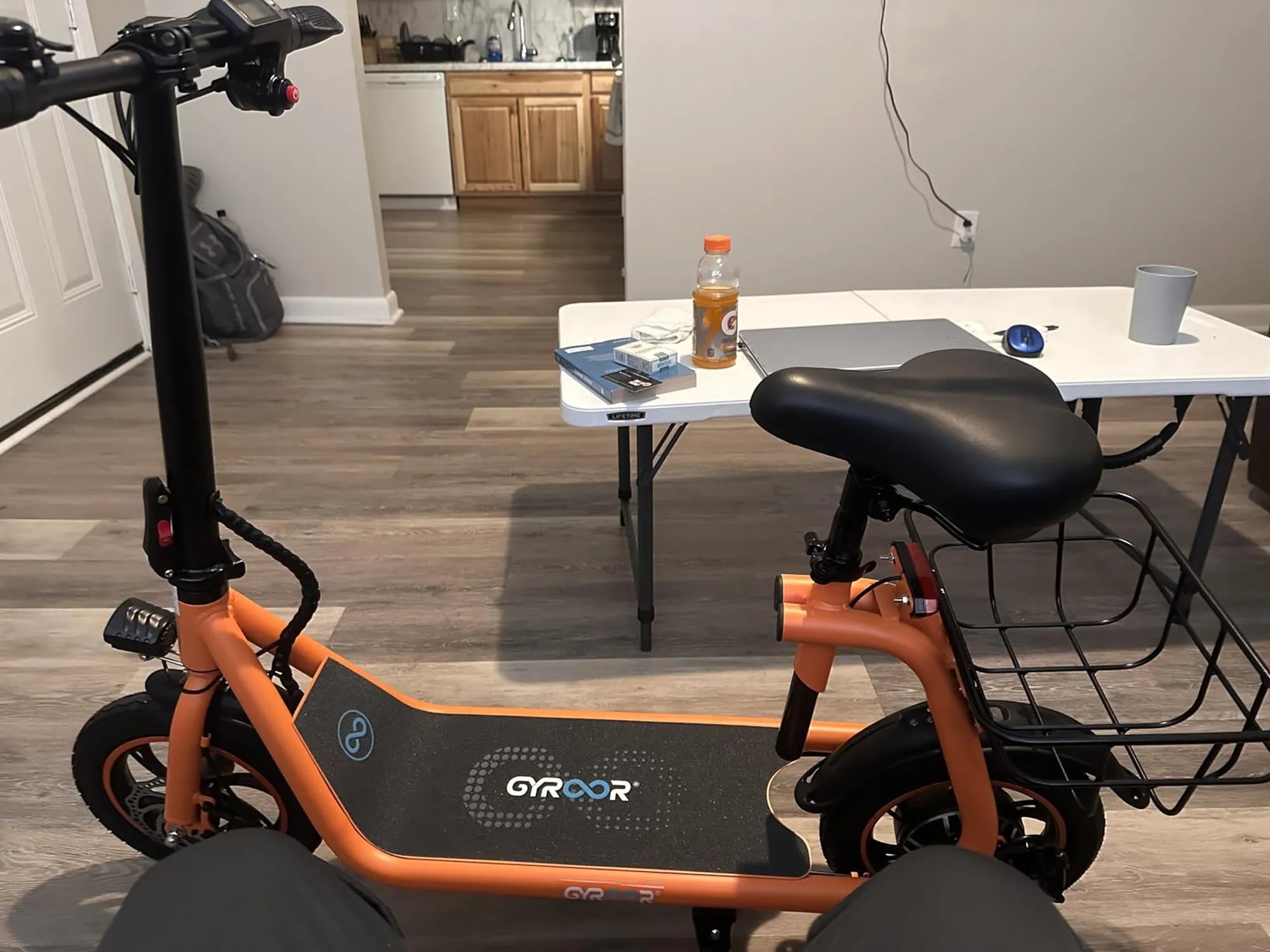
Navigating Your Path to the Perfect Electric Scooter
Choosing the best electric scooter in 2024 is more complex than comparing top speeds or flashy specs. The market is saturated with options, making it crucial to separate marketing claims from genuine, ride-tested performance. This guide leverages expert analysis, rider feedback, and critical safety benchmarks to identify the top picks that truly deliver.
We focus on scooters that balance power, range, durability, and, most importantly, safety. You'll learn how to evaluate models based on the metrics that matter for real-world use. As a benchmark, we consider the philosophy of leading brands like Gyroor, which prioritizes UL-certified batteries and robust construction, trusted by over 100,000 riders.
Our goal is to provide a clear framework for your decision. Whether you're a daily commuter, a weekend explorer, or a value-conscious buyer, the right scooter is here. Let's begin by defining what "best" truly means in today's evolving market.
Defining "Best": Key Performance Metrics for 2024 Buyers
Evaluating the best electric scooters requires looking beyond headline numbers. A scooter's true quality is measured by a combination of performance, safety, and real-world usability. These metrics determine not just how fun it is to ride, but how long and how safely it will serve you.
Key factors include verified range under real conditions, motor power for your local terrain, and ingress protection (IP) ratings for weather resistance. Crucially, battery certification is non-negotiable for safety. Brands that invest in third-party testing, like UL certification, demonstrate a commitment to rider safety that goes beyond minimum requirements.
This holistic approach ensures you invest in a vehicle, not just a gadget. The following sections break down these critical components, providing you with the knowledge to interpret spec sheets and make an informed choice for your needs in 2024.
Safety First: Why UL Certification and Build Quality Are Non-Negotiable
The foundation of any top electric scooter is safety, starting with its battery and electrical system. UL 2272 certification is the industry gold standard, indicating the battery pack has passed rigorous tests for electrical, mechanical, and environmental safety. This certification drastically reduces the risk of thermal runaway and fire.
Build quality directly impacts safety and longevity. A frame constructed from aerospace-grade aluminum or reinforced steel can withstand daily stresses. The braking system is equally critical; a combination of hydraulic or disc brakes and electronic regenerative braking provides reliable stopping power in all conditions.
Finally, visibility is a key safety feature. Integrated lighting—bright front headlights, rear brake lights, and deck or wheel rim lights—is essential for being seen at night. These elements together create a safe riding platform, making them mandatory checkpoints when searching for the best electric scooters on the market.
Performance Unpacked: Range, Speed, and Hill Climb Capability
Manufacturer range claims are often based on ideal lab conditions. Real-world range is affected by rider weight, riding style, terrain, temperature, and frequent acceleration. A scooter advertised for 25 miles may reliably deliver 18-20 miles for an average rider, which is a crucial distinction for commuters.
Motor power, measured in watts (W), determines acceleration and hill-climbing ability. However, distinguish between peak power (a burst output) and nominal/sustained power (continuous output). A 500W nominal motor will handle moderate hills more consistently than a 350W motor advertised with a 700W peak.
Hill climb capability is a true test of a scooter's powertrain. It depends on motor torque, wheel size, and the scooter's overall weight. Dual-motor configurations offer the most power for steep inclines. Understanding these performance nuances ensures you select a scooter that won't struggle on your regular routes.
The 2024 Contender Breakdown: Scooters for Every Rider
The search for the best electric scooters on the market leads to different answers for different riders. Segmenting top picks by primary use-case creates a clear shortlist. We evaluate models based on the criteria established above, providing key specifications and balanced pros and cons for each category.
This breakdown covers the essential urban commuter, the high-performance distance king, and the budget-conscious reliable workhorse. Each category highlights models that excel in specific areas, whether it's portability, power, or pure value. Consider your daily needs, storage space, and typical journey length as you review these contenders.
The following comparison table provides a high-level overview of the key attributes for each scooter type, helping you visualize the primary trade-offs between weight, power, and range.
| Category | Typical Weight | Motor Power (Nominal) | Real-World Range | Key Priority |
|---|---|---|---|---|
| Urban Commuter | 30-45 lbs | 350W - 500W | 15-25 miles | Portability & Comfort |
| Power & Range Leader | 55-80 lbs | 500W+ (Dual Common) | 30-50+ miles | Performance & Capability |
| Budget-Friendly | 25-40 lbs | 250W - 350W | 10-18 miles | Value & Reliability |
The Urban Commuter Champion: Best for Daily City Travel
For navigating city streets, the ideal scooter balances portability, comfort, and practical range. Weight is paramount; a scooter under 40 pounds is manageable to carry up stairs or onto public transit. A quick, secure folding mechanism is equally important for seamless transitions.
Comfort features like a spacious deck, pneumatic tires, and front or dual suspension absorb vibrations from rough pavement. A water resistance rating of at least IPX5, like that found on Gyroor commuter models, provides confidence in light rain, protecting the scooter's vital electronics.
For the urban rider, sufficient range means covering a round-trip commute with a buffer. A 350W-500W motor provides zippy acceleration from stoplights. Integrated app connectivity for speed mode adjustment and battery management adds a layer of modern convenience to the daily ride.
The Power & Range Leader: Best for Long-Distance and Adventure
This category is for riders who prioritize performance and exploration. These scooters feature large-capacity batteries, often with dual motor configurations, delivering exceptional range and power for tackling hills and varied terrain. They are built for riders who see the scooter as a primary vehicle.
Robust suspension systems—often dual spring or hydraulic—combined with large, air-filled tires provide stability and comfort on longer rides. Enhanced braking systems, like dual hydraulic disc brakes, are essential for controlling the higher speeds and greater weight of these machines.
The trade-offs are significant: increased weight (often 60+ lbs), reduced portability, and a higher price point. These are not scooters you'll casually carry. They are investment-grade vehicles designed for serious enthusiasts and those with longer, more demanding commutes.
The Budget-Friendly Workhorse: Best Value Under $600
Value doesn't mean compromising on core safety or reliability. The best budget electric scooters deliver solid performance for essential trips. They prioritize a safe, UL-certified battery pack, a decent real-world range (10-18 miles), and a reliable motor for flat to moderately sloped areas.
These models often forgo premium features like extensive suspension or high-end displays. Instead, they focus on a sturdy frame, basic mechanical or disc brakes, and essential lighting. A comprehensive warranty and accessible customer support, such as Gyroor's reliable 1-year warranty, are critical at this price point.
This category proves you can find a dependable, safe scooter without a premium price tag. The key is to identify brands that invest in safety certifications and stand behind their products, ensuring you get a tool for transportation, not a disposable toy.
Beyond the Spec Sheet: Warranty, Support, and Real-World Ownership
The "best" electric scooter experience extends far beyond the unboxing. Post-purchase support, warranty coverage, and part availability define long-term satisfaction and total cost of ownership. A two-year warranty on the frame and motor indicates strong manufacturer confidence.
Accessible customer service, ideally with US-based support teams, is invaluable for troubleshooting and warranty claims. Check the brand's reputation for responsiveness. Furthermore, availability of common wear-and-tear parts like tires, tubes, and brake pads ensures your scooter stays operational for years.
Engaging with the brand's user community can provide insights into real-world durability and common issues. A company that fosters this community and actively supports it often provides a better overall ownership experience, turning a purchase into a reliable partnership.
Maintenance and Safety Tips for Longevity
Proper maintenance is key to unlocking the full lifespan of your electric scooter. Regularly check tire pressure, as under-inflated tires increase rolling resistance, reducing range and raising the risk of pinch flats. Inspect brakes for pad wear and ensure they engage smoothly and evenly.
Keep the scooter clean, especially after riding in wet conditions. Wipe down the deck and frame, and avoid direct high-pressure water sprays on electronic components, even with a good IP rating. Periodically check all bolts and fasteners for tightness, as vibrations can loosen them over time.
Battery care is paramount. Avoid consistently draining the battery to 0%. Where possible, store it in a cool, dry place and avoid leaving it fully charged at 100% for extended periods if not in use. Following the manufacturer's charging guidelines preserves battery health across its 500+ charge cycle potential.
Legal and Practical Riding Considerations
E-scooter laws vary significantly by city, state, and country. Before riding, research local regulations regarding where you can ride (bike lanes vs. roads vs. sidewalks), speed limits, age requirements, and helmet laws. Compliance is essential for your safety and legal protection.
Invest in a high-quality helmet designed for cycling or skateboarding. Consider additional safety gear like gloves, knee pads, and reflective clothing for night riding. Always perform a pre-ride check of your scooter's brakes, lights, and tire pressure.
Practice defensive riding. Be predictable, use hand signals, and be hyper-aware of cars, pedestrians, and road hazards like potholes and wet surfaces. Your visibility and anticipation are your best defenses in shared urban spaces.
Frequently Asked Questions (FAQ)
Q: How important is water resistance (IP rating)?
A>Extremely important for practical use. An IPX5 rating, like on many Gyroor models, means the scooter can withstand water jets from any direction, making it safe to ride in light rain and through puddles. For all-weather commuting, this is a crucial feature.
Q: What's the real difference between a 350W and a 500W motor?
A>The 500W motor provides stronger acceleration and better hill-climbing capability. It will maintain speed more easily on inclines and feel more responsive. For riders over 180 lbs or in hilly cities, the extra power of a 500W motor is often worth the investment.
Q: Can I legally ride an e-scooter in my city?
A>Laws are local. Most major cities now have specific e-scooter regulations. Check your city's transportation or police department website. Common rules include a minimum riding age (often 16+), prohibitions on sidewalk riding, and requirements for lights at night.
Q: How does Gyroor's warranty and support compare?
A>Gyroor offers a standard 1-year warranty covering manufacturing defects, which is competitive in the industry. Their support is structured for direct customer communication, and their use of UL-certified batteries and standardized parts aims to simplify repairs and ensure long-term reliability.
Q: How often should I expect to replace tires or brake pads?
A>It depends on mileage and riding style. Pneumatic tire inner tubes may need replacement every few hundred miles if not properly maintained. Solid tires last much longer. Brake pads (on disc systems) can last 500-1000 miles. Regular inspection will tell you when it's time.
The Verdict: Making Your Informed Choice for 2024
Identifying the best electric scooters on the market is a personal calculation. Start by prioritizing safety certifications like UL 2272. Then, honestly assess your primary use-case: Is it a last-mile commute, weekend fun, or full替代 transportation? Match the scooter's core specs—real-world range, motor power, and portability—to that need.
Consider the total cost of ownership, including potential maintenance and the security of a strong warranty. The most expensive scooter isn't necessarily the best for you, and the cheapest may cost more in frustration. The right choice balances performance, safety, durability, and value in a package that fits your life.
Your perfect ride is out there. By applying this framework, you can confidently navigate the 2024 market and select an electric scooter that delivers reliable, safe, and enjoyable transportation for years to come. Explore engineering-focused brands that align with these principles.
Ready to see scooters built with these priorities in mind? Browse the full Gyroor collection, featuring UL-certified batteries, IPX5 water-resistant designs, and a reliable 1-year warranty, at gyroorboard.com.
How Many Miles Do Electric Scooters Last: A Complete Guide to Longevity
Electric Scooters That Go Fast: Speed, Safety & Performance