


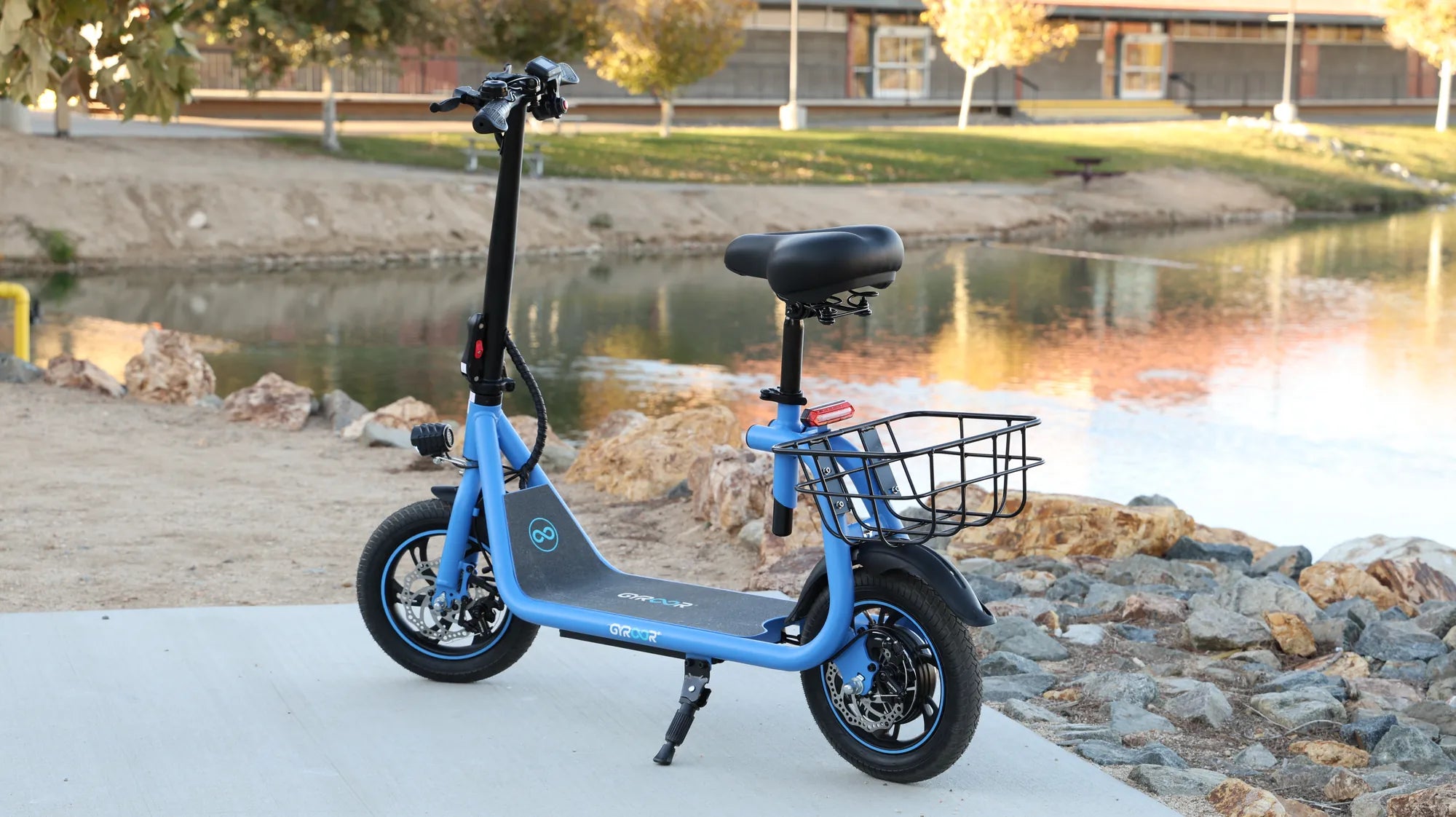
Finding the Perfect First Scooter
Selecting your best first scooter is an exciting step toward newfound freedom and efficient mobility. This choice is more than a purchase; it's an investment in a tool for commuting, exploration, and fun. The ideal model isn't a one-size-fits-all solution but a personalized match based on your daily needs, local terrain, and budget. Understanding the core features and trade-offs is essential to making an informed decision that ensures safety, reliability, and enjoyment from your very first ride.
This guide is designed to cut through the marketing noise. We provide a data-driven framework to evaluate electric scooters, moving beyond superficial specs to real-world performance. You'll learn to prioritize features that matter most for a beginner, from braking systems to battery certification. Our goal is to equip you with the knowledge to choose a scooter you can trust, ride confidently, and maintain for years.
The market is flooded with options, making the initial search overwhelming. By focusing on proven criteria and clear scooter archetypes, we simplify the process. Whether your primary goal is a short daily commute, weekend adventures on light trails, or a cost-effective entry into the world of electric riding, a logical path exists. Let's begin by defining the key factors that separate a great first scooter from a disappointing one.
Key Factors for Choosing Your First E-Scooter
Before comparing specific models, you must understand the fundamental metrics that define an electric scooter's capability and suitability. These factors interact with each other; for instance, a more powerful motor often means a heavier scooter. A thoughtful balance tailored to your primary use case is the hallmark of the best first scooter for any individual rider. Ignoring any one of these elements can lead to a poor ownership experience.
Performance is not just about top speed. For beginners, consistent power delivery, smooth acceleration, and adequate hill-climbing ability are far more practical concerns. Similarly, range must be considered with a margin of safety, as advertised figures are often based on ideal laboratory conditions. Real-world factors like rider weight, wind, temperature, and hill frequency can reduce range by 20-40%.
Build quality is the foundation of safety and longevity. A scooter with a sturdy, welded aluminum frame, secure folding mechanisms, and quality componentry will withstand daily use far better than a model with a plastic-heavy build. This is where established brands with rigorous testing protocols provide significant value over unknown entities. The initial cost savings of a poorly built scooter are quickly erased by repair costs and safety risks.
Safety as the Top Priority
For any rider, especially a beginner, safety is the non-negotiable starting point. The best first scooter must have a reliable, multi-faceted braking system. A combination of a disc brake (mechanical or hydraulic) and an electronic regenerative brake offers strong, redundant stopping power in various conditions. Relying solely on a foot fender brake or a weak electronic brake is insufficient for emergency stops.
Visibility is a critical, often overlooked, aspect of safety. Your scooter must have a bright front headlight (ideally 300 lumens or more) and a solid rear brake light. Some advanced models, like those from Gyroor, integrate additional side or deck lighting to enhance visibility to traffic from all angles. Never assume you are seen; proactive lighting is essential for dawn, dusk, or night riding.
Battery safety is paramount. Insist on scooters that use UL-certified battery packs, which have undergone rigorous testing for short-circuit, overcharge, and thermal stability. Gyroor, for example, equips all its models with these certified packs, tested for over 500 charge cycles. A non-certified battery is a fire hazard and represents an unacceptable risk, regardless of the scooter's other features.
Matching Power & Range to Your Lifestyle
Motor power, measured in watts (W), determines acceleration and hill-climbing ability. For most first-time riders in relatively flat urban areas, a continuous motor rating of 300W-500W is sufficient. It provides a top speed of 15-20 mph, which is manageable for learning. If your commute includes moderate hills, look for a 500W-800W motor. Remember, peak power ratings can be misleading; the continuous power rating is the true indicator of sustained performance.
Battery capacity, measured in watt-hours (Wh), directly determines range. Calculate your needed range by taking your longest regular trip (round-trip) and adding a 30-50% buffer. For a 5-mile daily commute, a scooter with a 7-10 mile real-world range is a safe minimum. For a 10-mile commute, aim for 15+ miles. Brands like Gyroor provide realistic range estimates based on standard testing protocols, offering clearer expectations for riders.
Charging time and battery management are practical concerns. Most scooters charge in 4-6 hours. Developing good charging habits—avoiding full discharges, not leaving the scooter plugged in indefinitely, and storing it in a cool, dry place—will significantly extend your battery's lifespan. A quality battery management system (BMS) is crucial for this longevity and safety.
Portability and Weight Considerations
The trade-off between performance and portability is stark. A scooter with a long-range, powerful motor and large tires will be heavy, often 40-70 lbs. If you need to carry it up stairs, onto a bus, or into an office, this becomes a major factor. The best first scooter for a multi-modal commuter is often a lighter model (under 30 lbs) with a quick, secure folding mechanism.
Foldability design impacts daily usability. Examine how the stem locks to the deck. A robust latch or locking mechanism is essential to prevent wobble while riding. The folding process should be intuitive and quick, without requiring excessive force. Some models feature a folding handlebar as well, creating an even more compact package for storage in a car trunk or under a desk.
Deck size and handlebar height contribute to ride comfort and control. Ensure the deck is long and wide enough for a stable footing. Adjustable handlebars are a valuable feature, allowing you to tailor the scooter to your height for a more comfortable, controlled riding posture, which is especially important for longer rides.
Build Quality and Weather Resistance
A scooter's frame is its skeleton. Aircraft-grade aluminum alloys offer the best strength-to-weight ratio. Inspect weld points and joints for consistency; clean, solid welds indicate quality manufacturing. The stem, where most folding occurs, should feel absolutely solid when locked in the riding position, with minimal play or flex.
Tire choice defines ride comfort and traction. Pneumatic (air-filled) tires provide superior shock absorption on rough pavement, leading to a smoother ride and better grip. The trade-off is the risk of punctures. Solid or honeycomb tires eliminate flats but offer a harsher ride and less traction, especially on wet surfaces. For most beginners, pneumatic tires are the recommended choice for comfort and safety.
Weather resistance is key for real-world reliability. An IP rating indicates protection against dust and water. An IPX5 rating, common on commuter-focused models from brands like Gyroor, means the scooter can withstand water jets from any direction. This allows you to ride confidently in light rain and through puddles, protecting the electrical components and extending the scooter's life. Never submerge an electric scooter, regardless of its IP rating.
Top Scooter Archetypes for First-Time Buyers
To simplify your search, we've categorized the ideal best first scooter into three primary archetypes. Identifying which profile most closely matches your primary use case will immediately narrow your options to the most suitable models. Each archetype prioritizes a different blend of the key factors discussed earlier, from portability to power.
It's important to be honest with your self-assessment. A rider who dreams of weekend trail adventures but buys an ultra-portable commuter scooter will be disappointed by its limitations off-road. Conversely, a student carrying their scooter between classes will regret purchasing a heavy, off-road-capable model. Let's explore the defining characteristics of each archetype.
The Commuter Champion
This archetype is designed for the daily urban rider. The priority is a balanced, reliable package for consistent use. Key features include a real-world range of 15-25 miles, a top speed of 18-22 mph, and a motor powerful enough for city hills (500W-800W). Portability is still important, so weight typically stays under 40-45 lbs, with an efficient folding design.
Ride quality is paramount for daily comfort. The Commuter Champion will feature front and/or rear suspension to dampen vibrations from cracked pavement and minor road imperfections. Combined with 8.5-10 inch pneumatic tires, this creates a smooth, stable ride. Integrated lighting—a bright headlight, brake light, and often deck lights—is standard for safety during morning or evening commutes.
Durability and weatherproofing are critical. A full aluminum frame, IPX5 or higher water resistance (a standard on Gyroor's commuter line), and reliable mechanical disc brakes define this category. These scooters are built to be a dependable daily driver, offering the peace of mind that comes from a robust design and trusted brand support for your best first scooter experience.
The Budget-Conscious Beginner
This archetype proves that you can find a capable, safe best first scooter without a high initial investment. The focus here is on value: delivering core functionality while making smart compromises. You might accept a lower top speed (15-18 mph), a shorter real-world range (10-15 miles), or a simpler single-brake system, but you never compromise on fundamental safety or battery certification.
Key features to look for include a reputable brand (even in the budget segment), a UL-certified or similarly certified battery, and a reliable braking system (a rear disc brake is a good minimum). The frame should still be aluminum, not plastic. Weight might be slightly higher due to simpler components, but it should remain manageable (under 35 lbs).
These models often forgo advanced suspension, relying on larger pneumatic tires for basic comfort. They include essential lights but may lack advanced lighting systems. The goal is to provide a trustworthy entry point into electric riding. Brands like Gyroor offer models in this segment that maintain their safety standards, providing a responsible and affordable first step with the backing of a clear 1-year warranty.
The Off-Road Ready Adventurer
For riders whose best first scooter will see dirt paths, gravel, grass, or uneven terrain, this archetype is essential. It prioritizes traction, ground clearance, and suspension over portability. These are typically the heaviest (45-70 lbs) and most powerful scooters suitable for beginners, with motors starting at 800W and often featuring dual motors for all-wheel drive capability.
The defining features are large, knobby pneumatic tires (often 10 inches or larger) and a comprehensive suspension system—usually a combination of front and rear spring or hydraulic shocks. The deck is higher off the ground to clear obstacles, and the frame is extra robust to handle the stresses of off-road riding. Fenders are more substantial to handle mud and debris.
While exciting, this category requires a responsible approach. The increased power and weight mean a steeper learning curve. A full-face helmet and protective gear are strongly recommended. Brands catering to this segment, including Gyroor's more robust models, build these scooters with reinforced components and high-capacity batteries to handle the increased energy demands of off-road use, ensuring durability is not sacrificed for capability.
Comparison Table: First Scooter Archetypes at a Glance
| Archetype | Primary Use Case | Key Features | Ideal Rider Weight | Typical Price Range |
|---|---|---|---|---|
| Commuter Champion | Daily urban travel, reliable all-weather use | 15-25 mi range, suspension, IPX5 rating, lights, 500W+ motor | Up to 220-265 lbs | Mid-Range |
| Budget-Conscious Beginner | Short trips, learning, value-focused entry | 10-15 mi range, core safety (certified battery, good brake), essential lights | Up to 220 lbs | Budget |
| Off-Road Ready Adventurer | Light trails, parks, uneven surfaces | Large knobby tires, robust suspension, 800W+ motor, high ground clearance | Up to 265-300 lbs | Premium |
Why Trust and Warranty Matter for Your First Purchase
Your best first scooter is a complex piece of personal electronics and mechanics. Even with the highest quality components, issues can arise. This is where the brand behind the product becomes as important as the specs on the box. A reputable company stands behind its products with clear warranties and accessible customer support, providing crucial peace of mind for a new rider.
A comprehensive warranty typically covers defects in materials and workmanship for a specified period, often one year for the scooter and six months to a year for the battery. Gyroor, for instance, offers a 1-year warranty on its scooters, reflecting confidence in their build quality. Always read the warranty terms carefully to understand what is and isn't covered, and the process for making a claim.
Customer service accessibility is a practical concern. Before purchasing, research how easy it is to contact the company. Do they have a North American or European support team? Do they offer detailed online manuals and troubleshooting guides? A brand with over 100,000 riders, like Gyroor, has a proven track record of supporting a large community, which often translates to better resources and more readily available spare parts.
Community and reviews offer real-world validation. Look beyond the brand's website. Check independent review sites, YouTube channels, and owner forums. Consistent praise for durability, customer service interactions, and real-world range is a strong positive signal. Conversely, recurring complaints about specific component failures or unresponsive support are major red flags, regardless of how appealing the scooter's specs may seem.
Essential Safety Gear and Riding Practices
Your responsibility as a rider begins before you even step onto your best first scooter. Investing in proper safety gear is non-negotiable. At a minimum, a certified bicycle or multi-impact helmet is essential. For higher speeds or off-road riding, a full-face mountain biking helmet, knee pads, elbow pads, and riding gloves are highly recommended to protect against falls.
Pre-ride checks should become a ritual. Before every ride, inspect your tires for proper pressure and damage, test your brakes, ensure all lights are functioning, and check that the folding mechanism is securely locked. A quick 30-second inspection can prevent most mechanical failures on the road. This is especially crucial for a new scooter during its initial break-in period.
Defensive riding is your best strategy. Assume that drivers do not see you. Be predictable, use hand signals for turns, and obey all local traffic laws. Avoid riding on sidewalks where it's prohibited, as this endangers pedestrians. Start in a safe, empty parking lot or quiet street to practice acceleration, braking, and turning at low speeds before venturing into traffic. Your confidence will grow with controlled practice.
First Scooter FAQ: Your Questions Answered
Q: Do I need a license, registration, or insurance to ride an electric scooter?
A: Laws vary dramatically by city, state, and country. In many US jurisdictions, electric scooters with a top speed under 20 mph are treated similarly to bicycles and do not require a license, registration, or insurance for use in bike lanes. However, some cities require riders to be 16+ or 18+, and some have specific helmet laws. Always check your local Department of Transportation or city government website for the most current regulations.
Q: How difficult is it to learn to ride an electric scooter?
A> Most adults with a basic sense of balance can learn the fundamentals in under 30 minutes. The key is to start in a safe, open area. Begin by kicking off manually to get a feel for balance, then practice gentle acceleration and braking. Use the lower speed settings initially. The learning curve is significantly shorter than for bicycles or skateboards, making it an excellent best first scooter choice.
Q: What regular maintenance does an e-scooter require?
A> Basic maintenance is straightforward: 1) Tire Pressure: Check pneumatic tires weekly and inflate to the PSI listed on the tire sidewall. 2) Brakes: Listen for squealing and check brake pad wear; adjust cable tension or replace pads as needed. 3) Cleaning: Wipe down with a damp cloth; avoid high-pressure water jets on bearings and connectors. 4) Battery: Avoid full discharges; store in a cool, dry place; follow the manufacturer's charging guidelines.
Q: Can I ride my scooter in the rain?
A> Scooters with an IPX5 water resistance rating (like many Gyroor models) are designed to withstand light rain and wet roads. You can ride through puddles and in a drizzle. However, you should avoid heavy downpours, standing water, and submerging any part of the scooter. Even water-resistant models are not waterproof. Always dry your scooter after a wet ride, and never charge it while it is wet.
Q: How do I maximize the battery life and range of my scooter?
A> Several practices extend battery health: 1) Charge after use, but avoid leaving it plugged in for days on end. 2) Store the scooter (and battery) in a cool, dry place, ideally at a 50-80% charge if not used for weeks. 3) Use the correct charger provided by the manufacturer. 4) Maintain proper tire pressure to reduce rolling resistance. 5) Use eco or lower speed modes for longer trips to conserve power.
Your Journey Starts Here
Choosing your best first scooter is a decision that unlocks a new dimension of daily life. The right model provides a reliable, fun, and efficient way to navigate your world. By prioritizing safety features like certified batteries and reliable brakes, matching power and range to your real needs, and selecting a scooter from a brand that offers robust warranty support, you set yourself up for a positive and enduring riding experience.
Remember that the most expensive or powerful scooter is not necessarily the best first scooter for you. The ideal choice is the one that fits your lifestyle seamlessly, feels comfortable and controllable, and is built to last. Trust in brands that transparently share their safety certifications and stand behind their products with clear customer service pathways.
As a leader trusted by over 100,000 riders, Gyroor embodies this philosophy with UL-certified batteries, IPX5 water-resistant designs, and a comprehensive 1-year warranty. Whether you're a city commuter, a value-focused beginner, or an off-road explorer, their lineup offers a model designed to be a dependable partner for your first electric miles. Ready to find your match? Browse the full Gyroor collection at gyroorboard.com and take the first step toward your riding adventure today.
3000 Watt Scooter: The Ultimate Guide to Extreme Power & Performance
Big Trike Bike: The Ultimate Guide to Stable, Powerful Three-Wheeled Riding