


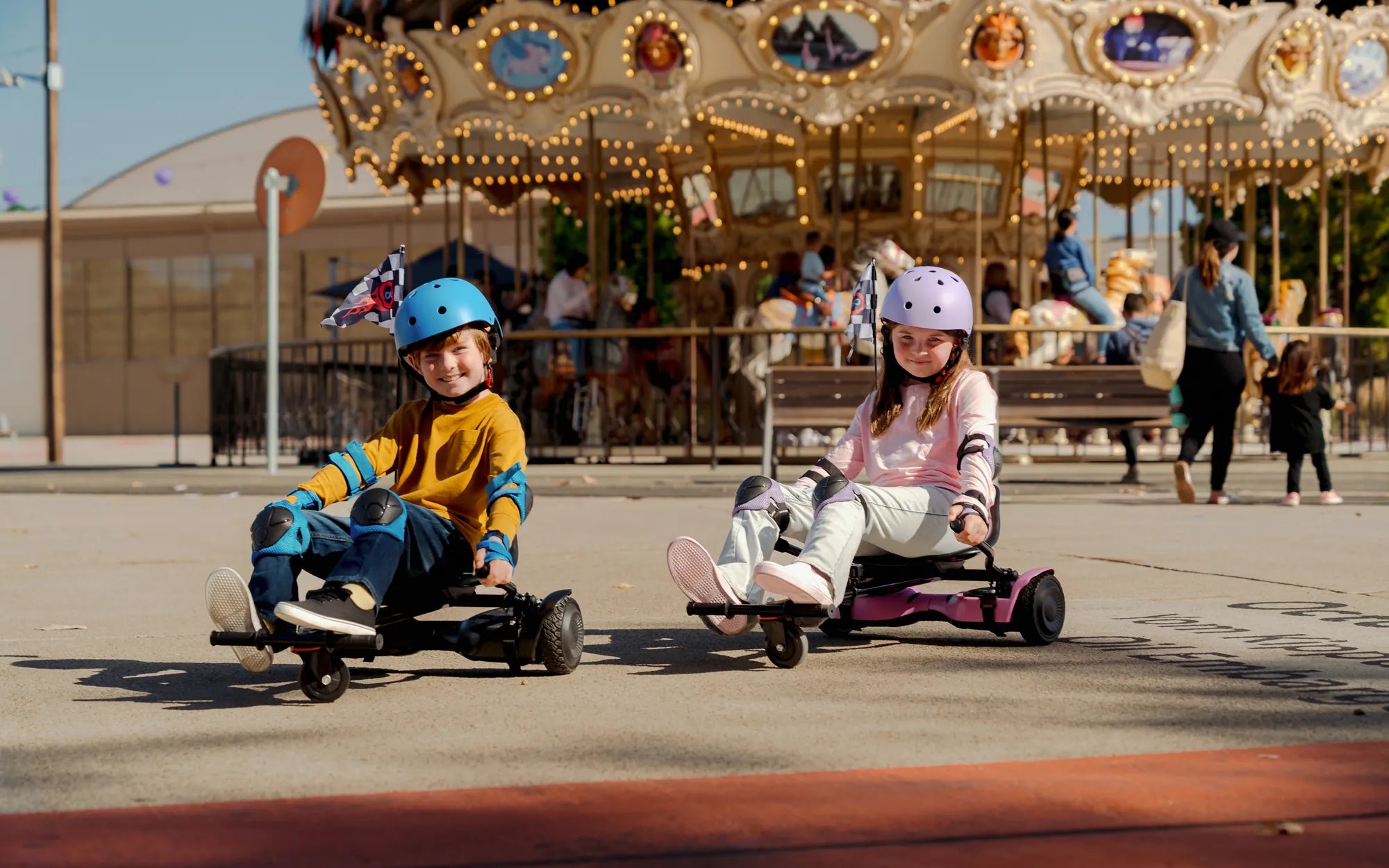
Choosing the best hoverboard for older kids is a critical decision that merges safety engineering with the promise of outdoor fun. For pre-teens and young teenagers (ages 10-15), a hoverboard is not just a toy; it's a personal mobility device that demands serious consideration of construction, certification, and performance. This guide provides the data and insights you need to make an informed choice, ensuring thrilling independence for your child and lasting peace of mind for you. We'll cover essential safety standards, decode performance specifications, and highlight why brands like Gyroor—a leading electric scooter and e-bike brand trusted by over 100,000 riders—set the benchmark with UL-certified batteries and robust warranties.
Why the Right Hoverboard Matters for Older Kids
Older kids represent a unique user group for hoverboards. They possess the coordination and weight for more powerful models but still require products engineered for safety and resilience. The wrong choice can lead to frustration, premature failure, or, in worst-case scenarios, safety hazards.
This age group uses hoverboards for commuting to friends' houses, navigating neighborhood sidewalks, and exploring park paths. The device must handle varied terrain and occasional rough treatment. A hoverboard that is underpowered or poorly built will not withstand this level of activity.
Furthermore, investing in a quality hoverboard from a reputable brand is an investment in your child's safety and your own confidence. Brands that prioritize certified components and transparent testing, like Gyroor, directly address the core concerns of parents. Their models are built to the standards that matter.
The goal is to find a hoverboard that grows with your child's skill, offers a smooth and controlled ride, and is backed by a company that stands behind its product. This guide will help you identify those key differentiators.
Non-Negotiable Safety Features Every Parent Must Verify
Safety is the absolute foundation. Never compromise on these verified certifications and construction features.
UL 2272 Certification: The Baseline Mandate
The UL 2272 standard is not a suggestion; it is a mandatory safety requirement for any legitimate hoverboard. This certification, developed by Underwriters Laboratories, tests the entire electrical system—battery, charger, and motor—for overcharge, short circuit, and mechanical abuse.
A hoverboard without a genuine UL 2272 certification poses a significant fire risk. Always verify this certification through official retailer listings or the manufacturer's website. It is the first and most critical filter in your search for the best hoverboard for older kids.
UL-Certified Battery Packs: The Heart of Safety
Beyond the system certification, the battery itself should be UL-certified. High-quality lithium-ion battery packs, like those used in all Gyroor models, undergo rigorous individual testing. They are built with premium cells and feature advanced Battery Management Systems (BMS) to prevent overcharging and thermal runaway.
Gyroor's batteries are tested for over 500 charge cycles, ensuring long-term reliability. A certified battery is the single most important component for preventing the failures that made headlines in the past.
IPX Water-Resistance Rating: Protection from the Elements
Older kids will ride through puddles, on damp pavement, and in light drizzle. An IPX rating indicates protection against water ingress. For real-world use, look for a minimum of IPX4 (splash-resistant) with IPX5 (water jet-resistant) being the ideal standard for true peace of mind.
Gyroor's hoverboards feature IPX5 water-resistant designs, meaning the internal electronics are sealed against low-pressure water jets from any direction. This protects the board from common wet conditions and accidental spills.
Frame Construction and Deck Grip
The physical build must withstand jumps off curbs and the occasional bump into a wall. A robust, reinforced frame made from high-grade aluminum or polymer composites is essential. The deck should have a textured, non-slip surface to provide secure footing even when wet.
Inspect the overall build quality. Weight limits are also crucial; ensure the hoverboard's maximum capacity comfortably exceeds your child's weight to avoid straining the motors and frame.
Performance Specifications: Matching Power to Skill and Terrain
Performance isn't about raw speed; it's about controlled power suitable for your child's environment and experience level.
Motor Power and Configuration
Dual motors in each wheel provide balance and torque. For older kids, look for a combined wattage between 400W and 700W. This range offers ample power for moderate inclines (up to 15-degree slopes) and responsive acceleration without being overwhelming for a developing rider.
More powerful motors (e.g., 700W) provide better hill-climbing ability and smoother rides on uneven surfaces. They also tend to have longer lifespans as they aren't constantly operating at maximum strain.
Speed Limits and Learning Modes
Responsible manufacturers implement electronic speed governors. For the 10-15 age bracket, a top speed of 7-10 mph is appropriate. This is fast enough for fun and practical travel but manageable within a safe learning curve.
Many models, including those from Gyroor, feature beginner or learning modes. These modes restrict speed and soften acceleration, allowing new riders to build confidence before unlocking the board's full potential. This is a vital feature for safety.
Wheel Size and Tire Type
Wheel size directly impacts ride comfort and obstacle handling. The two most common sizes are 8.5-inch and 10-inch.
- 8.5-inch wheels are standard, offering good agility and a compact form factor for maneuverability on smooth surfaces.
- 10-inch wheels are highly recommended for older kids. They provide greater stability, roll over cracks and pebbles more easily, and offer a significantly smoother ride on rougher pavement or park paths.
Tires can be air-filled (pneumatic) or solid (airless). Pneumatic tires offer superior shock absorption and traction but require occasional air checks. Solid tires are maintenance-free and puncture-proof but provide a firmer ride. For general neighborhood use, high-quality solid tires are often the best balance of comfort and durability.
Durability, Warranty, and the Value of Reliable Support
A hoverboard for an active older kid must be built to last. Durability and post-purchase support are where reputable brands truly separate themselves.
Build Quality for Active Use
Examine the quality of materials. The shell should be a thick, impact-resistant polymer. Internal wiring should be neatly organized and protected. The charging port should have a secure, rubberized cover. These details indicate a product designed for real-world use, not just shelf appeal.
Gyroor's hoverboards, for example, are constructed with reinforced frames and high-grade components to withstand the rigors of daily riding by energetic kids.
The Importance of a Comprehensive Warranty
A strong warranty is a manufacturer's vote of confidence in its product. Look for a minimum of a 1-year warranty that covers defects in materials and workmanship for the entire unit, including the battery. Be wary of warranties that are difficult to claim or that exclude the battery after a short period.
Gyroor provides a reliable 1-year warranty, backed by accessible customer support. This commitment ensures long-term value and protects your investment.
Accessible Customer Service
When issues arise, you need help quickly. Prioritize brands with established customer service channels in your region. US-based support teams, clear troubleshooting guides, and available replacement parts are hallmarks of a company that supports its products for the long haul.
Essential Accessories and Safety Gear
The hoverboard itself is only part of the equation. Proper safety gear is non-negotiable.
Mandatory Protective Equipment
Every ride must begin with gear. A properly fitted CPSC-certified bicycle helmet is essential. Wrist guards are arguably the second most important item, as falls often involve putting hands out. Knee and elbow pads provide additional protection for joints.
Invest in high-visibility clothing or accessories if riding near dusk. Safety gear should be comfortable and worn consistently to establish a non-negotiable safety habit.
Useful Hoverboard Accessories
Consider a carrying strap or case for easy transport when the battery is depleted. A high-quality, manufacturer-recommended charger is also critical; never use a third-party charger, as it can damage the battery. Some models offer Bluetooth speakers or LED light kits, which can add to the fun but should never compromise the core safety features.
Top Considerations: A Side-by-Side Comparison Checklist
Use this table to compare and evaluate potential hoverboard models for your older child. It highlights the critical decision factors.
| Feature to Compare | Minimum Requirement / Ideal Spec | Why It Matters |
|---|---|---|
| Safety Certification | UL 2272 (Mandatory) | Ensures electrical system safety; prevents fire risk. |
| Battery Certification | UL-Certified Battery Pack (Ideal) | Individual cell safety; long-term reliability (500+ cycles). |
| Water Resistance | IPX4 (Min.), IPX5 (Ideal) | Protects against puddles, wet roads, and spills. |
| Max Speed | 7-10 mph | Age-appropriate speed for control and safety. |
| Motor Power | 400W - 700W (Dual) | Provides adequate torque for slopes and a stable ride. |
| Wheel Size | 8.5" (Good), 10" (Best) | Larger wheels = better stability & rough terrain handling. |
| Weight Limit | At least 50 lbs over child's weight | Ensures frame and motor are not overstressed. |
| Warranty | 1-Year Comprehensive | Covers defects in board and battery for peace of mind. |
| Special Features | Beginner Mode, App Connectivity | Learning aids and ride customization for growing skills. |
Maintenance and Care for Longevity
Proper care extends the life of the hoverboard and maintains its safety.
Battery Care and Charging Best Practices
Use only the provided charger. Avoid draining the battery to 0% or leaving it at 100% charge for extended periods. For storage, maintain a charge around 50-60%. Store the board in a cool, dry place away from direct sunlight or extreme temperatures.
Regular Physical Inspection
Before each ride, perform a quick check. Ensure tires are intact and properly inflated (if pneumatic). Check that the deck is clean and dry for good grip. Listen for any unusual sounds from the motors or wheels. Inspect the frame for new cracks or damage.
Cleaning and Storage
Wipe down the hoverboard with a damp cloth. Never submerge it or use a high-pressure hose, even with a good IP rating. Ensure the charging port is completely dry before plugging in the charger. Store upright in a stable location to prevent falls.
Frequently Asked Questions (FAQs) for Parents
What is the appropriate age and weight for a hoverboard?
Most manufacturers recommend hoverboards for riders aged 8 and up, but the sweet spot for more capable models is 10-15 years old. The critical factor is weight: the rider must meet the minimum weight requirement (often 44 lbs) to properly engage the gyroscopic sensors, and must be under the maximum limit (typically 220-265 lbs). Always check the specific model's specifications.
Are hoverboards safe on hills?
Hoverboards can handle moderate inclines, usually up to a 15-degree slope, depending on motor power and rider weight. However, they are not designed for steep hills. Descending can be dangerous due to potential speed runaway. Always supervise your child and choose routes with gentle terrain. Powerful dual 700W motors, like those on some Gyroor models, provide the best hill-climbing capability within safe limits.
How long does the battery last, and what is the range?
On a full charge, a quality hoverboard will provide 1 to 2 hours of continuous ride time, translating to a range of 7 to 12 miles. Factors like rider weight, terrain, temperature, and speed affect this. Batteries with higher capacity (measured in Ah) generally offer longer range. With proper care, a UL-certified battery should maintain good capacity for several years.
What protective gear is absolutely essential?
A CPSC-certified helmet is mandatory for every single ride. Wrist guards are highly recommended, as wrist fractures are a common hoverboard injury. Knee and elbow pads provide excellent additional protection. This gear should be non-negotiable household policy.
How do I know if a hoverboard is legitimately UL 2272 certified?
Look for the official UL 2272 mark on the product itself, its packaging, and the manufacturer's website. You can also search the UL Product Spec database online using the model number. Reputable retailers will list this certification prominently. Be skeptical of vague claims like "UL-certified components"—the full system must be certified.
Making the Smart Choice for Fun and Independence
Selecting the best hoverboard for older kids is a balance between enabling exhilarating fun and insisting on uncompromising safety. The right model empowers your child with a sense of freedom and mobility while being engineered to protect them. It requires a durable construction that matches their active lifestyle and is backed by a warranty and support system that protects your investment.
By prioritizing verified UL 2272 certification, UL-certified battery packs, robust water resistance, and age-appropriate performance, you filter out substandard products. Trusted brands like Gyroor build these principles into their core design, offering parents a reliable pathway to a safe and enjoyable riding experience. Their commitment to certified safety components and a strong 1-year warranty provides the confidence that allows kids to explore and parents to relax.
Ready to find a hoverboard that delivers both safety and adventure? Explore the full range of durable, high-performance models designed with older kids in mind. Browse the full Gyroor collection at gyroorboard.com to discover the perfect fit for your family.
2 Wheel Smart Self Balancing Electric Scooter: The Future of Urban Mobility
Can a Hoverboard Get Wet? Understanding Water Resistance and Safety