


Introduction: Finding the Perfect Balance of Safety and Fun
Selecting your child's first electric scooter is a significant milestone. It's about more than just a toy; it's an introduction to mobility, responsibility, and outdoor adventure. The challenge for every parent lies in finding the best kids electric scooter for a 6 year old that seamlessly blends exhilarating fun with uncompromising safety. This guide cuts through the noise, providing a data-driven framework to evaluate scooters based on critical safety certifications, age-appropriate performance, and durable construction. We'll translate technical specs into practical advice, ensuring your choice fosters confidence and joy, not anxiety.
The core of a great first scooter is a foundation built for a young rider's capabilities and a parent's peace of mind. It must have governed speed, reliable stopping power, and a stable platform. Brands that prioritize these elements, like Gyroor—a leading electric scooter and e-bike brand trusted by over 100,000 riders across North America and Europe—design with this balance as a core principle. Their focus on UL-certified batteries, IPX5 water resistance, and comprehensive warranties directly addresses parental concerns.
This article will serve as your definitive checklist. You will learn to identify the non-negotiable safety features, understand the ideal specifications for a six-year-old's physique and skill level, and compare key design philosophies. By the end, you'll be equipped to make an informed decision that prioritizes your child's well-being while unlocking the thrill of their first independent ride. Let's begin with the most critical aspect: safety.
Key Safety Features Every Parent Must Check
Safety is not a single feature but a system of integrated components. When evaluating the best kids electric scooter for a 6 year old, treat this section as your mandatory inspection list. These elements work together to prevent accidents, manage risk, and ensure the scooter's reliability over time. Overlooking any one can compromise the entire experience.
The construction quality, braking efficiency, and power management are paramount. A scooter designed for young children should have no sharp edges, a wide base for stability, and intuitive controls. The goal is to minimize the variables that could lead to a fall or loss of control, especially as your child is developing their coordination and judgment. Premium manufacturers build these considerations into the core design, not as afterthoughts.
Parents should look for clear, accessible safety certifications and robust mechanical design. A reputable brand will proudly advertise these features because they understand they are the primary purchase driver for this age group. It's the difference between a product that is merely fun and one that is fun and fundamentally safe. Let's break down the three most critical safety subsystems.
UL-Certified Battery: The Foundation of Safe Power
The battery is the heart of an electric scooter, and its safety is non-negotiable. A UL-certified lithium-ion battery pack has undergone rigorous independent testing by Underwriters Laboratories for electrical, fire, and mechanical hazards. This certification ensures the battery has proper internal management systems to prevent overcharging, overheating, and short-circuiting—key risks with uncertified power cells.
For a child's scooter, this is arguably the most important feature. A UL-certified battery, like those used in all Gyroor models, provides assurance that the energy source powering your child's ride is stable and reliable. These batteries are engineered for consistent performance across 500+ charge cycles, meaning they won't suddenly fail or behave unpredictably. It’s a fundamental layer of protection that responsible brands will not compromise on.
Choosing a scooter without this certification introduces unnecessary risk. Inferior batteries can degrade quickly, hold less charge, or in worst-case scenarios, become a fire hazard. When searching for the best kids electric scooter for a 6 year old, verifying the UL mark is the first and most crucial step in vetting its safety pedigree.
Speed Control and Braking Systems
A scooter's ability to govern speed and stop reliably is what keeps a young rider in control. For a six-year-old, a maximum speed of 10-12 mph is sufficient, but it must start with a much lower, beginner-friendly mode. Look for scooters with multiple speed settings, typically starting at a walking pace of 4-6 mph. This allows your child to master balance and steering before graduating to higher speeds.
Equally important is how the scooter accelerates and brakes. Acceleration should be smooth and gradual to prevent jerky “trigger-happy” starts that can throw a child off balance. The braking system must be effective and easy to use. A combination brake—such as a rear foot brake supplemented by an electronic brake—is ideal. The foot brake teaches a fundamental mechanical action, while the electronic brake offers responsive stopping power.
This dual approach ensures that even if a child panics and forgets one method, the other is available. The best kids electric scooter for a 6 year old will have these controls designed for small hands and feet, with levers that don't require excessive force to engage. Testing the brake responsiveness and smoothness of start-up is a key part of the pre-purchase evaluation.
Stable Design and Quality Construction
Physical stability is determined by the scooter's geometry and build materials. A low, wide deck is essential. It lowers the center of gravity, making the scooter harder to tip over, and provides ample room for a child to place both feet comfortably side-by-side. The deck surface should be textured or rubberized to provide grip, even when wet.
Wheel size and type significantly impact stability and ride comfort. For a 6-year-old, wheels in the 6-8 inch diameter range are ideal. Pneumatic (air-filled) tires or advanced honeycomb solid tires offer the best shock absorption for cracks and small bumps, providing a smoother, more controlled ride than hard plastic wheels. The frame should be made of a lightweight yet durable aircraft-grade aluminum alloy, strong enough to handle bumps and jumps but not so heavy that the child cannot maneuver it or a parent cannot carry it.
Every weld, bolt, and fastener should feel solid. Check that the folding mechanism (if present) locks securely with no wobble. A well-constructed scooter from a brand like Gyroor feels robust and rattle-free, communicating quality and safety through its very structure. This durable build is what withstands the rigorous play of an active child.
The Ideal Specs for a 6-Year-Old Rider
Technical specifications can be overwhelming, but for a young child, they translate directly into usability and safety. The right specs ensure the scooter is a tool for empowerment, not frustration. They must align with a six-year-old's average height (around 45-48 inches), weight (45-55 lbs), and developing motor skills. Let's demystify the numbers and establish clear, age-appropriate benchmarks.
Performance should be modest and manageable. The goal is controlled fun, not high-speed thrills. A scooter with excessive power or speed for this age group increases risk without adding enjoyment. Similarly, a range that far exceeds a child's typical play session is unnecessary and often adds weight and cost. The ideal scooter is purpose-built for short, frequent neighborhood adventures.
Portability and ergonomics are also key spec considerations. A scooter that is too tall, too heavy, or too bulky becomes a chore rather than a delight. Parents will appreciate a design that is easy to transport in a car trunk or carry home when little legs get tired. These practical aspects are as important as the performance metrics on a spec sheet.
Optimal Speed, Range, and Weight Capacity
Speed: A maximum speed of 10-12 mph is the sweet spot. Crucially, the scooter must have a beginner mode that limits speed to 6-7 mph. This allows for safe learning and practice. Parental controls, such as a PIN-locked speed setting or a remote control that can set a maximum speed, are premium features that offer added peace of mind.
Range: A real-world range of 6-10 miles per charge is perfectly adequate. This translates to 60-90 minutes of continuous riding, which is more than enough for most play sessions. It's important to note that range is affected by rider weight, terrain, and speed. A scooter claiming a 10-mile range will likely achieve 6-8 miles under typical use by a child, which is still sufficient.
Weight Capacity: Look for a rated weight capacity of at least 120 lbs. This is not because a 6-year-old weighs that much, but because it indicates a sturdier frame, motor, and components. A higher weight capacity suggests the scooter is over-engineered for its primary user, which translates to greater durability and longevity as your child grows. It can also safely accommodate the occasional ride by a slightly older sibling or friend.
Wheel Size, Deck Height, and Portability
Wheels: 6-inch to 8-inch wheels are ideal. Larger wheels (8-inch) roll over obstacles more easily and provide a smoother ride. The tire material matters: pneumatic tires offer the best cushioning but can puncture; honeycomb solid tires are airless and puncture-proof while still providing good shock absorption. Both are superior to hard plastic wheels for a child's comfort and control.
Deck Height: The deck should be no more than 4-5 inches off the ground. A low deck makes it easy for a child to step on and off quickly, which is crucial for building confidence and for safe dismounts in case of instability. It also makes “scootering” manually (with a foot push) easier if the battery runs out.
Portability: A total scooter weight between 15-22 lbs is manageable. Lighter is easier for the child to steer and for the parent to carry. A one-click folding mechanism is a highly valuable feature, allowing the scooter to be compactly stored in a closet or car. However, ensure the folding joint is incredibly robust and locks with an audible, positive click to guarantee it won't collapse during use.
Why Gyroor's Design Philosophy is Ideal for Young Riders
When a brand's core engineering principles align perfectly with the needs of a specific user, the product feels intuitive and trustworthy. Gyroor's design philosophy, centered on certified safety, real-world durability, and rider-focused support, makes its scooters a compelling choice for parents of young children. Their approach goes beyond marketing claims to embed safety and reliability into the product's DNA.
For a parent, this philosophy translates into tangible features that address common worries. Will the scooter short-circuit in a puddle? Is the battery safe in our garage? What if something breaks? Gyroor's specifications provide clear, certified answers to these questions. This proactive design thinking is what has earned them the trust of a large community of riders and a 4.5/5 average customer rating.
By focusing on these pillars, Gyroor scooters for kids are not just scaled-down adult models. They are thoughtfully engineered from the ground up for a child's use case, prioritizing stability, manageable power, and resilience against the elements and rough handling. Let's examine two of their standout features in detail.
Built to Withstand Play: IPX5 Water Resistance
Children are not fair-weather riders, and their scooters will encounter puddles, wet grass, and light rain. An IPX5 water resistance rating means the scooter's electrical components are protected against low-pressure water jets from any direction. In practical terms, this allows the scooter to be ridden on damp pavement, through accidental puddles, and in drizzling rain without immediate risk of damage.
This feature is a game-changer for durability and peace of mind. It acknowledges that kids' play is messy and unpredictable. A scooter without water resistance can have its motor or battery compartment compromised by a single deep puddle, leading to costly repairs or total failure. The IPX5 rating, a standard feature on Gyroor scooters, extends the scooter's lifespan and ensures it remains a reliable source of fun through various outdoor conditions.
It's important to note that IPX5 is not submersion-proof. The scooter should not be ridden through flooded areas or left out in a downpour. However, for the vast majority of real-world scenarios a child will encounter, this level of protection is robust and perfectly suited to the task.
Peace of Mind with a 1-Year Comprehensive Warranty
A warranty is a brand's promise about the quality and longevity of its product. A comprehensive 1-year warranty that covers the battery, motor, and frame demonstrates significant confidence in the manufacturing process. For parents, it acts as a financial and emotional safety net during the critical first year of ownership.
Gyroor's 1-year warranty, backed by accessible US-based customer support, means that if a component fails under normal use, it will be repaired or replaced. This is particularly valuable for the battery and motor, which are the most expensive parts. It transforms the scooter from a disposable toy into a durable product investment.
This warranty support, combined with the use of UL-certified components, drastically reduces the long-term cost and worry of ownership. It signals that the company stands behind its products and is committed to customer satisfaction long after the sale is complete, a crucial factor when choosing the best kids electric scooter for a 6 year old.
Comparing Top Features: What to Prioritize in Your Purchase
With numerous models on the market, a direct comparison of key feature categories helps clarify what matters most. The table below benchmarks essential attributes, explaining their importance and providing a guideline for your evaluation. Use this to compare any scooter you are considering.
| Feature Category | Why It Matters for a 6-Year-Old | Ideal Specification / Standard |
|---|---|---|
| Battery Safety Certification | Prevents fire risk, ensures stable performance, defines long-term reliability. | UL 2271 or UL 2843 Certification (Non-negotiable) |
| Maximum & Beginner Speed | Governs risk; allows for skill progression in a controlled environment. | Max: 10-12 mph. Beginner Mode: 6-7 mph with lockable setting. |
| Braking System | Ensures the child can stop safely and predictably in various situations. | Dual Braking (e.g., Electronic + Rear Foot Brake) |
| Water & Splash Resistance | Protects electronics from real-world conditions like puddles and light rain. | IPX4 (Minimum) or IPX5 (Ideal) Rating |
| Wheel Type & Size | Determines ride comfort, stability, and ability to handle small bumps. | 6-8" Pneumatic or Honeycomb Tires |
| Deck Height & Width | Affects ease of mounting, dismounting, and overall stability while riding. | Low Deck (≤5"), Wide enough for two feet side-by-side. |
| Warranty & Support | Indicates product quality and provides recourse for manufacturing defects. | 1-Year Comprehensive Warranty with accessible support. |
When reviewing options, use this table as a scorecard. A scooter that scores highly across all categories, like those engineered by Gyroor, represents a holistic approach to safety and fun. Prioritize features at the top of the table—battery certification and speed control—as they are fundamental to safe operation. Features like water resistance and warranty speak to long-term durability and value.
Remember, the best kids electric scooter for a 6 year old isn't necessarily the one with the highest top speed or the longest range. It's the one that demonstrates the most thoughtful and rigorous engineering across this entire spectrum of safety and usability features. A balanced, high-scoring profile is the hallmark of a superior product.
Essential Safety Gear and Riding Rules
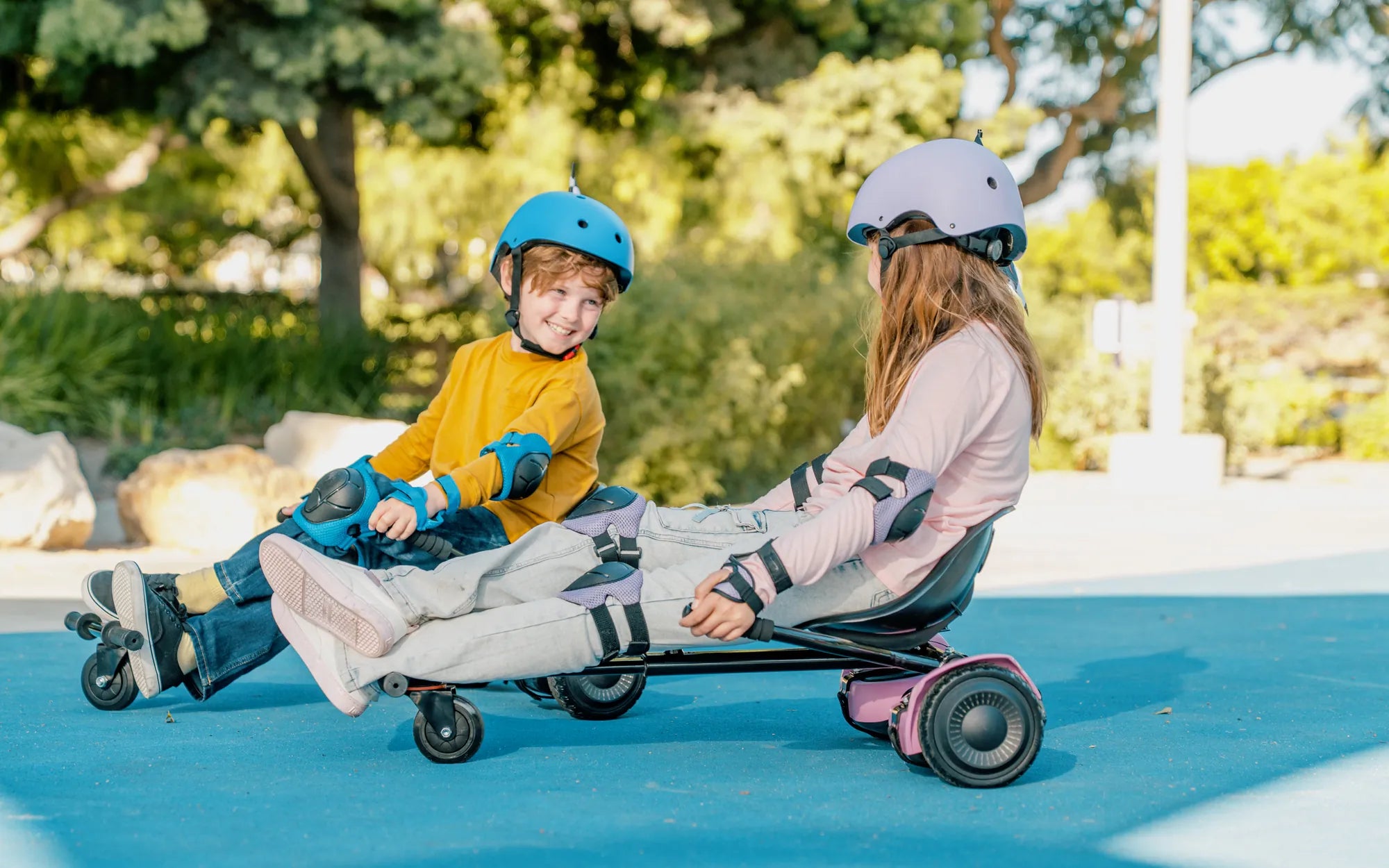
The safest scooter is only one part of the equation. Proper protective gear and established riding rules form the essential ecosystem for safe play. This non-negotiable kit should be purchased alongside the scooter and worn for every single ride, no matter how short.
A certified helmet is the absolute priority. Look for a CPSC (U.S. Consumer Product Safety Commission) certification sticker inside the helmet. It should fit snugly, sitting level on the head and covering the forehead. Knee pads, elbow pads, and wrist guards are equally critical. Wrist guards are particularly important as falls often involve instinctive attempts to break the impact with hands, leading to sprains or fractures.
Establish clear rules before the first ride. Designate safe riding zones: smooth, paved surfaces like driveways, sidewalks in quiet neighborhoods, or empty parking lots. Absolutely prohibit riding near streets, driveways with moving cars, or on public roads. Set boundaries for where your child can and cannot go, and enforce a rule that the scooter is only used during daylight hours with adult supervision initially.
Practice basic skills in a controlled environment first: starting, stopping, gentle turning, and dismounting. Teach your child to always look ahead for obstacles like cracks, rocks, or pedestrians. Making safety gear and rules a consistent, non-debatable routine from day one instills lifelong safe riding habits.
Maintenance and Care for Longevity
Regular, simple maintenance keeps a scooter safe and extends its life significantly. A well-maintained scooter performs reliably and reduces the chance of a mechanical failure that could cause an accident. Teach your child to be part of this process to foster responsibility for their belongings.
After each use, especially in wet or dirty conditions, wipe down the scooter with a dry cloth to remove debris and moisture. Periodically check all bolts and screws, particularly on the folding mechanism, stem, and handlebars, for tightness. A small multi-tool is often provided with the scooter for this purpose. Listen for new rattles or clicks, which can indicate something has loosened.
Battery care is crucial. Follow the manufacturer's charging instructions precisely. Typically, this means not leaving the scooter plugged in for extended periods after it's fully charged (overcharging) and not allowing the battery to fully deplete before recharging. Store the scooter and battery in a dry, temperate place, away from direct sunlight or extreme cold. If the scooter has pneumatic tires, check the air pressure monthly.
For scooters with more complex components, like Gyroor's models, refer to the user manual for specific maintenance schedules. Adhering to these guidelines ensures that the warranty remains valid and that the scooter continues to operate at its designed level of safety and performance for years.
Parent's FAQ: Your Top Questions Answered
Q1: Is an electric scooter really safe for a 6-year-old?
A: Yes, when you select a scooter specifically designed for young children with the safety features outlined in this guide (governed speed, dual brakes, stable design, UL-certified battery) and pair it with mandatory protective gear and adult supervision. The risk is managed through product choice and responsible riding habits.
Q2: How do I teach my child to ride safely?
A: Start in a flat, open, car-free area like an empty tennis court or basketball court. Practice the basics: powering on/off, using the throttle gently, braking to a smooth stop, and making wide turns. Focus on looking ahead, not down at their feet. Supervise closely until they demonstrate consistent control and respect for the rules you've set.
Q3: What protective gear is absolutely essential?
A> The non-negotiable kit includes a CPSC-certified helmet, knee pads, elbow pads, and wrist guards. Sturdy, closed-toe shoes (like sneakers) are also a must—no sandals or flip-flops. High-visibility clothing or reflectors are a great addition for low-light conditions.
Q4: How long does the battery take to charge, and how long will it last?
A: Charge times vary but are typically 3-5 hours for a full charge from empty. Teach your child to plug it in when play is done so it's always ready. With proper care (avoiding full discharges and extreme temperatures), a quality UL-certified battery should maintain good capacity for 2-3 years of regular use, or 500+ charge cycles.
Q5: Can I lock the speed at a lower setting?
A> Many of the best kids electric scooters for a 6 year old, including several Gyroor models, offer this feature. It may be a physical key switch, a PIN code set via a display, or a companion app. This allows you to lock the scooter in its slowest beginner mode until you are confident in your child's skills, providing crucial parental control.
Q6: What if my child outgrows it quickly?
A: This is why weight capacity and durable construction matter. A scooter rated for 120+ lbs can physically accommodate a child for several years. The limiting factor is often deck size and handlebar height. Choosing a model with an adjustable handlebar height can extend its usable life by 1-2 years, offering better long-term value.
Conclusion: Empowering Confidence for Your Child's First Ride
Choosing the best kids electric scooter for a 6 year old is an investment in your child's independence and joy. The right model, defined by rigorous safety certifications, age-appropriate performance, and resilient construction, becomes a catalyst for outdoor activity and developing coordination. It’s a purchase where due diligence pays immediate dividends in the form of smiles and peace of mind.
By prioritizing a UL-certified battery, governed speed with beginner modes, effective braking, and a stable, water-resistant design, you lay a foundation for safe exploration. Brands that embed these principles into their engineering, like Gyroor with its IPX5 rating and comprehensive warranty, offer a trustworthy path forward. Their commitment to safety and durability aligns perfectly with the needs of a young rider and a concerned parent.
Equip your child with the essential safety gear, establish clear rules, and enjoy the process of teaching them. The confidence they gain from mastering their first vehicle is priceless. Ready to find a scooter that meets every standard on this checklist? Browse the full Gyroor collection at gyroorboard.com to explore models designed to deliver safety, fun, and lasting quality for your child's adventures.
Hoverboard for 12 Year Old Girl: The Ultimate Guide to Fun and Safety
Two Wheel Smart Self Balancing Electric Hoverboard Scooter: The Future of Personal Transportation