



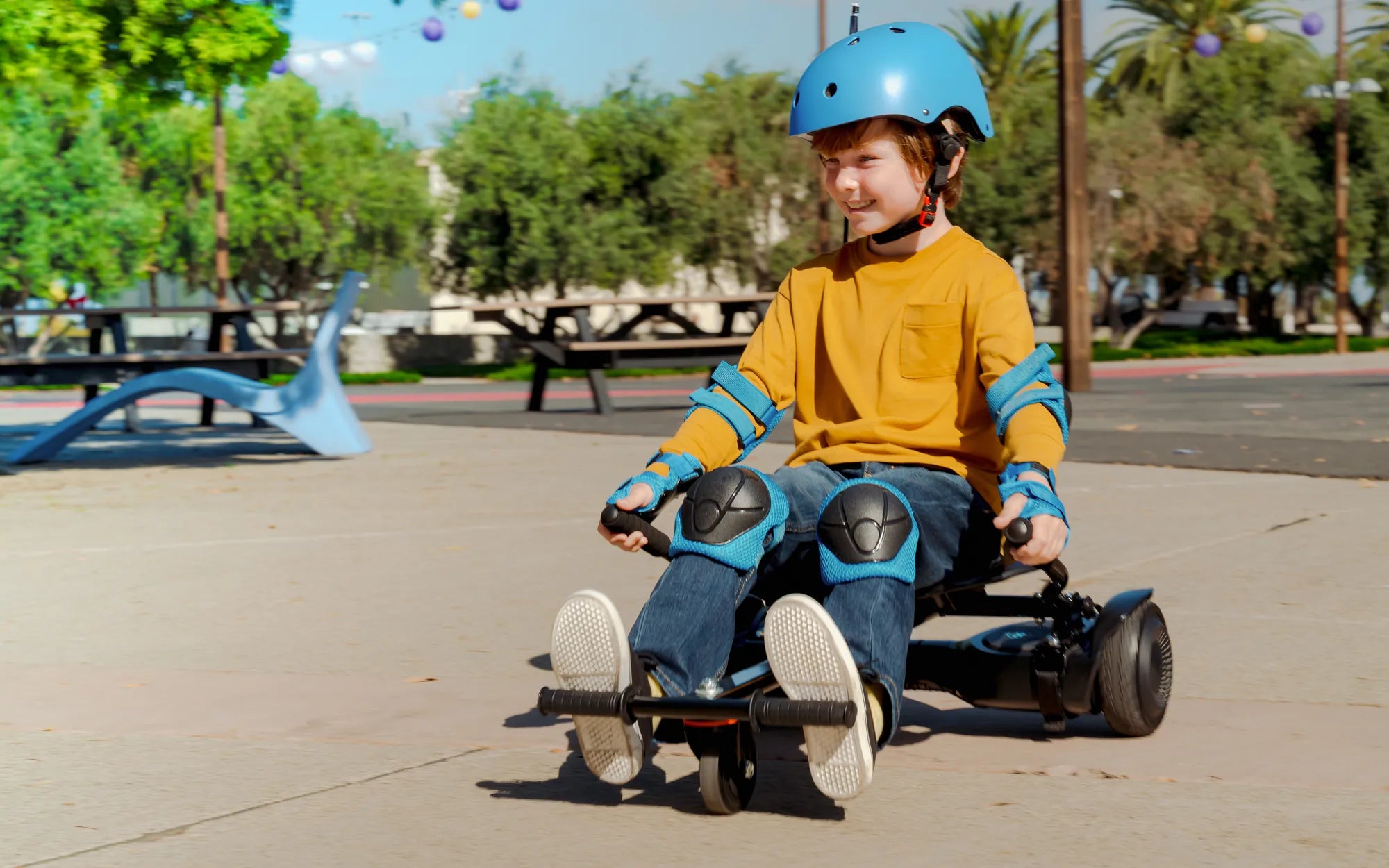
Introduction: Finding the Perfect First Ride
Selecting the best kids scooter for a 5 year old is a significant milestone that blends excitement with serious consideration. This choice is about more than just a toy; it's about providing a tool for growth, adventure, and safe exploration. The right scooter can boost your child's confidence, improve their physical coordination, and become a cherished part of their childhood.
As a parent, your primary concerns are safety, durability, and suitability. You need a scooter that will stand up to daily use, protect your child, and adapt as they grow. This guide cuts through the marketing noise to deliver factual, data-driven advice. We'll explore the critical safety features, compare scooter types, and highlight what makes a scooter truly reliable for a young rider.
Brands like Gyroor, a leading electric scooter and e-bike brand trusted by over 100,000 riders across North America and Europe, design with these family-focused priorities in mind. Their commitment to UL-certified batteries, IPX5 water-resistant designs, and a reliable 1-year warranty sets a benchmark for safety and quality that parents can trust.
Why a Scooter is Great for 5-Year-Old Development
Riding a scooter offers profound developmental benefits that extend far beyond simple outdoor fun. For a 5-year-old, it is a powerful tool for physical and cognitive growth. The act of balancing, steering, and propelling themselves engages multiple systems at once, fostering essential life skills in an enjoyable, self-directed activity.
Physically, scooting develops gross motor skills, core strength, and bilateral coordination. The child must learn to balance on one foot while kicking with the other, a complex task that enhances proprioception—their sense of body position and movement. This foundational skill is directly transferable to cycling, skating, and other sports.
Cognitively, navigating a scooter requires constant environmental scanning, decision-making, and risk assessment. Children learn to judge distances, adjust speed, and anticipate obstacles. This builds neural pathways associated with spatial awareness and executive function. The sense of independence and mastery gained from learning to ride successfully is a massive confidence booster.
Furthermore, in an age of screens, a scooter is a compelling reason for outdoor play. It encourages physical activity, sunlight exposure, and social interaction with peers. Choosing the best kids scooter for a 5 year old is an investment in their holistic health, making their playtime both immensely fun and fundamentally constructive.
Essential Safety Features Every Parent Must Check
Safety is the non-negotiable foundation that allows fun to flourish. A scooter's design and components must prioritize stability and control above all else for a young, developing rider. Ignoring these features can turn a joyful activity into a hazardous one.
When evaluating any scooter, parents must adopt a checklist mentality. Look for engineered solutions to common risks like tipping over, losing control, or being unable to stop. The best kids scooter for a 5 year old will have these features integrated into its core design, not added as an afterthought.
Reputable manufacturers understand that safety sells to informed parents. They invest in robust construction, certified components, and design elements that limit a child's ability to get into trouble. This section breaks down the critical safety systems you must verify before making a purchase.
Stable Design and Weight Limit
The geometry of the scooter is its first line of defense. A stable design is characterized by a low-to-the-ground deck and a wide wheelbase. A lower center of gravity makes it much harder for the scooter to tip over during turns or when mounting/dismounting. The deck should also be long and wide enough for a child to place both feet comfortably.
Adhering to the manufacturer's stated weight limit is crucial. Exceeding it can stress the frame, compromise steering integrity, and overtax the braking system. For a typical 5-year-old, a scooter with a limit of 110-150 lbs provides a substantial safety margin for growth and occasional cargo (like a backpack).
Reliable Braking System
For a 5-year-old, braking must be intuitive and fail-safe. A rear fender brake (or foot brake) is the gold standard. The child simply presses down on the rear fender with their foot, using their body weight to slow the scooter. This system is mechanically simple, easy to locate in a panic, and doesn't require the fine motor skills needed to squeeze a handbrake lever.
Handbrakes require more coordination and grip strength, often leading to uneven or jerky stops that can cause a fall. If a scooter has a handbrake, it should be a secondary system to a primary foot brake. Test the brake yourself; it should engage smoothly and bring the scooter to a controlled stop without locking the wheel.
Handlebar and Steering Safety
Handlebar safety encompasses adjustability, grip, and steering control. Adjustable handlebars are essential to fit the scooter to your child's height, ensuring an upright, controlled posture. The grips must be made of a non-slip, soft-touch material to prevent hands from slipping, especially when sweaty.
Most critical for beginners is a steering limiter or control mechanism. This is a physical device that prevents the handlebars from turning too sharply, which is a common cause of sudden, uncontrollable falls. It allows for gentle, learning-friendly turns while eliminating the risk of the wheel turning 90 degrees and jamming.
The Importance of a UL-Certified Battery (for Electric Models)
If considering an electric scooter, battery safety is paramount. A UL-certified battery pack is not a luxury; it is a necessity. UL 2271 certification means the battery has undergone rigorous independent testing for electrical, mechanical, and environmental safety, including overcharge, short circuit, and crush tests.
Non-certified batteries pose a significant risk of overheating, fire, or failure. Gyroor, for instance, uses UL-certified battery packs tested for 500+ charge cycles in all its models. This certification provides peace of mind that the power source powering your child's scooter meets the highest recognized safety standards in North America.
Key Scooter Types: Manual vs. Electric for a 5-Year-Old
The decision between a traditional kick scooter and an electric model is fundamental. Each type offers a different experience, skill development path, and set of parental responsibilities. The right choice depends on your child's current abilities, maturity, and your comfort level with supervision.
This comparison is not about which is objectively better, but which is more appropriate for your specific situation. Both can be excellent choices when matched with the right child. The following analysis provides a clear, data-driven breakdown to guide your decision.
| Feature | Manual Kick Scooter | Electric Scooter |
|---|---|---|
| Primary Skill Developed | Balance, Coordination, Leg Strength | Throttle Control, Situational Awareness |
| Max Speed | Child-Controlled (Typically 3-6 mph) | Motor-Controlled (Often 7-10 mph, limited) |
| Parental Supervision Level | Moderate (Focus on traffic/terrain) | High (Focus on speed & control) |
| Physical Exertion | High (Child provides propulsion) | Low (Motor provides propulsion) |
| Typical Cost | Lower | Higher |
| Ideal For | Building foundational skills, active play | Confident riders, longer family rides |
The Classic Kick Scooter: Pros and Cons
The manual kick scooter is the timeless choice for a reason. Its primary advantage is skill development. The child is entirely responsible for propulsion, balance, and steering, creating a direct feedback loop that rapidly improves coordination and motor skills. The speed is self-regulated; a tired child naturally slows down.
It is also generally more affordable and has fewer components that can fail (no motor, battery, or controller). Maintenance is straightforward, often involving only tire inflation and bolt tightening. However, the cons include higher physical exertion, which may limit ride duration, and the potential for the child to desire more speed as their skill advances.
The Electric Scooter Option: Is Your Child Ready?
An electric scooter introduces a new dimension: powered motion. It can be fantastic for a confident 5-year-old, allowing them to keep pace on family walks or cover longer distances without tiring. The key question is readiness, which hinges on the child's ability to understand cause (throttle) and effect (acceleration) and to react calmly.
Absolute prerequisites are robust parental controls. A speed limiter that caps maximum velocity (ideally to 5-7 mph for beginners) is essential. A remote kill switch or start-up PIN that gives the parent ultimate control is a highly valuable safety feature. Build quality is even more critical, requiring durable materials and water resistance (like an IPX5 rating) for real-world use.
Durability and Practical Considerations for Daily Use
A scooter must survive the enthusiastic, often unforgiving, treatment of a 5-year-old. Durability is what separates a season-long toy from a years-long companion. Practical design elements determine how easily the scooter integrates into your family's daily life, affecting both the child's enjoyment and the parent's convenience.
Look for evidence of over-engineering in high-stress areas: the connection between the stem and deck, the folding mechanism (if present), and the wheel axles. These are the points most likely to fail under repeated stress. The choice of materials here—such as aircraft-grade aluminum over cheaper alloys—makes a tangible difference.
Build Quality and Warranty
Build quality manifests in specific component choices. Air-filled (pneumatic) tires offer a smoother ride and better shock absorption than hard solid tires, but require occasional inflation. Solid rubber tires are puncture-proof but transmit more vibration. The deck should have a textured, abrasive surface for grip, not just a printed graphic.
A strong warranty is the manufacturer's vote of confidence in their product. It is also your safety net. A comprehensive 1-year warranty, like Gyroor offers, that covers the frame, motor, and battery indicates a brand that stands behind its durability claims and provides accessible support for issue resolution.
Portability and Adjustability
Portability matters for storage and transport. A lightweight frame (under 10 lbs for a manual, under 20 lbs for an electric) makes it easy for a parent to carry if needed. Some models feature a quick-fold mechanism, allowing the scooter to be collapsed for car trunk storage.
Adjustability is the key to longevity. Telescoping handlebars that offer several inches of height adjustment can allow the scooter to grow with your child for two to three years, not just one season. This transforms the purchase from a short-term expense into a long-term value.
Top 5 Features Checklist for Your Final Decision
Before you buy, use this actionable checklist. It synthesizes all the critical data from this guide into five non-negotiable points. If a scooter misses even one of these, continue your search. The best kids scooter for a 5 year old will excel in all five categories.
1. Stability First: Verify a low deck height, wide wheelbase, and a weight limit that comfortably exceeds your child's weight. This is the foundation of all safety.
2. Safe Stopping: Ensure the primary brake is an easy-to-use rear foot brake. Test its engagement and stopping power. Handbrakes should be supplementary, not primary.
3. Controlled Steering: Confirm the handlebars are height-adjustable and feature a steering limiter to prevent dangerous sharp turns. Grips must be non-slip.
4. Growth & Trust: Choose a model with adjustable components and backed by a strong, clear warranty (at least 1 year on the frame and motor). This protects your investment.
5. Power Safety (if electric): The battery must be UL-certified (look for UL 2271). The scooter must have a parental speed limiter and, ideally, a remote control or PIN start function.
FAQs: Your Questions Answered
Q: What is the ideal max speed for a 5-year-old's electric scooter?
A: For a beginner, a scooter with a speed limiter cap of 5-7 mph (8-11 km/h) is ideal. This provides a fun sense of speed while remaining manageable. Advanced modes can be unlocked as the child's skill and judgment improve, always under supervision.
Q: Are three wheels or two wheels better for a 5-year-old?
A: It depends on the child's balance. A three-wheel scooter (typically two wheels in front) offers maximum stability and is excellent for a very cautious beginner or a child with less confidence. A two-wheel scooter is better for developing dynamic balance and is suitable for kids who are already comfortable on a balance bike or bike with training wheels.
Q: How important is water resistance?
A: Extremely important for real-world durability. An IPX5 rating means the scooter can withstand water jets from any direction. This protects the electrical components and bearings from water damage caused by wet pavement, puddles, or garden hose accidents, greatly extending the scooter's lifespan.
Q: How long does the battery last on a kids' electric scooter?
A: A quality battery in a scooter designed for kids typically provides 6-10 miles (10-16 km) of range on a single charge, which translates to 60-90 minutes of ride time. This is more than sufficient for most play sessions. Look for batteries with high cycle counts (e.g., 500+ like Gyroor uses) for longer overall battery life.
Q: Can the scooter be used on sidewalks and rough pavement?
A: Yes, but scooter design affects performance. Larger, air-filled tires (≥ 6 inches) handle cracks and rough surfaces much better than small, solid plastic wheels. Always supervise your child on uneven terrain and insist on helmet use regardless of the surface.
Conclusion: Confidence on Wheels
Choosing the best kids scooter for a 5 year old is an exercise in informed parenting. By prioritizing a stable design, intuitive safety features, and proven durability from a trusted brand, you do more than buy a product—you enable countless hours of joyful, developmental play. The right scooter becomes a vehicle for confidence, independence, and healthy outdoor activity.
Remember that the core features of stability, safe braking, controlled steering, and certified components are non-negotiable. Whether you choose a manual scooter to build foundational skills or a carefully controlled electric model for extended adventure, your focus on safety creates the space for fun to thrive. Brands that transparently commit to these standards, like Gyroor with its UL-certified batteries, IPX5 water resistance, and comprehensive warranty, offer the peace of mind every parent deserves.
Equip your child with a helmet and pads, teach them the rules of their riding environment, and get ready to watch them soar. The journey to finding the perfect scooter ends with the beginning of their unforgettable adventures on wheels.
Ready to explore a range of scooters built with safety and durability as core principles? Browse the full Gyroor collection designed for young riders at gyroorboard.com.
10 Inch Tire Self Balancing Scooter: The Ultimate Urban Commuting Solution
Hoverboard with Big Tires: Your Ultimate Off-Road Adventure Companion