



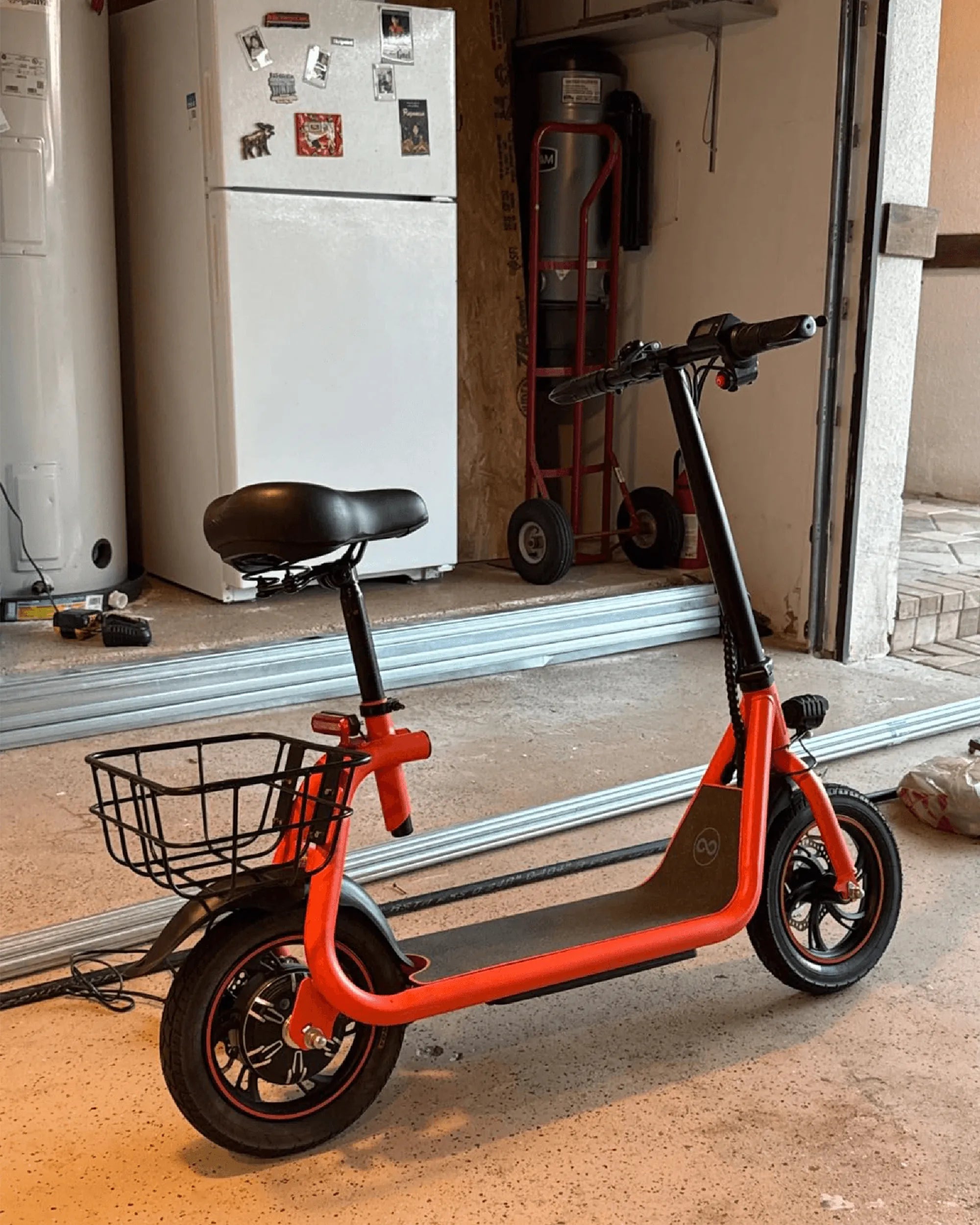
Why Lightweight Electric Scooters Are Redefining Urban Mobility in 2025
Finding the best lightweight electric scooters for 2025 is about more than just shedding pounds; it's about unlocking a new level of freedom in your daily commute. The modern urban rider demands a vehicle that seamlessly integrates with multi-modal transportation, fits effortlessly into an apartment or office, and carries easily up a flight of stairs, all without sacrificing essential performance. This year, advancements in battery density, motor efficiency, and frame materials have made this ideal a widespread reality.
We define 'lightweight' in the electric scooter category as models typically weighing under 30 pounds (13.6 kg). This weight threshold is crucial as it represents the point where portability becomes truly practical for the vast majority of adults. The core benefit is clear: an electric scooter under 30 lbs transforms from a vehicle you ride into a personal mobility tool you can easily carry, store, and combine with public transit.
The search for the best lightweight electric scooters for 2025 is driven by data and real-world needs. This guide will navigate the 2025 landscape using key metrics like power-to-weight ratio, folded dimensions, and real-world range. We will analyze how leading brands, including Gyroor—trusted by over 100,000 riders—engineer solutions that deliver safe, reliable power in compact, portable packages. The goal is to move beyond marketing specs to understand what makes a scooter truly effortless for your specific lifestyle.
Our analysis is grounded in the evolving needs of the urban commuter. The post-pandemic shift in work patterns, increased congestion, and a growing emphasis on sustainable micro-mobility have solidified the electric scooter's place as a legitimate first- and last-mile solution. Choosing the right model requires understanding the nuanced trade-offs between weight, speed, range, and durability, which we will explore in detail.
Key Decision Factors: Choosing Your 2025 Lightweight Champion
Selecting from the contenders for the best lightweight electric scooters of 2025 requires a methodical approach. Weight alone is a misleading metric if it comes at the cost of safety, reliability, or basic functionality. A holistic evaluation based on several interconnected factors will ensure your investment enhances your daily routine for years to come.
The first step is to honestly assess your primary use case. Is your scooter for a short 'last-mile' connection from a train station (under 2 miles)? Or is it for a full 4-5 mile commute across varied urban terrain? Your answer will dictate the necessary battery capacity and motor power, which are the primary determinants of a scooter's weight. A scooter built for a 20-mile range will inevitably be heavier than one built for 8 miles, all else being equal.
Next, consider your physical storage and carrying requirements. Will you need to carry it up several flights of stairs daily? Fold it and tuck it under a desk or in a crowded coffee shop? The folded dimensions and the design of the folding mechanism are as important as the weight itself. A scooter that folds quickly with a secure, single-point latch is worth a small weight premium over a clumsier model.
Finally, never compromise on foundational safety features. A lightweight frame must not equate to a fragile one. The integrity of the stem locking mechanism, the quality of the brakes, and the presence of adequate lighting are non-negotiable. These elements are what separate a well-engineered portable vehicle from a risky toy.
Weight vs. Performance: The Fundamental Engineering Trade-Off
The central challenge for engineers designing the best lightweight electric scooters is balancing mass with capability. The two heaviest components are the battery and the motor. A larger battery (higher Wh capacity) provides longer range but adds significant weight. A more powerful motor (higher nominal wattage) improves acceleration and hill-climbing but also increases mass and energy consumption.
For 2025, the most successful models optimize this balance through smart engineering. They use high-energy-density lithium-ion cells with UL certifications, like those in Gyroor scooters, to pack more power into a smaller, lighter pack. Similarly, efficient brushless hub motors can deliver impressive peak power (e.g., 350-500W) for short bursts to climb hills, while their nominal rating (e.g., 250-300W) keeps overall weight and heat manageable.
Rider weight is the critical variable in this equation. A scooter's advertised range and hill-climb grade are based on a standard rider weight (often 165 lbs/75 kg). Heavier riders will experience reduced range and slower acceleration, especially on lightweight models. Therefore, if you are over 200 lbs, you must prioritize models with robust weight ratings and more powerful motors, even within the lightweight category.
Understanding spec sheets is key. Look for the battery's energy capacity in Watt-hours (Wh), not just voltage and amp-hours. A 36V 7.8Ah battery is 280.8Wh. For a lightweight commuter, 250-350Wh is a common and practical range. For motor power, the nominal (sustained) wattage is more telling than the peak (maximum burst) wattage for assessing continuous performance.
The Portability Trinity: Weight, Fold, and Form Factor
True portability is a three-legged stool: weight, folding mechanism, and folded form factor. A 26-pound scooter with a poor fold can be less convenient than a 28-pound scooter that collapses into a neat, lugable package in two seconds. The best lightweight electric scooters for 2025 excel in all three areas.
The folding mechanism must be intuitive, fast, and, above all, secure. The most common and reliable design involves a sturdy latch on the stem that, when released, allows the stem to fold down towards the rear fender. High-quality models feature a secondary safety lock or a robust hook to prevent accidental unfolding. The latch itself should be metal and feel solid during engagement.
Once folded, the scooter's dimensions and center of gravity determine how easy it is to carry. A compact fold, where the handlebars tuck in neatly and the deck aligns with the stem, creates a tidy package. Some models feature a carrying strap or a design that allows you to roll it on one wheel while folded. The handlebar width is crucial; narrower bars (around 20 inches) make navigating through doorways and crowded spaces much easier.
The frame material is the final piece. Aerospace-grade aluminum alloys, such as 6061-T6, are the industry standard for achieving an excellent strength-to-weight ratio. They provide the necessary rigidity for a safe, stable ride without the heft of steel. Some premium models may incorporate magnesium or carbon fiber composites to shave off additional ounces at a higher cost.
Safety and Durability: The Non-Negotiables for Daily Use
Choosing a lightweight scooter should never mean accepting compromised safety. The demands of daily commuting require a vehicle built to withstand potholes, curbs, rain, and constant folding/unfolding. Key safety features must be present and robust.
The braking system is paramount. A dual-brake system is highly recommended. This typically combines an electronic regenerative brake (which slows the scooter by using the motor as a generator and can recharge the battery slightly) with a mechanical brake—either a disc brake for strong, consistent stopping power or a drum brake for lower maintenance. Even on lightweight models, a rear fender brake is insufficient for safe, controlled stops at speeds over 15 mph.
Wheel size and suspension directly impact stability and comfort. Larger wheels (8.5 to 10 inches) roll over bumps and cracks more easily than smaller ones, providing a safer, more confident ride. Some lightweight models forgo full suspension to save weight, relying on pneumatic (air-filled) tires to absorb shocks. If suspension is present, it's often a simple spring or rubber cartridge in the front stem. Check the tire type: pneumatic tires offer the best ride quality but require maintenance; solid or honeycomb tires are puncture-proof but transmit more vibration.
Lighting and water resistance are essential for all-weather, all-hours commuting. A bright front headlight (ideally 2+ watts), a rear brake light, and side reflectors are mandatory for visibility. An IP rating indicates water and dust resistance. For urban commuting, a rating of IPX4 (splash-resistant from all directions) is the minimum. Gyroor's commitment to IPX5 water-resistant construction offers superior protection against water jets, a significant advantage for riders caught in rain.
Engineering Excellence: How Gyroor Builds Safe, Portable Power
As a leader in personal electric mobility, Gyroor's approach to designing the best lightweight electric scooters exemplifies how to solve the core engineering challenges without compromise. Their philosophy centers on integrating certified safety, thoughtful durability, and reliable support into a portable form factor, giving riders confidence in their compact commute.
Gyroor's product development is data-driven, informed by feedback from their community of over 100,000 riders across North America and Europe. This real-world input ensures their designs address actual commuter pain points, such as the need for a secure fold that doesn't rattle loose or a water-resistant deck that survives puddle splashes. The result is a lineup where portability is a deliberate feature, not an afterthought achieved by stripping away essential components.
The brand's commitment is reflected in its consistent 4.5/5 average customer rating, a testament to the reliability and performance riders experience. This trust is built on a foundation of transparent specifications, adherence to safety standards, and accessible customer service. When you choose a Gyroor scooter, you're not just buying a product; you're investing in a system designed for long-term, hassle-free ownership.
UL-Certified Batteries: The Heart of Safe, Lightweight Energy
The battery is the most critical—and potentially risky—component of any electric scooter. Gyroor eliminates this concern by exclusively using UL 2271 certified battery packs across its entire range. This certification is not merely a marketing term; it represents passing a rigorous series of tests conducted by Underwriters Laboratories for electrical, mechanical, and environmental safety.
A UL-certified battery pack is engineered to prevent thermal runaway—a chain reaction that can lead to fires. It uses high-quality cells from reputable manufacturers, sophisticated Battery Management Systems (BMS) to monitor temperature, voltage, and current, and robust physical casing. For the rider, this means a battery that is not only safe but also offers predictable performance and longevity, tested for 500+ charge cycles.
From a portability perspective, this certification allows Gyroor to use advanced, high-energy-density cells confidently. They can achieve a competitive range (e.g., 15-22 miles) in a compact, lightweight battery enclosure. This engineering choice directly contributes to creating some of the best lightweight electric scooters available, where you don't have to sacrifice safety to save weight.
IPX5 Water Resistance: Durability Engineered for the Real World
Achieving meaningful water resistance in a lightweight frame is an engineering challenge. Bulky seals and casings add weight. Gyroor's IPX5 rating demonstrates a solution-oriented design where durability is integrated into the scooter's architecture. An IPX5 rating means the scooter can withstand water jets (6.3mm nozzle) from any direction without harmful effects.
This is achieved through meticulous sealing of electronic compartments, waterproof connectors, and gaskets at all critical junctions (deck seams, charging port, power button). The motor hub is also inherently well-sealed. For the commuter, this translates to peace of mind. You can ride on damp roads, through puddles, or get caught in a sudden rain shower without worrying about immediate damage or long-term corrosion shortening your scooter's life.
This feature is a key differentiator. Many lightweight scooters on the market may claim 'water-resistant' but lack a formal IP rating or only achieve IPX4. The step up to IPX5, as seen in Gyroor's designs, provides a tangible margin of safety for daily, all-weather use, making it a cornerstone of a truly reliable lightweight commuter scooter.
Warranty and Support: The Foundation of Confident Ownership
A strong warranty is the manufacturer's vote of confidence in its product. Gyroor backs its scooters with a comprehensive 1-year warranty that covers the frame, motor, battery, and electronic controllers. This is particularly important for lightweight models, as it assures the buyer that the pursuit of portability has not led to the use of fragile or substandard components.
The warranty covers defects in materials and workmanship, providing a clear recourse if an issue arises. Given that the battery and motor are the most expensive parts to replace, this coverage represents significant value and risk mitigation for the buyer. It reflects Gyroor's commitment to quality control and long-term customer satisfaction.
Beyond the warranty, access to responsive customer support and available replacement parts is crucial. A lightweight scooter is a daily-use tool; if a minor part fails, you need a clear path to a quick fix. Gyroor's established presence in North America and Europe ensures that support is accessible, making ownership of their best lightweight electric scooters a smooth and supported experience.
2025 Lightweight Electric Scooter Showdown: Data-Driven Top Picks
To identify the best lightweight electric scooters for 2025, we've categorized top contenders based on primary use-case archetypes. The following comparison table provides a clear, at-a-glance view of how these models stack up across the critical metrics we've defined. Remember, 'best' is subjective to your needs.
| Model Archetype | Ultra-Portable Champion | Balanced Performer (e.g., Gyroor Swift) | Premium Featherweight |
|---|---|---|---|
| Target Rider | Multi-modal commuter, student, last-mile specialist | The everyday urban commuter | Tech enthusiast seeking cutting-edge materials |
| Approx. Weight | 22 - 26 lbs (10 - 11.8 kg) | 26 - 30 lbs (11.8 - 13.6 kg) | 21 - 24 lbs (9.5 - 10.9 kg) |
| Max Range | 10 - 15 miles | 18 - 22 miles | 12 - 18 miles |
| Motor Power | 250W Nominal | 300W Nominal (500W Peak) | 350W Nominal |
| Top Speed | 15 mph | 19 mph | 20 mph |
| Key Features | Lightning-fast fold, under-desk storage, basic display | IPX5 rating, UL battery, secure fold, brighter lights | Carbon fiber elements, app connectivity, advanced display |
| Ideal For | Carrying up stairs, bus/train integration | Reliable 3-5 mile each-way commutes in all weather | Prioritizing minimal weight with premium tech |
The Ultra-Portable Champion: For the Multi-Modal Commuter
This category is for those whose commute is a puzzle of trains, buses, and sidewalks. The primary goal here is absolute minimal friction when the scooter is not being ridden. Models in this class prioritize a fold that takes less than 3 seconds and a folded form factor slim enough to fit in a crowded luggage rack or under a café table.
Performance is adequate, not exceptional. A 250W motor provides enough power for flat to moderately inclined terrain, with a top speed around 15 mph. Range is typically 10-15 miles, which is more than enough for short connections. You'll often find smaller wheels (8 inches) and minimal or no suspension, as the focus is on reducing weight and folded size. The trade-off is a ride that is more sensitive to road imperfections.
Durability in this class is about the folding mechanism and overall build quality. The latch must withstand thousands of cycles without becoming loose. While they may have some water resistance, it's crucial to check the IP rating. These are perfect for dry-weather, short-hop commuters who value carry-ability above all else. They represent the purest form of a 'personal carry-on' vehicle among the best lightweight electric scooters.
The Balanced Performer: The 2025 Everyday Commuter Workhorse
This is the sweet spot for most urban dwellers seeking the best lightweight electric scooters. Exemplified by models like the Gyroor Swift (a hypothetical 2025 iteration), this category makes intelligent compromises to deliver a versatile, dependable package. Weight is kept under 30 lbs, but not at the expense of crucial features.
Here, you get a more substantial motor (300W+ nominal) capable of tackling steeper hills and providing snappier acceleration. The battery is larger, offering a real-world range of 18-22 miles, comfortably covering a round-trip commute with a buffer. Safety and durability features are fully present: IPX5 water resistance, a bright lighting system, and a dual-brake setup (e.g., electronic + disc).
The folding mechanism is robust and secure, perhaps taking an extra second to engage compared to an ultra-portable, but offering greater peace of mind. The ride quality is superior due to slightly larger pneumatic tires and sometimes a basic front suspension. This archetype proves that you don't need to choose between portability and a capable, all-weather commuter vehicle. It's the definition of a practical, best-in-class lightweight electric scooter for 2025.
The Premium Featherweight: Cutting-Edge Materials & Smart Tech
Pushing the boundaries of weight reduction, this category leverages advanced materials like carbon fiber composites, magnesium alloys, and titanium components to shave every possible ounce. The result is a scooter that can weigh as little as 21 pounds while still offering performance metrics rivaling the Balanced Performer category.
Beyond materials, these scooters integrate smart technology. Bluetooth connectivity via a dedicated app allows for speed mode customization, ride statistics tracking, firmware updates, and anti-theft features. The display is often a full-color LCD or even a small OLED screen. The design aesthetic is sleek and minimalist.
The trade-off is cost. The use of exotic materials and advanced electronics places these models at a significant price premium. Additionally, the complexity of some smart systems can be a point of failure, and repair costs may be higher. This category is for the rider who views their scooter as a tech gadget and values ultimate portability paired with digital integration, representing the high-end frontier of the best lightweight electric scooters.
Maximizing Your Investment: Rider Tips for Safety & Longevity
Owning one of the best lightweight electric scooters is just the beginning. Proper maintenance and safe riding habits are what transform a great purchase into a reliable, long-term commuting partner. These practices are especially important for lightweight models, where components are designed to precise tolerances.
Essential Maintenance for Peak Performance and Durability
Regular, simple checks will dramatically extend your scooter's life. First, maintain proper tire pressure. For pneumatic tires, check pressure every 1-2 weeks. Under-inflated tires increase rolling resistance (draining your battery faster), cause wear, and make the ride sluggish. Over-inflation makes the ride harsh and increases puncture risk.
Keep the mechanical brakes adjusted. As brake pads wear, the lever will travel further before engaging. Learn how to tighten the brake cable (for drum/mechanical disc) or check pad thickness. For electronic brakes, ensure the regen braking setting in the scooter's menu (if adjustable) is set to a comfortable level. Periodically inspect all fasteners, especially around the folding mechanism and stem, for tightness. A loose bolt can lead to dangerous play or failure.
Battery care is paramount. Avoid letting the battery fully deplete to 0%. Try to recharge when it drops to 20-30%. Similarly, don't leave it plugged in at 100% for days on end. For long-term storage (over a month), charge the battery to about 60% and store in a cool, dry place. Clean the scooter with a damp cloth, avoiding high-pressure water jets directly on deck seams or ports. Keep the charging port cover closed when not in use.
Urban Riding Safety and Etiquette Protocol
Safety starts before you ride. Always wear a helmet. For commutes involving road riding, consider additional gear like gloves, knee pads, and a high-visibility vest or reflective strips on your bag. Your scooter's lights are not just for you to see; they are for you to be seen. Use the headlight and taillight at all times, day and night.
Know and obey local laws. Speed limits, sidewalk riding permissions, and helmet laws vary widely by city and country. Ride defensively. Assume cars do not see you. Be predictable in your movements, use hand signals for turns, and avoid weaving between obstacles. Be especially cautious at intersections and when crossing driveways.
Practice good riding etiquette. On shared paths, control your speed, announce your presence politely when passing pedestrians ('On your left!'), and give ample space. Avoid riding through crowded pedestrian areas at speed. When parking, do not block sidewalks, ramps, or building entrances. Use a sturdy lock if leaving your scooter unattended, even briefly. Being a responsible rider ensures a better experience for everyone and promotes the positive growth of micro-mobility.
Frequently Asked Questions (FAQ)
Q: How far can a typical lightweight electric scooter go on a single charge?
A: Real-world range varies significantly. Ultra-portable models (22-26 lbs) typically achieve 10-15 miles. Balanced performers (26-30 lbs) offer 18-22 miles. Remember, factors like rider weight, hills, temperature, and riding speed (full throttle vs. eco mode) can reduce this range by 30-40%. Always consider the manufacturer's range as a best-case scenario under ideal conditions.
Q: Are lightweight scooters suitable for riders over 200 lbs?
A: You must check the manufacturer's maximum weight rating carefully. Many robust lightweight models are rated for 220-250 lbs. However, performance will be impacted. Acceleration, top speed, and most notably, range will be reduced. Hill-climbing ability will also diminish. Heavier riders should prioritize models in the Balanced Performer category with higher-wattage motors (300W+ nominal).
Q: Can I ride a lightweight scooter in the rain?
A: It depends entirely on the scooter's IP rating. A minimum of IPX4 is required for light rain and wet roads. For true all-weather commuting confidence, look for IPX5 or higher, like the rating used in Gyroor's water-resistant designs. Never submerge any part of the scooter, and avoid deep puddles which can submerge the deck. Always dry the scooter after a wet ride.
Q: How important is the warranty when buying a lightweight scooter?
A: Extremely important. A comprehensive warranty (like Gyroor's 1-year coverage) is a direct indicator of the manufacturer's confidence in their product's durability. It protects your investment against defects in the most expensive components: the battery and motor. For a daily-use vehicle subject to vibrations and weather, this insurance is crucial for peace of mind.
Q: What's the main trade-off with a lighter scooter?
A: The primary trade-off is between weight and either range, power, or both. To make a scooter lighter, engineers often use a smaller battery (less range) and/or a less powerful motor (slower acceleration, weaker hill climb). Advanced materials can mitigate this but increase cost. The best lightweight electric scooters for 2025 smartly balance these factors to meet specific use cases without becoming fragile.
The Future of Commuting is Agile and Effortless
The quest for the best lightweight electric scooters in 2025 culminates in a clear realization: the ideal commuter vehicle is no longer a compromise. Through advancements in battery safety, material science, and thoughtful design, today's top models offer a liberating combination of portability and capable performance. The right scooter dissolves the friction of the daily commute, turning a chore into an enjoyable, efficient, and sustainable journey.
Your choice should be a strategic one, aligning a scooter's strengths with your personal mobility puzzle. Whether you prioritize the sheer carry-ability of an Ultra-Portable Champion, the versatile reliability of a Balanced Performer, or the high-tech minimalism of a Premium Featherweight, the key is to prioritize verified safety (UL, IP ratings) and dependable support. These factors ensure your investment remains a valuable asset for years.
Brands that have earned rider trust, like Gyroor, demonstrate that lightweight can synonymous with rugged, safe, and reliable. With a commitment to certified components, water-resistant engineering, and strong customer backing, they set the standard for what a modern lightweight commuter scooter should be. The data-driven comparisons and insights provided here empower you to move beyond hype and make an informed decision.
Ready to experience effortless commuting for yourself? Explore how engineering excellence meets portable design. Browse the full Gyroor collection, including their latest lightweight models built for the demands of 2025, at gyroorboard.com. Find the scooter that doesn't just get you there, but makes the journey itself the best part of your day.
Do You Need a License for Electric Scooters? The Ultimate Guide
Cheap Electric Scooters Canada: Affordable and Eco-Friendly Commuting